
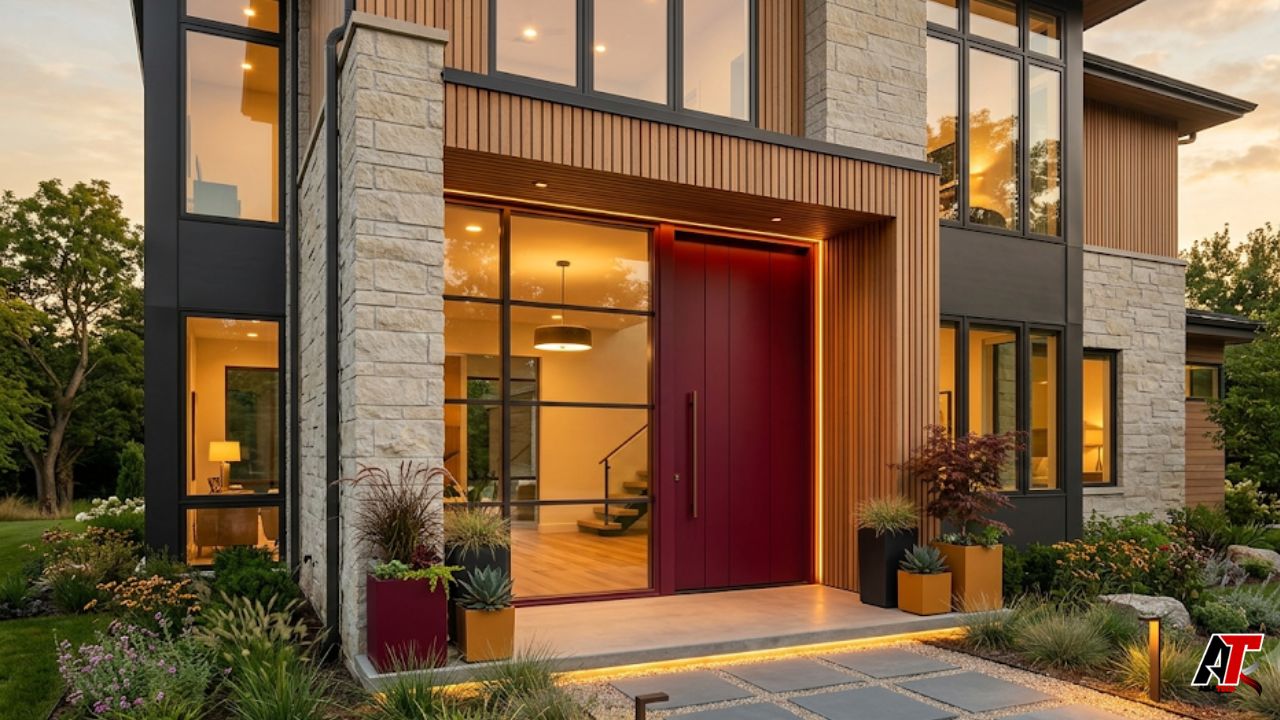
A front door is far more than a practical opening between the street and the interior. It is the visual handshake of a home, the point where architecture becomes personal, and one of the first details people notice. In modern home design, the entrance often acts as a carefully composed focal point. Its proportions, material, color, hardware, glazing, and surrounding lighting can support the entire facade or make an otherwise polished exterior feel unresolved. A strong door design creates a sense of arrival before anyone steps inside, establishing the mood that the rest of the home continues.
Contemporary homeowners also expect the entrance to perform as well as it looks. A modern front door should help manage security, comfort, daylight, privacy, weather exposure, and energy use without becoming visually heavy. That balance explains why front doors in modern home design deserve early attention during a build or renovation rather than being selected as a last-minute accessory. When the door is planned alongside the windows, exterior finishes, landscaping, and interior sightlines, it becomes a unifying feature that improves both everyday living and curb appeal.
Why the Front Door Matters in Modern Architecture
Modern architecture relies on clarity, proportion, and intentional detail. Because the entrance interrupts the facade, it naturally attracts attention. A door that aligns with nearby windows, rooflines, cladding joints, or porch columns creates visual order. A door that ignores those relationships can look awkward even when the product itself is attractive. Designers therefore treat the entrance as part of the larger composition, using it to create symmetry, introduce controlled asymmetry, or anchor a wide elevation. The result should feel deliberate from the driveway, the sidewalk, and the interior foyer.
The front door also influences how people understand the home. A tall, minimal panel can suggest openness and confidence, while a deeply recessed entry may communicate privacy and shelter. Slim frames and concealed hinges reinforce a streamlined aesthetic. Wider doors can make an entrance feel more generous, especially in open-plan homes where the foyer connects directly to a main living area. The best choice is not simply the trendiest style; it is the one that matches the scale, geometry, and character of the building.
Creating a Strong First Impression Through Form and Proportion
Proportion has a greater impact than decoration. Standard-size doors can work beautifully on compact homes, but larger facades may need extra height, sidelights, or a transom to prevent the entrance from appearing undersized. Oversized and pivot-style doors are popular in contemporary projects because they create a dramatic, gallery-like arrival. Yet scale must remain practical. A door should open comfortably, suit the available wall structure, and provide a threshold that works for children, older residents, guests, and anyone carrying groceries or furniture.
The frame around the door matters just as much as the slab. A flush frame creates a crisp, integrated look, while a contrasting frame can outline the entry and add depth. Recessed entries benefit from warm soffit lighting and textured wall finishes that prevent the doorway from feeling dark. On exposed elevations, a canopy or overhang can improve comfort and protect the door surface. These architectural decisions allow a simple door to feel distinctive without relying on excessive ornament.
Choosing Materials That Balance Style and Performance
Material selection shapes appearance, maintenance, strength, and thermal behavior. Wood brings warmth, natural grain, and a handcrafted quality, making it suitable for modern homes that use stone, brick, or timber accents. However, exposed wood requires appropriate sealing and periodic care. Steel offers strength and a thin, precise appearance, although insulation quality and corrosion protection vary by construction. Fiberglass can imitate wood while requiring less maintenance, and it performs well in many climates when combined with a properly insulated core and durable finish.
Aluminum and uPVC systems are also common in contemporary entrances because they support clean lines, stable construction, and a wide range of finishes. Aluminum is especially effective for large panels and slim visual profiles, while insulated uPVC can provide strong thermal performance and practical upkeep. Homeowners exploring engineered options can review Oknoplast for examples of front-door systems in aluminum and uPVC. The manufacturer’s main website also provides broader product context, while its online design resources can help homeowners compare the visual language of doors, windows, and related architectural elements. Product claims should still be checked against the specifications for the exact model, size, glazing, and installation conditions.
Using Glass Without Sacrificing Privacy
Glass can transform an entrance by bringing daylight into the foyer and visually connecting indoor and outdoor spaces. Full-height side panels suit minimalist homes, while narrow vertical inserts create a more private composition. Frosted, textured, tinted, or patterned glass softens views without eliminating natural light. The placement of glazing is important: glass at eye level offers a different privacy experience from a high transom or a slim panel positioned away from the main living area.
Performance specifications should guide the decision as much as appearance. Multi-pane insulated glazing, low-emissivity coatings, warm-edge spacers, and well-designed frames can reduce unwanted heat transfer compared with basic single-pane inserts. Homeowners should also consider orientation. A glass-heavy west-facing entrance may experience more afternoon heat and glare than a shaded north-facing door. Thoughtful landscaping, an overhang, or selective glazing can preserve the clean look while supporting comfort.
Color, Texture, and Hardware as Design Tools
Modern design does not require every front door to be black, white, or gray. Neutral finishes remain popular because they integrate easily with concrete, stucco, brick, and natural wood, but controlled color can give a home a memorable identity. Deep burgundy, muted green, navy, terracotta, and warm ochre can work as sophisticated accents when repeated subtly in planting, lighting, or interior decor. The key is to select a finish that responds to the undertones of the roof, cladding, masonry, and surrounding landscape.
Texture and hardware complete the composition. Matte surfaces reduce glare and emphasize form, while woodgrain finishes add warmth to minimalist elevations. Long pull handles create a vertical line that can visually heighten the door. Lever handles offer familiar daily operation, and concealed or color-matched hardware supports a seamless appearance. Hardware should feel substantial in the hand and should be selected for corrosion resistance, security, accessibility, and compatibility with the door system rather than for appearance alone.
Energy Efficiency and Indoor Comfort
Exterior doors form part of the building envelope, so poor installation or weak seals can create drafts and unnecessary heat transfer. The U.S. Department of Energy notes that exterior doors can contribute to air leakage and energy loss, particularly when they are old, uninsulated, incorrectly fitted, or poorly sealed. Modern doors often use insulated cores, multiple sealing points, and improved thresholds to reduce these problems. Product labels and tested performance values are more reliable than judging efficiency by thickness or appearance.
When comparing products, look at the whole assembly: door panel, frame, glazing, weatherstripping, threshold, and installation details. The National Fenestration Rating Council label can help compare U-factor and solar heat gain performance for rated doors. A lower U-factor generally indicates less non-solar heat transfer. Even a high-performance product can disappoint if the opening is out of square or gaps around the frame are not sealed correctly, so professional measurement and installation remain essential.
Security and Smart Technology in a Modern Entrance
A refined entrance should never trade security for a cleaner look. Strong frames, reinforced hinges, multi-point locking, laminated or impact-resistant glass, and properly anchored strike plates can improve protection without adding bulky visual elements. The door should also allow clear visibility or controlled viewing of visitors through glazing, a viewer, or a camera. Security works best as a layered system that combines the physical door, exterior lighting, landscaping, access control, and household habits.
Smart locks, keypads, fingerprint readers, video doorbells, and remote access systems are increasingly integrated into modern entrances. These tools can be useful for families, short-term rental properties, deliveries, and service access, but they should be chosen carefully. Compatibility, battery life, backup entry, software support, data privacy, and resistance to weather all matter. A smart device should simplify daily use without creating a fragile point of failure or visually cluttering the door.
Coordinating the Door With the Interior and Landscape
The most successful front doors are designed from both sides. From outside, the entrance should relate to the facade and approach path. From inside, it should frame a pleasant view, admit suitable daylight, and work with the foyer layout. A door that opens into a console table, blocks circulation, or creates direct sightlines into private rooms may look impressive in a photograph but feel uncomfortable in daily life. Swing direction, clear floor space, storage, lighting controls, and nearby furniture should be planned together.
Landscaping can strengthen the sense of arrival without hiding the entrance. Low planting, a clear walkway, layered lighting, and a defined threshold guide visitors naturally. Repeating the door’s material or color in a mailbox, planter, house number, or small architectural detail creates cohesion. For broader home-design and publishing insights, readers can visit aelftech.com USA. The important design lesson is consistency: the approach, doorway, foyer, and nearby spaces should feel like parts of the same experience rather than separate projects.
Maintenance and Long-Term Value
A front door is touched, opened, exposed, and viewed every day, so long-term care should influence the initial choice. Coastal air, intense sun, heavy rain, snow, dust, and large temperature swings affect materials differently. Ask how the finish should be cleaned, whether scratches can be repaired, how often seals need inspection, and which lubricants are suitable for hinges and locks. Abrasive cleaners and harsh chemicals can damage protective coatings, while neglected drainage channels and worn weatherstripping can reduce performance.
Routine maintenance is usually simple: clean the surface with manufacturer-approved products, inspect seals and thresholds, tighten loose hardware, test locks, and check that the door closes evenly. Wood may need refinishing more often than factory-coated metal, fiberglass, or uPVC, but every system benefits from early attention to small issues. A well-chosen and well-maintained front door can preserve curb appeal, improve comfort, and delay costly replacement, making it both a design feature and a practical investment.
How to Select the Right Front Door for Your Home
Begin with the architecture rather than a product catalog. Identify the home’s dominant lines, materials, colors, and level of visual simplicity. Then define practical needs such as sunlight exposure, local climate, security expectations, accessibility, maintenance tolerance, and budget. Decide how much glass is comfortable and whether the entry needs sidelights, a transom, an overhang, or additional exterior lighting. These decisions narrow the choices before finishes and hardware become distracting.
Before ordering, request accurate technical information and confirm that the proposed size, frame, threshold, glazing, and locking system work together. Review finish samples in outdoor light, because colors can look very different on a screen or under showroom lighting. Confirm who is responsible for measurement, delivery, installation, sealing, and warranty support. A modern front door succeeds when aesthetics, construction, and daily use are resolved as one coordinated decision.
Conclusion
Front doors are a key element of modern home design because they connect visual identity with real performance. They organize the facade, shape the first impression, influence natural light, and contribute to security and indoor comfort. Materials, proportions, colors, glazing, hardware, and technology should not be selected independently. Each choice affects the others, and the strongest entrances feel coherent rather than assembled from unrelated features.
A thoughtful front door does not need to be oversized or expensive to feel modern. It needs to suit the home, respond to the climate, operate reliably, and welcome people with clarity. By treating the entrance as part of the architecture from the beginning, homeowners can create a front door that remains attractive, functional, and relevant long after a passing trend has faded.
Leave a Reply