
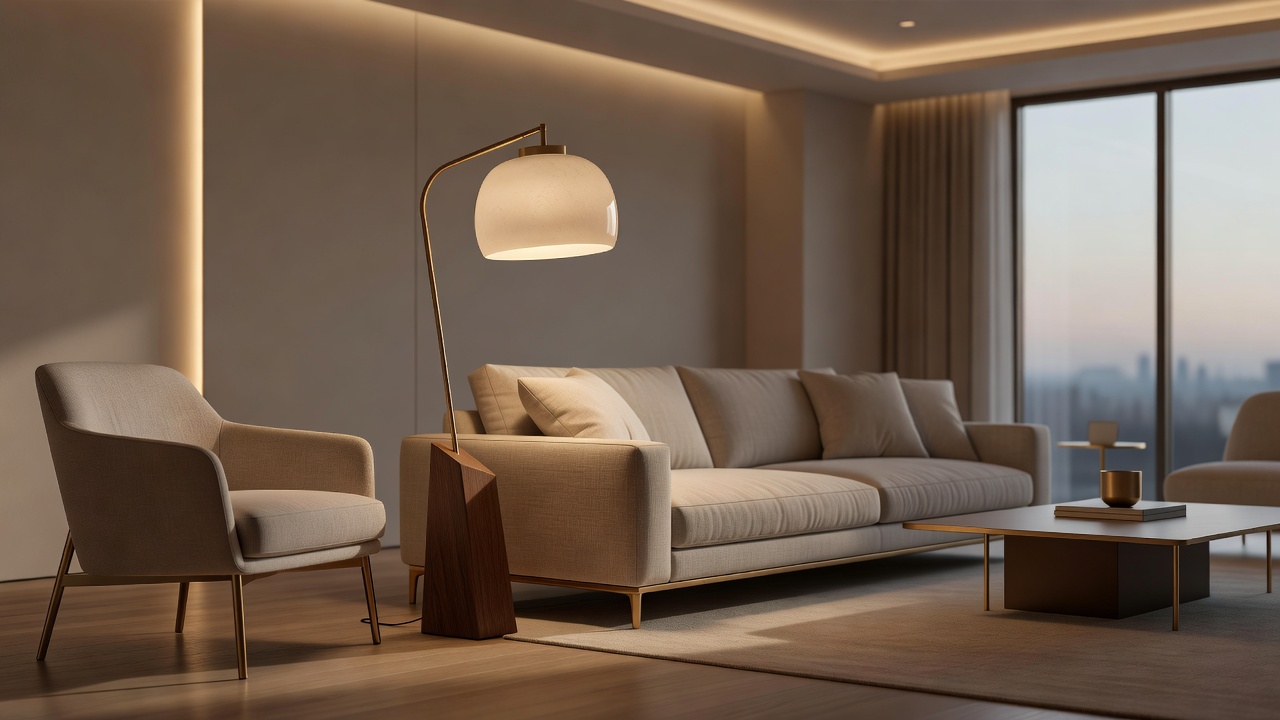
Lighting can completely change how a room looks and functions. Ceiling fixtures may provide general illumination, but they do not always create the warmth, visual depth, or focused light needed for reading, relaxing, working, and entertaining. A well-selected floor lamp can solve these problems without requiring permanent electrical work, making it one of the most flexible lighting additions for living rooms, bedrooms, offices, reading corners, and other interior spaces.
Unlike table lamps, floor-standing lights do not require an existing side table or desk. They can fill unused corners, illuminate seating areas, highlight architectural features, or provide task lighting exactly where it is needed. Modern designs range from understated vertical lamps and classic shaded fixtures to dramatic arc lamps, tripod models, torchiere designs, and smart LED systems with adjustable brightness and colour temperature.
Choosing the right lamp, however, involves more than finding a design that looks attractive in photographs. Height, shade shape, beam direction, bulb output, colour temperature, stability, switch placement, cord management, and room proportions can all affect whether the lamp works well after it arrives.
This guide explores seven important considerations for buying a floor-standing lamp, along with placement ideas, bulb selection, smart features, energy efficiency, maintenance, and common design mistakes.
What Is a Floor Lamp?
A floor lamp is a freestanding lighting fixture designed to sit directly on the floor rather than being mounted permanently to a wall or ceiling.
Most models include:
- Base.
- Vertical stem or frame.
- Light source.
- Shade or diffuser.
- Electrical cord or integrated power system.
- Switch or control.
Because installation generally requires little more than positioning the fixture and connecting it to an appropriate outlet, floor-standing lights can be moved relatively easily when furniture layouts change.
Why Floor Lamps Are Popular
Floor-standing lights combine decoration and functionality.
They can help:
- Add ambient illumination.
- Create reading light.
- Brighten dark corners.
- Define seating areas.
- Add height to room design.
- Reduce dependence on overhead fixtures.
This versatility makes them particularly useful in rental properties where permanent electrical modifications may not be practical.
1. Choose the Right Type of Floor Lamp
Different designs distribute light in different ways.
Traditional Shade Lamp
This familiar style uses a vertical base with a fabric, glass, or other shade.
It works well beside sofas, armchairs, and beds.
Arc Lamp
An arc lamp extends outward from its base, allowing the light source to sit above furniture.
This can be useful over:
- Sectional sofas.
- Reading chairs.
- Dining areas.
- Conversation spaces.
The large reach requires adequate room and a stable base.
Torchiere Lamp
Torchiere designs direct light primarily upward.
Light reflects from the ceiling and surrounding surfaces to create indirect ambient illumination.
Tripod Lamp
Tripod models use three legs and often create a strong decorative statement.
They require more floor area than slim pedestal designs.
Task Lamp
Adjustable heads and arms allow users to direct light toward reading, crafts, or detailed work.
2. Match the Height to the Room
Height affects both appearance and glare.
A lamp placed beside a seated person should illuminate the intended area without exposing an uncomfortable bright bulb directly to the eyes.
Consider:
- Sofa height.
- Chair height.
- Ceiling height.
- Shade position.
- Lamp purpose.
Tall ceilings can accommodate more visually substantial fixtures, while compact rooms may benefit from slimmer designs.
Always review product dimensions rather than judging scale from staged retail photographs.
3. Understand Brightness and Lumens
Bulb brightness is measured in lumens.
Wattage primarily describes power consumption and is not a direct measure of brightness across modern lighting technologies.
A floor lamp used mainly for atmosphere can operate at a lower output than one used for reading or detailed work.
When comparing fixtures, consider whether the lamp:
- Accepts replaceable bulbs.
- Includes integrated LEDs.
- Supports dimming.
- Has multiple light sources.
Dimmable lighting offers greater flexibility because the same fixture can support different activities throughout the day.
4. Choose a Suitable Colour Temperature
Colour temperature is measured in kelvins and influences how warm or cool white light appears.
Warm White
Warm light creates a softer atmosphere commonly preferred in living rooms and bedrooms.
Neutral White
Neutral lighting can provide a balanced appearance suitable for general tasks.
Cooler White
Cooler light may feel more appropriate in certain workspaces where visual alertness and task clarity are priorities.
The surrounding paint, furniture, flooring, and daylight can change how the same lamp appears.
5. Consider Shade Material and Shape
The shade does more than decorate a floor lamp.
It controls how light leaves the fixture.
Fabric Shades
Fabric often diffuses light softly and creates a warm residential appearance.
Metal Shades
Metal generally directs light more strongly because little illumination passes through the shade itself.
Glass Shades
Glass can range from clear to heavily diffused.
Paper and Natural-Fibre Shades
These can create soft decorative light but may require more careful cleaning.
Never install a bulb that exceeds the fixture’s maximum permitted wattage or heat requirements.
6. Prioritise Stability and Safety
Tall lamps can tip if their bases are unstable or placed in high-traffic locations.
This is particularly important in homes with:
- Children.
- Pets.
- Robotic vacuums.
- Narrow pathways.
Evaluate base weight and overall construction.
Keep cords positioned where they do not create trip hazards.
Fixtures should comply with applicable electrical safety standards for the market in which they are sold.
7. Think About Controls and Smart Features
Modern floor lamps increasingly offer more than a simple switch.
Potential controls include:
- Foot switches.
- Rotary dimmers.
- Touch controls.
- Remote controls.
- Smartphone applications.
- Voice-assistant compatibility.
Smart lighting can support schedules and adjustable colour temperature.
However, app connectivity should not make basic operation unnecessarily difficult.
A good smart lamp should ideally remain convenient even when a phone is unavailable.
Best Floor Lamp for a Living Room
Living rooms often benefit from layered lighting.
Instead of relying on one bright central fixture, combine several sources.
A typical arrangement might include:
- Ceiling light.
- Floor lamp beside seating.
- Table lamp.
- Decorative accent lighting.
This creates more visual depth and allows the room to adapt between daytime activity and evening relaxation.
Floor Lamp for a Reading Corner
Reading requires focused illumination.
Place the light source so that it illuminates the page without creating significant glare or awkward shadows.
Adjustable task designs can be particularly useful because readers have different seating positions.
If multiple people use the chair, flexibility becomes even more valuable.
Floor Lamps Behind Sectional Sofas
Large sofas can make table-lamp placement difficult.
An arc lamp or appropriately positioned tall fixture can provide light without requiring a side table.
Make sure the extended arm does not interfere with head clearance or walking paths.
Large lamps should also be visually proportional to the sectional.
Floor Lamp for a Bedroom
Bedrooms generally benefit from comfortable, controllable light.
A floor-standing lamp can supplement bedside lighting and provide illumination near:
- Reading chairs.
- Dressing areas.
- Dark corners.
Warm dimmable light can support a calmer evening atmosphere.
Avoid positioning intense light so that it shines directly toward someone lying in bed.
Floor Lamp for a Home Office
Home offices require more functional lighting.
A task-oriented fixture can help reduce dependence on a bright ceiling light.
Position it to minimize:
- Monitor glare.
- Reflections.
- Strong shadows.
Remember that eye discomfort during computer work can also be influenced by screen settings, room lighting, viewing distance, and break habits.
Small Rooms and Apartments
A floor lamp can be particularly useful in compact homes because it does not require furniture to support it.
Look for:
- Narrow bases.
- Vertical designs.
- Integrated shelving where appropriate.
- Corner-friendly shapes.
Oversized tripod or arc fixtures can visually dominate small rooms even if they technically fit.
Large Rooms and Open-Plan Interiors
Large spaces often require several lighting zones.
A single ceiling fixture may make the room feel visually flat.
Use floor-standing lighting to distinguish:
- Conversation areas.
- Reading spaces.
- Dining zones.
- Quiet corners.
Matching every fixture exactly is not required. Coordinated materials and colour temperatures can create visual consistency without making the room feel overly uniform.
LED Floor Lamps
LED technology has become common because it can produce substantial light while using comparatively little energy.
LED fixtures may use:
Replaceable LED Bulbs
These provide flexibility when bulbs eventually fail or when the desired colour temperature changes.
Integrated LEDs
The light source is built directly into the fixture.
Integrated designs can be extremely slim and visually distinctive.
However, investigate whether components are replaceable because failure of a non-serviceable integrated LED may require replacing the entire fixture.
Smart Floor Lamps
Smart models can integrate with a connected-home ecosystem.
Possible functions include:
- Dimming.
- Colour adjustment.
- Scheduling.
- Remote operation.
- Voice control.
Before buying, check compatibility with the smart-home platform you already use.
Also consider privacy and software support when a lamp requires cloud-connected applications.
How to Position a Floor Lamp
Placement should consider both illumination and room circulation.
Common positions include:
- Beside a sofa.
- Behind an armchair.
- In a corner.
- Near a desk.
- Behind a sectional.
- Beside a console.
Avoid blocking doors, pathways, heating vents, or furniture functions.
Use a cord-management solution when electrical cords cross exposed areas.
Matching a Lamp to Interior Style
Lighting can reinforce the overall design language of a room.
Modern
Look for simple forms, minimal ornamentation, and refined metal finishes.
Industrial
Dark metal, exposed structural elements, and functional shapes can complement industrial spaces.
Scandinavian
Light woods, warm neutral shades, and simple silhouettes work well.
Traditional
Decorative bases and fabric shades can complement classic interiors.
Mid-Century Modern
Sculptural lines, warm metals, wood elements, and globe shades can fit this aesthetic.
Choose a lamp you genuinely like rather than purchasing solely around a temporary trend.
Black, Brass, or Chrome?
Finish affects how strongly the fixture stands out.
Black can create strong visual contrast.
Brass or gold-toned finishes add warmth.
Chrome and polished metals create a cooler, reflective appearance.
You do not need every metal finish in a room to match precisely. Repetition of a few related finishes often looks more deliberate than attempting perfect uniformity.
Choosing a Bulb
If the lamp accepts replaceable bulbs, verify:
- Socket type.
- Maximum permitted wattage.
- Bulb dimensions.
- Dimming compatibility.
- Fixture enclosure requirements.
LED bulbs are widely used, but not every dimmable bulb works perfectly with every dimmer.
Use combinations recommended by the manufacturer.
Energy Efficiency
Energy-conscious lighting decisions can include:
- LED bulbs.
- Dimming.
- Timers.
- Occupancy controls.
- Turning lights off when unnecessary.
Actual energy use depends on bulb power and operating hours.
Replacing inefficient legacy bulbs with appropriate LEDs can reduce lighting electricity consumption, but do not use incompatible bulbs solely for efficiency.
Floor Lamps and Eye Comfort
A good lighting layout helps avoid harsh contrast between a bright task and a very dark surrounding room.
For reading or work, use sufficient light while controlling direct glare.
Older adults may prefer more illumination for certain visual tasks.
Persistent eye strain, headaches, or visual symptoms should be discussed with an appropriate eye-care professional rather than assuming room lighting is the only cause.
Child and Pet Safety
Tall fixtures can be vulnerable to tipping.
In households with children or energetic pets:
- Choose stable bases.
- Keep cords controlled.
- Avoid unstable placement.
- Keep hot bulbs or shades inaccessible where relevant.
Do not place tempting hanging cords or decorations where animals can pull on them.
Common Buying Mistakes
A frequent mistake is choosing the lamp solely because it looks good in an online photograph.
Other problems include:
- Ignoring dimensions.
- Using insufficient brightness.
- Choosing the wrong colour temperature.
- Overlooking switch accessibility.
- Buying integrated LEDs without considering serviceability.
- Blocking walkways.
Measure the proposed location before ordering.
Maintaining a Floor Lamp
Basic maintenance helps preserve appearance and safety.
Periodically:
- Dust shades.
- Clean the base appropriately.
- Inspect cords.
- Check plugs.
- Confirm the fixture remains stable.
- Replace bulbs with approved types.
Unplug the fixture before more detailed cleaning and follow manufacturer instructions for shade materials.
When to Replace a Lamp
Stop using a lamp if you notice:
- Damaged power cords.
- Burning smells.
- Persistent flickering not explained by the bulb.
- Loose electrical components.
- Significant overheating.
Electrical faults should not be repaired casually without appropriate expertise.
Replace or professionally repair damaged equipment.
AI and Modern Interior Lighting
AI-powered design applications can help homeowners visualize different fixtures within photographs of their rooms.
These tools can be useful for comparing:
- Lamp height.
- Style.
- Placement.
- Finish.
However, AI renderings frequently distort scale or create impossible lighting effects.
Always verify real dimensions and specifications before purchasing.
Future Floor Lamp Trends
Lighting design is increasingly combining aesthetics with technology.
Emerging trends include:
- Tunable white LEDs.
- Smart automation.
- Sculptural minimalist designs.
- Rechargeable cordless models.
- More repairable modular components.
Rechargeable lamps offer useful placement flexibility but require attention to battery life and charging practices.
Conclusion
A floor lamp is one of the simplest ways to improve both the function and atmosphere of a room without modifying permanent electrical fixtures. The right model depends on how the space is used: reading corners benefit from focused adjustable light, living rooms often need softer ambient illumination, and offices may require brighter task-oriented output. Beyond style, buyers should compare height, lumens, colour temperature, shade design, base stability, bulb replacement, controls, and cord placement. Smart features can add convenience, but they should support rather than complicate basic lighting. By measuring the room and defining the lamp’s purpose before shopping, homeowners can choose a fixture that feels intentional, provides useful illumination, and complements the interior for years.
FAQs
What type of floor lamp is best for a living room?
The best choice depends on the room layout and lighting needs. Traditional shaded lamps provide general illumination, arc lamps work well over seating, and torchieres provide indirect ambient light.
How tall should a floor lamp be?
There is no universal ideal height. The shade and light source should suit surrounding furniture and provide illumination without uncomfortable direct glare.
Are LED floor lamps energy efficient?
LED lighting typically uses less electricity than older incandescent technologies for comparable useful light output. Actual consumption depends on the fixture and operating time.
Is an arc floor lamp suitable for a sectional sofa?
Yes. Arc lamps can extend light over large sectionals without requiring a side table, provided there is sufficient floor space and head clearance.
Should I choose an integrated LED or replaceable bulb floor lamp?
Integrated LEDs enable slim designs but may be harder to repair when the light source eventually fails. Replaceable bulbs offer greater flexibility and easier long-term replacement.
Where should a floor lamp be placed?
Common locations include beside sofas, behind reading chairs, in dark corners, near desks, and behind sectional seating. Keep it clear of walking routes and manage electrical cords safely.
Leave a Reply