
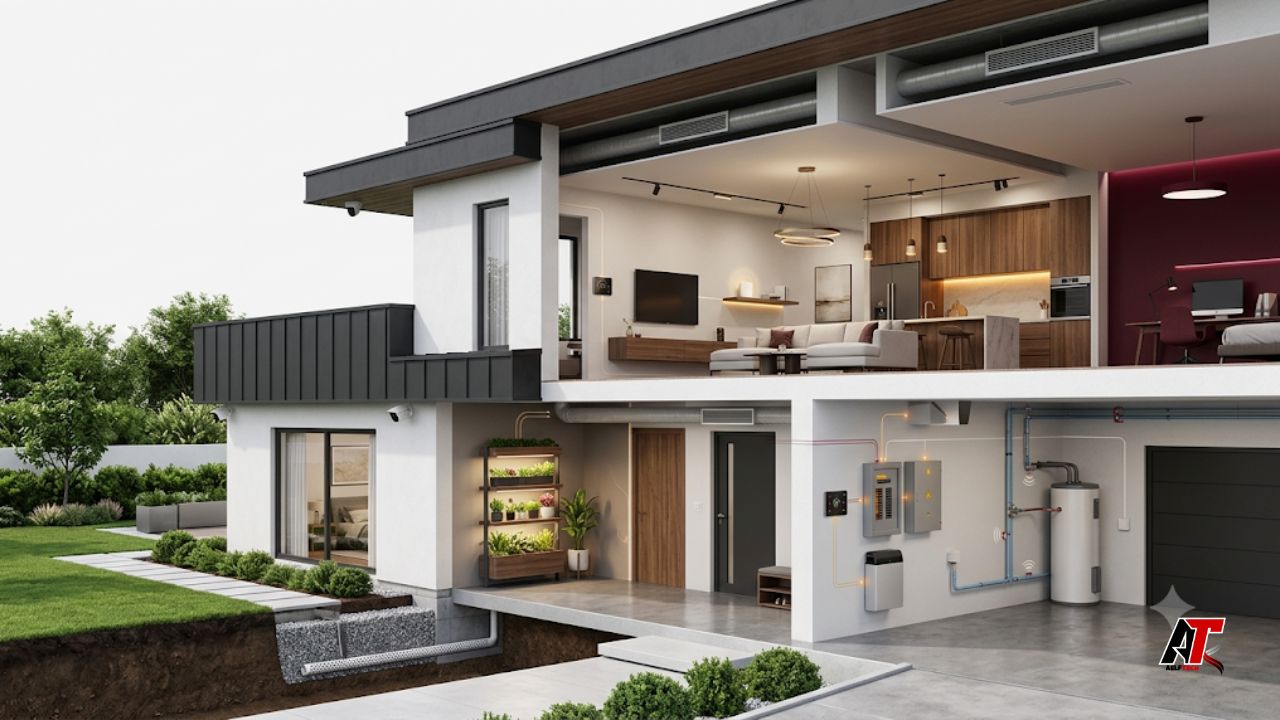
Elite home systems are not simply expensive gadgets or showpiece additions. The best upgrades improve how a property performs every day. They protect the structure, reduce avoidable waste, make rooms more comfortable, simplify routine tasks, and help homeowners respond faster when something goes wrong. In 2026, the most valuable upgrades are increasingly connected: drainage protects the foundation, climate controls manage energy use, leak sensors guard plumbing, and electrical systems support both convenience and resilience.
A high-performing home also feels calmer. Temperatures remain more consistent, outdoor water drains where it should, lighting supports different activities, security is easier to manage, and essential devices stay connected. The goal is not to automate every switch. It is to build a reliable system in which each upgrade solves a real problem and works well with the rest of the property. Homeowners researching technology-led improvements can also explore practical digital planning ideas through aelftech.com while comparing contractors, equipment, and long-term maintenance needs.
This guide explains the elite home systems worth upgrading this year, what benefits they can deliver, and how to prioritize projects without spending money on features that offer little real value.
What Makes a Home System Truly Elite?
An elite system should provide measurable performance, not only a premium appearance. It should solve a recurring issue, improve control, reduce risk, or make maintenance easier. For example, a smart thermostat is useful when it creates better schedules and temperature consistency. A drainage upgrade is valuable when it moves water away from vulnerable areas. A security platform becomes worthwhile when it gives clear alerts without producing constant false alarms.
Before upgrading, identify the property’s weak points. Look for high utility bills, uneven temperatures, standing water, repeated plumbing leaks, poor Wi-Fi coverage, stale indoor air, dark work areas, or security blind spots. These observations turn a broad wish list into a performance plan. The best project is often the one that quietly prevents damage or removes a daily inconvenience rather than the one with the most impressive screen.
1. Professional Drainage and Foundation Water Control
Water management should be near the top of the list because drainage problems can affect landscaping, patios, walkways, crawl spaces, and foundations. Warning signs include pooling after rain, soggy lawn areas, soil erosion, water marks near exterior walls, and downspouts that discharge too close to the home. Cosmetic landscaping alone will not correct a water-flow problem. The solution must be designed around grading, soil conditions, roof runoff, and the location of low areas.
A professionally planned French drain uses a perforated pipe and suitable aggregate or engineered drainage material to collect excess water and redirect it away from a problem zone. Homeowners evaluating options can review Sunrise French drain services to understand how modern drainage systems can reduce pooling while limiting disruption to the landscape. Depending on the property, the complete solution may also include channel drains, catch basins, extended downspouts, sump discharge routing, or corrected grading.
This is an upgrade where design matters more than appearance. A drain placed at the wrong depth or without a safe discharge point may fail even if the installation looks neat. Ask the contractor how water movement was assessed, where the system will release water, what materials are being used, and how the line can be inspected or maintained. Good drainage protects other investments, which makes it a foundational upgrade rather than a decorative one.
2. High-Efficiency HVAC and Intelligent Climate Control
Heating and cooling equipment has a major effect on comfort and household energy use. If the current system is aging, noisy, frequently repaired, or unable to maintain even temperatures, this may be the right year to assess a high-efficiency replacement. Heat pumps are increasingly practical across different climates because they transfer heat rather than creating it directly. Ductless mini-split systems can also be useful for additions, older homes without ductwork, and spaces that need independent temperature zones.
Smart thermostats and room sensors can improve the experience by learning schedules, supporting remote adjustments, and showing usage patterns. However, compatibility must be checked before purchase. In larger homes, zoning can direct conditioned air where it is needed instead of treating every room as identical. Pairing efficient equipment with sealed ducts, balanced airflow, and better insulation often delivers a more noticeable improvement than purchasing the highest-priced model without correcting the building envelope.
3. Whole-Home Leak Detection, Shutoff, and Water Quality
A small plumbing failure can become a major loss when it goes unnoticed. Whole-home leak detection systems monitor unusual water flow and can alert the homeowner through an app. More advanced setups include an automatic shutoff valve that closes the main water supply when the system detects a serious leak pattern. Point sensors can be placed near water heaters, washing machines, dishwashers, toilets, sinks, and mechanical rooms for faster local detection.
Water quality upgrades should be based on testing rather than assumptions. A sediment filter, carbon filtration system, water softener, or reverse-osmosis unit addresses different concerns. The right choice depends on local water chemistry, plumbing materials, taste, hardness, and the contaminants identified by an appropriate test. Premium performance comes from selecting the correct treatment stages and maintaining them, not from installing the largest system available.
4. Layered Lighting and Smart Indoor Growing
Lighting affects visual comfort, safety, productivity, and the atmosphere of a room. An elite lighting plan uses layers instead of relying on one bright ceiling fixture. Ambient lighting provides general illumination, task lighting supports cooking or desk work, and accent lighting highlights art, shelving, architectural details, or outdoor features. Dimmers, occupancy sensors, and scenes can help each room adapt to different activities without unnecessary brightness.
Smart controls are most useful when they simplify routines. A well-designed system can lower lights in the evening, illuminate a hallway when motion is detected, or make the home appear occupied while residents are away. Yet physical switches should remain intuitive for guests and family members. Choose compatible products and avoid building a system that depends on several unrelated hubs.
Homeowners who want fresh herbs or compact food production can also integrate countertop garden systems with automated watering and grow lighting. These systems can be useful where natural sunlight is limited, but placement still matters because bright grow lights may be distracting in bedrooms or offices. The strongest upgrade combines efficient LEDs, sensible timing, accessible controls, and a design that supports the way each space is actually used.
5. Electrical Resilience, Smart Panels, and Backup Power
Modern homes often place more demand on the electrical system than older panels were designed to manage. Electric vehicles, induction cooking, heat pumps, home offices, workshops, and battery storage may all increase load. Before adding high-demand equipment, have a licensed electrician evaluate panel capacity, grounding, surge protection, circuit condition, and local code requirements.
Backup power should be designed around priorities. Some homeowners need only enough capacity for networking, refrigeration, medical equipment, and essential lighting. Others want a standby generator or battery system capable of supporting larger loads. The safest approach is to define critical circuits, estimate realistic runtime, plan fuel or charging needs, and schedule periodic tests. A backup system that has not been exercised or maintained may fail at the exact moment it is needed.
6. Security, Access Control, and Reliable Home Networking
Security performs best as a coordinated system rather than a collection of disconnected cameras. A practical setup may include quality exterior lighting, reinforced doors and strike plates, door and window sensors, cameras covering real entry routes, smoke and carbon monoxide alarms, and controlled access for family members or service providers. Smart locks can simplify temporary access, but they should use strong credentials and retain a dependable physical or offline backup.
The network is the hidden foundation of most smart-home upgrades. A modern router or properly designed mesh network can improve coverage, but access-point placement and wired backhaul are often more important than the product name. Place smart-home devices on an appropriate network segment, use unique passwords, enable multi-factor authentication where available, and update firmware. A secure, stable network allows every connected system to perform as intended.
7. Indoor Air Quality and Balanced Ventilation
A home can be energy efficient and still feel uncomfortable when ventilation is poor. Stale air, cooking pollutants, excessive humidity, dust, and moisture can build up when the property is tightly sealed without a planned airflow strategy. Start with the basics: effective kitchen exhaust, properly vented bathrooms, clean HVAC filters, clear return-air paths, and control of moisture sources.
Monitoring can help identify patterns. Carbon dioxide, particulate, temperature, and humidity readings provide useful clues, but consumer sensors are not a substitute for professional investigation when there is suspected mold, combustion risk, or a serious air-quality concern. The elite approach is balanced: measure conditions, remove pollution sources, ventilate properly, filter effectively, and maintain equipment.
How to Prioritize Elite Home System Upgrades
Begin with risk and infrastructure before appearance. Active leaks, drainage failures, unsafe electrical components, combustion problems, and security weaknesses deserve attention before convenience upgrades. Next, focus on systems that affect daily operating costs and comfort, such as HVAC, insulation, lighting, water controls, and networking. Decorative automation should come after the home is dry, safe, efficient, and reliable.
Request detailed proposals that specify equipment, labor, permits, warranties, commissioning, cleanup, and future maintenance. Ask whether the system will work without an internet connection, whether it can integrate with existing equipment, and what happens if the manufacturer stops supporting the app. Plan upgrades in the correct order. For example, complete drainage and exterior work before restoring landscaping, improve the electrical panel before installing large new loads, and address insulation or duct leakage before choosing HVAC capacity.
Final Thoughts
The most worthwhile elite home systems are the ones that quietly improve performance every day. Professional drainage keeps water away from vulnerable areas. Efficient HVAC and intelligent controls improve comfort. Leak detection reduces response time. Layered lighting supports work and relaxation. Electrical resilience, security, networking, and ventilation make the entire property more dependable.
A successful upgrade plan does not require completing every project at once. Start with the system that presents the greatest risk or creates the most frequent frustration. Choose equipment that can be maintained, select qualified professionals for safety-critical work, and build around open, dependable controls whenever possible. When upgrades are selected as parts of one connected performance strategy, the home becomes easier to manage, more comfortable to live in, and better prepared for changing needs.
Frequently Asked Questions
Which elite home system should be upgraded first?
Start with safety and damage prevention. Correct active water intrusion, electrical hazards, failing HVAC, plumbing leaks, and security vulnerabilities before investing in convenience features. The first project should solve the most serious or expensive recurring problem.
Does a French drain require professional installation?
Some small drainage projects can be handled independently, but difficult grading, foundation water, buried utilities, limited discharge options, and local rules often require professional design. Incorrect slope, depth, or outlet placement can make the drain ineffective.
Should I upgrade HVAC equipment and insulation together?
They should at least be evaluated together. Air sealing, insulation, duct repair, and window conditions influence heating and cooling demand. Improving the building envelope before final equipment sizing can support better comfort and more appropriate system selection.
How can I avoid buying incompatible smart devices?
Choose a primary platform, verify compatibility before purchase, and limit the number of hubs and apps. Confirm that essential controls still work manually. For larger projects, create a device and network plan before installation rather than buying products one at a time.
Leave a Reply