
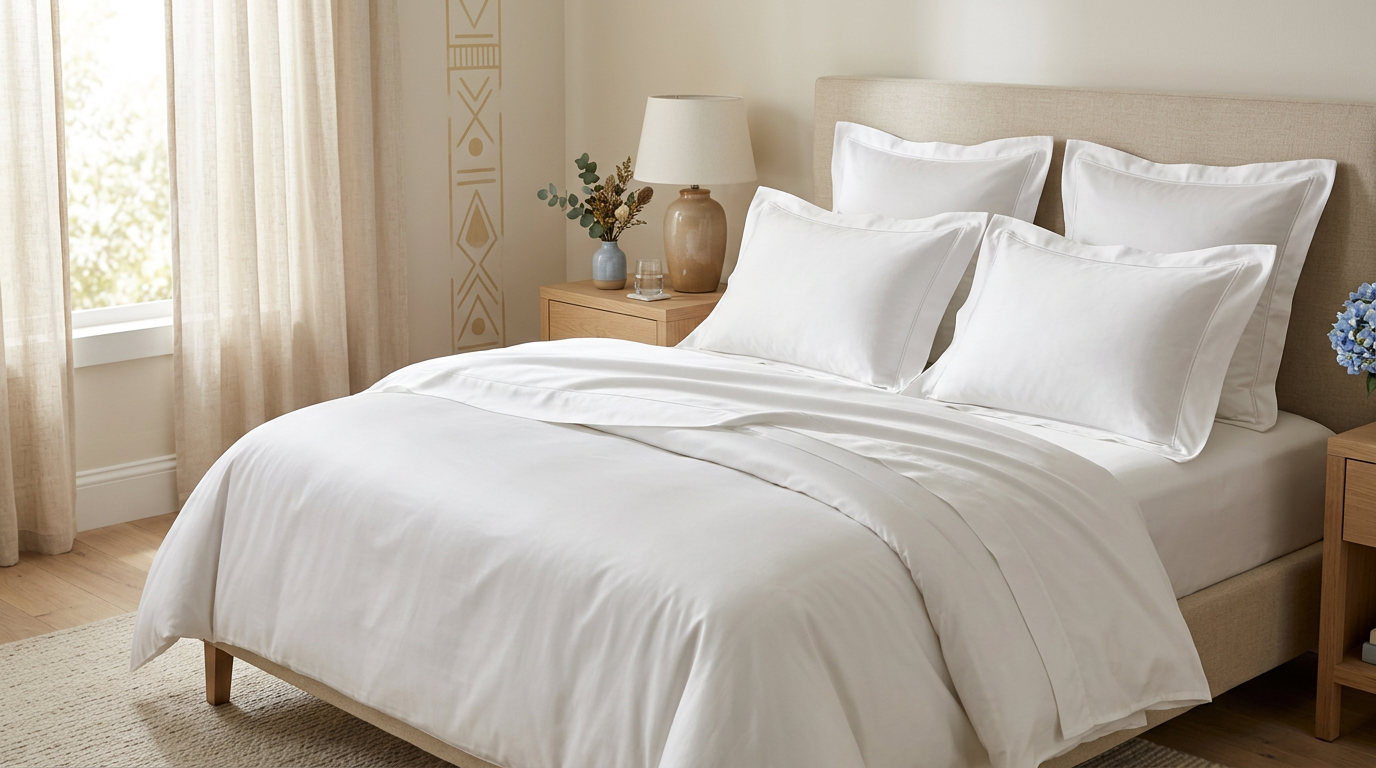
High-quality Egyptian cotton sateen sheets are known for a smooth hand, graceful drape and subtle lustre. Their feel comes from the combination of cotton fibre, yarn quality, weave structure and finishing—not from thread count alone. Genuine origin claims, mattress fit, breathability, construction and proper laundering all influence whether a sheet set delivers lasting comfort. This guide explains what Egyptian cotton and sateen mean, how to read product specifications, which quality signals matter and how to care for sheets without weakening fibres or dulling the finish.
What Are Egyptian Cotton Sateen Sheets?
Egyptian cotton sateen sheets are bed linens described as using cotton grown in Egypt and woven with a sateen structure. The two terms describe different aspects of the fabric.
Egyptian cotton refers to geographic origin. Egyptian-grown cotton includes varieties that can produce long or extra-long fibres, but the country name alone does not communicate every detail about staple length, yarn or manufacturing quality.
Sateen refers to the weave. A sateen construction places more yarn surface on the face of the fabric than a simple one-over, one-under percale weave. This creates a smoother touch, flowing drape and gentle sheen.
The resulting fabric often feels silky without being silk. It remains cotton, with the moisture absorption and easy care commonly associated with cotton bedding. Sateen generally feels denser and slightly warmer than crisp percale, although yarn fineness, thread count and finishing also affect temperature.
Egyptian cotton sateen sheets can vary widely in quality. A premium label does not guarantee long-staple fibre, single-ply yarn, honest thread count or durable finishing. Shoppers need to evaluate the complete specification.
Why Egyptian Cotton Sateen Sheets Feel Different
Fabric feel begins at the fibre level. Longer cotton fibres can be spun into smoother, finer yarn with fewer exposed ends. This can reduce fuzziness and support strength when the yarn and fabric are manufactured well.
The sateen weave adds another layer of smoothness. Longer yarn floats on the surface reflect light and create a more fluid hand. They can also make sateen somewhat more vulnerable to snagging, abrasion and pilling than a tightly balanced percale in certain conditions.
Finishing affects the first impression. Manufacturers may use calendaring, mercerisation, softeners and other processes to alter lustre, colour and touch. Some sheets feel exceptionally soft out of the package because of finishing agents, while others become softer after repeated washing.
The quality of Egyptian cotton sateen sheets therefore depends on:
- Fibre origin and staple length
- Yarn fineness
- Ply
- Thread density
- Weave consistency
- Finishing
- Dyeing
- Sewing
- Elastic and fitted-sheet construction
- Quality control
No single number replaces this complete picture.
9 Ways to Choose Egyptian Cotton Sateen Sheets
The following criteria help separate useful product information from luxury marketing language.
1. Verify the Fibre Content and Origin Claim
Read the sewn-in label and product description carefully. “Egyptian cotton” can mean different things if the product contains a blend or if the term is used without a percentage.
Look for clear wording such as 100% cotton and a separate, specific claim about Egyptian origin. If the sheets contain polyester, viscose, another cotton or an elastic fibre, that information should appear in the fibre disclosure.
Authenticity programmes and supply-chain certification can provide additional confidence that the cotton was grown in Egypt. Certification of origin is not the same as a guarantee of superior construction, but it makes the geographic claim more credible.
When comparing Egyptian cotton sateen sheets, ask:
- Is the fabric 100% cotton?
- Is all cotton claimed to be Egyptian-grown?
- Is a recognised origin mark or certification provided?
- Is the manufacturer or mill identified?
- Are fibre and care labels consistent with online claims?
A vague phrase such as “Egyptian-quality cotton” does not necessarily mean cotton from Egypt.
2. Look Beyond Thread Count
Thread count traditionally describes the number of lengthwise and crosswise threads in one square inch of fabric. It can be useful, but counting practices differ.
Some manufacturers count each strand in a multi-ply yarn as a separate thread, producing an impressive number without creating finer or stronger fabric. Very high advertised counts can also indicate dense, heavy construction that sleeps warmer.
Egyptian cotton sateen sheets in a moderate thread-count range can feel luxurious when made from fine, long-staple, single-ply yarn. A lower honest count can outperform a much higher inflated count.
Ask whether the yarn is single-ply and whether the number follows a recognised counting method. Product transparency matters more than chasing the highest figure.
Thread count also interacts with weave. Sateen naturally presents a smooth surface and can feel substantial at counts that remain breathable. Choose according to desired weight and warmth.
3. Understand Staple Length and Yarn Quality
Staple length refers to the length of an individual cotton fibre. Longer fibres can create smoother yarn with fewer protruding ends and fewer joins.
Terms such as long-staple and extra-long-staple are useful only when supported by credible sourcing and manufacturing information. Egyptian origin does not mean every cotton fibre belongs to the longest category.
Yarn quality also depends on:
- Fibre preparation
- Combing
- Spinning method
- Yarn twist
- Uniformity
- Ply
Combed cotton has shorter fibres and impurities removed before spinning. Ring-spun or other fine yarns can create a smoother, stronger fabric when produced well.
Egyptian cotton sateen sheets made with good yarn may resist pilling better and soften gracefully. Poor yarn can fuzz and pill despite a premium fibre claim.
4. Decide Whether Sateen Matches Your Sleep Style
Sateen is smooth, drapey and softly lustrous. Many sleepers describe it as buttery or silky. It tends to conform more closely to the body and can feel warmer than crisp percale.
Sateen may suit:
- Sleepers who prefer a smooth surface
- People who dislike crisp or rustling sheets
- Cooler bedrooms
- Those who want elegant drape
- Shoppers who prefer a subtle sheen
Percale may suit hot sleepers who prefer a cool, matte and crisp feel. Linen offers a textured, breathable alternative, while jersey feels soft and stretchy.
Egyptian cotton sateen sheets are still breathable cotton, but a dense weave and high thread count can retain more warmth. Bedroom temperature, mattress protector, duvet and sleepwear also influence comfort.
If uncertain, purchase from a retailer with clear return terms or start with pillowcases to experience the fabric.
5. Measure the Mattress and Pocket Depth
Sheet size labels are not enough. Mattresses vary in height, and toppers or pads add depth. A fitted sheet that is too shallow can pull off corners, while an excessively deep pocket can bunch.
Measure:
- Mattress width
- Mattress length
- Total height
- Added topper depth
- Mattress protector thickness
Compare these dimensions with the actual product specifications. Pocket depth describes the fitted-sheet side panel, but usable fit can depend on elastic, seam construction and shrinkage.
Egyptian cotton sateen sheets should have enough allowance to tuck under the mattress without excessive loose fabric. Full-perimeter elastic can provide more consistent grip than elastic only at the corners.
For adjustable beds, split kings and deep pillow-top mattresses, verify the exact configuration. Some sets bundle standard components that may not match unusual bed designs.
6. Examine Set Contents and Construction
A sheet set may include a fitted sheet, flat sheet and one or two pillowcases, but contents differ by size and brand. Extra pillowcases may be sold separately.
Construction details affect daily use:
- Full-perimeter elastic
- Reinforced corners
- Deep hems
- Envelope pillow closures
- Labelled top or bottom edges
- Strong, even stitching
- Generous flat-sheet dimensions
- Shrinkage allowance
Egyptian cotton sateen sheets with poor seams or weak elastic can become frustrating even when the fabric feels excellent.
Check whether pillowcases fit standard, queen or king pillows. A case that is too short exposes the pillow, while an oversized case can bunch.
Decorative hem stitching should be secure and smooth. Loose threads at purchase may signal weak quality control.
7. Evaluate Certifications and Chemical Testing
Textile certifications can address different concerns. One may verify fibre origin, another may test finished fabric for selected harmful substances, and another may address organic production or social and environmental criteria.
Do not treat all seals as interchangeable. Ask:
- What does the certification cover?
- Does it apply to the fibre, mill or finished product?
- Is the certificate current?
- Can the certification number be verified?
- Does it cover every colour and size?
Egyptian cotton sateen sheets described as organic require credible organic textile certification if the claim is important to the buyer. Origin certification alone does not establish organic production.
Likewise, a chemical-safety certification does not prove Egyptian cotton origin or guarantee durability. Each claim should be evaluated on its own terms.
8. Review Care Requirements Before Buying
Cotton sheets are generally washable, but excessive heat, bleach and harsh products can shorten their life. Dark colours and special finishes may have additional requirements.
Check the label for:
- Wash temperature
- Bleach restrictions
- Dryer setting
- Ironing
- Dry-cleaning guidance
- Washing before first use
Egyptian cotton sateen sheets often benefit from washing in cool or warm water with a mild detergent and drying at a moderate temperature. Remove them promptly to limit wrinkles.
Fabric softener can coat fibres and reduce absorbency. Dryer sheets may also leave residue. Overloading the washer creates friction and prevents thorough rinsing.
If the care routine does not fit the household, choose a different fabric. Premium sheets only provide value when they can be maintained consistently.
9. Compare Warranty, Returns and Value
Comfort is subjective. A fabric described as silky may feel too warm or slippery to another sleeper. Review the return period, washing restrictions and restocking terms before opening the package.
Some retailers do not accept washed bedding, while others offer sleep trials. Hygiene rules can limit returns, so read the policy in advance.
Value includes more than purchase price:
- Fabric quality
- Set contents
- Mattress fit
- Colourfastness
- Pilling resistance
- Elastic durability
- Care cost
- Return protection
- Warranty
Egyptian cotton sateen sheets should be compared on price per complete set, not a headline price for one component. A set with stronger construction and accurate sizing may offer better long-term value than a cheaper product that needs early replacement.
Egyptian Cotton Sateen Sheets vs. Percale Sheets
Sateen and percale are weave structures, not fibre types. Both can be made from Egyptian cotton or another cotton.
Sateen feel
Sateen feels smooth, soft and drapey with a light sheen. It can feel slightly warmer and may show fewer wrinkles because of its flowing surface.
Percale feel
Percale feels crisp, cool and matte. It tends to hold away from the body more and may appeal to hot sleepers.
Durability considerations
Percale’s balanced weave can resist abrasion well. Sateen’s longer surface floats create smoothness but can be more susceptible to snags or pilling when exposed to friction.
Appearance
Sateen creates a polished, elegant bed with rich colour and shine. Percale produces a fresh, tailored hotel-like appearance.
Choose Egyptian cotton sateen sheets if silky softness and drape matter more than a crisp feel. Choose percale if coolness and structure are priorities.
Egyptian Cotton Sateen Sheets and Thread Count
Thread count should be interpreted alongside yarn quality. A 400-thread-count sheet made with fine single-ply yarn can feel smoother and last longer than an 800-thread-count sheet made with coarse multi-ply yarn.
Extremely high thread counts may be achieved by:
- Counting each ply separately
- Using finer threads packed densely
- Adding picks or inserted yarns
- Applying marketing methods that differ from ordinary counting
Density affects airflow and weight. A high count can create a substantial fabric that feels luxurious to cool sleepers but heavy to hot sleepers.
When comparing Egyptian cotton sateen sheets, look for a believable specification and consistent consumer feedback about pilling, heat and shrinkage. Do not assume the highest number represents the best fabric.
Authentic Egyptian Cotton: What to Look For
Authenticity matters because the Egyptian cotton name commands a premium. Cotton grown elsewhere can also be excellent, but it should be labelled accurately.
Look for:
- Clear 100% Egyptian cotton wording
- Recognised Egyptian cotton certification or logo
- Traceability information
- Consistent fibre labels
- Transparent brand claims
- Reputable retailer and manufacturer
Be cautious when a low-priced set claims a luxury fibre, extremely high thread count and extensive finishing without explaining sourcing.
Certification verifies origin under its programme; it does not automatically prove the sheet will feel right for every buyer. Weave, yarn, finishing and construction still matter.
Egyptian cotton sateen sheets should earn their premium through both credible sourcing and good manufacturing.
How to Wash Egyptian Cotton Sateen Sheets
Always follow the product label. A generally gentle routine includes these steps:
- Separate sheets from towels and rough garments.
- Close zippers on other items or wash bedding alone.
- Use a mild detergent in the recommended amount.
- Choose cool or warm water unless the label states otherwise.
- Avoid chlorine bleach unless specifically permitted.
- Select a normal or gentle cycle based on fabric guidance.
- Dry at low or moderate heat.
- Remove promptly while slightly warm.
- Fold or place on the bed after complete drying.
High heat can shrink cotton and weaken elastic. Too much detergent can leave a dull residue. Insufficient rinsing may make fabric feel stiff.
Wash Egyptian cotton sateen sheets often enough to remove body oils and skincare residue. Frequency depends on household use, climate, pets and personal needs.
Drying and Ironing Sateen Sheets
Line drying reduces heat exposure but can create a firmer texture. A brief tumble after line drying may soften the fabric.
Machine drying is convenient, but avoid baking sheets after they are dry. Overdrying contributes to shrinkage and fibre wear.
Sateen’s sheen can hide some wrinkles. If ironing is desired, follow the care label and use the appropriate temperature while fabric is slightly damp.
Do not iron elastic directly. Store sheets only when fully dry to prevent odour and mildew.
Rotating between two or three sets gives each set time to rest and reduces repeated rapid washing. Fold Egyptian cotton sateen sheets in a cool, dry space away from direct sun.
How to Prevent Pilling
Pilling occurs when fibres loosen, tangle and form small balls on the surface. It can be affected by fibre length, yarn, weave, finishing, friction and care.
Reduce pilling by:
- Washing sheets separately
- Avoiding abrasive towels and denim
- Using the correct detergent amount
- Skipping harsh bleach
- Drying at moderate heat
- Keeping rough skin and nails from snagging fabric
- Managing pet claws
- Avoiding excessive friction from unsuitable mattress protectors
Early shedding after the first wash can occur, but persistent heavy pilling may reflect yarn or manufacturing quality.
Egyptian cotton sateen sheets with longer, well-spun yarn often resist pilling better, but no cotton fabric is immune to wear.
Colour, Dye and Finish Considerations
Sateen reflects light, so colour can appear richer and change with viewing angle. Dark shades may show lint, skincare residue and fading more readily.
Wash dark and light colours separately. Sun exposure can fade sheets, particularly when line dried for long periods.
White sheets can be easier to coordinate and may tolerate certain stain treatments, but bleaching restrictions still apply. Optical brighteners can change appearance and may not suit every user.
Some wrinkle-resistant finishes alter hand feel and chemical exposure. If sensitive skin is a concern, review product disclosures and wash sheets before use.
Colour samples on screens are approximate. Egyptian cotton sateen sheets may look different under warm bedroom lighting than in product photography.
Choosing the Right Sheet Colour
A bedroom palette should consider walls, flooring, duvet, headboard and natural light.
White and ivory
Create a classic, hotel-inspired look. Ivory may coordinate better with warm neutrals.
Blue and green
Can feel calm and work well with wood, grey and coastal palettes.
Grey and taupe
Provide versatile neutral options, but undertones should match the room.
Deep colours
Showcase sateen lustre and create a dramatic bed. They may reveal lint and fading more clearly.
Egyptian cotton sateen sheets with a subtle sheen make colour appear multidimensional. Order swatches when available, especially for expensive bedding.
Fitted-Sheet Problems and Solutions
A fitted sheet that slips may be too shallow, too loose or poorly elasticised. Measure the mattress and account for shrinkage.
If the fitted sheet is difficult to install:
- Confirm the correct size
- Check top and bottom labels
- Measure mattress depth
- Remove unnecessary thick layers
- Do not force seams beyond their design
If it bunches:
- Confirm that pocket depth is not excessive
- Tuck elastic fully beneath corners
- Check whether the mattress is narrower than standard
- Consider sheet straps only if they do not damage fabric or mattress
High-quality Egyptian cotton sateen sheets should provide clear dimensions. “Deep pocket” is not a universal measurement, so always check the stated range.
Egyptian Cotton Sateen Sheets for Hot Sleepers
Sateen can work for some hot sleepers because cotton absorbs moisture, but it generally feels denser and warmer than percale.
Choose a lighter sateen with a moderate thread count and breathable bedding layers. Avoid combining heavy sheets with a dense mattress protector and warm duvet if overheating is a concern.
Bedroom temperature, humidity, mattress foam and sleepwear often matter more than sheets alone.
Hot sleepers seeking maximum airflow may prefer Egyptian cotton percale, lightweight linen or another tested option. Those who value a smooth feel may still prefer sateen despite the additional warmth.
A return policy is particularly useful when buying Egyptian cotton sateen sheets for temperature-sensitive sleep.
Egyptian Cotton Sateen Sheets for Sensitive Skin
Smooth sateen can reduce the sensation of rough friction for some people. However, no sheet can diagnose or treat a skin condition.
Sensitive shoppers may consider:
- Clear fibre labels
- Finished-product chemical testing
- Fragrance-free laundering
- Mild detergent
- Thorough rinsing
- Avoiding fabric softener
- Washing before first use
If skin irritation persists, consult a healthcare professional. Detergent, skincare, sweating, pets and other bedding can all contribute.
Egyptian cotton sateen sheets marketed as hypoallergenic should be evaluated carefully because the term can be vague. Specific materials and certifications are more informative.
Common Buying Mistakes
Shopping by thread count alone
Fibre, yarn, weave and construction are equally important.
Assuming every Egyptian claim is certified
Look for credible origin verification and clear fibre percentages.
Ignoring pocket depth
An excellent fabric provides little value if the fitted sheet will not stay on the mattress.
Confusing sateen with satin
Sateen usually refers to a cotton weave, while satin can be made from silk or synthetic fibres.
Buying an incomplete set
Check pillowcase count, flat-sheet inclusion and exact dimensions.
Using high dryer heat
Overdrying can shrink cotton, damage elastic and accelerate wear.
Washing with towels
Rough, lint-producing fabrics increase abrasion and pilling.
Expecting silk-like sheets to sleep as cool as percale
Sateen generally feels smoother and warmer than crisp percale.
Questions to Ask Before Buying
- Is the fabric 100% Egyptian-grown cotton?
- Is origin certification available?
- Is the yarn single-ply?
- What is the thread-count method?
- What are the exact fitted-sheet dimensions?
- How deep are the pockets?
- Which pieces are included?
- Has the fabric been tested for selected harmful substances?
- What shrinkage should be expected?
- Can washed sheets be returned?
- What does the warranty cover?
- Which care routine is recommended?
Transparent answers help shoppers compare Egyptian cotton sateen sheets without relying on prestige language.
Conclusion
Egyptian cotton sateen sheets can deliver a smooth, drapey and softly lustrous sleep surface when credible fibre sourcing is paired with fine yarn, honest thread count and careful construction. The Egyptian cotton name describes origin, while sateen describes the weave; neither term alone guarantees quality.
Shoppers should verify fibre content, evaluate staple and ply claims, measure the mattress and review pocket depth, set contents, certifications and care requirements. A moderate, believable thread count made with strong single-ply yarn can outperform a much higher marketing number.
Care is equally important. Wash Egyptian cotton sateen sheets with a mild detergent, avoid harsh chemicals and excessive heat, and keep rough fabrics out of the load. With the right fit and maintenance, a well-made set can become softer and more comfortable while retaining its elegant appearance.
FAQs
1. What are Egyptian cotton sateen sheets?
They are cotton sheets described as using Egyptian-grown fibre and a sateen weave that creates a smooth feel, flowing drape and subtle sheen.
2. Are Egyptian cotton sateen sheets good for hot sleepers?
They are breathable but generally feel warmer than percale. Hot sleepers may prefer a lighter sateen with a moderate thread count or choose percale.
3. What thread count is best for sateen sheets?
There is no single perfect number. Fibre and yarn quality matter more than an extreme count, and a moderate single-ply fabric can perform exceptionally well.
4. How can I tell if Egyptian cotton is authentic?
Look for clear 100% fibre wording, credible origin certification, traceability information and consistent labels from a reputable manufacturer or retailer.
5. How should Egyptian cotton sateen sheets be washed?
Follow the label, use a mild detergent, wash separately in cool or warm water and dry at low or moderate heat without overdrying.
6. What is the difference between sateen and percale?
Sateen feels smooth, drapey and lustrous, while percale feels crisp, matte and cooler. Both are weave types and can use the same cotton fibre.
Leave a Reply