
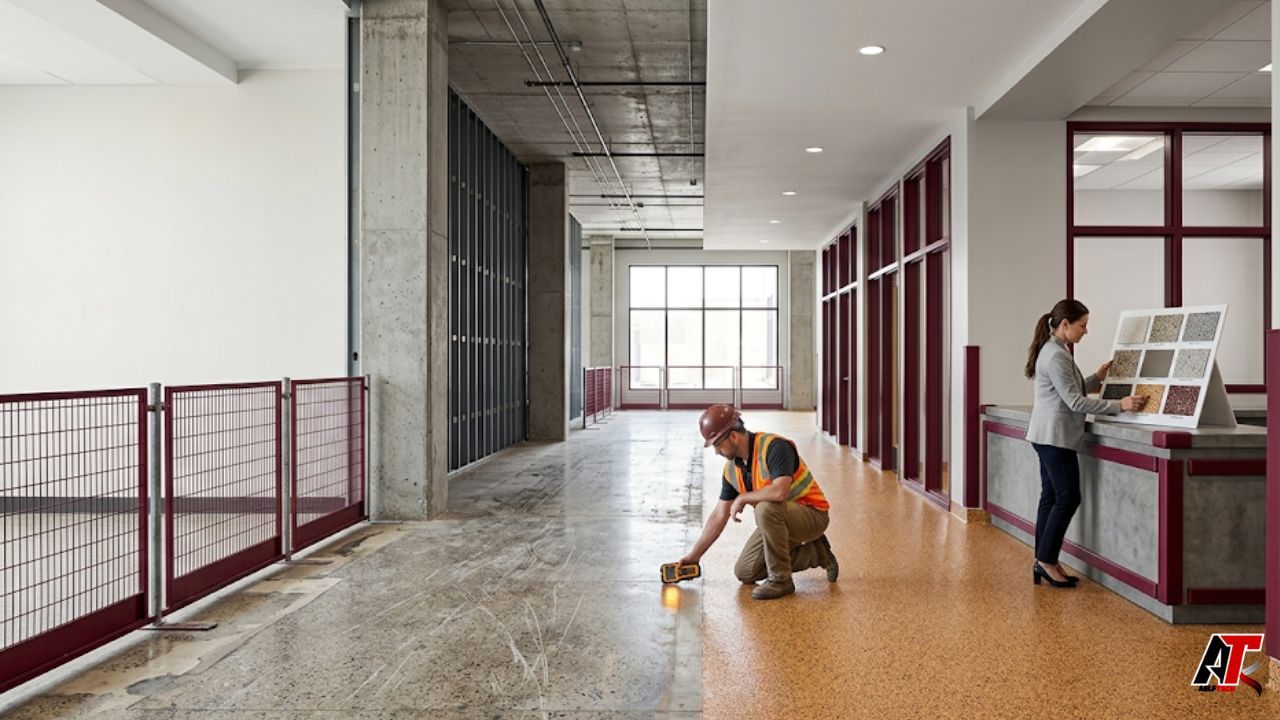
Commercial renovation often treats durability as a product label: choose the “heavy-duty” finish, install it, and expect years of trouble-free service. In practice, surfaces fail for more complicated reasons. Foot traffic, rolling loads, cleaning chemicals, moisture, sunlight, impact, poor substrate preparation, and rushed curing can all shorten service life. A finish may perform beautifully in a boutique showroom yet deteriorate quickly in a restaurant kitchen, warehouse corridor, clinic, or public restroom.
Rethinking surface durability in commercial renovation means looking beyond initial hardness or warranty length. The better approach is to design a complete surface system around real operating conditions. That includes the substrate, primer, finish, joints, edges, installation method, cleaning plan, and repair strategy. When these elements work together, a renovated space stays safer, looks professional for longer, and avoids the repeated downtime that comes with premature replacement.
Why Surface Durability Needs a Broader Definition
Durability is not simply resistance to scratching. A commercial surface may need to withstand abrasion from grit, repeated impact from carts, chemical exposure, staining, thermal movement, standing water, ultraviolet light, and frequent disinfection. The priority changes by location. A lobby must preserve appearance under tracked-in dirt, while a commercial kitchen needs traction, chemical resistance, and seamless detailing around drains. A loading area may care more about impact and rolling-load performance than decorative perfection.
The most durable option is therefore the one that remains functional under the specific combination of stresses in that zone. This is why blanket specifications often disappoint. Using one flooring, wall coating, or countertop material throughout an entire building may simplify purchasing, but it can create weak points where use conditions are more severe. A zone-based specification gives each surface the protection it actually needs without overspending in low-risk areas.
Start with Use Conditions, Not Product Samples
Before comparing colors and finishes, map how the space operates. Record expected footfall, cart and equipment movement, spill types, cleaning frequency, temperature changes, exposure to exterior doors, and the possibility of moisture rising through concrete. Ask staff where previous surfaces failed and what maintenance tasks are difficult. Their observations often reveal recurring issues—such as worn turning points, chipped corners, stained grout, or coatings that become slippery after cleaning—that are easy to miss during a short site visit.
Create a simple risk profile for every important area. Classify traffic as light, moderate, heavy, or intensive; identify whether loads are static or rolling; and list the chemicals or contaminants likely to contact the surface. Include operational realities such as overnight cleaning, limited shutdown windows, and whether the facility can tolerate odors during installation. This profile becomes a more reliable basis for material selection than marketing terms alone.
Treat the Substrate as Part of the Finish
Many visible surface failures begin below the finished layer. Weak concrete, residual adhesive, cracks, dust, trapped moisture, uneven movement, or incompatible primers can cause bubbling, delamination, telegraphing, and joint failure. Covering these problems with a premium material does not remove them. In fact, a dense coating can make moisture-related problems more obvious because vapor pressure has fewer paths to escape.
A durable renovation should include substrate testing, repair, cleaning, and profiling in the written scope. Concrete may require moisture evaluation and mechanical preparation; timber or board substrates may need reinforcement and movement control; existing tile must be checked for hollow or loose areas. Mockups are especially valuable when coating over an unfamiliar substrate. They confirm adhesion, appearance, texture, and cure before the full installation begins.
Match Surface Systems to Commercial Zones
High-traffic floors usually benefit from systems that balance wear resistance, cleanability, traction, and repairability. Resilient sheet products can reduce joints in healthcare or education settings. Porcelain tile offers strong wear performance but places greater importance on grout and movement joints. Polished or coated concrete can work well where the slab is sound and the detailing is carefully managed. Resinous systems are useful when a seamless surface, fast cleaning, or chemical resistance is a priority.
Decorative broadcast systems can combine visual variation with practical wear performance when the primer, flake layer, and topcoat are properly selected. For example, Stone Coat flake flooring offers multiple polymer flake blends intended to add color and texture within a coating system. The decorative layer should not be evaluated alone: substrate preparation, moisture control, broadcast coverage, topcoat thickness, cure, and optional traction additives all influence the finished floor’s long-term behavior.
Do Not Ignore Walls, Counters, and Contact Points
Flooring receives most of the attention, yet commercial interiors often show wear first on corners, wall bases, service counters, doors, and millwork. Cleaning equipment strikes exposed edges. Bags and carts rub against lower walls. Moisture enters unsealed joints around sinks, splash zones, and service counters. A beautiful renovation can begin to look neglected when these small contact points chip or swell.
Specify protection where damage is predictable. Options include impact-resistant wall panels, washable high-performance coatings, replaceable corner guards, continuous coved bases, sealed countertop edges, and durable kick plates. Details should also support repair. A modular wall panel or replaceable edge strip can be renewed without closing an entire room, which may produce better lifecycle value than a monolithic finish that is difficult to patch discreetly.
Balance Hardness with Flexibility and Safety
Harder is not always better. Very rigid finishes may resist scratching but crack when the substrate moves or when heavy objects strike a weak point. Softer surfaces may absorb impact but show indentation under concentrated loads. The right choice depends on how the surface and substrate behave together. Movement joints, flexible transitions, edge detailing, and compatible repair materials are often as important as the headline strength of the finish.
Safety must remain part of durability planning. A glossy surface that becomes slippery when wet is not successful simply because it resists wear. OSHA’s walking-working surface requirements emphasize keeping floors clean, dry, and free from hazards, while wet or spill-prone areas may also require appropriate surface texture and maintenance controls. Evaluate traction under realistic conditions, including the cleaners, footwear, grease, water, or dust present in the facility.
Use Testing, Mockups, and Quality Control
Product data should be translated into project-specific acceptance criteria. Depending on the material, teams may review abrasion resistance, impact performance, stain resistance, chemical resistance, indentation, adhesion, and slip-related test results. ASTM F510/F510M, for example, addresses abrasion resistance testing for resilient floor coverings and illustrates why wear should be assessed through recognized methods rather than vague claims. The applicable standard will vary by surface type, so specifications should reference the correct test and edition.
Field quality control is equally important. Approve a representative mockup, document substrate conditions, verify batch numbers, measure environmental conditions, and protect the work through the full cure period. Inspect edges, penetrations, drains, joints, and transitions—not just the open field of the surface. Many costly callbacks originate at interfaces where two materials meet or where installation crews had to work around existing equipment.
Design Maintenance Before Installation
A durable surface can be damaged by the wrong maintenance program. Highly alkaline cleaners, aggressive pads, waxes, solvents, or excessive water may attack a finish or leave residues that change traction and appearance. Dirt also acts as an abrasive when it is trapped under shoes and wheels. Entry matting, routine dry soil removal, prompt spill response, and manufacturer-approved cleaners can therefore extend service life as much as a more expensive material.
Ask for maintenance instructions during submittal review, not after handover. Confirm which products are permitted, how often deep cleaning is required, whether protective coatings must be renewed, and how localized repairs should be performed. Train the cleaning team and keep a small quantity of matching material for future touchups. When maintenance is realistic, documented, and budgeted, the specified durability has a much better chance of being achieved.
Compare Lifecycle Cost, Downtime, and Repairability
Lowest installed cost rarely tells the full story. Commercial surfaces create costs through cleaning labor, periodic recoating, replacement, business interruption, waste removal, and disruption to occupants. A system that costs more initially may be more economical if it cures quickly, needs less frequent maintenance, or can be repaired in small sections. Conversely, a premium finish may be poor value if the building cannot provide the substrate preparation or shutdown time it requires.
Use a lifecycle comparison that includes expected service interval, routine maintenance, planned renewal, repair access, and downtime. Consider whether future color matching will be possible and whether damaged components can be replaced without disturbing adjacent work. For more practical renovation and property-improvement guidance, readers can explore aelftech.com. The goal is not to select the most expensive surface, but the system that delivers dependable performance at the lowest total operational burden.
A Practical Specification Framework
A strong commercial renovation specification begins with performance requirements and site conditions. Define the use zone, substrate, expected traffic, chemical exposure, moisture conditions, desired texture, cleaning method, and acceptable downtime. Then identify compatible system components and require installers to follow preparation, coverage, cure, and environmental limits. Avoid mixing products from different systems unless compatibility is confirmed in writing.
Finally, assign responsibility for testing and approval. State who evaluates moisture, repairs cracks, approves mockups, verifies traction, and signs off on completed work. Include closeout documents, maintenance instructions, warranties, and repair procedures. This framework turns “durable” from a sales adjective into a measurable project outcome that owners, designers, contractors, and facility teams can manage together.
Frequently Asked Questions
What is the most durable surface for a commercial renovation?
There is no single material that is best for every building. The most durable option is the system matched to the actual traffic, loads, moisture, chemicals, cleaning methods, safety needs, and substrate conditions of the space. Zone-based selection usually performs better than using one finish everywhere.
How can a renovation team prevent premature coating failure?
Begin with substrate inspection and testing, then use the manufacturer’s required preparation and compatible primers. Repair cracks and weak areas, control moisture, install a representative mockup, document environmental conditions, and protect the surface until it has fully cured. Skipping preparation or reopening too early commonly undermines otherwise suitable coatings.
Are decorative flake floors suitable for commercial areas?
They can be suitable for many commercial and service environments when the complete system is designed for the use. Performance depends on the substrate, primer, broadcast coverage, topcoat, texture, cure, cleaning plan, and exposure conditions. Always review technical data and confirm that the selected system meets project-specific safety and operational requirements.
Conclusion
Rethinking surface durability in commercial renovation means designing for the building people actually use, not the showroom sample they first admire. A successful surface is supported by a sound substrate, realistic performance criteria, careful installation, safe texture, compatible cleaning, and an achievable repair plan. When teams assess each zone, verify the full system, and compare lifecycle cost rather than purchase price alone, surfaces stay attractive and functional for longer. The result is a renovation that protects operations, reduces avoidable waste, and delivers a more dependable return on investment.
Leave a Reply