
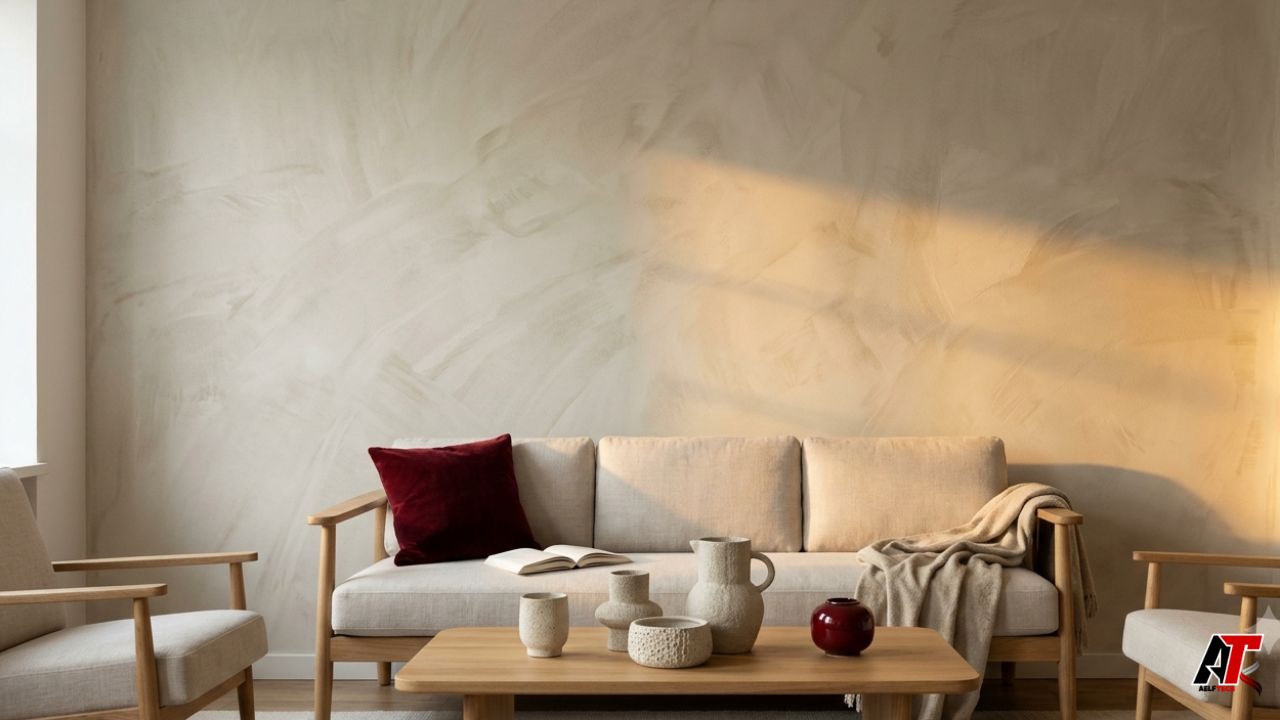
Perfectly flat walls can look clean, but they do not always make a room feel memorable. Natural finishes create visual depth through gentle tonal changes, brush movement, and mineral texture. Instead of covering a surface with one uniform colour, lime-based finishes react with light throughout the day. The result can feel calm in the morning, softly dramatic in the evening, and more tactile than conventional emulsion paint.
CalceTerra Lime Paint is designed for homeowners, designers, and decorators who want that layered character without turning a room into a themed space. Its appeal lies in restraint: muted colour, mineral variation, and texture that becomes part of the architecture. Used thoughtfully, it can enrich modern interiors, period properties, hospitality spaces, and selected exterior surfaces while remaining visually timeless.
What Makes CalceTerra Different?
According to Stucco Veneziano, CalceTerra is a natural wall covering based on lime and natural sand. The product is supplied as a powder containing natural lime and white Carrara marble, then mixed with water for application. The manufacturer describes it as suitable for interior and exterior design, with natural pigments and textured finishes that give walls more depth than a standard flat coating.
Its collection is built around four fibre-inspired textures. Cotton is described as silky and elegant. Linen creates a lightly wrinkled softness. Jute has a more rustic mineral appearance, while Hemp incorporates natural hemp for a coarser, organic effect. These options allow the finish to move from quiet and refined to visibly tactile without relying on printed patterns or artificial effects.
How Lime Paint Creates Visual Depth
Conventional paint is usually judged by how evenly it hides the surface beneath it. Lime-based finishes behave differently. Slight variations in absorption, brush direction, drying, and mineral content produce gentle movement across the wall. These shifts are not normally defects; they are central to the finish. The surface gains a softly mottled character that changes with the light.
The texture remains more architectural than decorative. It can make a plain wall feel handcrafted, but it does not need ornate furniture or traditional styling. In a minimalist room, the mineral movement prevents large neutral surfaces from feeling empty. In a period room, it can sit naturally beside timber, stone, plaster details, and aged metals.
A Natural Palette With More Range Than Expected
Lime finishes are often associated with chalky white, warm cream, and pale earth colours. Those tones remain popular because they show texture gently and work with many materials. CalceTerra also offers a wider palette through natural sands. Stucco Veneziano states that 20 Natural Sands can be used to create 60 shades across the collection.
The best colour is not always the most striking sample. Lime colour changes with wall orientation, daylight, lamps, floor tone, and nearby furnishings. A muted sand may appear golden in a south-facing room and cooler in a shaded hallway. Large sample areas are therefore essential. Test the intended texture and colour on the wall, then observe it in morning, afternoon, and evening light before ordering.
Choosing Between Cotton, Linen, Jute, and Hemp
Cotton works well when the goal is softness rather than obvious texture. It can suit bedrooms, formal sitting rooms, and calm contemporary spaces where the wall should feel elevated but not rustic. Linen adds more visible movement and pairs naturally with woven fabrics, pale woods, plaster lighting, and relaxed interiors.
Jute creates a stronger mineral identity. It can bring warmth to feature walls, dining rooms, boutique spaces, and interiors using stone, dark timber, or aged metal. Hemp has a more organic personality and can work in earthy, biophilic, or craft-led schemes. Because texture becomes more noticeable under side lighting, the final decision should consider both the room style and the position of windows and wall lights.
Where the Finish Works Best
CalceTerra can create a strong result on a full room, a single feature wall, an entrance, a fireplace surround where the substrate and heat conditions permit, or a commercial focal area. Its muted movement is particularly effective in spaces that need warmth without busy wallpaper. It can also help connect new furniture with older architectural elements.
Not every wall needs the same level of texture. A heavily furnished room may benefit from the quieter Cotton or Linen finish. A simple hallway or dining room can carry Jute or Hemp more comfortably. High-contact zones, splash areas, and surfaces exposed to frequent cleaning need extra consideration. Confirm whether the chosen system requires a compatible protective treatment and whether that treatment will alter the final colour or sheen.
Breathability and Older Buildings
One reason lime finishes remain important is their relationship with moisture. Historic England advises that lime render, stucco, masonry, and old plaster may require breathable coatings that allow moisture to evaporate rather than trapping it behind an impermeable paint film. This can be especially relevant in traditional buildings designed to manage moisture through permeable materials.
Breathability should not be confused with a cure for damp. A leaking roof, failed gutter, plumbing problem, rising moisture, or inadequate ventilation must be diagnosed and corrected. Decorative paint cannot solve an active building defect. Owners of listed buildings or properties containing historic decoration should also seek appropriate conservation advice before removing old finishes or changing the wall system.
Surface Preparation Determines the Final Look
Mineral finishes reveal the quality of the surface beneath them. Cracks, unstable plaster, loose paint, greasy marks, and inconsistent repairs can affect absorption and appearance. The wall should be sound, clean, and compatible with the specified system. Existing glossy or non-porous coatings may need a suitable primer or preparation layer rather than direct application.
Do not assume every wall can be treated in the same way. New plaster, lime plaster, gypsum board, painted walls, brick, concrete, and exterior masonry have different requirements. Follow the current product technical guidance and ask the supplier about the exact substrate. A test area can confirm adhesion, colour, texture, and drying behaviour before work begins across the whole room.
Planning the Application
A successful textured finish begins before the brush touches the wall. Calculate the area carefully, allow for the recommended number of coats, and obtain enough material from the same order where possible. Protect floors, joinery, sockets, furniture, and adjacent finishes. Prepare all tools in advance so the wall can be completed with consistent movement rather than frequent interruptions.
Mix the powder and water exactly as directed by the manufacturer. Mineral products can settle, so maintain the recommended consistency during use. Work in manageable areas while keeping a wet edge. Stopping in the centre of a broad wall may create an unintended boundary. Corners, doorways, and architectural breaks provide more natural places to pause.
Brush Movement Shapes the Character
The applicator’s movement has a major influence on the finished wall. Broad crossed strokes can create soft clouding, while more directional work can produce a calmer grain. Irregular movement feels natural when it is balanced across the surface; repeating the same mark too mechanically can make the texture look artificial.
Begin with a sample board or discreet wall section. Practice pressure, loading, stroke length, and overlap before approaching the main feature wall. Step back frequently because the pattern is easier to judge from across the room than at arm’s length. Avoid repeatedly correcting partially dried areas, as overworking may create harsh patches or polished marks.
Drying Time Requires Patience
Lime-based finishes often change noticeably as they dry and cure. A wet coat may look darker, more transparent, or less even than the final result. Judging too early can lead to unnecessary extra material or disruptive touch-ups. Allow the complete recommended drying period before deciding whether the texture or colour needs adjustment.
Room temperature, humidity, airflow, substrate absorption, and coat thickness can affect drying. Provide sensible ventilation without forcing the surface with excessive heat. When decorating indoors, follow label precautions and keep the room safely ventilated. The U.S. Environmental Protection Agency similarly recommends increased ventilation and careful compliance with product instructions when using paints and other materials that may emit volatile compounds.
Use Lighting to Reveal, Not Overpower, the Texture
Lime texture becomes most visible when light travels across the wall rather than striking it evenly from the front. Daylight from a side window can reveal delicate tonal movement. Wall washers, shaded lamps, and carefully positioned sconces can create a similar effect after dark. The goal is depth, not theatrical shadow.
Very cool bulbs can make warm mineral shades appear grey, while extremely warm lighting may turn neutral sands orange. Check colour rendering and colour temperature before finalising the palette. Install temporary bulbs or test portable lamps against a completed sample. Lighting should help the material feel natural in both functional and relaxed settings.
Pair the Finish With Honest Materials
CalceTerra works naturally with timber, linen, wool, stone, ceramic, leather, brushed metal, and other materials that show their own texture. These combinations create a layered room without relying on excessive pattern. A softly mottled wall behind an oak table or sculptural sofa can become a quiet background rather than a competing feature.
Contrast can also be effective. Clean cabinetry, modern glass, or precise black metal may look warmer beside a mineral wall. Keep the number of major finishes controlled. When the walls already contain movement, furniture and accessories can be simpler. The room feels more intentional when each material has space.
Maintenance and Retouching
Natural texture can be forgiving because small tonal changes do not stand out as sharply as they do on perfectly uniform paint. Even so, maintenance should be gentle. Dust with a soft, dry cloth or an appropriate brush attachment. Do not scrub, soak, or apply household chemicals unless the manufacturer confirms that the completed system can tolerate them.
Keep a record of the colour, texture, batch information, preparation products, mixture, and application method. This makes future repairs more predictable. A retouched section may still differ slightly because the existing wall has aged and the new material dries under different conditions. For larger damage, refinishing to a natural break or completing the whole wall may produce a more coherent result.
Common Mistakes to Avoid
The first mistake is choosing from a small digital image. Screens cannot reproduce mineral depth, room lighting, or surface texture accurately. The second is applying the finish to an incompatible or poorly prepared wall. The third is expecting machine-perfect uniformity and trying to remove every variation. That can destroy the natural movement that made the finish attractive.
Other mistakes include ordering too little material, changing application style midway, using harsh directional lighting without testing, and selecting a bold texture for a visually crowded room. Rushing the drying process can also create problems. Good results come from samples, preparation, consistent technique, and acceptance that a handcrafted mineral finish will contain subtle variation.
Is CalceTerra Right for Your Project?
Choose CalceTerra when you want walls to contribute texture, warmth, and material character. It is particularly suitable for interiors built around natural colours, quiet luxury, rustic refinement, contemporary craft, or heritage-sensitive design. It can also provide a memorable finish in restaurants, studios, reception spaces, and boutique retail environments.
A conventional washable paint may remain more practical for utility rooms, frequently splashed surfaces, or spaces requiring repeated aggressive cleaning. The correct choice depends on substrate, exposure, maintenance expectations, budget, and the skill available for application. Speak to the supplier or an experienced decorative-finishes specialist when the wall condition or intended environment is uncertain.
A Practical Selection Checklist
Before purchasing, identify the substrate, repair any moisture source, choose the preferred texture, test the colour at full scale, and confirm preparation products. Ask about coverage, coat count, drying time, protective treatments, exterior suitability, cleaning, and future repair. Request current technical and safety information rather than relying only on inspiration photographs.
When comparing Lime Paint options, focus on the complete system rather than colour alone. Primer compatibility, texture, workmanship, lighting, and aftercare all influence the result. For more practical home, design, and technology guidance, visit aelftech.com.
Final Thoughts
CalceTerra brings character to walls through mineral ingredients, natural sand, soft colour variation, and four distinctive textures. Its beauty is not based on a printed effect or a glossy surface. It comes from the interaction between material, hand application, architecture, and changing light.
The most successful projects respect that process. They begin with a sound, compatible wall, use generous samples, follow the manufacturer’s system, and allow the finish to dry naturally before judgment. With thoughtful colour, texture, and lighting choices, CalceTerra Lime Paint can make a room feel warmer, calmer, and more individual for years.
Leave a Reply