
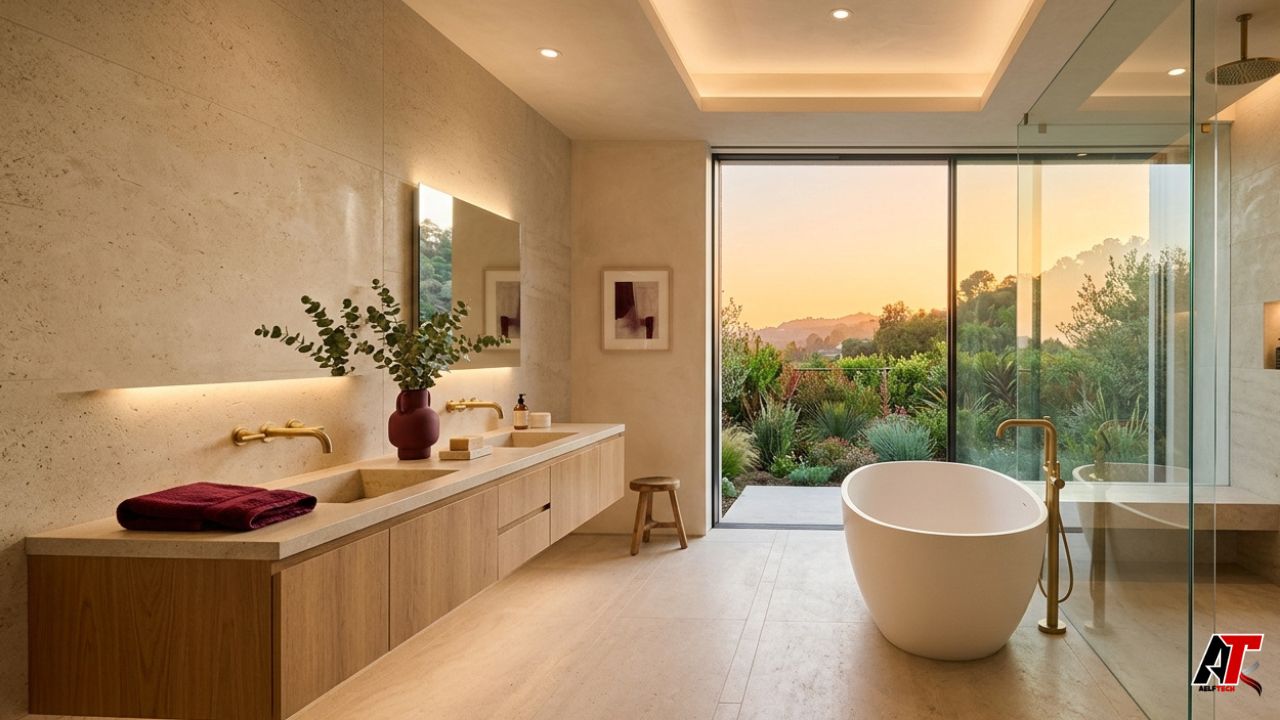
A well-designed bathroom can change an entire home. It is where mornings begin, evenings slow down, and small daily routines either feel effortless or unnecessarily awkward. In a Beverly Hills property, the most successful remodels do more than add expensive finishes. They improve comfort, strengthen the architecture, reduce visual clutter, and create an experience that still feels refined after trends have moved on.
The strongest Beverly Hills bathroom remodeling ideas combine quiet luxury with precise planning. Premium stone cannot compensate for poor storage, awkward fixtures, weak ventilation, or difficult maintenance. Begin with the way the room must function, then layer in materials, lighting, technology, and craftsmanship. That order protects the budget and produces a bathroom that feels genuinely tailored rather than assembled from fashionable parts.
Choose Quiet Luxury Over Visual Excess
Luxury does not require every surface to compete for attention. A calm palette of warm white, limestone, travertine, pale oak, plaster, and brushed metal can feel more expensive than a room filled with unrelated statement pieces. Choose one or two memorable elements—perhaps a sculptural vanity, a book-matched stone wall, or a beautifully proportioned tub—and allow the remaining finishes to support them.
This approach also helps a remodel age gracefully. Highly specific patterns, excessive accent lighting, and too many metal finishes may photograph well initially but become tiring in daily use. Use texture and material quality to create depth. Honed stone, ribbed cabinetry, hand-finished plaster, and softly reflective hardware can make a neutral bathroom feel layered without making it busy.
Rework the Layout Around Daily Routines
Before choosing tile, map how each person uses the room. Consider where towels are reached, where skin-care products are stored, how two people move around the vanity, and whether the shower door blocks a walkway. In a primary suite, separate zones can improve privacy and reduce congestion. In a guest bath, a simpler layout often feels more generous.
Moving plumbing can be worthwhile when the existing layout is fundamentally inconvenient, but it should be evaluated early because it affects demolition, framing, drainage, waterproofing, and permits. Keep enough clearance around doors, drawers, toilets, and shower entries. A floor plan that looks balanced on paper must also work when cabinet doors are open and the room is being used by more than one person.
Create a Spacious Curbless Shower
A curbless shower gives the bathroom a clean architectural line and can make the floor feel continuous. Large-format stone or porcelain, frameless glass, a linear drain, and a built-in bench can create a spa-like wet zone without ornamental clutter. Recessed niches should be sized around actual products rather than treated as decorative afterthoughts.
That simplicity depends on technical precision. The floor must be correctly sloped, drainage capacity must match the shower system, waterproofing must continue through transitions, and glass placement must control spray. A multi-outlet shower may need larger supply lines, pressure balancing, and careful valve planning. Resolve these details before framing and tile work, not after premium materials have been installed.
Add a Freestanding Tub Only When It Earns Its Space
A freestanding tub can become a calm focal point, especially near a private garden view, textured wall, or softly filtered window. It works best when there is comfortable circulation around it and a practical place for a towel, bath products, and controls. A floor-mounted filler can look sculptural, while a wall-mounted version reduces clutter when coordinated precisely.
Do not keep or add a tub solely because it is associated with luxury. Some homeowners would use a larger shower, makeup station, sauna, or additional storage more often. In a family home, retaining at least one tub elsewhere may remain useful. Base the decision on how the property is lived in, the available space, and likely future buyers rather than on a generic checklist.
Use Statement Stone Strategically
Natural stone suits Beverly Hills interiors because it connects architecture, landscape, and material craft. Calacatta marble, limestone, travertine, quartzite, and richly veined slabs can create distinctive walls, vanities, and tub surrounds. Book-matching can be striking, but a single uninterrupted slab may feel more sophisticated than covering every surface with dramatic veining.
Stone selection must include performance. Ask about porosity, staining, etching, slip resistance, sealing, slab thickness, edge treatment, and cleaning requirements. Use mockups to align veins across corners and openings. In wet areas, confirm that the selected finish provides suitable traction. Homeowners who prefer lower maintenance can combine a natural-stone focal area with high-quality porcelain elsewhere.
Invest in Custom Vanities and Concealed Storage
Custom cabinetry can solve proportions that stock vanities cannot. A floating vanity makes the floor feel open, while a furniture-style piece can bring warmth to a traditional or transitional home. Deep drawers, internal outlets, integrated organizers, hidden waste bins, and dedicated appliance storage keep the countertop clear without forcing daily items into another room.
Plan the vanity around the sink, faucet, mirror, lighting, and user height as one composition. Drawers must clear plumbing, wall-mounted faucets need exact rough-in dimensions, and medicine cabinets require sufficient wall depth. Consider moisture-resistant cabinet construction and durable drawer hardware. The goal is storage that still operates smoothly after years of humid use.
Select Modern Bathroom Fixtures Early
Premium hardware is both decorative and mechanical. When comparing modern bathroom fixtures, look beyond the finish and evaluate valve quality, service parts, warranty support, spout reach, handle clearance, flow rate, and compatibility with the basin or tub. Wall-mounted faucets create a clean countertop, but they demand early coordination of valve depth, backsplash thickness, and spout projection.
Keep the fixture language coherent across faucets, shower trim, tub fillers, drains, cabinet pulls, and accessories. One primary metal with a controlled secondary accent usually feels more intentional than several near-matching finishes. Brushed or engineered finishes can be forgiving in busy bathrooms, while living metals are designed to patina. Record every model and finish code so replacement parts can be ordered accurately.
Layer Lighting for Grooming and Atmosphere
A luxury bathroom needs more than ceiling downlights. Vertical lighting beside the mirror reduces facial shadows, while concealed ambient lighting can soften the room at night. Add focused illumination for the shower, tub, water closet, and storage areas where needed. Dimmers allow the same room to support early-morning grooming and a evening bath.
Choose color temperature and color rendering with the materials in the room. Warm light enriches wood and brass, but lighting that is too yellow may distort makeup and stone colors. Very cool light can make warm marble appear flat. Test lamps against actual finish samples. All fixtures in wet or damp locations should be appropriately rated and installed according to applicable electrical requirements.
Bring in Warmth Through Natural Materials
Bathrooms dominated by white stone and glass can feel cold without a softer counterpoint. Oak, walnut, woven shades, linen, textured plaster, and handcrafted ceramics introduce warmth. Even a small timber bench or framed mirror can balance hard surfaces. These materials also help connect the bathroom to bedrooms and dressing areas rather than making it feel like a separate showroom.
Use moisture-sensitive materials selectively and detail them properly. Wood should be suitable for the environment and protected from standing water. Plaster finishes need the correct substrate and sealing strategy. Natural rugs should remain outside direct splash zones. The goal is an organic interior that remains practical to maintain.
Improve Ventilation and Moisture Control
A beautiful bathroom will deteriorate quickly if moisture is not managed. Size the exhaust system for the room and the intensity of its use, then provide a clear path for replacement air. Quiet fans with humidity controls are more likely to be used consistently. In large suites, separate exhaust points may be helpful near the shower and water closet.
Waterproofing is equally important. Request a complete wet-area system rather than relying on tile and grout as the water barrier. Pay attention to shower pans, benches, niches, curbs or curbless transitions, penetrations, and connections to adjacent floors. Photograph concealed waterproofing and plumbing before walls close, and keep product information for future repairs.
Choose Water-Efficient Fixtures Without Sacrificing Comfort
California homeowners can reduce water use without making a premium bathroom feel underpowered. WaterSense-labeled bathroom sink faucets are independently certified for efficiency and performance; EPA states that labeled private-lavatory faucets use no more than 1.5 gallons per minute and can reduce flow by 30 percent or more compared with the federal standard. WaterSense labels are also available for showerheads and toilets.
Check current California and local requirements before ordering, because maximum flow rates and approved-product rules can differ from general national guidance. Discuss the full shower system with the plumber, especially when using multiple outlets. Efficient design is not only about fixture labels: rapid hot-water delivery, insulated pipes, leak detection, and intuitive controls can reduce waste while improving everyday comfort.
Add Technology That Solves Real Problems
Smart features should remove friction rather than complicate the room. Useful options include programmable shower controls, heated floors, anti-fog mirrors, discreet night lighting, leak sensors, occupancy controls, and properly located charging outlets. A towel-warming drawer may be more useful than a television or elaborate audio system.
Plan technology around serviceability and privacy. Confirm where control modules, transformers, valves, and access panels will be located. Avoid burying equipment behind permanent stone without a repair route. Keep essential functions usable if an app, Wi-Fi connection, or proprietary component fails. The best technology feels invisible when it works and remains manageable when it needs maintenance.
Design for Long-Term Comfort and Accessibility
A bathroom can feel elegant while quietly supporting different ages and abilities. A curbless shower, wider entry, well-placed bench, handheld spray, non-slip flooring, lever controls, and reinforced walls for future grab bars can improve safety without creating an institutional appearance. Good lighting and circulation benefit every user.
Build these features into the initial plan because later changes can damage stone and waterproofing. Reinforcement behind walls is inexpensive before tile installation. Choose grab-bar locations according to professional guidance rather than appearance alone. Accessible planning is not simply about resale; it allows homeowners and guests to use the room more confidently over time.
Respect the Home’s Architecture
A modern bathroom should still belong to the house. In a traditional Beverly Hills residence, contemporary plumbing can sit within classic proportions, warm metalwork, and tailored cabinetry. In a mid-century or modern property, clean lines, natural stone, timber, and controlled glazing may be more appropriate than decorative molding. Preserve meaningful architectural cues instead of erasing them.
Indoor-outdoor connections can be especially effective where privacy permits. A planted courtyard, skylight, clerestory window, or carefully screened view introduces daylight and greenery. Glazing changes, exterior openings, and visible facade work may involve additional review, so discuss them separately from a straightforward interior renovation.
Plan Permits, Budget, and Construction Logistics
The City of Beverly Hills Permit Center guide specifically lists kitchen and bathroom remodels among work processed by Building & Safety, alongside interior minor remodels and plumbing repair or maintenance. The required pathway depends on the scope. Before demolition, confirm whether the project needs building, plumbing, electrical, or mechanical permits, plans, HOA authorization, Title 24 documentation, or other supporting information.
Build a detailed budget that separates design, permits, demolition, plumbing, electrical, waterproofing, cabinetry, stone, tile, glass, fixtures, lighting, ventilation, labor, storage, and contingency. Long-lead faucets, custom vanities, specialty stone, and imported components should be ordered early. Visit the project location through this map link when coordinating site meetings, and require a written scope, payment schedule, insurance documentation, and change-order procedure from the contractor.
Create a Room That Is Easy to Maintain
Maintenance should influence every major choice. Minimize grout lines where practical, select accessible drain components, provide enough clearance to clean around the tub and toilet, and avoid tiny gaps between cabinetry and walls. Consider how fingerprints, water spots, cosmetics, hair products, and cleaning agents will affect each finish.
Ask how stone, metal, wood, glass, and plaster should be cared for before approving them. Keep spare tile, grout information, paint formulas, sealers, and fixture documentation. A bathroom remains luxurious when it can be maintained without specialist intervention for every small issue. For more practical home, design, and technology guidance, visit aelftech.com.
Final Thoughts
The best Beverly Hills bathroom remodels are luxurious because they are considered in full. Layout, storage, lighting, ventilation, waterproofing, fixtures, and maintenance work together before the stone and styling are added. This prevents a visually impressive space from becoming inconvenient or fragile.
Prioritize the improvements that affect daily life, then use exceptional materials and details with restraint. With early technical planning, accurate permit checks, and a coherent design language, a bathroom can feel more spacious, personal, and enduring while elevating the character of the entire home.
Leave a Reply