
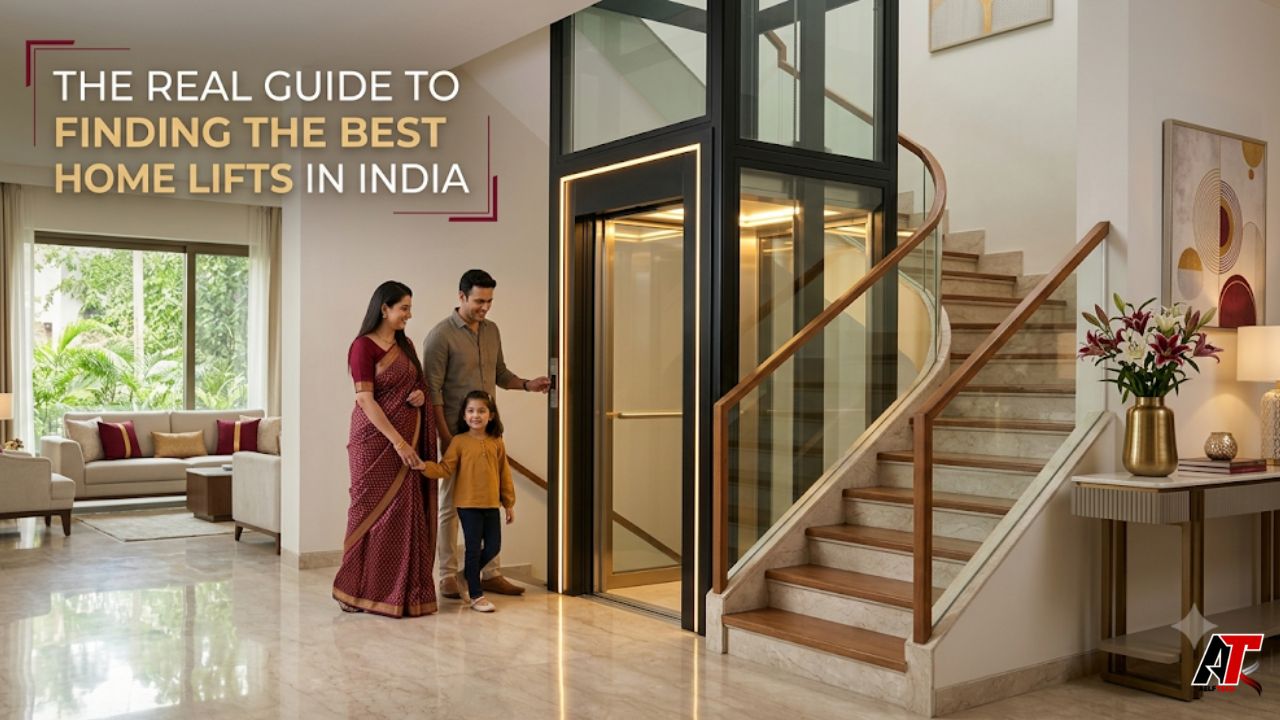
Choosing a home lift should feel exciting. However, many homeowners feel confused as soon as they start comparing models, prices, and features. One company talks about technology. Another talks about design. A third one focuses only on cost.
That is why you need a simple guide. A good home lift is not only a luxury item. It can support elderly parents, improve daily comfort, make upper floors easier to use, and add long-term value to your home.
The best choice is the lift that fits your space, budget, safety needs, and lifestyle. Therefore, this guide explains the process in plain language. You will learn what to check, what to avoid, and how to compare options without feeling overwhelmed.
What Is a Home Lift?
A home lift is a residential elevator made for private houses. It usually connects two to five floors. It also carries fewer people than a commercial elevator. Because of this, it focuses more on comfort, safety, design, and easy daily use.
In India, home lifts are becoming common in villas, duplex homes, bungalows, farmhouses, and premium apartments. Many families build vertical homes on smaller plots. As a result, stairs can become tiring for older people, children, or anyone carrying daily items.
A home lift solves this problem. It helps family members move between floors with less effort. At the same time, it can improve the look and function of the house.
Start With the Real Reason You Need It
Before you compare lift brands, ask one clear question: why do I need this lift? Your answer will guide every decision.
For example, if you need the lift for elderly parents, safety should come first. You may need simple controls, smooth movement, backup power, and easy entry. If you want a lift for a luxury villa, design, cabin finish, lighting, and silent travel may matter more.
Some homes have limited space. In that case, compact size and low civil work become important. Other homeowners want wheelchair access, so cabin size and door width need extra attention.
Once you know the main reason, the buying process becomes easier. You can ignore features you do not need and focus on what will improve your home.
Main Types of Home Lifts in India
You do not need to become an engineer to choose a lift. Still, you should understand the basic types before you ask for quotations.
Hydraulic home lifts offer steady travel and suit many residential projects. They may need proper space planning, so a site inspection is important before final approval.
Traction or electric home lifts are also popular. They often provide smooth movement, better energy use, and a modern ride experience. Many premium homes prefer this type because it feels comfortable in daily use.
Platform lifts are simpler solutions. They work well for short travel or accessibility needs. They may not look as premium as a full cabin lift, but they can solve a specific problem quickly.
Pneumatic or vacuum-style lifts look modern and compact. They can suit homes with limited space. However, you should check capacity, cabin size, and design limits before choosing one.
Panoramic and glass lifts focus more on design. They can become a feature in villas and duplex homes. When you compare the best home lifts in India, do not judge only by photos. Check how the lift will fit your actual home.
How Much Space Do You Need?
Space is one of the biggest factors. New construction gives you more freedom because the architect can plan the lift early. The team can decide the shaft, landing, electrical points, and structure before major work begins.
Existing homes need more care. You may need to work around stairs, beams, slabs, parking areas, or furniture layouts. Therefore, rough measurements are not enough.
Ask the lift company for a proper site visit. They should check floor height, pit requirement, overhead space, entry direction, machine room needs, and electrical setup. After that, they can suggest the right model.
A compact lift on paper may still need civil work. On the other hand, some modern options can reduce construction. The right answer depends on your site.
Safety Features You Should Check First
Safety should never be treated as an extra feature. It should be part of the basic discussion.
Ask about emergency stop, automatic rescue device, battery backup, overload warning, door sensors, interlocks, alarm system, anti-skid flooring, emergency lighting, and child-safe controls.
Also ask what happens during a power cut. This matters in many Indian homes. The lift should move safely to a floor or allow a safe rescue process. Users should not feel trapped or confused.
Controls should be simple. Elderly family members should be able to use the lift without fear. In addition, the doors should feel safe and easy to operate.
Service safety matters too. Ask who maintains the lift, how often service is required, and how quickly technicians can visit your area. A lift is a long-term product, so after-sales support is very important.
Comfort, Noise, and Daily Use
A home lift may be used many times a day. Because of that, comfort matters more than most people think.
During a demo, notice how the lift starts and stops. Does it jerk? Does it feel stable? Is the cabin quiet? Are the doors smooth? Is the lighting pleasant? Does the cabin feel too small?
Small details become important after installation. For example, a noisy lift can disturb bedrooms, study rooms, or living areas. A lift that feels normal in a commercial building may feel loud inside a quiet home.
So, do not choose only by looks. Test the ride if possible. A smooth and silent lift can make daily use feel premium and stress-free.
Understanding Home Lift Cost in a Practical Way
Home lift cost in India can vary a lot. The final price depends on technology, number of floors, cabin size, load capacity, design, safety features, civil work, installation difficulty, and maintenance plans.
This is why the cheapest quote is not always the best deal. A low price may exclude civil changes, electrical work, glass panels, premium doors, delivery, annual maintenance, or customization.
A higher quote may include better engineering, quieter operation, stronger safety systems, better design, and faster support. Therefore, you should compare total value, not only base price.
Ask for a written quotation. It should mention the model, capacity, number of stops, warranty, installation scope, civil requirements, service terms, payment schedule, and exclusions. This step helps you avoid surprises later.
Design Should Match the Home
A lift should look like part of your home. It should not feel like a random machine added later.
For a simple modern interior, you may prefer clean panels, soft lighting, and neutral finishes. For a luxury villa, glass, stainless steel, warm lights, or panoramic design may create a stronger impression.
Some home elevators are made to stand out. Others are made to blend into the layout. Both choices can work. The better option depends on your interior style and personal taste.
If you are building a new home, involve the lift company early. The architect, interior designer, and lift supplier should work together. This helps avoid awkward placement, blocked movement, and last-minute changes.
Questions to Ask Before You Finalize a Company
A reliable lift company should answer your questions clearly. It should not rush you with pressure tactics.
Before you pay an advance, ask which technology suits your home and why. Also ask how much civil work is needed, what safety systems are included, and what happens during power failure.
Next, ask about capacity, cabin size, number of people, installation time, warranty, annual maintenance, spare parts, and nearest service team.
You can also ask to see a demo or an installed project. This gives you a better idea of ride quality, cabin finish, noise level, and real-world performance.
A good company will inspect your site, understand your family, explain options, and suggest a practical solution. The buying experience should feel helpful, not confusing.
Common Mistakes to Avoid
The first mistake is choosing only by price. Budget matters, but a lift is not a short-term purchase. Poor service or weak safety features can cost more later.
The second mistake is selecting a design before checking technical feasibility. A lift may look perfect online but may not suit your floor height, structure, or layout.
The third mistake is ignoring maintenance. Even a high-quality lift needs regular service. Ask about response time, spare parts, and service visits before you decide.
The fourth mistake is planning too late. If you are building a new home, discuss the lift early. Late planning can reduce your options and increase costs.
Finally, do not forget future users. Today, you may need the lift for convenience. Tomorrow, it may help parents, guests, children, or your own long-term mobility.
Simple Buying Checklist
Use this quick checklist before you shortlist suppliers.
First, decide the main purpose of the lift. It may be accessibility, comfort, luxury, resale value, or a mix of these.
Next, check your available space and book a professional site visit. Then compare lift types based on your home, not only on product photos.
After that, review safety features in detail. Ask for a clear quote with inclusions and exclusions. Also check warranty, maintenance, and service support.
Finally, compare companies based on trust, clarity, product quality, and long-term support. The team aelftech.com recommends making a one-page checklist before speaking to vendors. It keeps the discussion focused and helps you compare each company fairly.
Final Thoughts: Choose Calmly, Not Quickly
Finding the right lift is not about choosing the most expensive model. It is also not about choosing the most advertised brand. The right lift is the one that fits your home and supports your family every day.
Take your time. Understand the technology. Ask clear questions. Check safety. Compare service support. Think about design and future use.
When chosen well, a home lift does more than connect floors. It adds comfort, independence, elegance, and confidence to daily life. That is the real value of a smart home lift decision.
Leave a Reply