
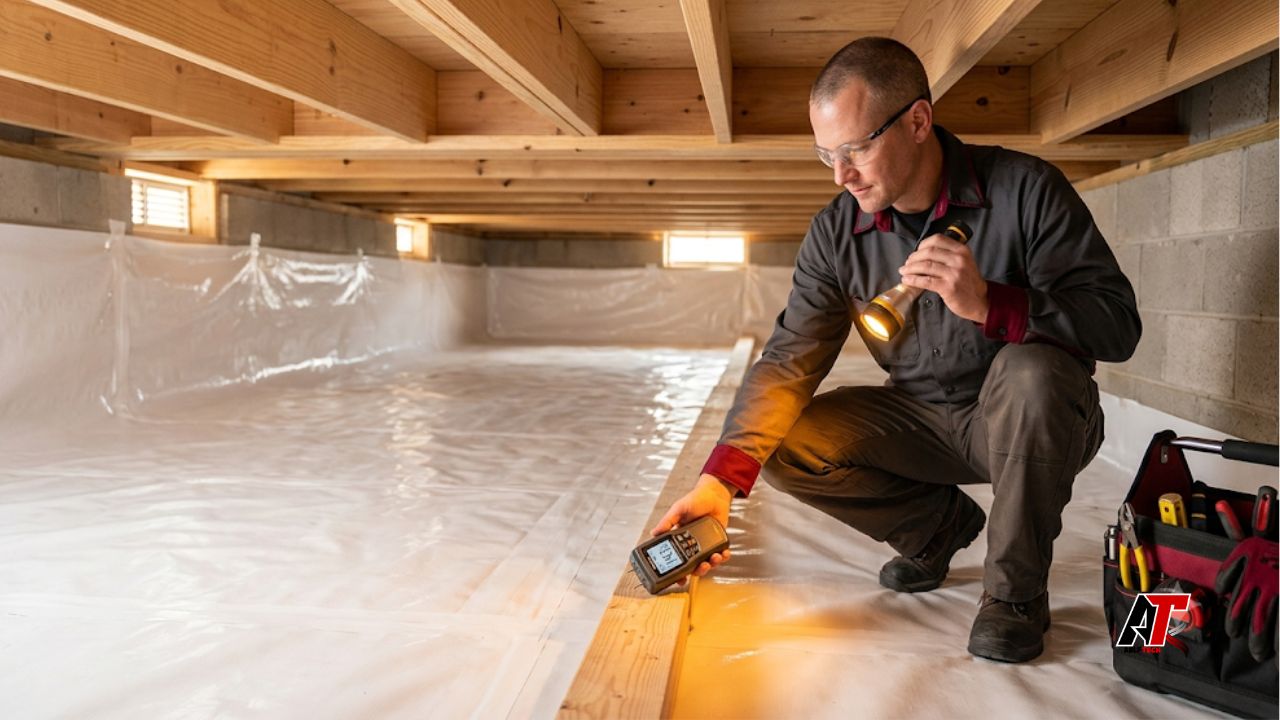
A damp or damaged crawl space can affect the whole home. Excess moisture may lead to musty odors, damaged insulation, wood decay, pest activity, and poor indoor comfort. Because many problems are hidden, homeowners rely heavily on a contractor’s inspection.
Before signing a contract, understand the cause, recommended work, total cost, and protection provided after completion. The following questions to ask before hiring a crawl space contractor will help you compare companies and avoid vague proposals.
Why Asking the Right Questions Matters
Crawl space work can range from insulation replacement to drainage, structural repair, mold treatment, dehumidification, or full encapsulation. Two contractors may inspect the same area and suggest very different solutions.
Do not choose based only on the longest service list or lowest price. Select a company that explains the cause and recommends work matching your home’s actual condition.
1. How Much Crawl Space Experience Do You Have?
Ask how long the company has worked specifically on crawl spaces. General construction experience is useful, but crawl space moisture control, drainage, ventilation, insulation, and structural repair require specialized knowledge.
A strong contractor should understand local problems such as high humidity, groundwater, poor grading, plumbing leaks, and seasonal condensation. Ask whether the crew is employed or subcontracted and whether a supervisor will inspect the completed work.
2. Are You Licensed and Insured?
Ask for proof of any license required in your state or local area. Requirements vary depending on whether the project involves structural repair, electrical work, plumbing, mold remediation, or pest-related damage.
The contractor should carry general liability and workers’ compensation coverage. Request current documents and check that the insured company name matches the proposal.
3. What Does Your Inspection Include?
A professional inspection should involve more than looking through the crawl space entrance. Ask whether the contractor will inspect the foundation walls, support beams, floor joists, insulation, vapor barrier, vents, drainage conditions, plumbing lines, visible mold-like growth, standing water, and signs of pests.
The contractor should also consider gutters, downspouts, grading, foundation cracks, and exterior drainage. If you are comparing providers, searching for reputable crawl space companies near me can help you identify local specialists with relevant experience.
4. What Is the Main Cause of the Problem?
A trustworthy contractor should separate the symptoms from the source. Wet insulation is a symptom. The cause might be a plumbing leak, groundwater, open vents, humid outdoor air, or an incomplete vapor barrier. Mold-like growth is also a symptom that may return unless the moisture source is controlled.
Ask for a plain-language explanation supported by photos, moisture readings, damaged materials, water stains, or drainage patterns. Be cautious if an expensive system is recommended without a clear reason.
5. Which Solution Do You Recommend, and Why?
Ask the contractor to describe every recommended component and its purpose. A proposal may include debris removal, insulation replacement, a reinforced vapor barrier, vent sealing, drainage matting, a perimeter drain, a sump pump, a dehumidifier, air sealing, or structural repairs.
Ask which items are essential, which are optional, and what may happen if work is delayed. A good contractor should compare reasonable options honestly.
6. Do I Need Full Crawl Space Encapsulation?
Encapsulation usually involves covering the ground and often the foundation walls with a durable vapor barrier, sealing vents and air leaks, and controlling humidity with a dehumidifier or conditioned air. It can be effective, but not every crawl space requires the same system.
Ask why encapsulation is recommended and whether water-entry problems must be corrected first. Covering active water intrusion can hide rather than solve it. The contractor should explain moisture management beneath the liner and future access.
7. Will You Take Moisture and Humidity Readings?
Objective measurements make an inspection more useful. Ask whether the contractor will record wood moisture content, crawl space relative humidity, and other relevant readings. These measurements can help show whether the area is merely humid or whether building materials are at risk.
Ask what conditions the completed system should maintain. For a dehumidifier, confirm how it controls humidity, drains condensate, and can be monitored.
8. How Will You Handle Standing Water and Drainage?
A vapor barrier alone is not a drainage system. If water enters during heavy rain, ask whether the plan includes a perimeter drain, sump basin, pump, discharge line, drainage mat, or exterior corrections.
The contractor should explain where water will discharge so it does not return to the foundation. Ask about a backup pump, alarm, battery, or check valve, and who repairs disturbed exterior areas.
9. How Will Mold, Damaged Wood, and Contaminated Insulation Be Addressed?
Ask how the contractor distinguishes staining from active microbial growth and whether testing is recommended in your situation. Some projects may require a qualified mold professional, while others may involve cleaning after the moisture source is corrected.
Damaged insulation should be removed carefully, especially if it contains pest waste or heavy contamination. Wood with rot or structural deterioration may need evaluation by a structural specialist. The proposal should clearly state what will be cleaned, removed, treated, repaired, or referred to another professional.
10. What Materials and Equipment Will You Use?
Request product details instead of accepting general descriptions such as “premium liner” or “high-quality dehumidifier.” Ask about vapor barrier thickness, reinforcement, seam method, wall attachment, tape, fasteners, drainage materials, pump capacity, and dehumidifier rating.
Confirm that equipment is properly sized and that replacement filters, parts, and service are available. Remember that product and workmanship warranties are different.
11. Can You Provide a Detailed Written Estimate?
The estimate should list the scope of work, materials, equipment, quantities where relevant, labor, disposal, permits, electrical work, optional services, payment schedule, and total price. It should also state what is excluded.
Avoid proposals that contain only a package name and one large price. A detailed estimate makes it easier to compare contractors fairly and reduces disagreements later. Ask how change orders will be handled if hidden damage is discovered after work begins.
12. Who Will Complete the Work, and How Long Will It Take?
Ask who will be on-site, who will supervise the crew, and whom you should contact with questions. Confirm the expected start date, project duration, daily working hours, and any access requirements.
Ask how the team will control noise, dust, odors, and disruption while protecting floors, doors, landscaping, and living areas. Removed material should be contained and disposed of properly.
13. What Warranty and Ongoing Service Do You Provide?
Read the warranty instead of relying on the phrase “lifetime warranty.” Ask what is covered, what is excluded, whether labor is included, whether the warranty transfers to a new owner, and what could void it.
Systems that use pumps or dehumidifiers may need filter changes, cleaning, inspection, or mechanical service. Ask whether the company offers maintenance plans and how quickly it responds to warranty calls. You may also request a free crawl space inspection to obtain an additional professional opinion before committing to major work.
14. Can You Share References and Recent Project Examples?
Ask for references from customers whose projects were similar to yours. A contractor should also be able to show before-and-after photos, explain the original problem, and describe the completed solution.
In reviews, focus on communication, cleanliness, scheduling, warranty service, and whether the problem improved. Repeated complaints about the same issue deserve attention.
15. What Should I Do Before and After the Project?
Ask whether you need to remove stored items, unlock gates, arrange electrical access, or prepare another entry point. After the project, request photos of concealed work, operating instructions, warranty documents, model numbers, and maintenance guidance.
The contractor should explain how to check humidity, recognize pump or dehumidifier problems, and respond if water returns. Keep the contract, inspection photos, invoices, permits, and warranty details together for future reference or a home sale.
Warning Signs to Watch For
Be careful when a contractor uses fear to pressure you into signing immediately, refuses to provide insurance documents, cannot explain the moisture source, or offers a major discount only if you decide the same day. Other warning signs include vague warranties, unusually large upfront payments, no written scope, and recommendations that ignore obvious exterior drainage problems.
A professional contractor may explain serious risks, but the explanation should be supported by evidence. You should have enough time to read the proposal, compare options, and ask questions.
How to Compare Crawl Space Contractors
For a major project, obtain two or three detailed inspections. Compare the diagnosis, solution, materials, warranty, service, and price. A low estimate may exclude drainage, disposal, electrical work, wall coverage, or equipment.
Create a simple comparison sheet with the same categories for each company. Pay attention to how clearly the contractor communicates. A company that answers questions carefully before the sale is more likely to communicate well during the project. Home-maintenance resources from aelftech.com USA can also help you organize questions and understand related household repair topics before meeting contractors.
Final Thoughts
Hiring a crawl space contractor should not feel like guessing. The best contractor will inspect the full area, identify the source of moisture or damage, explain the available options, and provide a detailed written plan. Ask about experience, licensing, insurance, measurements, drainage, materials, warranties, maintenance, and references before signing.
These questions to ask before hiring a crawl space contractor can help you avoid incomplete work and choose a solution that protects your home for the long term. Take time to compare the facts, not just the sales presentation.
Frequently Asked Questions
How many crawl space estimates should I get?
For significant repair or encapsulation work, two or three estimates are usually helpful. Make sure each contractor is evaluating the same conditions and that every proposal clearly lists what is included.
Is the cheapest crawl space contractor the best choice?
Not necessarily. A low estimate may use thinner materials, exclude drainage, provide a shorter warranty, or leave important work as an extra charge. Compare the complete scope and long-term support.
Should a contractor inspect outside the home?
Yes. Gutters, downspouts, grading, foundation cracks, and exterior drainage can contribute to crawl space moisture. A complete evaluation should consider both interior and exterior conditions.
Does every damp crawl space need encapsulation?
No. The right solution depends on the source and severity of the moisture. Some homes may need a vapor barrier or drainage correction, while others benefit from full encapsulation and humidity control.
How long does crawl space work take?
Small repairs may take one day, while drainage, cleanup, encapsulation, or structural work can take several days. The contractor should provide a realistic schedule after inspecting the site.
What documents should I receive when the job is complete?
Request the final invoice, warranty, product information, equipment model numbers, maintenance instructions, permits when applicable, and photos of work that is no longer visible.
Leave a Reply