
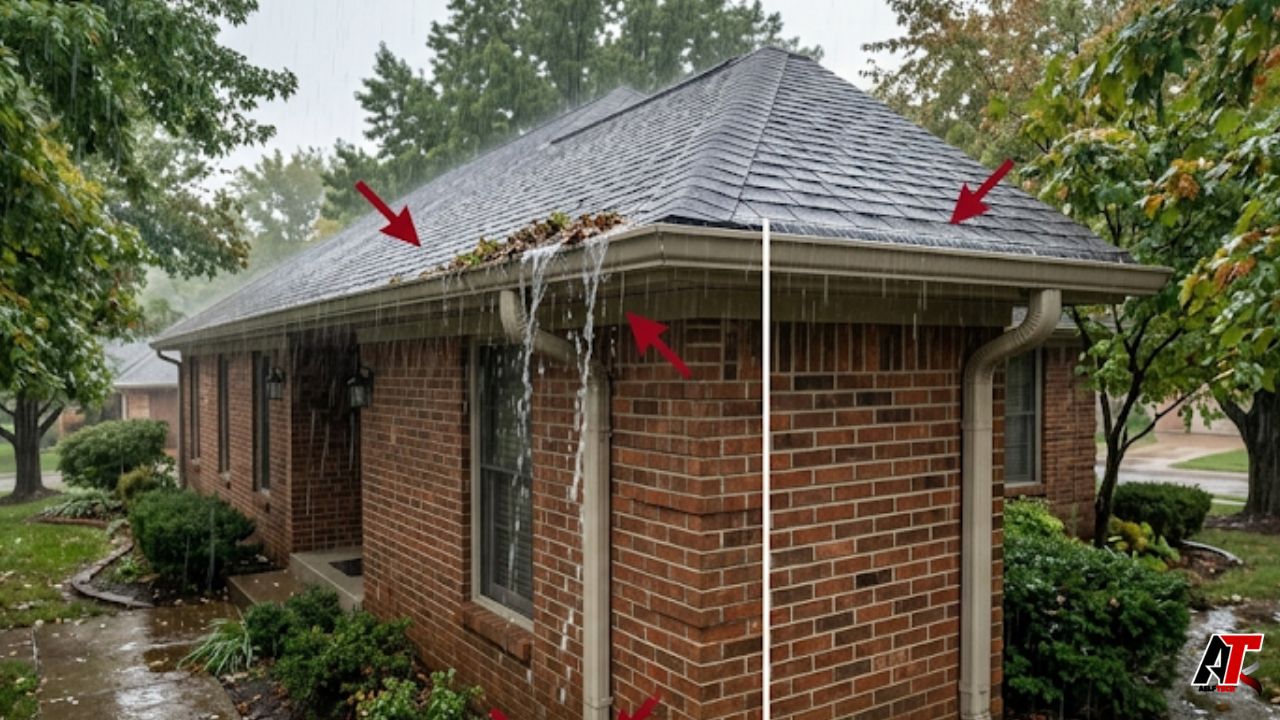
Overflowing gutters are easy to dismiss as a minor nuisance until water begins staining the siding, soaking the fascia, eroding flower beds, or collecting beside the foundation. In St. Louis, the problem deserves quick attention because local homes regularly face spring downpours, summer thunderstorms, autumn leaf fall, and winter freezing conditions. A gutter system that performs adequately during light rain may fail when several weather and maintenance factors arrive at once.
The good news is that overflow usually leaves useful clues. Water spilling from one short section points to a different problem than water running over an entire roof edge. Overflow near a downspout often suggests a blockage, while water shooting past a gutter below a roof valley may indicate a capacity or positioning issue. By watching where, when, and how the water escapes, you can move from guessing to a practical solution.
Why St. Louis Homes Are Vulnerable to Gutter Overflow
St. Louis receives substantial rainfall and experiences frequent thunderstorms. The National Weather Service notes that spring is normally the wettest season in the area and that thunderstorms typically occur on 40 to 50 days each year. June alone has normal precipitation of about 4.49 inches. Those averages do not mean rain arrives in gentle, evenly spaced amounts. A short, intense storm can send a large volume of roof runoff toward the gutters within minutes.
Local architecture adds another layer. Older brick homes may have complex rooflines, additions, steep valleys, mature trees, and underground drain connections that are difficult to inspect. Newer homes may have broad roof surfaces that concentrate more water than standard five-inch gutters can comfortably manage during a cloudburst. Overflow is therefore not always a cleaning problem; it can be a design, installation, or drainage problem.
1. Leaves, Twigs, Roof Grit, and Other Debris Are Blocking the Channel
The most common cause is still a physical clog. Leaves and seed pods collect in the gutter, then trap smaller material such as shingle granules, dirt, moss, and decaying organic matter. The mixture becomes dense and heavy. Water cannot move freely toward the outlet, so it rises and pours over the lowest edge. A gutter may look open from the ground while several inches of compacted debris sit beneath the top layer.
2. The Downspout or Outlet Is Clogged
A clean-looking gutter can still overflow when the outlet or downspout is blocked. Debris often forms a plug at the small opening where the gutter meets the downspout. It can also lodge at an elbow, where the direction changes, or at the bottom connection to an underground drain. In these situations, water may back up along the gutter and spill several feet away from the actual obstruction.
3. The Gutter Pitch Is Too Flat – or Slopes the Wrong Way
Gutters need a subtle, consistent fall toward each downspout. If a section is level, back-pitched, or sagging between hangers, water remains after the storm and reduces the available capacity for the next rainfall. Standing water also adds weight, which can loosen fasteners and worsen the sag. Over time, the system can develop a repeating cycle of pooling, pulling, and overflowing.
4. Your Gutters or Downspouts Cannot Handle the Roof Runoff
Capacity matters most during intense storms. A large or steep roof moves water quickly. Multiple roof planes may feed a single gutter, while valleys can deliver a concentrated stream to one small area. If the gutter is undersized, the downspout count is too low, or the downspouts are narrow, a perfectly clean system may still overflow when rainfall intensity increases.
5. Loose Hangers, Damaged Fascia, or Separated Seams Are Distorting the System
Gutters rely on secure attachment to a sound fascia board. Loose spikes, failing hidden hangers, rotted wood, storm damage, or repeated ice loading can pull the gutter away from the roof edge. Even a small change in alignment can create a low spot or allow water to run behind the gutter instead of into it. Seams and end caps may also leak, making an overflow problem look larger than it is.
Signs include visible gaps, sections that move in wind, peeling paint behind the gutter, water stains on the fascia, and drips that continue after rainfall slows. These conditions call for more than cleaning. Professional gutter repair St Louis can determine whether the system needs realignment, new hangers, sealed joints, fascia repair, partial replacement, or a complete redesign.
6. Water Is Running Behind the Gutter
Sometimes the gutter is not overflowing from the front at all. Water may travel behind it because the roof edge, drip edge, apron, or gutter position does not guide runoff into the channel. This can soak the fascia and soffit while leaving the gutter partly empty. From the ground, the result looks like ordinary overflow, but cleaning will not solve it.
7. Underground Drainage Is Backing Up
Many downspouts connect to buried pipes. These lines can clog with roots, sediment, leaves, collapsed pipe material, or debris entering through an open connection. When the underground route cannot accept water, the downspout fills from the bottom. Overflow then appears at joints, at the gutter outlet, or around the foundation where the connection is located.
Disconnecting the downspout temporarily during diagnosis can reveal whether the buried line is the restriction. Any permanent redirection must send water to a suitable location without creating erosion, icy walkways, neighbor disputes, or foundation moisture. The U.S. Environmental Protection Agency recommends considering local rules and the destination of redirected water before changing a discharge arrangement.
8. Gutter Guards Are Dirty, Damaged, or Poorly Matched to the Property
Guards can reduce the amount of leaves entering a gutter, but no system is maintenance-free. Fine roof grit, pollen, seed pods, pine needles, and wet leaf fragments can coat the surface or collect at roof valleys. During heavy rain, water may skim over a blocked screen instead of passing through. Improperly installed guards may also alter the roof edge or leave gaps that admit debris.
The right gutter guards depend on tree coverage, roof pitch, debris type, and rainfall intensity. Micro-mesh products can filter fine material but still need surface cleaning. Larger openings may handle fast water but admit smaller debris. Before adding guards, repair existing pitch, capacity, and drainage defects; otherwise, the new product can hide the original problem rather than solve it.
9. Ice and Freeze-Thaw Conditions Have Created a Temporary or Lasting Problem
Winter overflow can occur when ice blocks the gutter or downspout. Meltwater from sun-warmed roof sections reaches a frozen area, backs up, and spills over. The added weight may bend gutters, separate seams, or loosen hangers. A damaged section may continue overflowing during spring rain even after the ice disappears.
How to Diagnose the Overflow Safely
Start with a ground-level observation during a steady rain, not during lightning, high wind, or severe weather. Note the exact location of overflow and whether water exits the downspout. Photograph the pattern if it is safe. After the weather clears, use binoculars or a camera zoom to look for debris, sagging, gaps, and guard buildup.
A garden-hose test can help a professional isolate sections, but sending water onto a roof or working from a ladder introduces fall and slip hazards. OSHA guidance emphasizes inspection of ladders and protection from roof-edge falls. For two-story homes, steep grades, wet surfaces, overhead power lines, damaged fascia, or uncertain ladder placement, arrange a professional inspection rather than attempting a risky cleaning.
What to Do About Overflowing Gutters
Begin with the least invasive correction that addresses the confirmed cause. Remove debris from the gutter and outlet, clear the downspout, and verify that water exits freely. Tighten or replace failed hangers, reseal leaking joints where appropriate, and correct the pitch. Repair damaged fascia before reinstalling a gutter because new fasteners cannot hold reliably in deteriorated wood.
When the system is clean but still fails in strong rain, evaluate capacity. A contractor may recommend adding a downspout, increasing downspout size, installing a larger gutter, modifying a valley transition, or dividing a long roof run. If water reaches the gutter but backs up at ground level, inspect the underground drain or provide a safe above-ground discharge route.
Finally, treat the ground around the home as part of the drainage system. Downspouts should release water where it can move away from the structure without damaging landscaping or creating hazards. EPA guidance explains that roof runoff may be redirected to an appropriate lawn, garden, rain barrel, or rain garden, provided the location and local requirements are suitable.
A Practical Maintenance Schedule for St. Louis Homes
Inspect gutters in early spring before the wettest part of the year, then check again after spring blossoms and seed pods fall. Review the system after severe storms for loose sections, impact damage, and new debris. In autumn, clean once during heavy leaf drop if buildup is substantial and again after most leaves are down. A final winter check should confirm that downspouts are open and extensions are secure.
Homes beneath dense tree cover, properties with complicated roof valleys, and buildings that have overflowed before may need more frequent attention. Keep brief records of cleaning dates, repair work, and where overflow occurred. A simple history helps identify whether the problem is seasonal debris or a recurring design defect.
When to Call a Professional
Professional help is appropriate when overflow returns soon after cleaning, water runs behind the gutter, sections sag or pull away, fascia feels soft, seams repeatedly leak, underground drains back up, or the roof is too high for safe access. It is also wise to seek an assessment when basement dampness, soil erosion, siding stains, or interior moisture appears near the overflow location.
Ask the contractor to explain the cause, not merely offer a product. A useful inspection should consider the roof area, valley flow, gutter dimensions, downspout locations, pitch, hanger spacing, fascia condition, guards, and final discharge point. Request photographs and a written scope so you can distinguish cleaning, repair, capacity upgrades, and replacement.
Frequently Asked Questions
Why do my gutters overflow only during heavy rain?
The system may be partly restricted or too small for peak runoff. A clean gutter can also be overwhelmed where a steep roof valley concentrates water. Observe whether the downspout flows strongly; that clue helps separate a capacity issue from a blockage.
Can overflowing gutters damage a foundation?
Yes. Repeated discharge beside the house can saturate soil, erode grading, and increase moisture pressure near basement or crawl-space walls. The risk depends on drainage, soil, foundation condition, and how long the problem continues.
Will gutter guards completely stop overflow?
No. Guards can reduce debris entry, but they cannot correct poor pitch, inadequate capacity, damaged gutters, blocked underground drains, or incorrect roof-edge details. They also require periodic inspection and surface cleaning.
How often should gutters be cleaned in St. Louis?
Many homes benefit from checks in spring and late fall, but tree coverage and roof design matter more than a universal schedule. Properties with heavy seed drop, pine needles, multiple valleys, or a history of clogs may need additional service.
Should I repair or replace overflowing gutters?
Repair is often suitable for isolated loose hangers, minor leaks, a short sag, or one damaged section. Replacement may be more economical when gutters are broadly distorted, corroded, undersized, poorly configured, or attached to failing fascia.
Final Takeaway
Overflowing gutters in St. Louis are a warning that water is not following its intended path. The cause may be as simple as a clogged outlet or as complex as undersized drainage, faulty pitch, roof-edge installation, or a blocked underground line. Diagnose the pattern first, repair the underlying defect, and then choose preventive upgrades such as guards or larger downspouts where they genuinely fit the property.
Prompt action protects more than the gutter itself. It helps preserve fascia, siding, masonry, landscaping, and the area around the foundation. For more practical property-care and digital publishing resources, visit aelftech.com.
Leave a Reply