
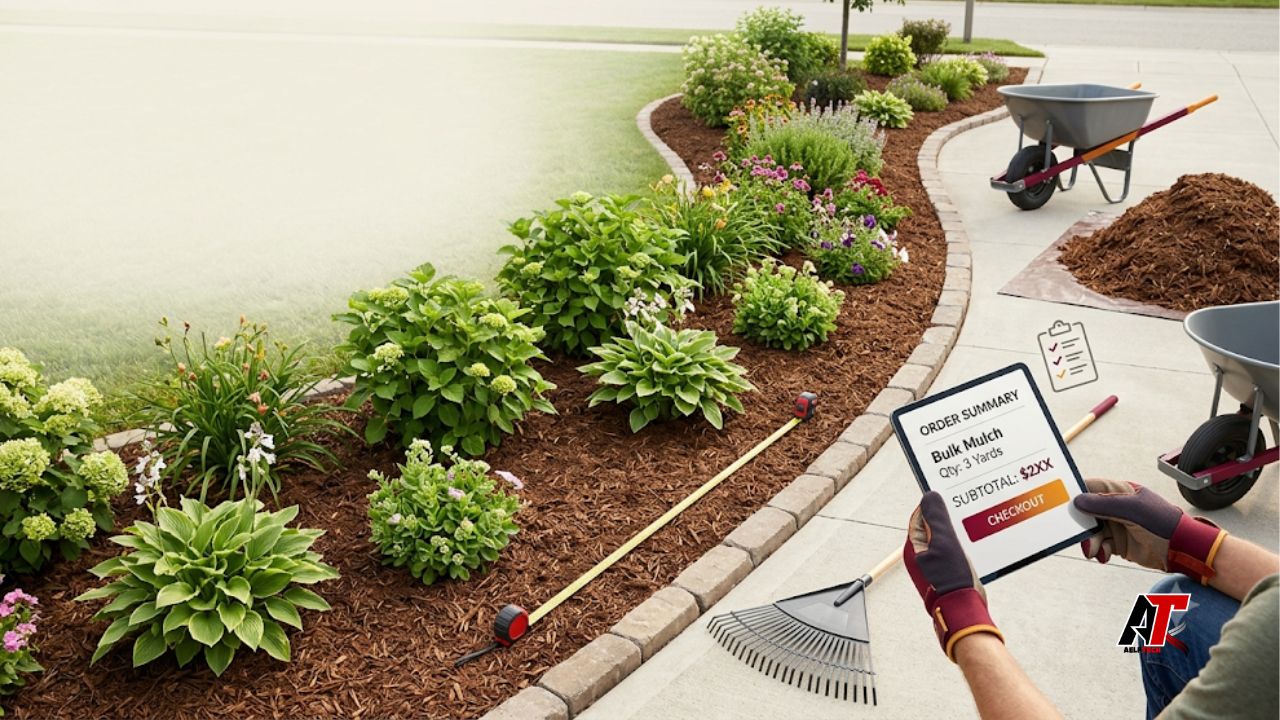
Ordering mulch online can save time, reduce heavy lifting, and simplify a large landscaping project. Instead of loading dozens of bags and making repeated store trips, you can choose a product, enter the quantity, select a delivery date, and have the material dropped near your project area. That convenience can become expensive, however, when the order is based on guesswork.
The wrong mulch, an inaccurate quantity, or a poorly planned delivery can create extra costs and more work than expected. Some mistakes can even affect soil health, plant growth, and the long-term appearance of your garden. Before you Order Mulch Online, take time to understand the product, calculate your needs, and prepare the site.
This guide explains six common mistakes gardeners make when buying mulch online and shows you how to avoid them.
Why Ordering Mulch Online Requires Planning
Online suppliers may offer hardwood, cedar, bark, dyed wood, compost blends, pine products, stone, and other materials. Similar names can hide important differences in texture, source, color, and best use. Delivery policies also vary by supplier and location.
A successful order depends on four decisions: choosing the right material, estimating the correct volume, confirming delivery requirements, and applying the mulch correctly. Getting these decisions right before checkout helps protect your budget and your plants.
Mistake 1: Guessing How Much Mulch You Need
The most common ordering mistake is estimating quantity by sight. Garden beds often look smaller than they are, especially when they curve around a home, contain islands, or include spaces around trees and shrubs. Ordering too little may lead to a second delivery fee, inconsistent color between batches, or an unfinished landscape. Ordering too much leaves a pile that must be stored, spread too deeply, or removed.
Mulch is commonly sold by the cubic yard. To estimate volume, measure the length and width of each bed in feet, multiply them to find the square footage, and then calculate the amount needed for your preferred depth. For irregular beds, divide the area into smaller shapes, calculate each section, and add the totals.
A simple planning rule is that one cubic yard covers approximately:
- 324 square feet at 1 inch deep
- 162 square feet at 2 inches deep
- 108 square feet at 3 inches deep
- 81 square feet at 4 inches deep
Established beds often need only a refresh. Check the remaining depth before ordering. If two inches are still present and you want three inches total, add only one inch. A supplier’s calculator can help, but accurate measurements remain essential.
Allow roughly 5 to 10 percent for settling, uneven ground, and small measuring errors, rather than adding an extra full yard without a clear purpose.
Mistake 2: Choosing Mulch Only by Color
Color matters because mulch affects the visual style of a landscape, but appearance should not be the only factor. Different materials behave differently around plants. Organic mulches such as shredded wood, bark, leaves, and compost-based products gradually break down and can improve soil structure. Inorganic options such as stone and gravel last longer but can absorb heat and may not suit every planting area.
Before buying, compare the available types of mulch and match the material to the garden’s purpose. Shredded hardwood often stays in place well. Bark offers a decorative finish but may move during heavy rain. Cedar decomposes slowly, while composted mulch can help where soil improvement is a priority.
Dyed mulch creates uniform color, but ask what wood is used and whether the colorant suits the intended area. For edible gardens, many people prefer natural, untreated material from a clearly identified source.
Consider the climate too. Lightweight mulch may blow away in exposed areas, large bark pieces can be awkward around small annuals, and stone can overheat in direct sun. The best product supports the plants, soil, slope, sunlight, and maintenance plan—not just the house color.
Mistake 3: Ignoring Product Quality and Source Information
Online photos cannot show smell, moisture, particle size, contaminants, or consistency. Poor-quality material may contain excessive fines, debris, weed seeds, moldy sections, or wood from an unclear source—problems that are difficult to fix after delivery.
Read the complete product description instead of relying on the product name. Look for details about the source material, whether the mulch is natural or dyed, the expected particle size, and whether it has been screened or aged. If the listing is vague, contact the supplier before placing the order.
Reviews can reveal patterns in delivery accuracy, color consistency, cleanliness, and appearance. One negative review may mean little, but repeated complaints about the same issue deserve attention.
For a large or highly visible project, request a sample when possible. Screen colors vary, and natural mulch differs between batches. For a consistent finish, order the full quantity at once and ask whether it can come from the same batch.
Newly processed wood may smell stronger and settle more than aged material. Mulch stored in a wet pile may arrive warm or decompose quickly. These conditions are not always harmful, but they affect when and where the material should be used.
Mistake 4: Overlooking Delivery Details
Many online buyers focus on the product and price but do not plan for the delivery itself. Bulk mulch is usually dropped as a loose pile from a dump truck. The driver needs safe access, enough overhead clearance, and a firm surface. Narrow driveways, low branches, utility wires, steep slopes, soft lawns, gates, and parked vehicles can prevent the truck from reaching the requested spot.
Before checkout, confirm the service area, minimum order, dates, delivery fee, cancellation policy, and whether service is same-day or scheduled. Availability may vary by ZIP code.
Choose a drop location that will not block traffic, cover a drain, or inconvenience neighbors. A driveway is usually safer than a lawn because a loaded truck can damage soft ground. Use a tarp only if the supplier permits it and it will not create a slipping hazard.
Be present when possible, mark the location clearly, and leave enough room for the pile. Several yards can occupy much of a driveway. Check the weather too, because heavy rain can make the pile harder to move and delay spreading.
Mistake 5: Applying Mulch Too Deeply or Against Plant Stems
Ordering the correct quantity does not help if the mulch is applied incorrectly. A very deep layer can restrict air and water movement, keep soil excessively wet, and encourage roots to grow into the mulch instead of the soil. Around trees, piling mulch against the trunk creates the familiar “mulch volcano,” which can trap moisture against bark and increase the risk of decay, insects, disease, and girdling roots.
For many landscape beds, a finished depth of about 2 to 3 inches is appropriate. Fine materials can form a dense layer if spread too thickly. Grass clippings should stay around 1 to 2 inches because thick layers can mat and heat as they decompose.
Keep mulch a few inches away from tree trunks, shrub stems, and the crowns of perennials. The root flare at the base of a tree should remain visible. Around young plants, use a light layer and leave breathing space immediately around the stem.
Do not add three new inches automatically every year. Measure and loosen the existing layer, remove sour or contaminated material, and add only enough to restore the desired depth.
Mistake 6: Skipping Site Preparation and Aftercare
Mulch is not a substitute for basic garden preparation. Spreading it over tall weeds, compacted soil, diseased plant debris, or poor drainage hides problems temporarily rather than solving them. Weeds may grow through the mulch, and loose organic matter beneath it can create an uneven surface.
Prepare beds before delivery. Remove weeds by the roots, edge borders, collect debris, and correct obvious drainage issues. Water very dry soil before mulching, and improve compaction carefully without damaging established roots.
Avoid plastic sheeting under organic mulch in planted beds because it can interfere with water and oxygen movement. Landscape fabric may suit limited hardscape areas, but it can clog over time and allow weeds to germinate on top. In most living beds, a maintained organic layer is easier to manage.
After spreading, water lightly if the material is very dry and dusty. Inspect beds after wind or rain, rake displaced mulch back, and watch for constantly wet areas. Evaluate organic mulch periodically instead of replacing it on an automatic schedule.
A Smart Pre-Order Checklist
Before placing an online mulch order, confirm the following:
- Measure every bed and calculate the required cubic yards.
- Check the remaining depth of old mulch.
- Match the product to your plants, sunlight, slope, and climate.
- Read source, treatment, color, and particle-size details.
- Review delivery fees, dates, access requirements, and drop policies.
- Prepare a safe, clearly marked delivery location.
- Remove weeds and edge beds before the truck arrives.
- Plan for a finished layer of approximately 2 to 3 inches in most beds.
- Keep mulch away from trunks, stems, and plant crowns.
Frequently Asked Questions About Ordering Mulch Online
Is bulk mulch cheaper than bagged mulch?
Bulk mulch is often economical for medium and large projects because the price per cubic yard may be lower and packaging is reduced. Compare the total delivered price, including fees and minimums, rather than the product price alone.
How many bags of mulch equal one cubic yard?
The number depends on bag size. One cubic yard equals 27 cubic feet. That is approximately 13.5 two-cubic-foot bags or 18 bags containing 1.5 cubic feet. Bulk delivery becomes especially convenient when a project would require dozens of bags.
When is the best time to order mulch?
Spring and fall are popular, but timing depends on soil temperature, plant growth, weather, and local demand. Avoid covering cold soil too early in spring or mulching waterlogged beds. In fall, apply it after plants begin dormancy but before the ground becomes difficult to work.
Can fresh mulch harm plants?
Properly sourced landscape mulch is generally safe when applied correctly. Problems arise when it is contaminated, piled too deeply, placed against stems, or stored without enough air. Let unusually hot or sour-smelling mulch air out before using it near plants.
How do I choose the right mulch for my yard?
Start with the purpose of the area. Use organic mulch where soil improvement, moisture retention, and weed suppression are priorities. Consider durable decorative materials for selected pathways or dry-landscape areas. Review a trusted guide to choosing the right mulch, then confirm the supplier’s exact product specifications before ordering.
Final Thoughts
Ordering mulch online works best when the project is measured, the product suits the landscape, and delivery is planned. The biggest mistakes come from guessing the quantity, trusting color alone, or expecting the driver to solve access problems on arrival.
Measure carefully, verify quality, prepare the site, and spread the material at a healthy depth. These simple steps help you avoid wasted money, protect your plants, and create a cleaner, longer-lasting garden. For more practical digital resources and helpful guides, visit aelftech.com.
Leave a Reply