
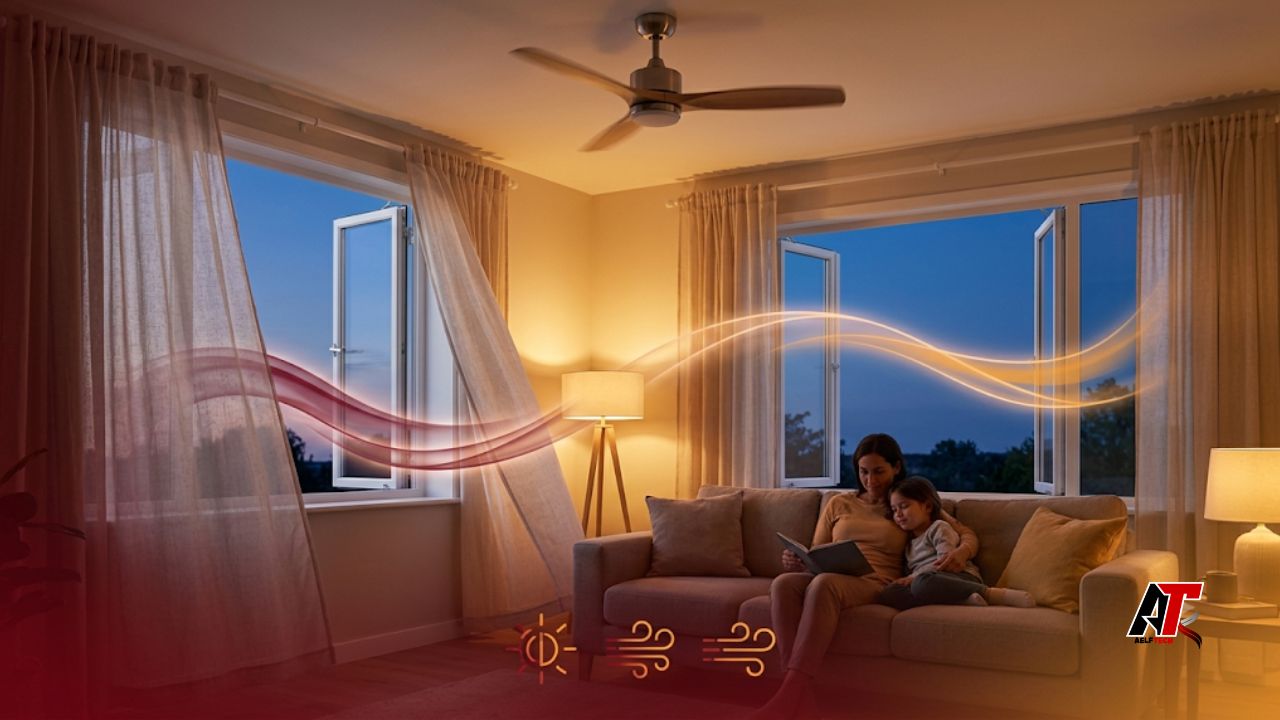
Using natural ventilation during cooler evening hours is one of the simplest ways to make a home feel fresher without running the air conditioner all night. When the outdoor temperature drops after sunset, fresh air can help push out trapped indoor heat, reduce stuffiness, and create a more comfortable sleeping environment. The key is not just opening every window at random. Good ventilation works best when you control timing, airflow direction, fan placement, and indoor heat sources.
This guide explains how to use natural ventilation during cooler evening hours in a practical way. It is written for homeowners, renters, and families who want better comfort, lower energy use, and healthier indoor air habits. It also explains when natural ventilation is helpful and when professional cooling support may still be needed.
Why Cooler Evening Hours Are Ideal for Natural Ventilation
During the day, sunlight warms walls, floors, furniture, roofs, and windows. Even after the sun goes down, those surfaces can continue releasing stored heat into the rooms. This is why a home may feel warmer indoors than outdoors in the evening. Natural ventilation helps by replacing warm indoor air with cooler outdoor air. It can also cool down building materials slowly, making the room feel better later at night.
Evening ventilation works best when the outdoor air is cooler than the indoor air. A simple way to check is to compare your thermostat or indoor thermometer with the outdoor temperature on a weather app. If outside air is cooler and the air quality is good, it is usually a good time to ventilate. If the evening is hot, smoky, humid, or full of pollen, natural ventilation may not be the right choice.
Cooler evening air also helps create a pressure difference. Wind can push air through open windows, while warm indoor air naturally rises and escapes through higher openings. When both effects work together, your home gets a cleaner and faster air exchange.
Prepare Your Home Before the Evening Starts
A good evening ventilation routine starts during the day. If your home collects too much heat before sunset, it will take longer to cool down later. Keep blinds, curtains, or shades closed on sunny windows, especially on the side of the house that receives strong afternoon sun. This reduces radiant heat and keeps indoor surfaces from getting too hot.
You should also reduce indoor heat sources before and during the evening. Ovens, dryers, dishwashers, old light bulbs, and several electronics can add warmth to the room. Try to cook earlier, use a microwave or outdoor grill when possible, and run laundry appliances at cooler times. Small habits like switching off unused lights and devices can make natural ventilation more effective.
Before opening windows, check screens, locks, and window tracks. Clean screens allow better airflow and help keep insects out. Make sure windows can be secured safely if they will stay open while you sleep. If you live near a busy road, choose windows away from traffic noise and pollution when possible.
Step-by-Step: How to Use Natural Ventilation During Cooler Evening Hours
Step 1: Check Outdoor Conditions First
Do not open windows only because it is evening. First, check the outdoor temperature, humidity, air quality, and weather forecast. Natural ventilation is most useful when outside air is cooler, cleaner, and less humid than indoor air. If humidity is high, opening windows for a long time can bring moisture indoors. That may make the home feel sticky and can create problems in basements, bathrooms, and poorly ventilated rooms.
Also check for smoke, dust, pollen, storms, or strong wind. If outdoor air quality is poor, keep windows closed and use your HVAC filter or air purifier instead. Comfort should never come at the cost of indoor air quality or safety.
Step 2: Open Windows on Opposite Sides
Cross-ventilation is the most useful method for evening airflow. Open windows on opposite sides of the home so fresh air can enter from one side and warm air can leave from the other. You do not need to open every window fully. In many homes, opening selected windows a few inches creates a stronger and more controlled path for air movement.
For best results, open a window where the breeze is entering and another window where air can exit. If you are not sure which side has the breeze, stand near each window and feel the airflow with your hand. You can also use a light curtain or tissue to see which way the air moves.
Step 3: Use the Stack Effect in Multi-Level Homes
Warm air rises. You can use this natural movement to cool your home more efficiently. Open a lower window on the cooler side of the house and open an upper window, skylight, or second-floor window where warm air can escape. This creates a chimney-like effect. Cooler air enters low, warms as it moves through the house, rises, and exits high.
This method is especially helpful for townhomes, two-story houses, stairwells, and homes with high ceilings. Keep interior doors open so air can move between rooms. If privacy or security is a concern, use windows with secure opening limits or ventilate for a shorter period before bedtime.
Step 4: Place Fans with a Purpose
Fans do not lower the actual temperature by themselves, but they make ventilation work better by moving air. A box fan placed in a window can pull cooler air in or push warm air out. In the early evening, you may get better results by placing one fan facing outward in a warm room. This exhausts hot air. Then open another window on the cooler side of the home so fresh air replaces it.
Ceiling fans also help. In summer, most ceiling fans should run counterclockwise to push air downward and create a cooling breeze. Turn fans off in empty rooms because fans cool people, not rooms. When used with open windows, fans help move fresh air through the home instead of letting it sit near one window.
Best Rooms to Ventilate First
Start with the rooms that hold the most heat. Bedrooms are important because cooler air helps support better sleep. Open bedroom windows in the evening if the outdoor air is clean and safe. Let the room flush for at least 20 to 30 minutes before bedtime. If possible, create a path from a hallway or nearby window so air can move across the room.
Kitchens also need attention. Cooking adds heat, moisture, and odors. Use a range hood or exhaust fan while cooking and keep it running for a short time afterward. When the outdoor air cools, open a kitchen window to release leftover heat, but avoid pulling cooking odors into bedrooms or living areas.
Upper floors often stay warmer than lower floors because heat rises. If your second floor feels hot at night, ventilate upstairs first. Open upper windows to let warm air escape, then open lower windows to bring in cooler air. Basements are different. They may stay cool but can be humid, so avoid long ventilation periods during damp weather.
How Long Should You Keep Windows Open?
The right time depends on the weather, home layout, and indoor temperature. A good starting point is 30 to 90 minutes after sunset. In mild weather, you may keep windows open longer if safety, noise, humidity, and air quality are acceptable. In very hot or humid weather, shorter ventilation may be better.
Use a simple rule: open windows when outdoor air is better than indoor air, and close them when that changes. Before sleeping, check the temperature again. If the outdoor temperature starts rising, humidity increases, or wind changes direction, close the windows and use fans or cooling equipment as needed.
In the morning, close windows early before the outdoor temperature climbs. This traps the cooler air inside for longer. Then close blinds or curtains to protect the home from sunlight during the day. Evening cooling becomes much easier when you prevent daytime heat buildup.
Natural Ventilation and Air Conditioning Can Work Together
Natural ventilation does not have to replace air conditioning completely. In many homes, the best approach is to use both wisely. You can ventilate during cooler evening hours to remove trapped heat, then use the AC for a shorter period if the home still feels uncomfortable. This can reduce the amount of time your system runs while still keeping the home comfortable.
If your AC struggles even after evening ventilation, the issue may be poor insulation, blocked airflow, dirty filters, low refrigerant, leaky ducts, or an aging system. Homeowners planning a system upgrade can learn more about professional air conditioner installation Brampton services when natural ventilation is not enough for consistent summer comfort.
On the other hand, if your system used to cool well but now runs constantly, blows warm air, or makes unusual sounds, it may need service. In that case, timely air conditioner repair can prevent a small issue from becoming a more expensive breakdown.
Common Mistakes to Avoid
The biggest mistake is opening windows during the hottest part of the day. This often brings hot air inside and warms indoor surfaces. Keep windows closed when outdoor air is hotter than indoor air. Another mistake is opening only one window and expecting strong airflow. One opening may freshen the room slightly, but it usually does not create steady air movement. Use at least two openings when possible.
Another common mistake is ignoring humidity. Cool but humid air can still feel uncomfortable. It can also increase moisture indoors. Pay extra attention if you live in a humid area or have rooms that already feel damp. Avoid leaving windows open overnight in basements or bathrooms when humidity is high.
Do not forget security. Windows should not be left wide open in unsafe areas or where children and pets can access them. Use secure window stops, locked screen systems, or short ventilation sessions before sleep. Comfort matters, but safety comes first.
Simple Evening Ventilation Checklist
- Check that outdoor air is cooler than indoor air.
- Review outdoor air quality, humidity, pollen, smoke, and storm risk.
- Open windows on opposite sides of the home for cross-ventilation.
- Use upper and lower openings to create a stack effect.
- Place fans to push warm air out or pull cool air in.
- Keep interior doors open so air can travel through the home.
- Close windows in the morning before outdoor heat returns.
- Use AC support when the home remains too hot or humid.
Final Thoughts
Learning how to use natural ventilation during cooler evening hours can make your home feel fresher, calmer, and more energy-conscious. The method is simple, but it works best when done with care. Wait until outdoor air is cooler, create a clear airflow path, use fans strategically, and close the home before daytime heat returns.
Natural ventilation is not perfect for every day or every climate. It does not filter outdoor air, remove high humidity, or replace a properly working cooling system during extreme heat. Still, when conditions are right, it is a smart habit that can support comfort and reduce unnecessary AC use.
For more practical home improvement and comfort guides, visit aelftech.com for helpful, easy-to-read advice.
Leave a Reply