
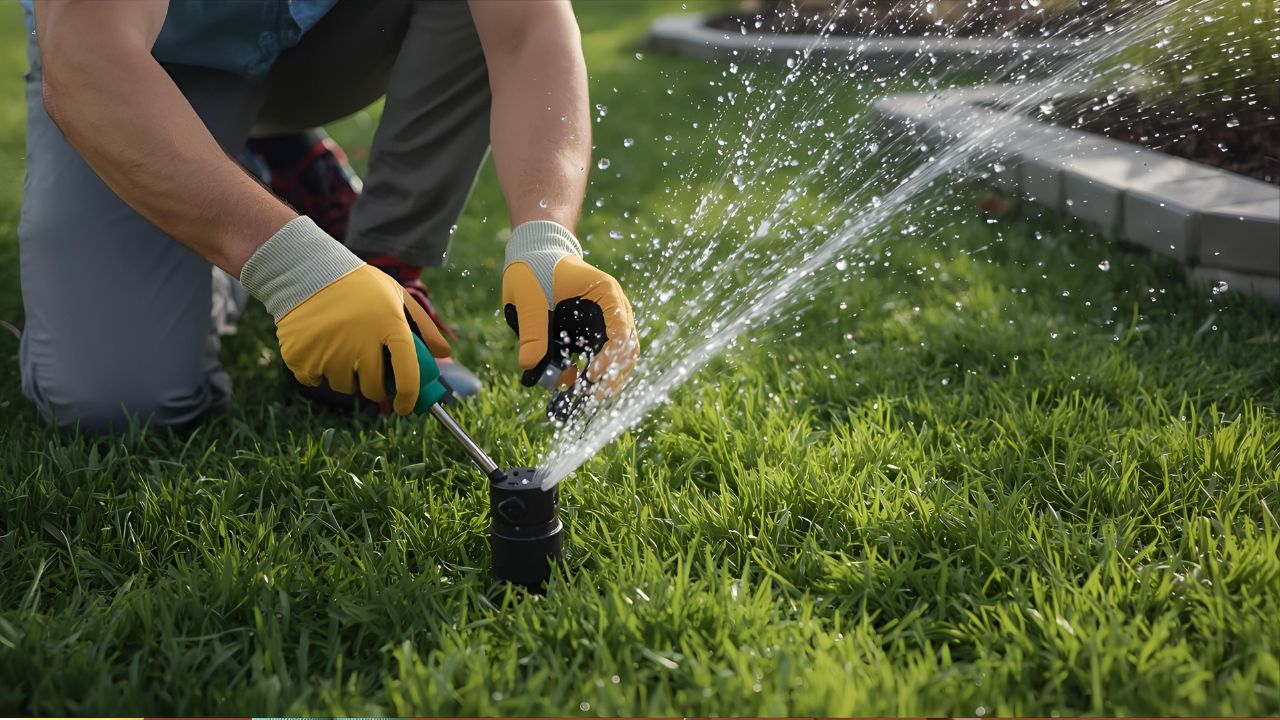
If you want a healthy, green lawn without wasting water, knowing how to adjust Rain Bird sprinkler heads is essential. Whether you have uneven coverage, dry patches, or water spraying onto sidewalks, a quick adjustment can make a big difference.
Rain Bird sprinkler heads are designed to give you precise control over the spray pattern, direction, and distance. With a few simple tools and steps, you can fine-tune your system for maximum efficiency and a lush lawn.
Understanding Rain Bird Sprinkler Heads
Before adjusting, it’s important to know which type of Rain Bird sprinkler head you have. Each model works a bit differently:
- Fixed Spray Heads: Ideal for small areas and flowerbeds. They spray water in a fixed pattern.
- Rotary or Rotor Heads: Best for large lawns. They rotate to cover wide areas with an adjustable arc.
- Pop-Up Sprinkler Heads: These rise when the system is running and retract when off.
Once you identify the type, you’ll know how to adjust it properly.
Tools You’ll Need
You don’t need any complicated equipment. Here’s what helps:
- A small flathead screwdriver
- A Rain Bird adjustment tool (optional but convenient)
- A pair of gloves
- Water source turned on (to see adjustments in real time)
Step-by-Step: How to Adjust Rain Bird Sprinkler Heads
1. Turn On the Sprinkler System
Start by running the zone that includes the sprinkler head you want to adjust. This helps you see where the water is spraying and identify coverage problems.
2. Adjust the Spray Direction
Locate the top of the sprinkler head. You’ll see a small slot or nozzle. Gently twist the nozzle to change the direction of the spray.
- For fixed spray heads, twist the top clockwise or counterclockwise to redirect water.
- For rotary heads, rotate the entire turret to point the nozzle where you want the water to start.
3. Adjust the Spray Arc (Coverage Angle)
If you’re using a rotary or rotor head, you can control how far it turns:
- Insert a flathead screwdriver into the adjustment screw on top.
- Turn it clockwise to decrease the arc (reducing coverage).
- Turn it counterclockwise to increase the arc (wider coverage).
Common arcs range from 40° to 360° depending on the model.
4. Adjust the Spray Distance
If water is overshooting your lawn or hitting sidewalks, you need to shorten the spray distance.
- Look for the radius adjustment screw on the nozzle top.
- Turn it clockwise to shorten the distance.
- Turn it counterclockwise to increase it.
Make small adjustments while the sprinkler is running until you achieve the desired range.
5. Check for Uniform Coverage
After adjustments, step back and observe how water is distributed. There should be no dry patches or overlapping zones. Adjust individual heads again if necessary for even coverage.
6. Clean or Replace the Nozzle if Needed
If the water pressure seems low or uneven, debris might be clogging the nozzle. Turn off the water, remove the nozzle, rinse it with clean water, and reinstall it.
Tips for Better Sprinkler Performance
- Avoid over-adjusting: Small turns go a long way — adjust gradually.
- Check pressure: Low water pressure can affect spray distance and coverage.
- Inspect regularly: Seasonal checks help catch leaks or misaligned heads early.
- Use the same type of heads per zone: Mixing rotor and spray heads can cause uneven watering.
- Schedule watering wisely: Early mornings are best to reduce evaporation.
When to Replace a Sprinkler Head
Sometimes, adjustment isn’t enough. Replace your Rain Bird sprinkler head if you notice:
- Cracked or damaged nozzles
- Heads stuck in the up or down position
- Persistent leaks around the base
- Extremely uneven spray patterns despite adjustments
Replacing a damaged head ensures consistent performance and water efficiency.
Frequently Asked Questions (FAQs)
Q1. How often should I adjust Rain Bird sprinkler heads?
Check them at least once every season or after any landscaping changes that affect water flow.
Q2. Can I adjust Rain Bird sprinklers while they’re off?
You can, but turning them on helps you see the results instantly and avoid over-adjusting.
Q3. What happens if I close the adjustment screw too much?
The water stream will weaken, and coverage may shrink too much. Adjust slowly until the spray looks even.
Q4. How do I prevent clogging in the nozzles?
Install a filter in your irrigation line and clean nozzles regularly to remove dirt and debris.
Q5. Do I need a special tool for adjustments?
A small flathead screwdriver works fine, though a Rain Bird adjustment tool makes it easier and faster.
Final Thoughts
Learning how to adjust Rain Bird sprinkler heads helps you keep your lawn healthy, reduce water waste, and maintain even coverage. The process only takes a few minutes and requires minimal tools.
By checking your sprinklers regularly and making small adjustments, you’ll ensure your irrigation system works efficiently all year round. Remember — the key is balance: not too much, not too little water.
Leave a Reply