
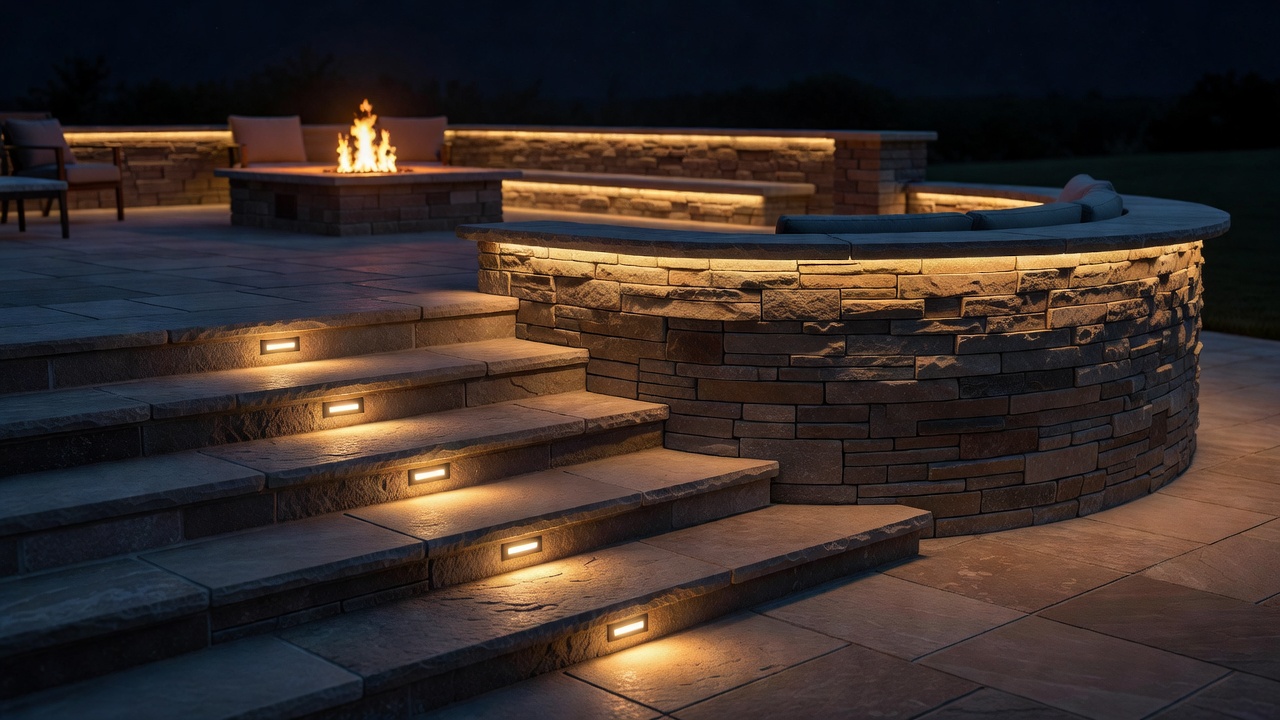
Hardscape lighting is the strategic integration of light fixtures into the non-living, structural elements of your outdoor property—such as stone walls, brick pillars, concrete patios, wooden decks, and stairways. Far more than just a decorative afterthought, hardscape lighting fundamentally transforms how an outdoor living space functions and feels after the sun goes down. By illuminating boundaries, highlighting textures, and guiding footsteps, it creates a seamless transition from the interior of a home to the exterior landscape. Whether you are designing a cozy backyard patio, a sprawling pool deck, or an elegant front entryway, understanding the principles, technologies, and fixture types of landscape lighting is essential for maximizing both the safety and aesthetic potential of your property.
What is Hardscape Lighting and Why Does It Matter?
In landscape architecture, “hardscape” refers to the solid, hard elements underfoot and around you—patios, driveways, retaining walls, and pathways. When we apply lighting directly to these structures, we achieve effects that traditional lawn-mounted pathway lights cannot replicate. Integrated fixtures become part of the architecture itself, casting light exactly where it is needed without creating visual clutter.
Enhancing Safety and Navigation
The primary functional role of hardscape lighting is safety. Uneven surfaces, elevation changes, and drop-offs are inherent risks in outdoor spaces. Stair lighting, in particular, is critical for preventing trips and falls. By clearly defining the edges of steps and pathways, low voltage lighting ensures that family members and guests can navigate the property safely, reducing liability and providing peace of mind.
Elevating Aesthetics and Ambiance
Beyond safety, hardscape lighting introduces drama and ambiance. It brings out the rich textures of natural stone, the warm tones of wood, and the sleek lines of concrete. Techniques like grazing—placing a light close to a textured wall to highlight its surface irregularities—can turn an ordinary retaining wall into a striking nighttime focal point. Soft, indirect illumination creates an inviting atmosphere that encourages outdoor entertaining long into the evening.
Increasing Property Value and Curb Appeal
A well-designed outdoor lighting system significantly boosts curb appeal and property value. Real estate professionals consistently note that professionally installed landscape and patio lighting makes a property stand out. It expands the usable square footage of a home by making outdoor rooms functional at night, offering a high return on investment for homeowners looking to upgrade their lifestyle and resale potential.
Key Types of Hardscape Lighting Fixtures
Choosing the right fixture depends on the specific structural element you are illuminating and the desired effect. Here are the most common and effective fixture types used in modern outdoor lighting.
Recessed Hardscape Lighting (Step and Wall Lights)
Recessed fixtures are built directly into the hardscape structure, sitting flush with the surface. They are the gold standard for stair lighting and seating walls. Because they are integrated, they are highly protected from the elements, lawnmowers, and foot traffic. Recessed step lights typically feature a louvered or hooded face to direct light downward onto the tread below, preventing harsh glare in the eyes of someone walking up the stairs.
Hardscape Paver Lights
Paver lights are specially designed to replace a standard paver, brick, or block in a driveway, patio, or pathway. They sit exactly level with the surrounding surface, creating a seamless look. Modern paver lights are often solar-powered or low voltage and are built to withstand the weight of passenger vehicles, making them incredibly durable for driveway applications.
Under-Cap and Pillar Lights
Retaining walls, seating walls, and fence pillars often feature a top cap or coping stone. Under-cap lights are discreet fixtures mounted beneath this overhang. They wash light downward, illuminating the face of the wall and the ground below. This creates a floating, luxurious effect without visible hardware. Pillar cap lights, on the other hand, sit on top of masonry columns, casting a wide pool of light downward and serving as striking architectural accents.
Deck and Railing Lighting
For elevated decks and boardwalks, specialized deck lighting is essential. Recessed deck lights can be installed directly into the deck boards or risers faces to illuminate walking surfaces. Additionally, post cap lights mount on top of deck railings, while LED strip lighting can be routed into the underside of handrails for sleek, glare-free task lighting.
Tape and Strip Lighting for Hardscapes
Flexible LED tape lighting has revolutionized outdoor living space design. Encased in waterproof silicone, these low-profile strips can be tucked into the lip of a fire pit, beneath a grill overhang, or along the base of a pergola. They provide a continuous, even glow of light that feels incredibly modern and custom.
Hardscape Lighting Technologies: LED vs. Halogen
The technology powering your hardscape lighting dictates its efficiency, longevity, and maintenance requirements. The industry has firmly shifted toward LED, though understanding both options is helpful.
The Shift to LED Hardscape Lights
LED (Light Emitting Diode) technology is now the undisputed standard for hardscape lighting. High-quality LED fixtures offer an operational lifespan of 30,000 to 50,000 hours or more, meaning they can last for decades with normal use. They consume a fraction of the electricity required by traditional halogen bulbs—often 75% to 80% less. Furthermore, LEDs run much cooler, reducing fire risk around wooden decks and dry landscaping. They also produce highly consistent light output and are highly resistant to vibration and shock.
Low Voltage Lighting Systems
Almost all modern hardscape lighting operates on a low voltage system (typically 12 volts). Low voltage is inherently safer than standard 120-volt line voltage, making it ideal for outdoor environments where moisture is present. It does not require rigid conduit, allowing for more flexible installation. A central transformer steps down the household current to 12V, and the fixtures are connected via weather-resistant direct burial cable. This makes low voltage lighting both safer to install and more cost-effective.
Design Principles for Hardscape Lighting
A successful outdoor lighting design relies on restraint and intention. The goal is to light the landscape, not the sky.
Layering Light in Your Outdoor Living Space
Professional designers use a concept called “layering” to create depth. This involves combining three types of light:
- Ambient Light: The general, base-level illumination that allows safe movement (e.g., step lights, paver lights).
- Task Light: Focused light for specific activities (e.g., grill lighting, under-counter light at an outdoor bar).
- Accent Light: Decorative light that creates drama (e.g., uplighting a textured wall, lighting a water feature).
By layering these elements, an outdoor living space feels rich and multifaceted rather than flat and one-dimensional.
Avoiding Light Trespass and Glare
The most common mistake in DIY landscape lighting is over-illumination and creating glare. Glare occurs when the bare bulb is directly visible, temporarily blinding the viewer and destroying the ambient mood. Always choose fixtures with glare shields, louvers, or frosted lenses. Warm color temperatures (2700K to 3000K) mimic the glow of firelight and feel much more relaxing than cool, blue-white light (4000K+). Additionally, ensure your lighting stays on your property by aiming fixtures downward or shielding them to avoid annoying your neighbors.
Highlighting Architectural Features
Hardscape lighting is an opportunity to showcase craftsmanship. If you have a natural stacked-stone wall, use a grazing technique by placing a fixture at the base pointing upward to emphasize the deep shadows and rugged texture. For sleek, modern concrete, use a washing technique from a distance to create a smooth, even glow. Let the architecture dictate the lighting style, not the other way around.
How to Plan and Install Hardscape Lighting
Proper installation is just as important as the fixtures you choose. Planning ahead saves time, money, and concrete.
Pre-Construction Planning is Critical
The most important rule of hardscape lighting is: Plan before you pour. It is incredibly difficult and expensive to core-drill into cured concrete or dismantle a stone wall to run wires later. If you are building a new patio, wall, or deck, lay the conduit and wire runs during the construction phase. Even if you do not plan to buy the fixtures immediately, having the infrastructure in place will make the future installation seamless.
Transformer and Wiring Sizing
To ensure consistent brightness, you must size your transformer and wiring correctly. Add up the total wattage of all your fixtures and choose a transformer that operates at roughly 80% of its maximum capacity (e.g., use a 100-watt transformer for an 80-watt load). For wire runs, use a multi-stranded direct burial cable. The longer the wire run and the higher the wattage, the thicker the wire gauge must be to prevent voltage drop—the dimming of fixtures furthest from the transformer.
Hiring a Professional vs. DIY
While low voltage lighting is accessible to skilled DIYers, there are compelling reasons to hire a professional. A licensed landscape lighting installer understands voltage drop calculations, proper splicing techniques (using waterproof direct-bury splice kits), and optimal fixture placement. They can also ensure the transformer is correctly mounted and code-compliant. Professional installation often comes with warranties that protect your investment against material defects and labor issues.
Maintenance and Troubleshooting
Hardscape lighting is relatively low maintenance, but it is not maintenance-free. Regular upkeep ensures longevity and consistent performance.
- Clean the Lenses: Over time, dirt, pollen, and mineral deposits can cloud the lenses of recessed and under-cap lights, significantly reducing light output. Wipe them down with a soft, damp cloth seasonally.
- Check for Water Intrusion: Moisture is the enemy of electrical connections. If a fixture is flickering or out, inspect the wire connections at the fixture. Ensure waterproof wire nuts or grease-filled connectors were used and are still intact.
- Replace Burnt Diodes: While LEDs rarely “burn out” entirely, individual diodes on an older strip or fixture can fail. Replace the module or strip section to maintain even lighting.
- Trim Surrounding Foliage: Plant growth can quickly obstruct pathway and paver lights. Keep grass and groundcovers trimmed back from the fixtures to maintain clear illumination.
Conclusion
Hardscape lighting is a vital investment that bridges the gap between structural functionality and nighttime beauty. By carefully selecting the right fixtures—from recessed step lights to versatile LED tape—and applying core design principles like layering and glare control, you can completely transform your property. It extends the hours you spend enjoying your outdoor living space, ensures safe navigation for your guests, and enhances the architectural features of your landscape. Whether you are illuminating a sweeping driveway, an intimate patio, or a complex retaining wall system, professional hardscape lighting turns the dark into a canvas, highlighting the very best parts of your home after dusk.
Frequently Asked Questions (FAQs)
1. What is the best lighting for outdoor steps?
Recessed hardscape lighting installed in the stair risers is the best option because it provides direct, glare-free illumination exactly where you step, ensuring maximum safety and a clean aesthetic.
2. Can hardscape lights be installed in existing concrete?
Yes, but it is difficult and costly; it requires core-drilling into the concrete to run wiring and house the fixture, which is why pre-planning during the initial hardscape construction is highly recommended.
3. What voltage is best for hardscape lighting?
Low voltage (12V) is the best and safest option for hardscape lighting; it minimizes the risk of electrical shock in wet outdoor environments and allows for flexible, shallow wire installations.
4. How long do LED hardscape lights last?
High-quality LED hardscape lights typically last between 30,000 and 50,000 hours, which translates to roughly 10 to 15 years of nightly use, drastically reducing maintenance compared to halogen bulbs.
5. How do I prevent my hardscape lights from glaring?
Choose fixtures with built-in louvers, hoods, or frosted lenses that direct the light downward and shield the bare bulb from direct view, ensuring a soft, ambient glow rather than harsh glare.
6. Do hardscape lights require a transformer?
Yes, all low voltage hardscape lights require a transformer to step down the standard household 120V current to the 12V needed to safely and efficiently power the outdoor fixtures.
Leave a Reply