
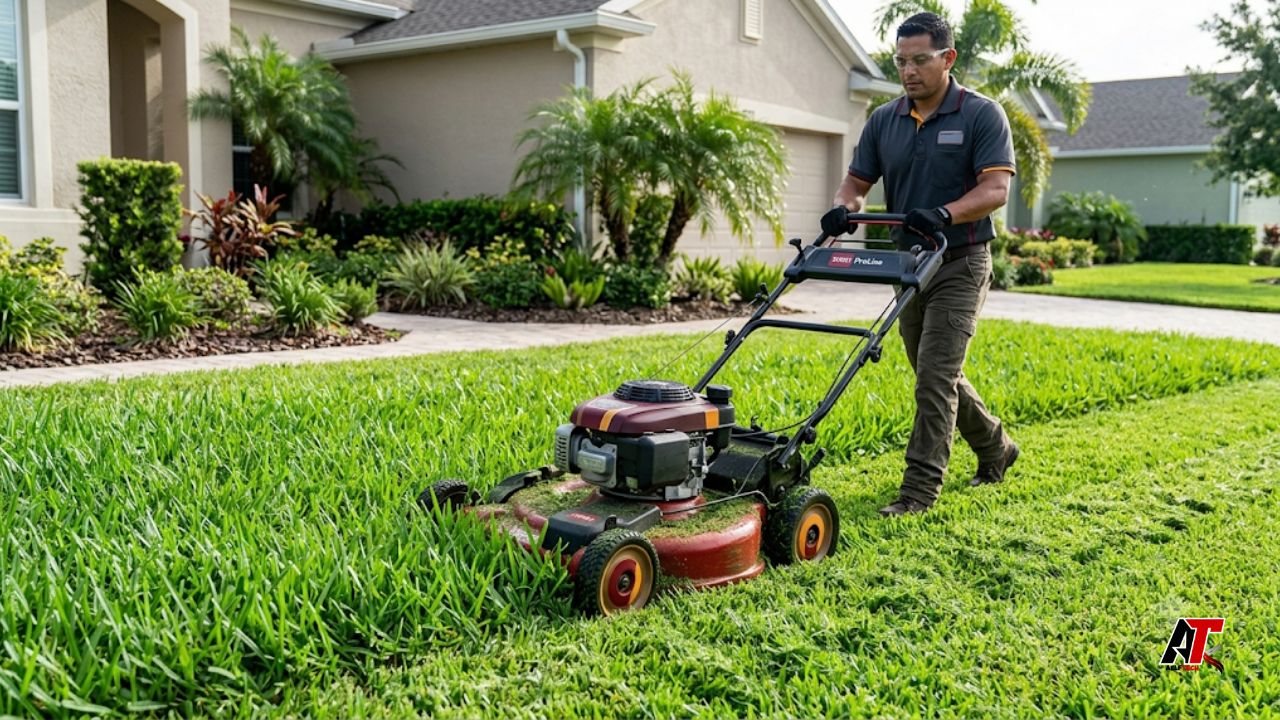
Florida summers can be tough on a lawn. High temperatures, strong sunlight, sandy soil, sudden downpours, humidity, and fast-growing weeds all place pressure on grass. The solution is not simply adding more water or fertilizer. Strong summer grass depends on a balanced lawn care plan that supports the roots while avoiding practices that create extra stress.
Effective Florida summer lawn care combines correct mowing, smart irrigation, responsible feeding, pest monitoring, and timely repairs. However, the strategies below give homeowners and lawn care professionals a practical framework for keeping turf dense, healthy, and better prepared for long periods of heat.
Why Florida Summer Conditions Challenge Grass
Florida lawns face two opposite problems during summer: heat stress and excess moisture. Grass loses water quickly on hot, windy days, but heavy storms can leave parts of the lawn saturated. Constantly wet soil limits oxygen around roots and encourages fungal activity, while dry areas near sidewalks and driveways may become vulnerable to insects and scorching.
Common Florida turf types such as St. Augustine, Zoysia, Bahia, and Bermuda also have different mowing heights and maintenance needs. St. Augustine is widely used because it handles warmth and produces a thick appearance, but it can suffer from chinch bugs, gray leaf spot, poor drainage, and mowing that is too low. The best lawn care service strategy begins with understanding the grass rather than applying the same treatment to every property.
1. Identify the Grass Type and Its Stress Signals
Before changing a maintenance routine, identify the turf variety. Standard St. Augustine grass is generally kept higher than Bermuda grass, while Bahia often looks more open and naturally produces seed heads. Using the wrong mowing height or fertilizer schedule can weaken the lawn even when every service visit is completed on time.
Learn to recognize early stress signs. Folded leaf blades, a blue-gray color, and footprints that remain visible may indicate that the lawn needs water. Yellow or brown patches beside hot pavement can suggest drought stress or chinch bug activity. Soft, dark, or continuously wet patches may point to poor drainage or overwatering. A professional should diagnose the cause before applying chemicals because insect damage, disease, nutrient deficiency, and irrigation problems can look similar.
2. Mow Higher During Heat
Mowing too short is one of the fastest ways to weaken summer turf. Taller grass has more leaf area for photosynthesis, shades the soil, and usually supports a deeper root system. For many standard St. Augustine cultivars, a mowing height of about 3.5 to 4 inches is appropriate. Dwarf varieties require a lower setting, so the grass type must be confirmed first.
Follow the one-third rule: remove no more than one-third of the leaf blade during a single mowing. If rain delays service and the lawn becomes tall, lower it gradually over two visits instead of scalping it. Keep mower blades sharp because dull blades tear the leaf tips, leaving a brown or frayed appearance and increasing stress. During peak growth, weekly mowing may be necessary, especially in South Florida. Clean clippings from hard surfaces, but leave a light layer of finely cut clippings on the lawn so nutrients can return to the soil.
3. Water Deeply, but Only When the Lawn Needs It
A fixed irrigation schedule can waste water and create weak roots. A better approach is to water when grass begins showing visible drought stress. In many Florida soils, applying roughly one-half to three-quarters of an inch during an irrigation event is enough to wet the root zone. Light daily watering keeps moisture close to the surface and encourages shallow roots that struggle during heat.
Run irrigation in the early morning. This reduces evaporation and allows leaves to dry as the day warms. Avoid watering late in the evening because extended leaf wetness may increase disease pressure. After meaningful rainfall, pause the irrigation system until the turf begins to show stress again. Homeowners should also check local watering restrictions, since permitted days and times can vary by county or water management district.
4. Audit the Irrigation System
Even a good watering plan fails when sprinkler coverage is uneven. Broken, blocked, tilted, or leaking heads can create dry rings, flooded corners, and water running onto pavement. Place several straight-sided containers across each irrigation zone, run the system for a measured period, and compare the collected amounts. Large differences show that the zone needs adjustment.
Separate sunny and shaded areas whenever possible. Grass beneath trees dries more slowly and may need less irrigation than turf in full sun. Correcting coverage saves water and prevents homeowners from increasing the entire system runtime just to fix one dry area. Repairing one head or redesigning one zone is often cheaper than repeatedly treating disease or replacing dead turf.
5. Use Fertilizer Carefully in Summer
Fertilizer can support color and growth, but more is not always better. Excess nitrogen produces soft, rapid growth that needs more mowing and may become more vulnerable to disease. It can also contribute to thatch and nutrient runoff. Follow the fertilizer label, use products suitable for the turf type, and observe state and local rules. Some Florida counties restrict nitrogen and phosphorus applications during parts of the rainy season.
A soil test is helpful when a lawn repeatedly turns yellow or responds poorly to treatment. High soil pH can reduce the availability of iron and manganese, while sandy soil may lose nutrients quickly. Iron can improve color when iron is deficient, but it does not replace nitrogen. A lawn care provider should build a feeding plan around soil conditions, grass type, previous applications, shade, irrigation, and local regulations instead of using a one-size-fits-all program.
6. Control Weeds Without Damaging Heat-Stressed Turf
Weeds compete with grass for water, sunlight, and nutrients. However, treating weeds during extreme heat requires care. Some herbicides can injure sensitive turf when temperatures are high, and blanket applications are unnecessary when weeds are limited to a few areas. Spot treatment is often the safer and more economical option.
The strongest long-term weed control is dense grass. Correct mowing, proper watering, and balanced nutrition help turf cover bare soil before weeds can establish. When a product is needed, confirm that it is labeled for the exact grass type and target weed. Never increase the rate to get faster results, and avoid combining multiple products unless the labels clearly allow it.
7. Watch Closely for Summer Insects and Disease
Hot, sunny, water-stressed areas are common starting points for chinch bug damage in St. Augustine lawns. The affected turf may first look yellow and then turn brown. Other possible pests include webworms, armyworms, mole crickets, and grubs. Because drought damage can look similar, inspect the border between healthy and damaged grass before choosing a treatment.
Humidity and frequent rain also increase disease pressure. Gray leaf spot commonly affects fresh St. Augustine growth during warm, rainy conditions. Excessive irrigation and nitrogen can make the problem worse. Avoid automatically treating every brown patch with insecticide or fungicide. Accurate diagnosis prevents wasted money, unnecessary pesticide use, and additional stress on the lawn. A service provider should document what was found, explain the treatment, and schedule a follow-up inspection.
8. Improve Soil, Drainage, and Root Health
Healthy roots are the foundation of a strong summer lawn. Compacted areas near driveways, gates, play spaces, and parking zones may not absorb water evenly. Core aeration can improve movement of air and water when compaction is a confirmed problem. Low areas that remain wet after storms may require grading, drainage work, or irrigation changes rather than more fertilizer.
Thatch should also be evaluated. A small amount is normal, but a thick layer can limit water penetration and hold treatments above the soil. Overwatering and overfertilizing often contribute to excessive thatch. Dethatching or vertical mowing can be stressful, so it should be performed only when the grass is actively growing and able to recover. Routine mowing clippings do not normally cause thatch when the lawn is cut at the proper height and frequency.
9. Repair Thin or Damaged Areas at the Right Time
Thin areas allow weeds to spread and soil temperatures to rise. Before installing sod or plugs, correct the original cause. Test irrigation coverage, check sunlight, inspect for insects, and determine whether traffic or drainage is involved. New grass placed over an unresolved problem may fail within weeks.
Warm-season turf establishes best while it is actively growing. Fresh sod and plugs need more frequent moisture at first, but watering should gradually become deeper and less frequent as roots develop. Keep people and pets off repaired areas until the turf is anchored. Matching the existing grass variety also creates a more consistent color, texture, and mowing requirement.
10. Build a Seasonal Lawn Care Service Plan
A reliable service plan should change with the weather instead of repeating the same tasks all year. During Florida summer, the schedule may include weekly mowing, irrigation checks after storms, pest scouting, selective weed control, and fertilizer applications only when conditions and local rules allow. During cooler or drier months, mowing and irrigation frequency may be reduced.
Homeowners comparing providers for landscaping Deerfield Beach should ask how the company adjusts mowing height, watering recommendations, and treatment timing during heat and heavy rain. It is also wise to request a written scope of work. Knowing whether the price includes edging, blowing, shrub trimming, weed control, fertilization, irrigation checks, or pest treatment makes quotes easier to compare.
Budget planning matters as well. Property size, grass type, service frequency, current lawn condition, and the number of included treatments all affect pricing. Reviewing realistic lawn care costs in Broward County can help homeowners understand why a neglected or complex property may cost more than a small lawn receiving regular maintenance. The lowest quote is not always the best value if it excludes essential inspections or leads to expensive repairs later.
A Practical Weekly Summer Checklist
A simple routine makes summer lawn care easier to manage. Walk the property before mowing and look for wilted blades, standing water, insects, fresh weeds, discolored patches, and damaged sprinkler heads. Mow at the correct height with a sharp blade, edge carefully, and remove clippings from streets and drains. Check the rain gauge before running irrigation, and inspect treated or repaired areas during the next visit.
Keep service records that include mowing dates, rainfall, irrigation changes, products applied, and problem areas. These notes reveal patterns. For example, repeated browning beside a driveway may be heat or irrigation related, while damage that expands despite adequate moisture may need a pest inspection. Records also prevent duplicated fertilizer or pesticide applications.
How Professional Care Can Save Money
Professional lawn care creates value when it prevents small problems from becoming costly replacements. Correct mowing protects roots, irrigation audits reduce wasted water, and early pest detection can limit the size of damaged areas. A knowledgeable provider also understands local grass varieties, rainy-season challenges, and fertilizer restrictions.
The goal is not to apply more products. It is to make better decisions at the right time. Homeowners should expect clear communication, itemized services, and explanations for recommended treatments. For more practical home and property maintenance guidance, visit team aelftech.com.
Conclusion
Stronger grass during Florida summer heat comes from consistent, balanced care. Identify the turf type, mow at the correct height, water deeply only when needed, maintain even sprinkler coverage, and use fertilizer carefully. Combine these basics with regular pest, disease, weed, soil, and drainage inspections.
A lawn that receives the right service at the right time develops deeper roots, recovers faster from heat and storms, and requires fewer emergency treatments. Whether the property is maintained by the homeowner or a professional crew, a flexible seasonal plan is the most dependable way to protect appearance, health, and long-term lawn care costs.
Leave a Reply