
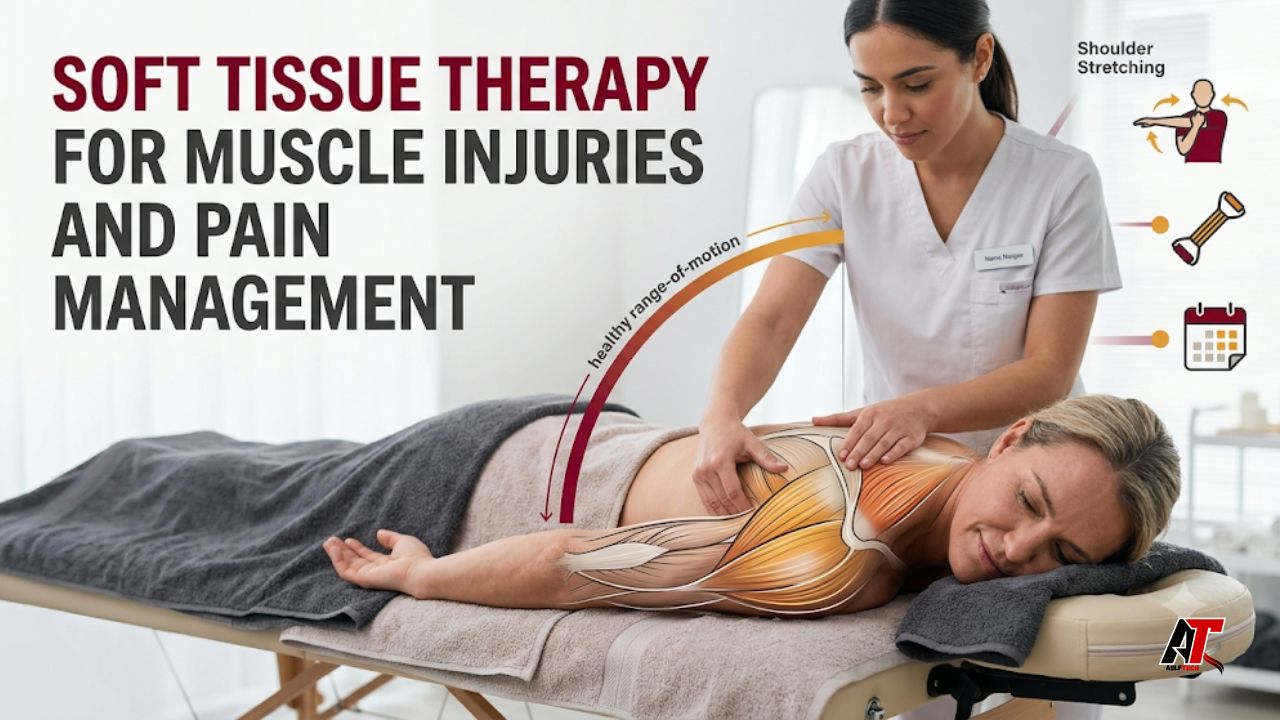
Muscle pain can begin after a workout, a sudden movement, repetitive work, poor lifting technique, prolonged sitting, or a sports injury. In many cases, the discomfort improves with time and sensible activity. In others, tightness, weakness, reduced movement, and pain continue to interfere with work, sleep, exercise, and daily routines. This is where soft tissue therapy may become part of a wider recovery plan.
Soft tissue therapy is a broad term for hands-on techniques applied to muscles, fascia, tendons, and other connective tissues. Depending on the practitioner and the problem, treatment may include massage, myofascial techniques, trigger-point pressure, assisted stretching, or gentle tissue mobilization. The purpose is not to “force” an injury to heal. It is to reduce symptoms, improve comfortable movement, and help a person participate in rehabilitation.
The most effective care is usually based on assessment rather than a standard routine. A fresh muscle strain requires a different approach from long-term neck tension, tendon pain, post-exercise soreness, or restricted movement after an old injury. This guide explains what soft tissue therapy can and cannot do, when it may be helpful, what to expect during a session, and how it fits with exercise, recovery, and pain management.
What Is Soft Tissue Therapy?
Soft tissues include muscles, tendons, ligaments, fascia, skin, nerves, and blood vessels. In everyday musculoskeletal care, soft tissue therapy usually focuses on muscles and the connective tissues that support movement. Practitioners use their hands, forearms, or approved tools to apply pressure, glide over tissue, move a joint gently, or guide a stretch.
The exact technique depends on the goal. A practitioner may use lighter pressure to settle a sensitive area, slower sustained pressure around a restricted region, or active movement while contacting a muscle or tendon. Treatment should be adjusted to the person’s comfort, medical history, injury stage, and response.
Soft tissue therapy is often described as a way to “break up scar tissue” or permanently release knots. These phrases are easy to understand but can be misleading. Human tissue is living and adaptable, and pain is influenced by many factors, including load, sleep, stress, previous injury, sensitivity, strength, and expectations. Hands-on care may temporarily reduce soreness or improve range of motion, but lasting recovery usually depends on progressive movement, strength, and better management of the activity that caused the problem.
How Muscle Injuries and Persistent Pain Develop
A muscle strain occurs when muscle fibres are overstretched or torn. It may happen suddenly during sprinting, lifting, jumping, or changing direction, or it may develop gradually when the same area is repeatedly loaded without enough recovery. Common symptoms include pain, tenderness, weakness, swelling, bruising, cramping, and difficulty using the affected area normally.
This matters because treatment should match the condition. Applying heavy pressure to a fresh tear is very different from using comfortable manual therapy for persistent muscle tension. A qualified clinician should look at how the pain started, which movements aggravate it, whether strength has changed, and whether symptoms suggest a more serious problem.
How Soft Tissue Therapy May Help
Research on massage and related manual therapies suggests that some people experience short-term improvements in pain, relaxation, and movement. The response varies, and hands-on treatment is generally more useful as one part of a complete plan than as a stand-alone cure.
One possible benefit is temporary pain modulation. Comfortable touch, pressure, and movement can change sensory input to the nervous system and make an area feel less guarded. This may help a person move with greater confidence. Treatment can also reduce the feeling of muscle tightness, even when the tissue has not literally become longer.
Range of motion may improve for a period after treatment, particularly when therapy is followed by active movement. This can create a useful window for stretching, strengthening, or practising a movement that was previously uncomfortable. Some people also value the relaxation and stress reduction associated with hands-on care.
People exploring soft tissue therapy in Brampton should expect an assessment-led approach rather than a promise that one technique will solve every problem. The meaningful outcome is not how intense the session feels. It is whether pain, function, confidence, and activity tolerance improve over time.
Common Techniques Used in Soft Tissue Care
Massage-based techniques use rhythmic or sustained pressure over muscles and surrounding tissues. Pressure can range from light to firm, but more force is not automatically more effective. A productive session should remain tolerable and should not create sharp, electric, or alarming pain.
Myofascial techniques usually involve slower pressure or gentle movement intended to reduce the feeling of restriction. Trigger-point work applies focused pressure to a tender area that may reproduce familiar symptoms. Assisted stretching combines therapist guidance with controlled lengthening, while active-release-style methods pair contact with movement.
A responsible practitioner explains why a method is being used, checks comfort throughout the session, and changes the technique if symptoms worsen.
Soft Tissue Therapy During Different Recovery Stages
Timing matters. During the first two or three days after a fresh sprain or strain, the priority is usually protecting the area, controlling excessive swelling, and avoiding activities that clearly aggravate the injury. NHS guidance advises avoiding massage during the first couple of days because it may increase swelling or irritation. Severe pain, major weakness, or inability to use the area requires assessment.
As the acute reaction settles, gentle movement is often introduced within comfort. A clinician may use light hands-on techniques around—not aggressively into—the injured region, followed by range-of-motion work. The aim is to prevent unnecessary stiffness while respecting tissue healing.
During the rebuilding stage, progressive loading becomes central. Strength exercises, balance work, sport-specific drills, and gradual return to activity help the tissue tolerate real-life demands again. Soft tissue therapy may be used before or after exercise to improve comfort, but it should not replace loading.
For persistent pain, treatment may focus on symptom relief and confidence while the person gradually increases activity. Progress is measured by improved function, not by repeatedly finding new “knots” that require indefinite treatment.
Soft Tissue Therapy for Pain Management
Pain management is broader than reducing a pain score for a few hours. Good care helps a person sleep, work, walk, train, and perform daily tasks with greater confidence. It also provides a plan for managing flare-ups without becoming dependent on passive treatment.
Soft tissue therapy can be useful when pain makes movement feel threatening or when temporary relief helps someone begin exercise. However, evidence for massage is stronger for short-term relief than for permanent correction of chronic musculoskeletal pain. Results are influenced by the condition, treatment dose, practitioner, and individual preferences.
For long-lasting pain, a balanced plan may include education, graded exercise, activity modification, sleep support, stress management, and medical care when needed. Many people would like a simple treatment that removes pain immediately, but persistent pain rarely has one cause or one solution. Hands-on therapy works best when it supports active recovery and clear goals.
What to Expect During a Session
A good appointment begins with questions. The practitioner should ask when symptoms started, what movements are difficult, whether there was trauma, which activities increase or reduce pain, and whether you have relevant health conditions, surgery, medication, or previous injuries.
The physical assessment may include posture, joint movement, muscle strength, walking, balance, and functional tasks such as squatting, reaching, or lifting. Treatment is then selected according to the findings. You may be asked to change position or move a limb while pressure is applied.
Some tenderness can occur, especially around a sensitive area, but treatment should not feel uncontrolled. Tell the practitioner immediately if you experience sharp pain, numbness, tingling, dizziness, nausea, or symptoms that spread unexpectedly. After treatment, mild soreness may occur for a short time. The practitioner should provide practical advice on movement, hydration, exercise, workload, or when to return.
A useful treatment plan includes measurable goals, such as turning the neck more comfortably, walking farther, returning to training, or lifting without a flare-up.
Who May Benefit—and Who Should Be Cautious
Soft tissue therapy may help active adults, athletes, office workers, tradespeople, and people recovering from uncomplicated strains or overuse problems. It may also be used as supportive care for neck, shoulder, back, hip, or leg discomfort when a clinician has ruled out serious causes.
Extra caution is needed with recent fractures, open wounds, skin infection, uncontrolled bleeding disorders, blood clots, severe osteoporosis, recent surgery, cancer in the treatment area, or medicines that increase bruising or bleeding. Pregnancy, diabetes, reduced sensation, and inflammatory conditions may require modified positioning or pressure.
People should not use massage to delay diagnosis. Seek urgent medical care for a visibly deformed limb, severe or rapidly increasing swelling, inability to bear weight, major weakness, loss of sensation, a cold or pale limb, fever with redness, chest pain, difficulty breathing, or calf swelling with warmth and tenderness. Sudden severe pain during activity may indicate a rupture or other significant injury.
How to Choose a Qualified Practitioner
Choose a practitioner whose training and professional scope match your needs. Depending on location, soft tissue techniques may be provided by regulated massage therapists, physiotherapists, chiropractors, athletic therapists, or other qualified clinicians. Check registration, insurance, experience, and whether the practitioner regularly treats your type of problem.
Ask how they assess injuries, how they decide which techniques to use, and how treatment will be combined with exercise or self-management. Be cautious of guarantees, claims that every pain is caused by scar tissue, or plans that require endless sessions without reviewing progress.
The practitioner should obtain consent, explain expected sensations, respect personal boundaries, and stop when asked. They should also refer to a physician or another professional when symptoms fall outside their scope. Good care is collaborative and gives the patient more control over recovery.
Combining Therapy With Exercise and Daily Habits
The benefits of a session are easier to maintain when daily habits support recovery. Begin with the exercises prescribed for your condition and increase load gradually. Doing too much too soon can trigger a flare-up, while avoiding all movement can contribute to weakness and fear.
For desk-related discomfort, change position regularly, adjust screen and chair height, and use short movement breaks rather than trying to hold a “perfect” posture all day. Athletes should review training volume, recovery days, technique, footwear, and recent increases in speed or intensity.
The goal is not to remove every sensation before returning to activity. It is to restore capacity safely, with symptoms remaining manageable and function improving from week to week.
Frequently Asked Questions
Is soft tissue therapy the same as massage?
They overlap, but soft tissue therapy is often more assessment-driven and may include massage, myofascial techniques, trigger-point work, assisted movement, and rehabilitation advice. The title used by a clinic does not guarantee a specific method, so ask what the session includes.
Does soft tissue therapy hurt?
Mild tenderness can occur, but sharp or severe pain is not required for results. Pressure should be adjusted to your comfort and condition. Tell the practitioner if you feel numbness, burning, dizziness, or pain that feels unsafe.
How many sessions will I need?
There is no universal number. A minor, improving problem may need only advice and a few visits, while persistent pain may require a longer rehabilitation plan. Progress should be reviewed through function, strength, movement, and activity tolerance rather than session count alone.
Can soft tissue therapy heal a muscle tear?
Hands-on therapy does not directly repair torn fibres. Healing occurs through the body’s biological processes. Therapy may help manage symptoms and movement at an appropriate stage, while progressive rehabilitation restores strength and tolerance.
Can I exercise after treatment?
Light activity is often appropriate, but the answer depends on the injury and treatment intensity. Follow the practitioner’s advice, avoid immediately testing the area with maximal effort, and return to training through a gradual plan.
Final Thoughts
Soft tissue therapy can be a useful part of care for muscle injuries, stiffness, and pain, especially when it provides short-term relief that supports movement and rehabilitation. Its value should be judged by meaningful improvements in daily function, not by the intensity of pressure or the number of tender points found.
The safest approach combines proper assessment, realistic expectations, progressive exercise, sensible workload management, and referral when symptoms suggest something more serious. For more practical health, technology, and lifestyle information, visit aelftech.com USA.
Leave a Reply