
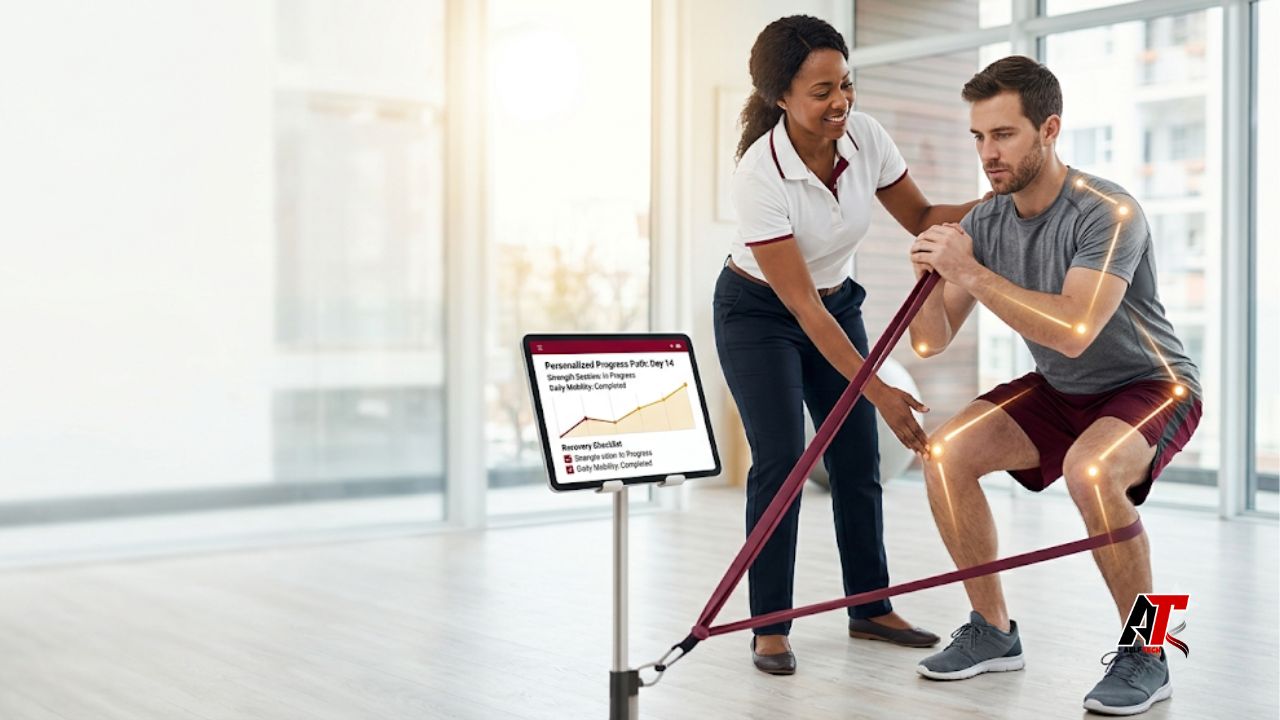
Recovery is rarely a straight line. Two people can have the same diagnosis but face very different challenges. Their pain, movement limits, work needs, fitness goals, and worries may all differ. For this reason, a standard exercise sheet may help one person but fail another. Personalized physical therapy starts with the individual, not just the injury.
A personalized plan fits your abilities, health history, daily routine, symptoms, and goals. First, the therapist checks how you move and finds the factors that may slow recovery. The plan then changes as your body responds. The aim is not only short-term relief. It is also to rebuild useful movement, strength, confidence, and long-term independence.
What Is Personalized Physical Therapy?
Personalized physical therapy is a patient-centered form of rehabilitation. The therapist adapts the assessment, goals, exercises, education, and visit schedule to one person. The plan may change between visits because recovery depends on your response, not a fixed calendar.
A physical therapist may check joint movement, muscle strength, balance, posture, coordination, endurance, sleep, stress, and past injuries. They also consider the tasks you need to do at home, work, or during sport. An athlete may want to return to competition. An older adult may want to climb stairs safely. An office worker may want to sit and lift without repeated neck or back pain.
The main difference is relevance. Every part of the plan should support a real goal or movement problem. Therapists do not choose exercises simply because they are popular. They choose them because the assessment shows they may help you reach an outcome that matters.
Why a One-Size-Fits-All Plan Can Fall Short
A diagnosis is helpful, but it does not explain everything. One person with knee pain may have stiff ankles, weak hip muscles, poor landing control, or a sudden rise in training. Another person may have a completely different cause. Giving both people the same routine can miss the main reason each person is struggling.
Generic plans may also ignore your current tolerance. An advanced exercise may be too hard early in recovery. On the other hand, a routine that never becomes harder may not rebuild enough strength. A personalized plan lets the therapist adjust the movement range, resistance, speed, repetitions, and rest time. This creates a safe but useful challenge.
The Initial Evaluation: Building the Recovery Roadmap
The first appointment creates your recovery roadmap. The therapist asks when the problem started, what makes it better or worse, and how it affects daily life. They also ask what you want to do again. Medicines, surgery, health conditions, sleep, work demands, and previous treatment may guide the plan.
The physical exam may include movement checks, strength tests, mobility measures, balance tasks, and functional tests. The therapist may watch you squat, reach, walk, run, lift, or change direction. These activities connect your symptoms with the movements you use in real life.
After the evaluation, the therapist should explain the key findings in simple language. They should also discuss your goals, likely recovery stages, and home responsibilities. A strong plan is collaborative. It reflects your priorities and fits your schedule.
Core Elements of an Individualized Treatment Plan
1. Specific and measurable goals
Goals give treatment a clear direction. Instead of simply saying, ‘I want to get better,’ you may aim to walk for 30 minutes or finish a full work shift. You may also want to reach overhead without strain or pass a sport-specific movement test. Clear goals make progress easier to see and measure.
2. Symptom and load management
Early treatment may reduce activities that trigger symptoms while helping you stay safely active. This may involve changing your training volume, work position, lifting method, or movement technique. Complete rest is not always helpful. However, pushing through every symptom is not wise. Your therapist helps you find a manageable activity level.
3. Progressive therapeutic exercise
Exercise is often the main part of physical therapy. Your program may improve mobility, strength, balance, coordination, endurance, power, or speed. Progression is important. As you improve, the exercises should slowly become more like the tasks you want to perform.
4. Hands-on treatment when appropriate
A therapist may use manual therapy, soft-tissue work, or joint mobilization to improve short-term comfort or movement. These methods are most useful when they help you take part in active rehabilitation. They should support exercise and self-management, not replace them.
5. Education and self-management
Understanding your condition can reduce fear and help you make better choices. Your therapist may explain pain responses, pacing, posture options, warm-ups, sleep habits, and recovery expectations. They may also teach you how to handle a temporary flare-up. This knowledge remains useful after formal treatment ends.
How Personalized Therapy Supports Better Recovery
Personalized care keeps rehabilitation focused on your actual limitations. It also allows regular changes. For example, pain may improve while strength remains low. In that case, the plan can move toward resistance and functional training. If an exercise causes too much discomfort, the therapist can change the dose or choose another movement that trains the same skill.
This flexible approach can also improve confidence. Many people become cautious after an injury because they do not know which sensations are safe. Gradual practice helps them trust their body again. A person may begin with a supported movement and later progress to lifting, running, jumping, or working independently.
Personalized treatment cannot promise a fast recovery. Healing time, general health, stress, sleep, and consistency still affect progress. However, regular reviews make it easier to respond when recovery is slower or different than expected.
The Role of Technology and Wearable Data
Technology can provide useful information when it supports clinical judgment. Activity trackers, smartwatches, motion sensors, and other wearable devices can record steps, active time, heart rate, sleep, and movement trends. A 2026 pilot study combined wearable data, phone location data, and short real-time surveys. The researchers used this information to study individual physical and emotional responses.
In physical therapy, this data may show whether you are meeting activity goals or doing too much too soon. It may also show whether you are becoming more consistent outside the clinic. Some systems can count exercise repetitions or give feedback on movement quality. This can be useful for home programs and remote rehabilitation.
Wearable data still needs context. Devices can be inaccurate, and more numbers do not always improve care. Ask what information the clinic collects, how it uses the data, and how it protects your privacy. Technology should answer a clear clinical question. It should not make you anxious about every daily number.
Conditions That May Benefit From a Tailored Approach
Personalized physical therapy can support many muscle, joint, nerve, balance, and post-surgery needs. Common examples include back or neck pain, shoulder problems, knee or hip pain, sports injuries, tendon problems, arthritis, and orthopedic surgery recovery. It may also help with balance difficulties and return-to-work rehabilitation.
Treatment should always match the person and the stage of recovery. After surgery, care may begin with protection and gentle movement. A runner may need strength training, changes in training load, and a review of running form. Balance treatment may combine home-safety advice with controlled strength and reaction exercises.
Your Role in the Recovery Process
Physical therapy works best as a partnership. The therapist brings clinical knowledge, while you provide important details about your symptoms, goals, barriers, and daily routine. Honest feedback keeps the plan accurate. Tell your therapist when an exercise is unclear, symptoms stay high, or the home program is hard to follow.
Consistency matters more than perfection. A short home program done regularly may help more than a long routine done rarely. Track useful changes such as walking time, confidence, work ability, and recovery after activity. These improvements may appear before your pain fully settles.
Temporary flare-ups can happen during recovery. Notice how strong they are, how long they last, and whether your overall function is improving. Your therapist can explain how to change repetitions, resistance, movement range, or rest. Seek prompt medical advice for severe new symptoms, major swelling, sudden weakness, unexplained numbness, chest pain, or trouble breathing.
How to Choose the Right Physical Therapy Provider
Choosing a provider involves more than finding the nearest clinic. Look for a licensed professional who completes a detailed assessment, explains the findings, listens to your goals, and uses a measurable plan. Ask how much one-to-one time you will receive. Also ask about supervision, home-exercise teaching, and progress reviews.
Location matters when you need in-person treatment. For example, people searching for personalized physical therapy in Lexington can compare the clinic’s services, location, therapist qualifications, fees, insurance rules, and style of care. This helps them decide whether the clinic fits their goals before booking an evaluation.
A trustworthy therapist should also know when physical therapy is not enough. They may refer you to a doctor or another health professional when your symptoms need further medical assessment.
Signs That Your Plan Is Working
Progress is more than a lower pain score. You may move more smoothly, complete daily tasks with less effort, or notice better strength. Flare-ups may become shorter, and you may feel less worried about using the affected area. You may also recover faster after activity or perform a task with better control.
Your therapist should repeat key tests and compare the results with your starting point. If progress stops, they may need to review the exercise dose, contributing factors, or goals. Reassessment is a normal and useful part of personalized care.
A Simple Recovery Framework to Follow
- Understand the main problem and the factors that may contribute to it.
- Choose one or two practical goals that matter most in daily life.
- Follow the home program at the agreed frequency and record important responses.
- Increase activity slowly instead of making sudden jumps in time or intensity.
- Discuss barriers early so your therapist can simplify or adjust the plan.
- Measure progress through movement, strength, confidence, and function – not pain alone.
Frequently Asked Questions
How is personalized physical therapy different from regular physical therapy?
Personalized care begins with an individual assessment. It links treatment goals to your daily activities and changes the plan based on your response. Good physical therapy should already use these principles. However, the amount of individual attention can vary between clinics.
How long does physical therapy take?
The timeline depends on your condition, injury severity, healing needs, general health, goals, and consistency. Some people need only a few visits for advice and exercise guidance. Others need a longer program. Your therapist should give an early estimate and update it as your progress becomes clearer.
Should physical therapy exercises hurt?
Some exercises may cause mild effort, stretching, or brief discomfort. However, you should not ignore severe or worsening pain. Ask your therapist what level of discomfort is acceptable and how quickly it should settle.
Can I do personalized physical therapy at home?
Many treatment plans include exercises you can do at home. Some services are also available through telehealth. However, an in-person assessment may be important when you need hands-on testing, safety checks, or special equipment.
Do wearable trackers replace a physical therapist?
No. Wearables can provide useful activity and movement data. However, they cannot fully assess symptoms, diagnose a condition, or create a safe plan for every person. They work best as supporting tools under professional guidance.
What should I bring to my first appointment?
Bring any requested medical or surgical records, a list of medicines, and imaging reports. Wear comfortable clothes that allow easy movement. Also prepare a clear description of the activities you want to regain. Write down questions about the treatment plan, expected schedule, and home exercises.
Conclusion
Personalized physical therapy makes rehabilitation clearer and more flexible. A careful assessment finds the main limits affecting your recovery. Shared goals guide treatment, while regular reviews keep the plan useful. Exercise, education, hands-on care, and technology may all help. However, each part should support meaningful movement and long-term independence.
The best recovery plan is not always the most complex one. It is a plan you understand, can follow, and can progress safely. Open communication with a qualified therapist can help you rebuild strength, movement, and confidence for the activities that matter most. For more practical health, technology, and wellness content, explore aelftech.com.
Leave a Reply