
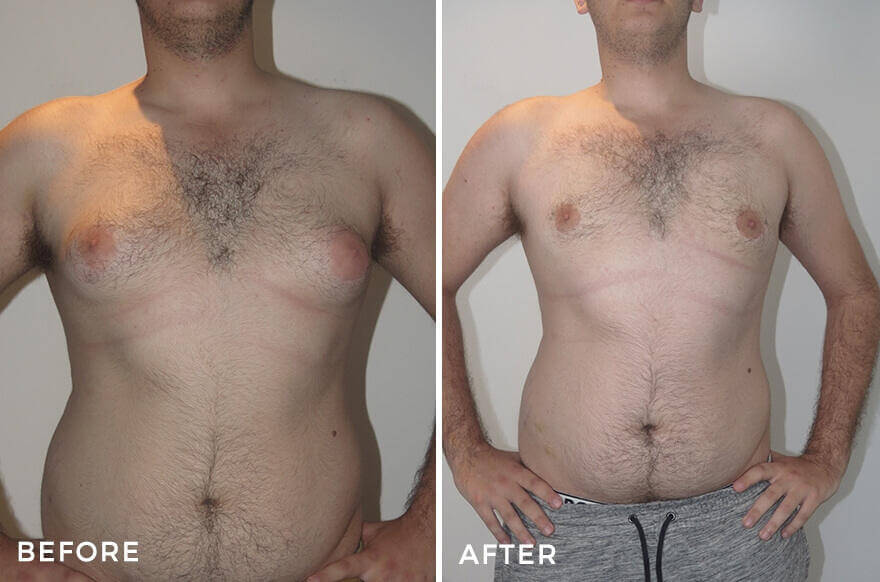
Gynecomastia, which is the enlargement of breast tissue in males, is a common condition that can affect teenagers, adults, and older men. While it is not usually a health threat, it can cause embarrassment, self-consciousness, and discomfort.
Understanding what causes gynecomastia, realistic ways to reduce symptoms, and when medical or surgical treatment may be appropriate can help individuals make informed decisions about care.
What Is Gynecomastia?
Gynecomastia refers to the benign or non-cancerous enlargement of male breast tissue. It differs from fat accumulation (lipomastia or pseudogynecomastia) because it involves glandular tissue growth rather than just fat.
How Gynecomastia Develops
Male breasts normally contain small amounts of glandular tissue. Gynecomastia develops when the balance between estrogen (which promotes breast tissue growth) and testosterone (which inhibits it) is disrupted.
This hormonal imbalance may occur due to:
- Puberty
- Aging
- Certain medications
- Underlying health conditions
- Hormonal changes
The condition can occur on one or both sides and may range in size from mild swelling to more noticeable enlargement.
Common Causes of Gynecomastia
1. Hormonal Changes
- Puberty: Hormone fluctuations may trigger temporary breast enlargement in teenage boys.
- Aging: Testosterone levels may decline with age, allowing relative estrogen effects to increase.
2. Medications and Substances
Certain medications and substances may contribute to gynecomastia, such as:
- Some anti-androgens
- Steroids or anabolic substances
- Certain antidepressants
- Alcohol and recreational drugs
Medication changes should always be discussed with a healthcare provider.
3. Health Conditions
Medical conditions that affect hormone levels may lead to gynecomastia, including:
- Liver or kidney disease
- Thyroid disorders
- Obesity-related hormonal shifts
Identifying underlying causes helps tailor appropriate treatment.
Natural Ways to Manage Gynecomastia
Not all cases require surgery, and some individuals find improvement with lifestyle and behavior changes. Some natural ways to manage gynecomastia include:
1. Maintain a Healthy Weight
Since excess body fat can be associated with higher estrogen levels, regular exercise, and a balanced diet may help reduce overall chest appearance by decreasing fat stores.
2. Avoid Substances That Affect Hormones
Limiting alcohol consumption, avoiding anabolic steroids, and reviewing medications with a healthcare provider may reduce hormone-related stimulation of breast tissue.
3. Strength Training and Resistance Exercises
Strength training does not directly shrink glandular tissue, but it can improve chest contour by building muscle tone and reducing surrounding fat.
Exercises That Support Chest Definition
While exercises cannot eliminate glandular tissue, they can strengthen the chest muscles and improve overall appearance in the following ways:
1. Push-Ups
Push-ups target the pectoral muscles and help build strength and definition when done consistently.
2. Chest Press
Using weights or resistance bands, chest presses activate major chest muscles and support upper-body strength.
3. Dumbbell Flyes
Dumbbell flyes help broaden the chest and improve muscle tone.
4. Pull-Ups and Rows
These exercises strengthen back and shoulder muscles that support better posture and upper-body alignment, enhancing chest appearance.
Regular workouts should be combined with proper nutrition and rest for best results.
When Exercise May Not Be Enough
In many cases, especially when glandular tissue is prominent or long-standing, exercise alone may not significantly reduce breast enlargement. This is because gynecomastia usually involves actual growth of glandular tissue rather than just fat.
For individuals wondering exactly how to get rid of gynecomastia, especially when lifestyle changes have limited effect, medical interventions may be considered.
Medical Evaluation and Diagnosis
A healthcare provider, usually starting with a primary care doctor or endocrinologist, will evaluate:
- Medical history
- Medications
- Hormone levels
- Physical examination
Diagnostic tests may include:
- Blood hormone tests
- Imaging tests, such as ultrasound or mammography (in select cases)
Accurate diagnosis helps determine whether gynecomastia is due to hormonal imbalance, medication effects, or underlying health conditions.
Surgical Options for Gynecomastia
When lifestyle changes and non-surgical strategies do not achieve the desired results, surgical treatment may be an effective option, including:
1. Liposuction
Liposuction removes excess fat from the chest area but may not effectively remove firm glandular tissue.
2. Excision Surgery
Excision involves the surgical removal of glandular tissue and excess skin. This approach is often chosen for more significant gynecomastia with firm tissue.
3. Combination Techniques
In many cases, surgeons use both liposuction and excision techniques to achieve a smoother, more contoured chest.
Surgical decisions are based on:
- Degree of breast enlargement
- Tissue composition (fat vs gland)
- Skin elasticity
- Patient goals
Surgical risks and recovery should be discussed in detail with a qualified surgeon.
What to Expect During Recovery
1. Immediate Post-Surgery
Patients may experience:
- Swelling
- Bruising
- Discomfort
Compression garments and follow-up appointments help support healing.
2. Activity and Work
Most individuals return to light activities within a week, but strenuous exercise is generally limited for several weeks as directed by the surgeon.
3. Scarring and Long-Term Results
Scars fade over time, and many patients enjoy improved chest contour and confidence after recovery.
FAQs
Is gynecomastia the same as fat in the chest?
No. Gynecomastia involves glandular tissue growth, while excess fat without glandular proliferation is known as pseudogynecomastia.
Can gynecomastia go away on its own?
In teenagers, especially, gynecomastia may resolve over time. In adults, spontaneous resolution is less common.
Are exercises enough to get rid of gynecomastia?
Exercises improve muscle tone and reduce overall fat, but may not eliminate glandular tissue.
Is gynecomastia surgery safe?
Yes, when performed by a qualified surgeon with proper evaluation, but discuss risks and benefits during consultation.
Will insurance cover gynecomastia surgery?
Insurance coverage varies and may depend on whether the surgery is medically necessary or cosmetic.
Conclusion
Gynecomastia is a common condition with various causes, from hormonal changes to medication effects and underlying health issues. While natural strategies, such as exercise, weight management, and lifestyle modifications, can help improve chest appearance, they may not fully eliminate glandular tissue.
When conservative measures are insufficient and symptoms persist or cause distress, surgical options offer a reliable path to improvement. Accurate diagnosis, individualized exercise plans, and informed decisions about surgery support effective management.
By understanding causes, treatment options, and realistic expectations, individuals can take proactive steps toward improved confidence, comfort, and chest contour.
Leave a Reply