
Height surgery, also called stature lengthening or cosmetic limb lengthening, does not end when the operation is complete. The aftercare period is a major part of the treatment. New bone must form, muscles and nerves must adapt, and joints must remain flexible while the limb is gradually lengthened.
Recovery can take months. It may involve an internal lengthening nail, an external frame, or another device chosen by the surgeon. Each method has different rules for wound care, weight bearing, device use, and rehabilitation.
This guide explains the main parts of height surgery aftercare in simple language. It is general education, not a replacement for your surgeon’s instructions. Your surgical team should always have the final word on medications, distraction settings, walking limits, and exercise.
Understand the Two Main Recovery Phases
Limb lengthening recovery usually has two broad phases. The first is the distraction phase. During this period, the device slowly separates the bone segments so new bone can form in the gap. The second is the consolidation phase, when the new bone hardens and becomes strong enough for greater activity.
The exact timetable is different for every patient. It depends on the bone being lengthened, the amount of length gained, the device, age, general health, and how quickly new bone appears on X-rays.
Do not compare your progress with online timelines. A slower or faster schedule is not automatically good or bad. Your surgeon may change the distraction rate or pause lengthening when muscles, nerves, joints, or bone formation need more time.
1. Follow the Distraction Schedule Exactly
After the initial postoperative period, the surgical team may instruct you to begin adjusting an external frame or using a controller for an internal magnetic nail. The timing and amount of each adjustment must follow the written plan.
Never increase the lengthening rate to reach the target sooner. Faster distraction can place extra stress on muscles, nerves, blood vessels, and joints. It may also affect the quality of new bone.
- Use the device only as demonstrated by the clinical team.
- Record each adjustment in a daily log.
- Keep the controller or adjustment tools clean and secure.
- Contact the team if the device does not respond as expected.
- Do not correct a missed adjustment without medical advice.
Bring the log to every appointment. It helps the surgeon compare the planned lengthening with physical findings and imaging.
2. Protect the Incisions or Pin Sites
Patients with an internal nail usually need to protect surgical incisions until they heal. Patients with an external fixator also need a specific pin-site care routine. The two routines are not interchangeable.
Use the dressings, cleaning method, and shower instructions provided by your hospital. Do not apply powders, creams, herbal remedies, or antiseptics that were not approved by the surgical team.
Some swelling and discomfort can occur after surgery. However, worsening redness, spreading warmth, pus, unusual drainage, fever, increasing pain, or feeling unwell may signal infection. External frame patients should also report new difficulty bearing weight when it occurs with pin-site symptoms.
Keep the area dry when instructed. If your team allows showering, follow its method for protecting or drying the device. Avoid swimming, hot tubs, lakes, and similar water exposure until the surgeon says it is safe.
3. Make Physical Therapy a Daily Priority
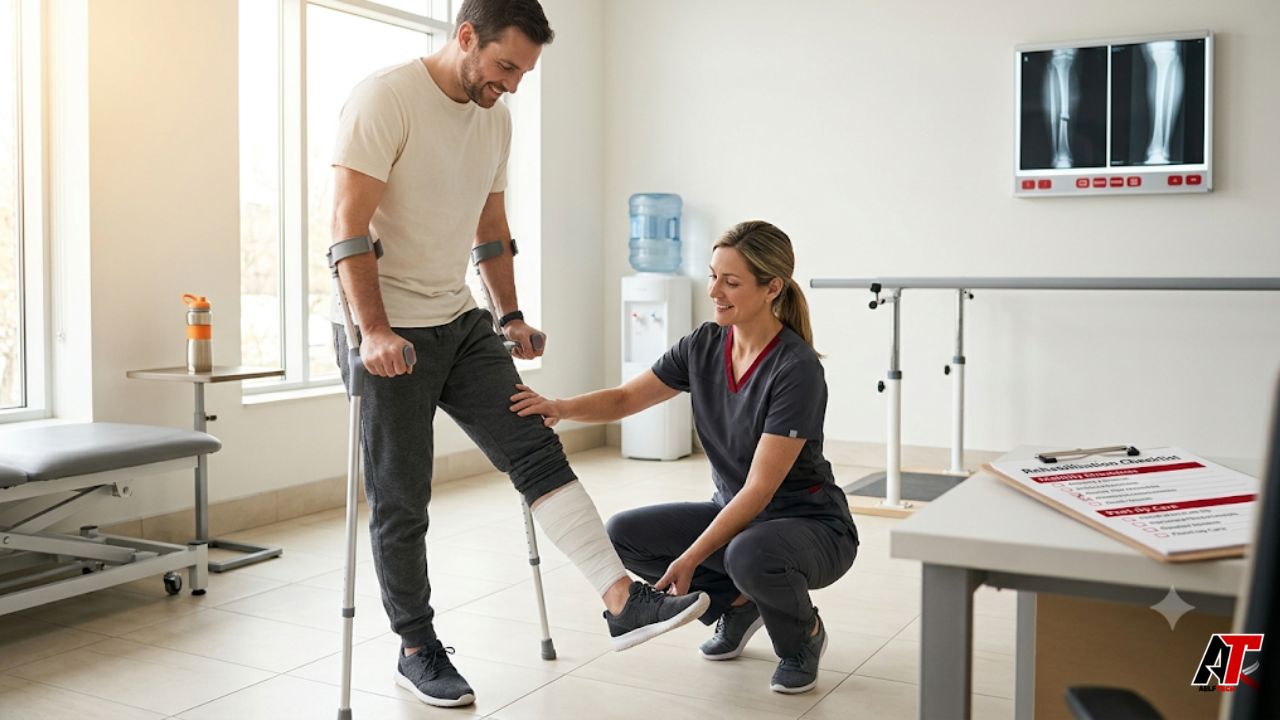
Physical therapy is one of the most important parts of height surgery aftercare. As the bone lengthens, muscles, tendons, nerves, and other soft tissues must adapt. Without regular stretching and guided exercise, joints can become stiff and muscles can tighten.
Therapy commonly focuses on knee and hip motion, ankle flexibility, muscle strength, posture, balance, and safe movement with crutches or a walker. The exact program depends on whether the femur, tibia, or both are being treated.
Hospital for Special Surgery notes that daily stretching can continue for months after stature lengthening. This highlights why rehabilitation should be viewed as part of the operation, not an optional extra.
- Complete only the exercises approved for your stage of recovery.
- Use correct form rather than rushing through repetitions.
- Tell the therapist about new numbness, weakness, spasms, or sharp pain.
- Attend formal sessions and complete the home program.
- Track range of motion so early stiffness is noticed.
Mild stretching discomfort may occur, but severe or rapidly increasing pain should not be ignored. Contact the therapist or surgeon instead of forcing the movement.
4. Respect Weight-Bearing Limits
Walking rules vary widely. Some devices permit limited or partial weight bearing, while others require a wheelchair or strict use of crutches for a period. Bone healing on X-rays helps the surgeon decide when more weight is safe.
Do not assume that feeling stronger means the new bone is ready. Placing too much weight on the limb may damage the device, affect alignment, or injure the developing bone.
Use mobility aids as trained. Check rubber tips, brakes, and height settings. Keep floors clear, add grab bars where needed, and use a shower chair if recommended. A fall during the lengthening or early consolidation phase can cause a serious setback.
5. Manage Pain Without Changing the Plan Yourself
Pain may come from the operation, muscle stretching, swelling, nerve irritation, or pin sites. Good pain control supports sleep, movement, and physical therapy. Take prescribed medicines according to the label and the surgeon’s instructions.
Do not add over-the-counter pain relievers, supplements, sleeping medicines, or blood-thinning products without asking the clinical team. Some products can interact with prescriptions or affect bleeding and bone healing.
Report pain that becomes suddenly severe, does not improve with the prescribed plan, or feels different from the usual pattern. Burning pain, new weakness, loss of sensation, or increasing tightness may require prompt assessment.
6. Reduce Swelling and Protect Circulation
Swelling is common after lower-limb surgery. Your team may recommend elevation, ankle movements, compression, or other measures. Follow the exact instructions because external frames, dressings, and individual circulation risks can change what is appropriate.
Stay as mobile as your plan allows. Approved movement helps circulation and can reduce stiffness. If medication has been prescribed to reduce the risk of blood clots, take it exactly as directed.
Seek urgent medical help for chest pain, sudden shortness of breath, coughing blood, fainting, or a new painful swollen calf. These symptoms can be associated with a blood clot and should not wait for a routine appointment.
7. Support Bone Healing With Nutrition and Healthy Habits
Your body needs enough energy and nutrients to produce new bone. Eat regular meals with protein, vegetables, fruit, whole grains, and suitable sources of calcium and vitamin D. A clinician or dietitian can help if appetite is low or dietary restrictions make planning difficult.
Do not begin high-dose vitamins or bone supplements without medical advice. More is not always better, and some supplements can interact with medicines or create other health risks.
Avoid smoking, vaping nicotine, and other nicotine products. Nicotine is linked with poorer bone healing. Limit or avoid alcohol according to your surgeon’s advice, especially while taking pain medicines or anticoagulants.
Hydration and fiber are also important. Reduced movement and opioid pain medicines can cause constipation. Ask the team about a safe prevention plan rather than waiting until the problem becomes severe.
8. Attend Every Follow-Up and Imaging Appointment
Regular follow-up is essential because the surgeon cannot judge new bone strength by symptoms alone. X-rays help the team monitor regenerate bone, alignment, device position, and the progress of consolidation.
Appointments also allow the team to check joint movement, nerve function, wounds, pin sites, and walking technique. Adjustments to the distraction rate, therapy plan, or weight-bearing level should be based on these findings.
- Bring your medication and adjustment lists.
- Write down new symptoms and when they began.
- Ask which activities remain restricted.
- Confirm the next X-ray and follow-up date.
- Request written instructions before traveling home.
9. Plan Extra Carefully When Surgery Is Abroad
Patients comparing limb lengthening surgery Turkey options should look beyond the operation price. A safe plan must also cover rehabilitation, imaging, accommodation, emergency care, device support, and treatment after returning home.
Ask who will manage complications after you leave the surgical country. Confirm how X-rays will be shared, who can change the distraction schedule, and whether a qualified local physiotherapist has been briefed.
Do not fly or travel long distances simply because a package has reached its final day. The surgeon should assess whether you are medically stable to travel and explain blood-clot prevention, seating, mobility, medicines, and emergency contacts.
Keep copies of operative notes, implant or device details, medication lists, X-rays, discharge instructions, and the surgeon’s contact information. These records can be vital if another hospital needs to assess you.
10. Protect Your Mental Health
Lengthening can be physically and emotionally demanding. Limited mobility, pain, sleep disruption, dependence on others, and a long recovery may affect mood. Frustration does not mean that recovery is failing.
Build a support plan before surgery. Identify who can help with meals, transportation, personal care, appointments, and household tasks. Maintain regular contact with supportive people and keep a daily routine where possible.
Speak with a mental health professional if anxiety, low mood, body-image concerns, or regret becomes difficult to manage. Seek urgent help if you feel unsafe or have thoughts of self-harm.
11. Know the Warning Signs That Need Prompt Help
Your discharge paperwork should list emergency contacts. Keep those numbers in your phone and beside your bed. Contact the surgical team promptly when symptoms are new, worsening, or outside the pattern they told you to expect.
- Fever, chills, or feeling suddenly unwell.
- Spreading redness, warmth, pus, odor, or wound opening.
- Severe pain that is new or not controlled by the prescribed plan.
- New numbness, weakness, loss of movement, or worsening muscle spasms.
- A foot that becomes unusually pale, blue, cold, or very swollen.
- A device that bends, jams, loosens, breaks, or stops working.
- Loss of alignment, a fall, or sudden inability to bear permitted weight.
- Chest pain, shortness of breath, fainting, or a painful swollen calf.
For severe breathing symptoms, chest pain, fainting, major bleeding, or sudden loss of circulation or movement, use emergency services rather than waiting for an email response.
12. Prepare the Home for a Long Recovery
Before discharge, arrange a safe sleeping area and a clear route to the bathroom. Move frequently used items to waist height. Remove loose rugs and electrical cords. Add stable seating and keep medications organized.
You may need help with bathing, dressing, meal preparation, transportation, and exercises. Cleveland Clinic advises many limb-lengthening patients to arrange assistance for everyday tasks after surgery.
For more accessible health and lifestyle reading, visit team aelftech.com. General online guidance can support planning, but it should never replace the surgeon who knows your operation and imaging.
A Simple Daily Aftercare Checklist
- Take medicines exactly as prescribed.
- Complete the approved distraction steps and record them.
- Inspect incisions or pin sites as instructed.
- Perform the assigned therapy and stretching program.
- Follow weight-bearing and mobility limits.
- Eat protein-rich meals and stay hydrated.
- Note pain, swelling, sensation, movement, and temperature changes.
- Keep the next appointment and imaging date visible.
- Contact the clinical team early when something changes.
Conclusion
Height surgery aftercare is a structured medical process. The operation creates the opportunity for lengthening, but careful rehabilitation and monitoring support the final result.
Follow the distraction schedule, protect wounds or pin sites, attend therapy, and respect walking limits. Support bone healing through nutrition, sleep, and avoidance of nicotine. Keep every follow-up appointment and respond quickly to warning signs.
Most importantly, use your own surgical team as the primary source of instructions. A safe recovery plan is personal, regularly reviewed, and adjusted according to examinations and X-rays.
Leave a Reply