
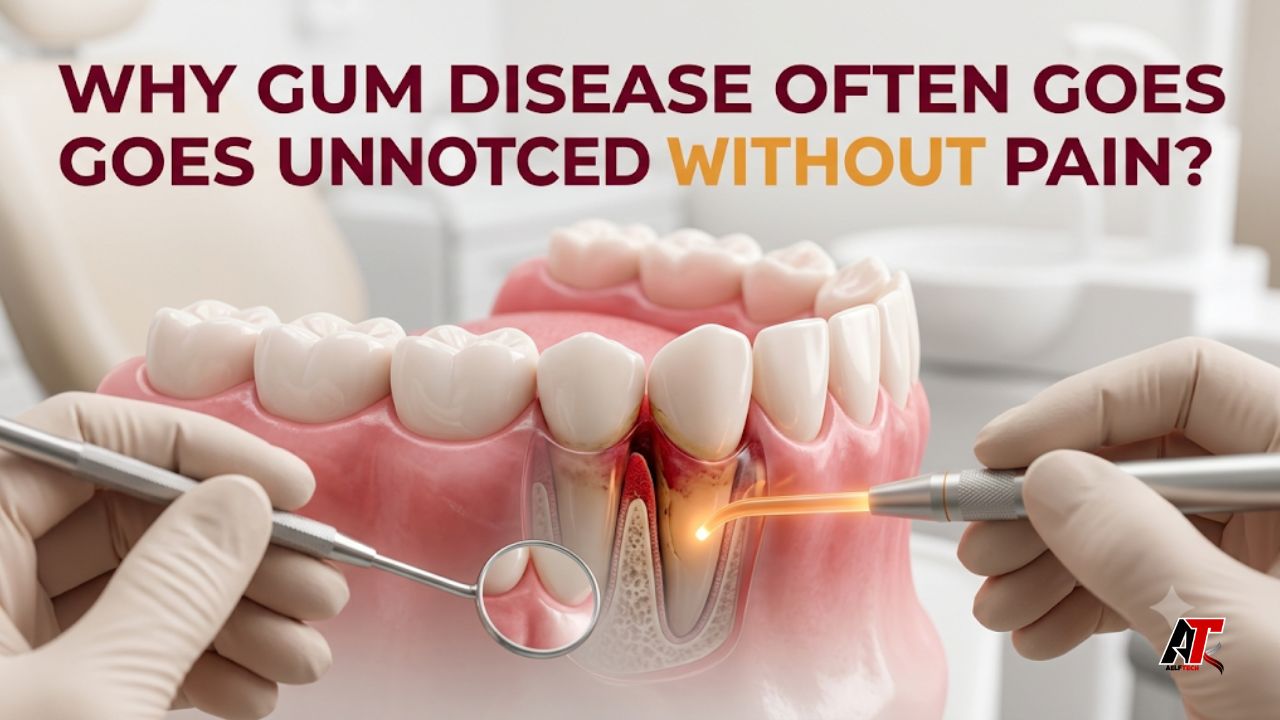
Gum disease can develop quietly. Many people expect an oral health problem to hurt, so they assume their gums are healthy when they can eat, drink, and sleep without discomfort. That assumption is risky because early gingivitis and even progressing periodontitis may cause little or no pain. Instead, the first clues are often bleeding during brushing, persistent bad breath, mild swelling, gum recession, or a change in how the teeth look and feel.
The absence of pain does not mean the absence of disease. Gum disease begins when plaque bacteria collect around the gumline and trigger inflammation. If plaque is not removed, it can harden into tartar and create conditions in which inflammation extends deeper around the teeth. Over time, the supporting tissues and bone may be damaged. By the time chewing becomes painful or a tooth feels loose, the condition may already be advanced.
This article explains why gum disease without pain is common, which subtle signs deserve attention, how dentists detect hidden problems, and what you can do to protect your gums before discomfort appears.
What Is Gum Disease?
Gum disease, also called periodontal disease, affects the tissues that surround and support the teeth. The earliest stage is gingivitis. At this point, the gums may look red or puffy and may bleed easily, but the deeper attachment and supporting bone have not necessarily been permanently damaged. With professional care and consistent home hygiene, gingivitis can often be controlled and reversed.
Periodontitis is a more serious stage. Inflammation and infection extend below the gumline, and the gums may separate from the teeth to form periodontal pockets. These spaces trap plaque and bacteria where a toothbrush cannot clean effectively. The body’s ongoing inflammatory response can damage the ligament and bone that hold the teeth in place.
The process is not always dramatic. It may affect only a few teeth, progress at different speeds, and produce symptoms that come and go. This is why regular dental assessment matters even when the mouth feels normal.
Why Gum Disease Can Progress Without Pain
Early inflammation may be mild
Gingivitis often begins as a low-level inflammatory response around the gumline. The tissue may be slightly swollen or more likely to bleed, but the change may not stimulate the intense pain people associate with a cavity, cracked tooth, or dental abscess. Because the discomfort is minimal, people may continue their normal routine without realizing that plaque is affecting the gums.
The condition usually develops gradually
Gum disease often progresses over months or years rather than appearing as a sudden injury. When changes happen slowly, the brain and daily habits adapt to them. A small amount of bleeding, slightly longer-looking teeth, or mild bad breath may become “normal” to the person experiencing it. Slow progression reduces the sense of urgency even though tissue damage may be continuing.
The most important changes can be below the gumline
Periodontal pockets, attachment loss, and early bone changes are not easy to see in a bathroom mirror. A person may have teeth that look acceptable from the front while bacteria and inflammation are active below the visible edge of the gums. These hidden areas require periodontal probing, professional cleaning, and sometimes dental X-rays to evaluate properly.
People often mistake bleeding for aggressive brushing
Occasional bleeding is commonly dismissed as a result of brushing too hard or using floss incorrectly. Technique can irritate the gums, but healthy gums should not bleed regularly during gentle cleaning. Repeated bleeding is a sign worth discussing with a dentist rather than a reason to stop brushing or flossing.
Pain may appear only after significant damage
Painful chewing, tenderness, abscesses, and tooth mobility are more likely when disease has become severe or when an acute infection develops. Waiting for pain can therefore delay treatment. Gum disease is similar to other chronic conditions in which screening and early signs are more useful than symptoms alone.
Subtle Warning Signs People Commonly Miss
The early signs of gum disease are often visible, sensory, or behavioral rather than painful. Pay attention to changes that persist or return, especially when more than one appears at the same time.
- Gums that bleed during brushing, flossing, or eating firm foods.
- Red, swollen, shiny, or tender-looking gums.
- Persistent bad breath or a bad taste that returns after cleaning.
- Gums pulling away from the teeth, making teeth look longer.
- New spaces forming between teeth or food getting trapped more often.
- Pus near the gumline or swelling that comes and goes.
- Teeth feeling loose, shifting position, or fitting together differently when you bite.
- Partial dentures beginning to fit differently.
These signs do not prove that a person has periodontitis, because other dental and medical conditions can produce similar changes. However, they justify an examination. People searching for professional care related to periodontal in Mississauga should expect the clinician to assess the gums, measure pocket depths, review risk factors, and explain whether routine cleaning, deep cleaning, specialist care, or monitoring is appropriate.
Why People Normalize the Symptoms
People often delay care because bleeding stops quickly, bad breath is blamed on food, and recession is mistaken for normal aging. Anxiety, cost concerns, and busy schedules can also make a painless problem feel easy to postpone.
Another factor is that symptoms can fluctuate. Mouthwash or better brushing may reduce odor and surface inflammation while tartar or deeper pockets remain. Temporary improvement can create false reassurance.
Brushing harder is not the answer. Aggressive brushing can injure the gumline and cannot clean deep pockets. Gentle technique, interdental cleaning, and professional guidance are safer.
Who Has a Higher Risk of Hidden Gum Disease?
Anyone can develop gum disease, but certain factors increase risk or make progression more likely. Knowing your risk helps determine how closely your gums should be monitored.
- Inadequate plaque removal, including inconsistent brushing and cleaning between teeth.
- Smoking or other tobacco use. Smoking substantially increases the risk of gum disease and can make treatment less effective.
- Diabetes, particularly when blood glucose is not well controlled.
- A personal or family tendency toward periodontal disease.
- Increasing age and a history of untreated gum inflammation.
- Crowded teeth, defective restorations, or appliances that make plaque control difficult.
- Conditions or treatments that affect immunity, healing, dexterity, or the ability to maintain oral hygiene.
Risk does not guarantee disease, and good brushing does not eliminate every risk. Some people develop periodontitis despite a reasonable home routine, which is why professional measurements and personalized recall intervals are important.
How Dentists Find Gum Disease When It Does Not Hurt
A dental examination looks for evidence that pain cannot reveal. The clinician inspects the gums and uses a small periodontal probe around each tooth. Deep measurements, bleeding on probing, recession, and attachment loss can indicate current disease or previous damage.
Dental X-rays may evaluate supporting bone. The dentist may also check mobility, bite changes, plaque, tartar, and difficult-to-clean areas. Diabetes, tobacco use, medications, and previous treatment help shape the risk assessment.
The evaluation should identify the extent of disease and the right care plan. Treatment may include hygiene coaching, professional cleaning, scaling and root planing, risk-factor management, closer maintenance, or referral to a periodontist.
What Can Happen If Painless Gum Disease Is Ignored?
Untreated gingivitis may progress to periodontitis in susceptible people. Once supporting tissue and bone are damaged, they may not fully recover on their own. Deepening pockets also make the teeth harder to clean.
Advanced periodontitis can cause recession, sensitivity, chewing problems, tooth movement, abscesses, and tooth loss. Progression varies, but early diagnosis usually provides more options for keeping natural teeth stable.
Periodontal disease is associated with conditions such as diabetes and cardiovascular disease, but association does not prove direct causation. The practical message is to treat oral health as part of overall health.
How to Protect Your Gums Before Pain Appears
- Brush twice a day with fluoride toothpaste and a soft-bristled toothbrush. Aim the bristles gently toward the gumline rather than scrubbing forcefully.
- Clean between the teeth every day using floss, interdental brushes, or another device recommended by your dental professional.
- Do not stop cleaning an area simply because it bleeds. Use gentle technique and arrange a dental review if bleeding continues.
- Attend dental checkups and professional cleanings at intervals based on your individual risk. People with a history of periodontitis may need more frequent periodontal maintenance.
- Avoid tobacco and seek support to quit. Tobacco use increases gum disease risk and can reduce the response to treatment.
- Manage diabetes with your healthcare team and tell your dentist about the condition and medications.
- Report persistent dry mouth, loose teeth, gum recession, swelling, or bite changes rather than waiting for pain.
Online educational content from team aelftech.com and other publishers can help people recognize warning signs, but it cannot measure periodontal pockets or bone levels. Prevention works best when reliable information is combined with professional assessment and a home routine that is realistic enough to follow every day.
When Should You See a Dentist?
Book a dental appointment if your gums bleed repeatedly, remain swollen, recede, or produce persistent bad breath. You should also seek care for pus, increasing gaps, loose teeth, pain when chewing, or a change in your bite. Contact a dentist promptly for facial swelling, fever, severe pain, difficulty swallowing, or rapidly spreading swelling, as these may indicate an urgent infection.
Do not wait for an emergency if you have diabetes, use tobacco, previously had gum disease, or have not had a dental assessment for a long time. Your dentist can recommend a visit schedule based on your oral health, risk factors, and treatment history rather than using the same interval for everyone.
Frequently Asked Questions
Can you have serious gum disease with no pain?
Yes. Bleeding, recession, deep pockets, bone loss, and tooth movement can develop before significant pain. A dental examination is needed to determine the stage.
Are bleeding gums always a sign of gum disease?
Not always, but repeated bleeding during gentle brushing or flossing is not considered normal and should be assessed.
Can mouthwash cure gum disease?
No. It may reduce odor or support plaque control, but it cannot remove tartar, clean deep pockets, or restore lost bone.
Does gum disease go away on its own?
Early gingivitis may improve with plaque control and professional cleaning. Periodontitis requires professional treatment and long-term maintenance.
How often should gums be checked?
The interval depends on current gum measurements, previous disease, diabetes, tobacco use, and plaque control. Your dental professional should set a personalized schedule.
Final Thoughts
Gum disease often goes unnoticed because people use pain as the main measure of oral health. Early disease usually speaks more quietly through bleeding, swelling, bad breath, recession, and changes below the gumline. These clues are easy to dismiss, but they are more useful than waiting for a toothache.
Consistent home care, risk-factor management, and regular professional assessment can identify problems while treatment is simpler. Healthy gums should not bleed regularly, and a comfortable mouth is not automatically a disease-free mouth. When something changes, an early dental conversation is safer than waiting for pain to make the decision for you.
Leave a Reply