
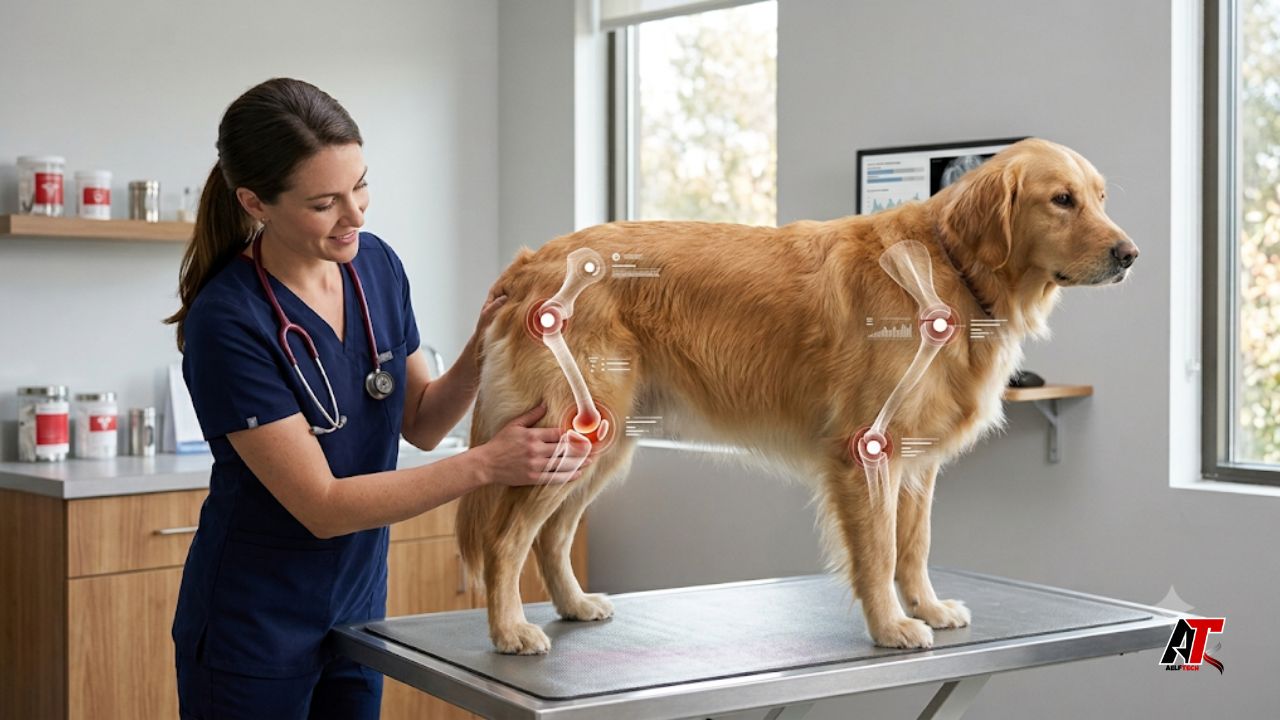
Dogs rely on comfortable, stable joints for almost everything they enjoy, from climbing stairs and chasing toys to simply standing up after a nap. When a joint becomes painful or unstable, a dog may gradually stop doing ordinary activities long before the owner realizes that pain is the reason.
Joint problems are not limited to senior dogs. Puppies can develop inherited or growth-related conditions, athletic dogs can suffer ligament injuries, and dogs of any age may experience infection, immune-mediated inflammation, or trauma. The most effective response begins with identifying the underlying cause rather than assuming that every limp is “just arthritis.”
This guide explains the primary causes of joint problems in dogs, the signs owners commonly miss, and practical steps that can protect mobility and quality of life. It is educational information only; a veterinarian should examine any dog with persistent pain, lameness, swelling, or reduced movement.
What Counts as a Joint Problem in Dogs?
A joint is the place where two or more bones meet. Healthy cartilage, joint fluid, ligaments, tendons, muscles, and the joint capsule work together to allow smooth movement. Problems can begin in any of these structures.
Osteoarthritis, also called degenerative joint disease, is one of the most familiar conditions. It involves progressive inflammation and damage within a joint. However, it often develops secondary to another problem, such as hip dysplasia, elbow dysplasia, a torn cranial cruciate ligament, patellar instability, a previous fracture, or joint infection. Early diagnosis therefore matters.
1. Genetics and Abnormal Joint Development
Some dogs inherit a higher risk of joints forming or fitting together abnormally. Hip dysplasia occurs when the ball-and-socket hip joint is loose or poorly aligned. Elbow dysplasia describes several developmental abnormalities in the elbow. Other examples include luxating patellas and osteochondritis dissecans.
Large and giant breeds are commonly associated with hip, elbow, and cartilage-development disorders, although any dog can be affected. Genetics are important, but growth rate, calorie intake, body weight, exercise, and environment can influence how strongly an inherited tendency appears.
What to do: Choose breeders who perform appropriate orthopedic screening on parent dogs. Feed puppies a complete diet designed for their expected adult size, especially in large breeds. Avoid pushing rapid growth through excessive calories or supplements. Ask a veterinarian about early screening if the breed, family history, gait, or sitting posture raises concern.
2. Ligament, Tendon, and Traumatic Injuries
A collision, awkward landing, fall, vehicle accident, or sharp turn can damage the structures that stabilize a joint. One common orthopedic problem is disease or rupture of the cranial cruciate ligament in the knee. The resulting instability causes inflammation, pain, and an increased risk of osteoarthritis. Meniscal cartilage may also be injured.
Not every injury is dramatic. Repetitive strain can build over time, particularly in overweight dogs, poorly conditioned weekend athletes, and dogs repeatedly jumping on hard or slippery surfaces. An old fracture or dislocation may also change joint mechanics after healing.
What to do: Restrict running and jumping after a sudden limp and arrange a veterinary examination. Do not repeatedly exercise the dog to “test” the leg. Treatment may involve controlled rest, medication, rehabilitation, or surgery to restore stability. Early care is usually easier than managing advanced secondary arthritis.
3. Excess Weight and Obesity
Extra body weight increases the load carried by hips, knees, elbows, shoulders, and the spine. Fat tissue also contributes to chronic low-grade inflammation, so obesity affects joints through more than pressure alone. An overweight dog with an existing abnormality or old injury may show pain sooner.
Weight gain can create a damaging cycle. The dog moves less because activity hurts, burns fewer calories, loses muscle, and gains more weight. Weaker muscles then provide less support around painful joints.
What to do: Ask the veterinary team to assess both body condition and muscle condition. A safe plan usually combines measured portions, suitable calorie density, controlled treats, and low-impact activity. Gradual weight reduction may improve comfort and movement, while crash diets and sudden intense exercise are inappropriate.
4. Progressive Osteoarthritis and Previous Joint Damage
Osteoarthritis is a progressive disease in which joint tissues become inflamed and deteriorate. Aging alone is not the sole cause. Many dogs develop it because of abnormal joint development, excess weight, previous injury, instability, surgery, or years of altered movement. Older dogs are diagnosed more often because damage has had more time to accumulate.
Signs can be subtle. A dog may take longer to rise, hesitate before getting into the car, stop sitting squarely, lag behind on walks, or sleep more. These changes are sometimes dismissed as normal aging even though they can indicate treatable pain.
What to do: Schedule an examination when mobility changes, even if the dog is not crying. Chronic pain is best managed proactively and usually requires several compatible approaches. The goal is to preserve comfortable daily function, muscle strength, sleep, and participation in family life.
5. Inappropriate Exercise and Poor Conditioning
Exercise supports healthy weight, muscle, coordination, and joint function, but the intensity must match the dog. Sudden increases in distance, repeated high-impact jumping, uncontrolled ball chasing, tight turns, and vigorous activity on hard or slippery ground can overload joints and soft tissues.
Growing puppies are vulnerable because their bones and growth plates are still developing. A sedentary adult dog may also become sore or injured after an unusually long hike because its muscles were not prepared.
What to do: Build duration and intensity gradually. Favor regular, moderate activity over occasional extreme sessions. Warm up with easy walking before demanding exercise, maintain nails for traction, and address slippery floors. A veterinarian or certified canine rehabilitation professional can design a plan for sporting, recovering, or arthritic dogs.
6. Rapid Growth and Nutritional Imbalance
Nutrition during puppyhood can influence orthopedic development. Large-breed puppies need controlled, steady growth rather than maximum growth. Excess calories can accelerate weight gain and stress developing joints. Adding mineral supplements to an already complete diet may also disrupt normal development.
In adults, poor nutrition may contribute indirectly through obesity or inadequate muscle maintenance. Joint supplements are not a substitute for a complete diet, healthy weight, diagnosis, and evidence-based care.
What to do: Feed a complete and balanced food suited to the dog’s life stage and expected size. Measure meals and monitor body condition during growth. Do not add calcium, vitamins, or high-dose supplements unless a veterinarian recommends them. Discuss omega-3 intake and joint-support products with a professional because quality, dosage, and evidence vary.
7. Infection and Immune-Mediated Joint Disease
Some joint problems are inflammatory rather than mainly mechanical. Bacteria can enter a joint through a wound, surgery, or the bloodstream, causing septic arthritis. Tick-borne diseases may be associated with shifting lameness and joint inflammation. In immune-mediated polyarthritis, the immune system triggers inflammation in multiple joints.
These conditions may cause fever, lethargy, poor appetite, stiffness, swollen joints, pain in several legs, or reluctance to move. They require different treatment from routine osteoarthritis and may worsen quickly.
What to do: Seek prompt veterinary attention when lameness is accompanied by fever, illness, major swelling, or pain in multiple limbs. Diagnosis may involve blood tests, infectious-disease testing, imaging, and joint-fluid analysis. Do not use leftover medication because the wrong treatment can mask signs or complicate diagnosis.
8. Body Structure and Altered Movement
A dog’s conformation affects how forces travel through the limbs. Bowed legs, long backs, shallow hip sockets, unstable kneecaps, and other structural characteristics can change weight distribution. Pain in one limb may also cause the dog to overload another limb.
Long nails, painful paws, neurologic disease, and muscle weakness can alter gait and increase joint stress. A complete mobility assessment should therefore consider the whole dog, not only the joint that appears painful.
What to do: Maintain nails at a functional length and use non-slip surfaces. Ask the veterinarian to evaluate posture, gait, spine, paws, muscle mass, and neurologic function. Some structural problems need surgery, while others are managed through weight control, rehabilitation, home changes, and pain management.
Early Signs Owners Should Watch For
Limping matters, but it is not the only sign of joint pain. Watch for stiffness after rest, slower rising, shortened walks, reluctance to climb stairs, difficulty jumping into a vehicle, reduced play, repeated shifting while lying down, licking a joint, changes in sitting position, irritability when touched, and muscle loss over a limb.
Short home videos can help because dogs may move differently at the clinic. Film the dog walking from the front, side, and behind, or rising from bed, without forcing painful activity.
How Veterinarians Diagnose the Cause
The veterinarian will consider age, breed, growth history, activity, previous injuries, onset of signs, and whether one or several joints are affected. Examination usually includes observing gait, feeling the limbs and spine, checking joint stability and range of motion, and comparing muscle mass.
X-rays may reveal dysplasia, fractures, bone changes, swelling, or osteoarthritis. Some cases require ultrasound, CT, MRI, arthroscopy, or joint-fluid analysis. Blood tests may identify health issues that affect treatment choices or help investigate infection and immune disease. A clear diagnosis allows treatment to target the cause instead of relying on trial and error.
What to Do About Joint Problems in Dogs
The strongest care plans are usually multimodal, meaning several strategies are combined. Treatment may include veterinarian-prescribed pain medication, weight management, therapeutic exercise, physical rehabilitation, home modifications, nutritional support, and surgery when instability or structural damage needs correction.
Never give a dog ibuprofen, naproxen, or other human pain medicine unless a veterinarian specifically directs it. Some common human drugs can cause severe gastrointestinal, kidney, liver, or blood-related complications in dogs. Veterinary medications also require individual selection and monitoring.
Rehabilitation may include strengthening, balance exercises, range-of-motion work, hydrotherapy, or massage selected for the diagnosis. At home, use rugs or traction runners, ramps, supportive bedding, and barriers that prevent unsafe jumping.
Pet owners researching newer options may also encounter information about stem cell therapy for dogs. Regenerative approaches are still evolving, and procedures or products can differ substantially. Discuss the evidence, regulation, expected benefit, cost, and suitability with a veterinarian or veterinary orthopedic specialist before deciding.
Can Joint Problems Be Prevented?
Not every condition is preventable, especially when genetics or unavoidable injury is involved. However, risk can often be reduced. Keep the dog lean, support controlled puppy growth, provide consistent age-appropriate exercise, use safe footing, prevent repetitive high-impact strain, and obtain early care after injury.
Regular wellness examinations allow the veterinary team to notice weight gain, reduced muscle, altered gait, or discomfort before daily function declines. For breeds at higher orthopedic risk, discuss screening and preventive planning while the dog is young.
When Joint Pain Is an Emergency
Contact a veterinarian urgently if the dog cannot bear weight, reacts strongly to touch, has a visibly deformed limb, develops sudden major swelling, drags a limb, has been hit by a vehicle, or shows weakness after trauma. Fever, extreme lethargy, loss of appetite, or pain in several joints also warrants prompt assessment.
Final Thoughts
The primary causes of joint problems in dogs include inherited developmental disorders, ligament injuries, obesity, osteoarthritis, unsuitable exercise, rapid growth, nutritional imbalance, infection, immune-mediated disease, and structural abnormalities. These causes can overlap, which is why early professional assessment is more useful than guessing based on age or breed.
Owners can make a meaningful difference by watching for subtle changes, maintaining a lean body condition, choosing controlled exercise, improving traction at home, and following a diagnosis-specific veterinary plan. For more practical animal-care and lifestyle reading, visit team aelftech.com. Protecting mobility early helps dogs remain active, engaged, and comfortable for as long as possible.
Leave a Reply