
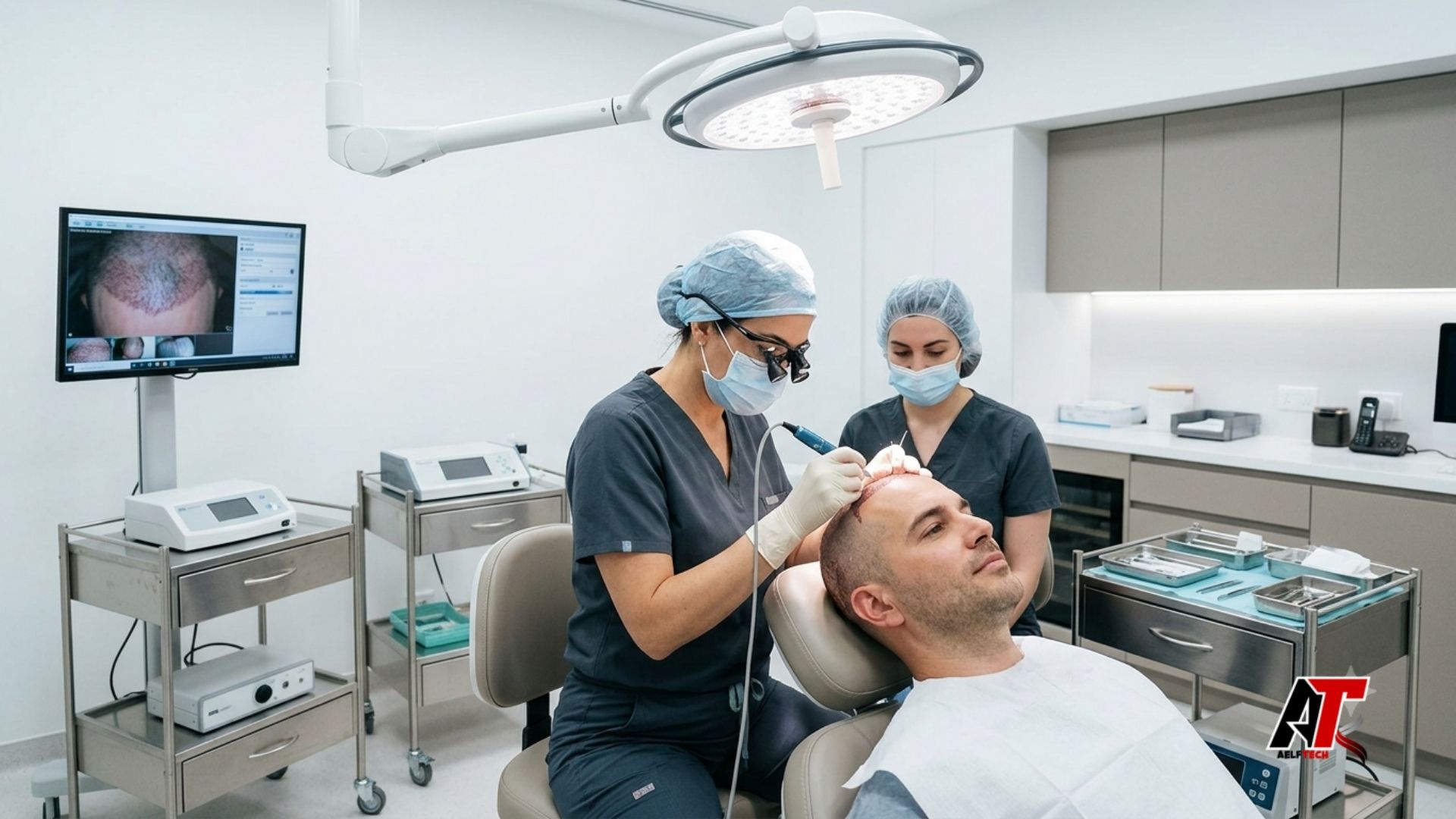
A DHI hair transplant (Direct Hair Implantation) is an advanced hair restoration technique designed to treat hair loss by transplanting healthy hair follicles directly into thinning or bald areas. As one of the modern methods of hair transplantation, DHI focuses on precise implantation using specialized instruments, allowing surgeons to control the angle, depth, and direction of each implanted follicle.
People experiencing male or female pattern hair loss often explore DHI because it is associated with natural-looking results, minimal scarring, and a relatively quick recovery compared to some traditional hair restoration approaches. This guide explains how DHI works, who may be a suitable candidate, the benefits, recovery process, and factors to consider before treatment.
What Is a DHI Hair Transplant?
DHI (Direct Hair Implantation) is a hair transplant technique in which individual hair follicles are extracted from a donor area—usually the back or sides of the scalp—and implanted directly into the recipient area using a specialized implantation tool.
Unlike some other techniques, implantation and channel creation are often performed in a single step using a dedicated implanter pen. The exact procedure may vary depending on the surgeon’s approach and the patient’s individual needs.
How Does a DHI Hair Transplant Work?
The procedure generally follows several stages.
Initial Consultation
The specialist evaluates:
- Hair loss pattern
- Donor hair density
- Medical history
- Hair characteristics
- Treatment goals
A personalized treatment plan is developed based on the patient’s condition.
Donor Hair Extraction
Healthy follicular units are carefully extracted from the donor area using minimally invasive techniques.
Each follicle is preserved for implantation.
Direct Hair Implantation
Using a specialized implantation device, the surgeon places individual follicles directly into the recipient area while controlling:
- Implantation angle
- Direction
- Depth
- Hairline design
This level of precision contributes to a natural appearance.
Recovery
Patients receive aftercare instructions and attend follow-up appointments to monitor healing and hair growth.
Benefits of DHI Hair Transplant
Natural-Looking Results
Careful control of hair placement helps recreate natural growth patterns.
Minimal Scarring
The extraction process typically leaves very small marks that become difficult to detect after healing.
High Implantation Precision
Individual follicle placement allows surgeons to customize hair density and direction.
Faster Recovery
Many patients resume normal daily activities relatively quickly, although recovery experiences vary.
Suitable for Smaller Areas
DHI is commonly used for:
- Hairline restoration
- Crown enhancement
- Beard transplantation
- Eyebrow restoration
Suitability depends on individual circumstances.
Who May Be a Candidate?
A consultation with a qualified hair restoration specialist is necessary to determine candidacy.
Potential candidates may include individuals who:
- Experience male or female pattern hair loss
- Have sufficient donor hair
- Are in good general health
- Have realistic expectations
Eligibility varies depending on the cause of hair loss and overall medical condition.
DHI vs FUE Hair Transplant
Although DHI and FUE are closely related, there are technical differences.
| Feature | DHI Hair Transplant | FUE Hair Transplant |
|---|---|---|
| Follicle Extraction | Individual extraction | Individual extraction |
| Implantation | Direct implantation using specialized pen | Follicles placed into prepared recipient sites |
| Precision | High placement control | High, depending on technique |
| Hairline Design | Highly customized | Customized |
The most appropriate method depends on the patient’s needs and the surgeon’s clinical assessment.
Recovery Timeline
Recovery varies between individuals.
First Few Days
Patients may experience:
- Mild swelling
- Redness
- Small scabs
These effects typically improve over time.
First Month
Temporary shedding of transplanted hairs may occur before new growth begins.
Several Months
New hair gradually grows as follicles establish themselves.
Long-Term Growth
Hair restoration develops progressively over many months. Individual timelines vary.
Aftercare Tips
Following postoperative instructions supports proper healing.
General recommendations may include:
- Follow washing instructions provided by your clinic.
- Avoid scratching the scalp.
- Protect the scalp from direct sunlight.
- Avoid strenuous activity if advised by your healthcare provider.
- Attend scheduled follow-up appointments.
Patients should always follow the specific guidance provided by their treating surgeon.
Factors Affecting Results
Several variables influence outcomes.
These include:
- Donor hair quality
- Hair characteristics
- Extent of hair loss
- Surgical technique
- Healing response
- Adherence to aftercare instructions
Results vary between individuals.
Choosing a Hair Transplant Clinic
Before selecting a clinic, consider:
- Surgeon qualifications
- Experience with DHI procedures
- Before-and-after case examples
- Clinic accreditation
- Patient reviews
- Consultation process
- Clear discussion of risks and expected outcomes
Choosing an experienced medical team is an important part of treatment planning.
Possible Risks
As with any medical procedure, hair transplantation carries potential risks.
These may include:
- Infection
- Swelling
- Temporary numbness
- Uneven growth
- Scarring
- Need for additional procedures
Your healthcare provider should discuss potential risks, benefits, and alternatives during consultation.
FAQs
What is a DHI hair transplant?
DHI (Direct Hair Implantation) is a hair restoration technique that implants individual hair follicles directly into the scalp using a specialized implantation tool.
Is DHI suitable for everyone?
No. A consultation with a qualified hair restoration specialist is necessary to determine whether the procedure is appropriate.
Does transplanted hair look natural?
When performed by experienced professionals, DHI is designed to produce natural-looking hair growth patterns.
How long does recovery take?
Recovery timelines vary by individual. Your surgeon will provide guidance based on your treatment.
Is the procedure permanent?
Transplanted hair follicles are generally intended to provide long-term growth, although results vary depending on individual factors.
Conclusion
A DHI hair transplant offers a modern approach to hair restoration through precise follicle implantation and personalized treatment planning. For suitable candidates, the technique may provide natural-looking results with minimal scarring and a relatively efficient recovery process. Because every patient’s hair loss pattern and medical history are different, consultation with a qualified hair restoration specialist is essential to determine the most appropriate treatment approach and establish realistic expectations.
Leave a Reply