
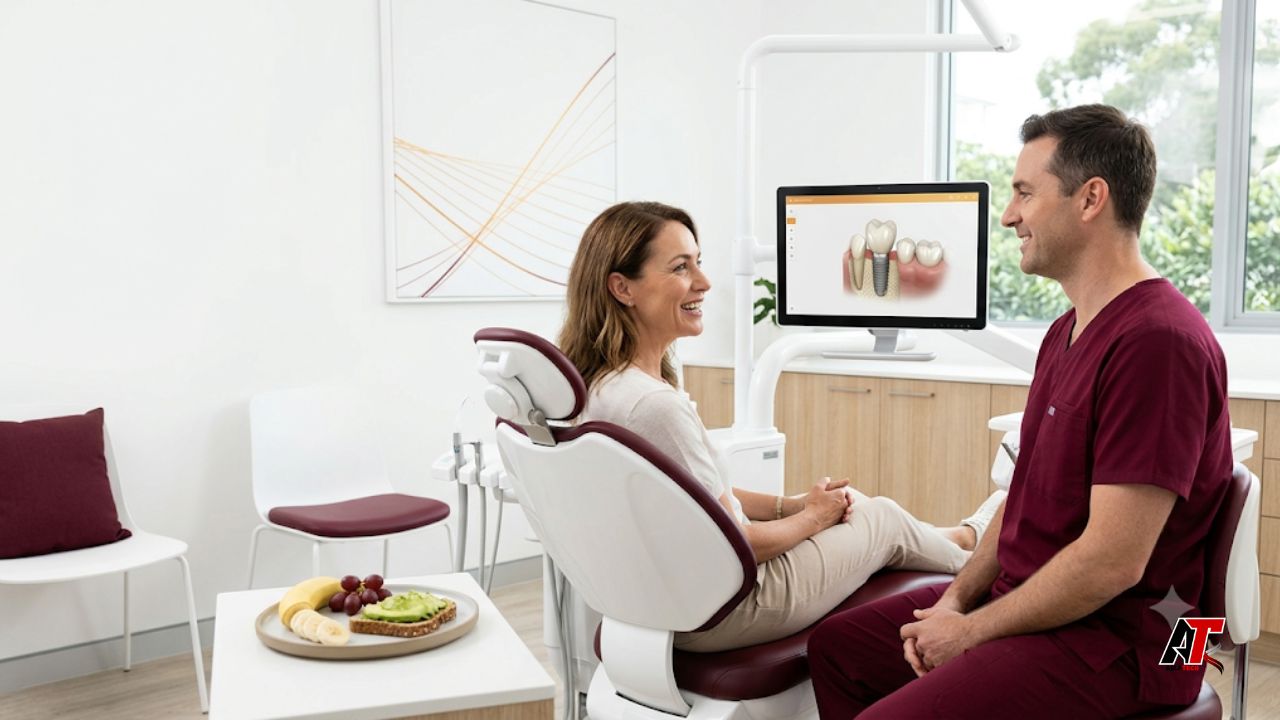
Missing teeth affect far more than the appearance of a smile. They can change the way air moves through the mouth, reduce chewing strength, alter the bite, and make everyday activities feel less natural. Some people begin avoiding certain foods, covering their mouth when they speak, or worrying that a removable denture may shift at an awkward moment. Dental implants are designed to replace missing tooth roots and support a crown, bridge, or full-arch restoration. Because the replacement is anchored in the jaw, it can provide a level of stability that is difficult to achieve with a loose or poorly fitting removable appliance.
However, implants are not an instant or identical experience for every patient. Speech may sound slightly different during the adjustment period. Chewing must usually return in stages while the surgical area heals. Comfort depends on implant position, the shape of the final teeth, bite balance, gum health, cleaning habits, and the patient’s ability to follow aftercare instructions. This guide explains what Brisbane patients can realistically expect and why careful planning matters as much as the implant itself.
What a Dental Implant Actually Replaces
A dental implant is usually a titanium fixture placed into the jawbone where a tooth root was previously located. After the implant becomes stable in the bone, it can support an artificial tooth. A single implant may carry one crown, several implants may support a bridge, and a smaller number of strategically positioned implants may support a full arch of replacement teeth. The visible tooth is therefore only one part of the treatment. The implant, connector, restoration, surrounding bone, gums, and bite must work together as a single system.
Patients comparing treatment options can review how dental implants in Brisbane are planned for a single missing tooth, several missing teeth, or broader smile rehabilitation. A consultation is still necessary because bone volume, gum condition, medical history, smoking, grinding habits, and the location of the missing teeth can all influence suitability and timing.
How Missing Teeth Can Change Speech
Speech is produced through a precise combination of breath, tongue movement, lip position, tooth contact, and the shape of the mouth. Front teeth are especially important when forming sounds such as “s,” “f,” “v,” “th,” and “z.” A gap, a loose denture, or a restoration with the wrong thickness can change where the tongue meets the teeth and how air escapes. The result may be a whistle, lisp, clicking sound, reduced clarity, or a feeling that familiar words require extra effort.
People often adapt to missing teeth by changing tongue or lip movement. Restoring the gap can improve the structures used for speech, but the muscles may still need time to learn the new shape.
Can Dental Implants Improve Speech?
A well-designed implant restoration can support clearer and more confident speech by filling gaps and providing a stable surface for the tongue and lips. Unlike a removable denture that may lift or slide, a fixed implant-supported tooth generally stays in place during conversation. Stability can be particularly valuable for people who speak for work, teach, serve customers, record audio, or regularly attend meetings.
Speech also depends on the contour of the replacement teeth. Teeth that are too thick or positioned differently may affect pronunciation, especially in a full-arch restoration. Planning and patient feedback help refine the final shape.
Why Speech May Feel Different at First
A short adjustment period is common after a crown, bridge, temporary full-arch prosthesis, or final implant restoration is fitted. The mouth is highly sensitive to small changes, so even a well-made tooth may initially feel larger than expected. Mild swelling, temporary numbness, changes in saliva, and the presence of a new surface can also influence speech during the early days.
Reading aloud for several minutes, repeating difficult words, speaking at a normal pace, and staying hydrated can help the tongue adapt. Most minor speech changes should gradually settle. A persistent whistle, lisp, clicking sound, pain, looseness, or difficulty closing the teeth together should be reported rather than accepted as normal. The dentist may need to check the bite or adjust the shape of the restoration.
How Dental Implants Affect Chewing
Natural teeth transfer chewing pressure through their roots and supporting tissues. When teeth are missing, people often chew on the opposite side or select softer foods. This can reduce diet variety and place uneven pressure on the remaining teeth. Implant-supported teeth can restore a stable biting surface and help distribute chewing forces more evenly, especially when the restoration is carefully matched to the opposing teeth.
The practical difference can be significant. A stable implant crown may allow a person to bite and chew without worrying about movement. Implant-supported bridges and full-arch teeth may also provide greater control than a loose removable denture. Nevertheless, an implant does not have the same sensory feedback as a natural tooth. Patients need to avoid using excessive force, chewing ice, cracking hard shells, or testing the new teeth with very tough foods simply because they feel strong.
Chewing Returns in Stages, Not All at Once
After implant surgery, the surrounding tissues need protection. The exact eating plan depends on the procedure, implant stability, whether bone grafting was performed, and whether temporary teeth were fitted. Early meals are often soft and easy to chew. Foods such as yoghurt, eggs, soup at a safe temperature, soft rice, pasta, fish, mashed vegetables, and smoothies taken without forceful suction may be easier during initial healing. The treating clinician’s instructions should always take priority.
As healing progresses, texture can usually increase gradually. Patients should chew slowly, use both sides when advised, and stop if a food causes pain or pressure. Full chewing confidence normally develops after the implant and restoration have been reviewed and the bite has been adjusted. Rushing this process can overload a healing implant or irritate the surgical area.
Everyday Comfort: What Patients Usually Notice
Comfort is not limited to the absence of pain. It includes how natural the teeth feel during speaking, smiling, eating, yawning, and cleaning. A successful implant restoration should not rock, pinch the gums, trap the tongue, or make the bite feel constantly uneven. Many patients value the ability to laugh, speak, and eat without removing an appliance or applying denture adhesive.
An adaptation period is still normal. Gums may feel tender, temporary teeth may differ from the final design, and cleaning may require new tools. Reviews allow small comfort issues to be corrected early.
Single Implants, Bridges, and Full-Arch Options Feel Different
A single implant crown generally replaces one tooth and often requires the least speech adaptation, particularly when it is located toward the back of the mouth. A front implant demands very careful shaping because it affects appearance, lip support, and speech. An implant-supported bridge replaces several teeth and must allow effective cleaning beneath the connected teeth.
For patients missing most or all teeth in one jaw, All-On-4 Brisbane treatment may be discussed as a fixed full-arch option supported by four implants. Full-arch treatment can substantially change the shape of the biting surface and the space around the tongue, so speech, hygiene access, lip support, smile line, and bite strength need to be planned together. It is not simply four implants plus a generic row of teeth.
The Fit and Bite Matter More Than Many People Realise
Even a firmly integrated implant can feel uncomfortable if the restoration does not meet the opposing teeth correctly. A high spot may cause tenderness, jaw fatigue, headaches, chipping, or a sensation that one tooth touches before the others. Uneven pressure can be especially important for patients who clench or grind at night. Bite checks and adjustments are therefore a normal part of implant follow-up rather than a sign that treatment has failed.
Front teeth support the lips and guide movement, while back teeth carry much of the chewing load. Digital planning helps, but real-life feedback is still essential.
Cleaning Has a Direct Effect on Long-Term Comfort
Implants cannot develop tooth decay, but the gums and bone around them can become inflamed or infected. Plaque left around an implant may lead to bleeding, swelling, bad taste, tenderness, or progressive bone loss. Daily cleaning is therefore necessary even when the teeth are fixed and feel completely stable.
A single implant is commonly cleaned with a toothbrush and an interdental aid recommended by the dental team. Bridges and full-arch restorations may need floss threaders, small interdental brushes, water-flossing devices, or other tools to clean underneath the replacement teeth. Professional maintenance visits allow the team to check the gums, bite, screws, connectors, and areas that are difficult to see at home.
Factors That Influence Speech, Chewing, and Comfort
Outcomes vary because no two mouths, medical histories, or treatment plans are identical. Important factors include:
- The number and location of missing teeth.
- Available bone volume and whether grafting is required.
- The position and angle of each implant.
- The design, thickness, and material of the final restoration.
- Bite balance and any history of clenching or grinding.
- Gum health, saliva levels, smoking, and general health.
- How consistently the patient follows dietary and cleaning instructions.
- Whether review appointments and professional maintenance are completed.
A personalised assessment may include photographs, scans, X-rays, bite records, and discussion of the patient’s diet, speech demands, and expectations.
When Discomfort Needs Prompt Attention
Mild tenderness and swelling can occur after implant surgery, but worsening symptoms should not be ignored. Contact the treating dental team if there is increasing pain, persistent bleeding, fever, pus, a bad taste that does not improve, increasing swelling, numbness that is not resolving as expected, a loose temporary tooth, or a feeling that the implant or bridge is moving. Sudden changes in the bite, cracked teeth, exposed components, or difficulty cleaning also deserve review.
Emergency care may be necessary for severe swelling that affects breathing or swallowing, uncontrolled bleeding, or signs of a serious allergic or medical reaction. General online information cannot diagnose implant complications, and early assessment can prevent a small problem from becoming more difficult to manage.
Questions to Ask During a Brisbane Implant Consultation
A useful consultation should go beyond price and appearance. Patients may wish to ask:
- Which type of implant restoration suits the number and position of my missing teeth?
- How might the temporary and final teeth affect my speech?
- What foods will I be able to eat during each stage of healing?
- Will I need bone grafting or other preparatory treatment?
- How will my bite and grinding habits be assessed?
- What cleaning tools will I need under the crown, bridge, or full arch?
- What is included in reviews, repairs, and long-term maintenance?
- Which symptoms should make me contact the practice immediately?
Clear answers make it easier to compare options. The strongest plan balances health, function, maintenance, appearance, and realistic long-term expectations.
A Practical View of Long-Term Results
Dental implants can have a positive effect on speech, chewing, confidence, and everyday comfort when they are properly planned, accurately restored, and consistently maintained. Fixed stability can reduce the worry associated with gaps or moving dentures, while a balanced bite can make a wider range of foods easier to manage. Yet implants are not maintenance-free and do not remove the need for regular dental care. The team at aelftech.com recommends treating health content as a starting point for informed discussion rather than a substitute for an individual clinical assessment. Anyone considering dental implants in Brisbane should ask how the proposed design will affect speech, chewing, cleaning, healing, and comfort in daily life. A plan that addresses all five areas is more useful than one focused only on filling the visible gap.
Leave a Reply