
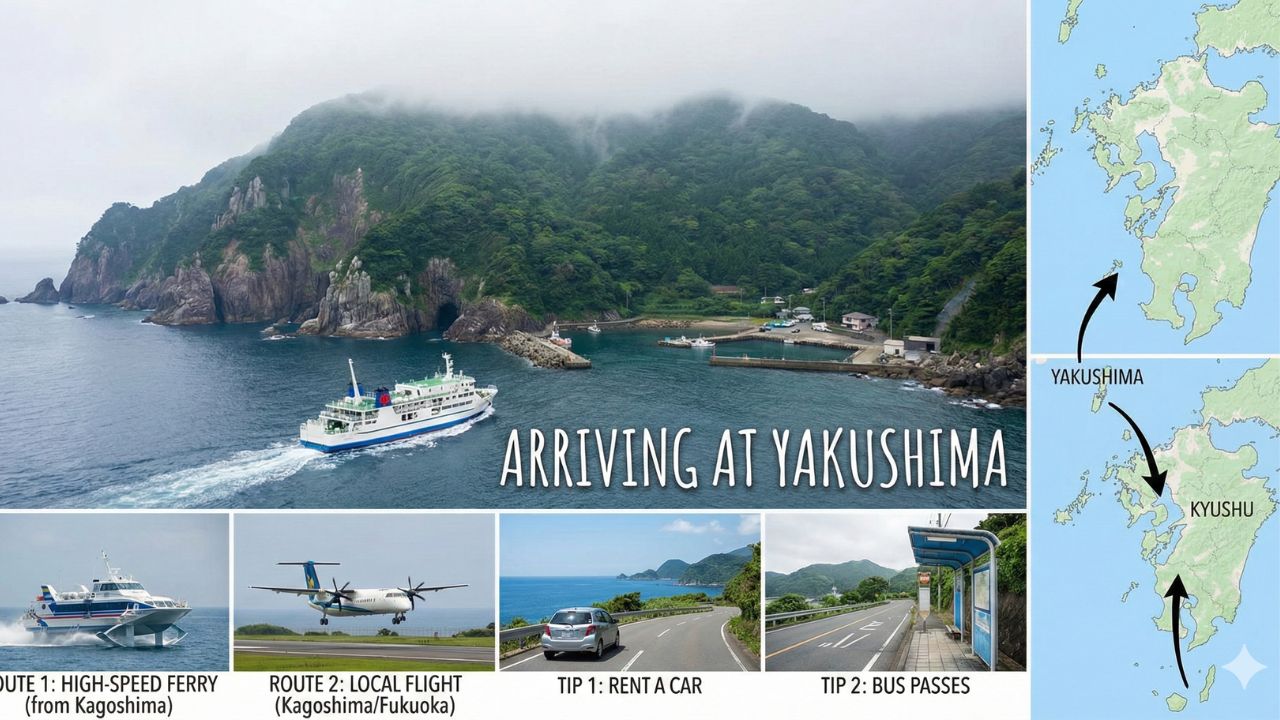
Yakushima is a stunning island in Japan, known for its ancient cedar forests, lush mountains, and unique wildlife. If you’re planning a trip, you might be wondering how to get to Yakushima. While the island is remote, it is accessible by a combination of flights and ferries from major cities like Kagoshima. This guide will walk you through all the travel options, tips, and considerations to make your journey to Yakushima smooth and enjoyable.
Step 1: Getting to Kagoshima
Before reaching Yakushima, most travelers first arrive in Kagoshima, the nearest major city on the southern tip of Kyushu.
By Air:
- Fly into Kagoshima Airport from major Japanese cities like Tokyo, Osaka, and Fukuoka.
- Domestic carriers like Japan Airlines (JAL) and All Nippon Airways (ANA) operate frequent flights.
- Flight time from Tokyo is approximately 2 hours.
By Train:
- Take the Shinkansen (bullet train) to Kagoshima-Chuo Station from cities like Fukuoka or Osaka.
- Travel time from Fukuoka is about 4 hours.
Kagoshima serves as the main hub for onward travel to Yakushima.
Step 2: Choose Between Air or Sea Travel to Yakushima
From Kagoshima, you can reach Yakushima either by plane or ferry.
Option 1: Flight to Yakushima Airport
- Airlines: Japan Airlines (JAL) and All Nippon Airways (ANA) operate flights.
- Flight time: Approximately 35 minutes from Kagoshima.
- Pros: Fast, convenient, less affected by weather compared to ferries.
- Cons: Can be more expensive than ferry travel.
Yakushima Airport is located in the northern part of the island, making it easy to access major attractions.
Option 2: Ferry to Yakushima
There are two main ferry services from Kagoshima Port:
- High-speed ferry:
- Travel time: About 2 hours.
- Slightly more expensive than the slow ferry but quicker.
- Slow ferry:
- Travel time: Around 4 hours.
- More affordable and can be a scenic, relaxing way to approach the island.
Ferries usually dock at Miyanoura or Anbō ports, both popular starting points for exploring the island.
Step 3: Getting Around Yakushima
Once on the island, you’ll need to plan transportation for sightseeing:
- Rental cars: The most convenient way to explore Yakushima’s forests, waterfalls, and trails.
- Buses: Limited routes connect major towns and trailheads.
- Taxis: Available but can be expensive for long distances.
Planning your transport in advance helps you make the most of your time on the island.
Step 4: Popular Yakushima Destinations
Knowing how to get to Yakushima is only part of the plan. Consider which attractions you want to visit:
- Jomon Sugi: Ancient cedar tree, a UNESCO World Heritage site.
- Shiratani Unsuikyo Ravine: Famous for moss-covered forests.
- Yakusugi Land: Hiking trails among old-growth cedar trees.
- Yakushima Beaches: Nagata Inaka-hama for sea turtles.
These spots often require early planning and sometimes guided tours, especially for longer hikes.
Step 5: Tips for Traveling to Yakushima
- Check weather conditions: Ferries may be canceled in typhoon season or rough seas.
- Book flights and ferries in advance: Popular in spring, autumn, and summer.
- Bring cash: Some parts of the island have limited card acceptance.
- Pack for hiking: Comfortable shoes, rain gear, and water are essential.
- Accommodations: Choose between Miyanoura, Anbō, or other small towns depending on your itinerary.
Following these tips ensures a stress-free journey to Yakushima.
Step 6: Best Time to Visit Yakushima
- Spring (March–May): Mild weather, fewer tourists.
- Summer (June–August): Lush forests, but rainy season can affect hiking.
- Autumn (September–November): Beautiful fall foliage and pleasant weather.
- Winter (December–February): Fewer tourists, cooler temperatures, and some hiking trails may be icy.
Choosing the right season helps you enjoy the island’s natural beauty to the fullest.
Final Thoughts
Learning how to get to Yakushima is the first step toward exploring one of Japan’s most magical islands. Whether you choose a quick flight or a scenic ferry ride from Kagoshima, planning your journey carefully ensures you can experience Yakushima’s ancient forests, waterfalls, and wildlife without hassle. Combine smart transport choices with proper planning for accommodations, gear, and sightseeing to make your trip unforgettable.
Leave a Reply