
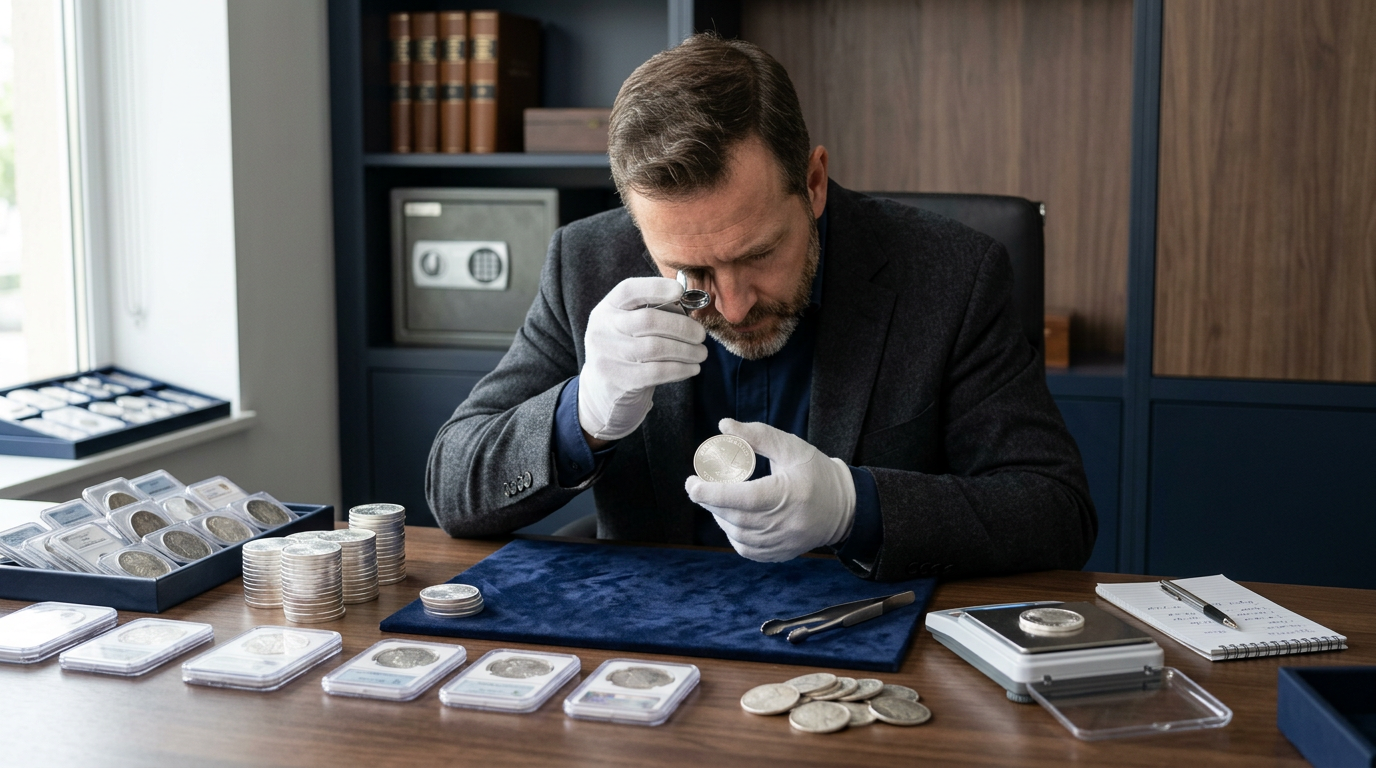
Choosing a silver coin buyer requires more than finding the highest number in an advertisement. Silver coins can carry value from their metal content, condition, rarity, mint, date, demand or third-party certification. Some are primarily bullion, while others are collectibles worth considerably more than melt value. A trustworthy transaction begins with accurate identification, a transparent valuation method and clear payment and shipping terms. This guide explains how coin buyers assess silver, how to prepare a collection, which questions to ask and how to avoid pressure, hidden fees and preventable damage.
What Is a Silver Coin Buyer?
A silver coin buyer is a dealer, numismatist, auction company, bullion business or marketplace participant that purchases silver coins from individuals or estates. Buyers may specialise in bullion, historic U.S. coins, world coins, certified coins, complete collections or wholesale quantities.
The best channel depends on what is being sold. A bullion dealer may be efficient for common one-ounce coins and 90% U.S. silver, while a specialist numismatic buyer may be better equipped to evaluate key dates, varieties, proofs and high-grade pieces. An auction house may suit rare material with strong collector demand, but seller fees and timing should be considered.
A professional silver coin buyer should be able to explain whether an offer is based on:
- Silver weight and purity
- Current wholesale market conditions
- Dealer inventory needs
- Coin condition or grade
- Date and mint mark
- Rarity or variety
- Certification
- Collector demand
- Quantity
- Transaction and handling costs
The buyer needs a margin to resell coins, so an offer will normally differ from a retail asking price. The important issue is whether the spread is understandable and competitive for the type of material.
Bullion Value vs. Numismatic Value
Silver coins generally fall along a spectrum from metal-focused bullion to collector-focused numismatics. Many pieces have elements of both.
Bullion-focused coins
Bullion coins are valued mainly for recognised metal content and market liquidity. Examples can include common government-issued one-ounce coins and privately produced rounds, although rounds are technically not coins.
The offer may be quoted as a fixed amount above or below the current silver spot price. Popular sovereign products can trade differently from generic rounds because recognition and demand vary.
Historic circulating silver
Older U.S. dimes, quarters and half dollars may contain silver, depending on denomination and date. Common circulated pieces are sometimes traded by face value or calculated silver content. However, key dates, rare mint marks and better grades can carry numismatic value.
Collectible and certified coins
A collectible coin may be valued for scarcity, condition, strike, colour, eye appeal, pedigree, variety or demand. Coins certified by recognised grading services often trade within established market ranges, but the holder and grade do not guarantee a specific sale price.
A knowledgeable silver coin buyer should sort material before making a bulk melt-based offer. Sellers should be cautious when valuable dates and certified coins are grouped with ordinary bullion without explanation.
9 Ways to Choose the Best Silver Coin Buyer
A careful process helps sellers understand value and compare options without rushing.
1. Identify the Coins Before Requesting Offers
Start by creating a basic inventory. Record denomination, country, year, mint mark, quantity, weight and certification number where applicable. Photograph both sides of important pieces under neutral lighting.
Do not rely on internet image matching alone. Similar coins can differ in purity, composition, finish and value. Dates and mint marks matter, and replicas may resemble originals.
A silver coin buyer can assist with identification, but sellers benefit from knowing the broad categories before the meeting. Separate obvious bullion, circulated silver, certified coins, proof sets and world coins.
Keep original packaging, certificates, invoices and collection notes. Provenance does not automatically increase value, but documentation can help identify special issues and establish lawful ownership.
2. Do Not Clean the Coins
Cleaning is one of the most damaging mistakes a seller can make. Polishing, dipping, brushing, wiping or using household chemicals can alter surfaces and reduce collector value.
Even gentle-looking methods may leave hairlines or remove natural toning. A cleaned coin can be assigned a details designation rather than a straight numerical grade by a grading service.
Handle coins by their edges over a soft surface. Leave certified holders sealed, and do not remove coins from original government packaging without a clear reason.
A reputable silver coin buyer will prefer to evaluate the coin in its existing state. Dust or fingerprints should not be “fixed” immediately before an appraisal. Professional conservation is a specialised service and should not be attempted casually.
3. Understand Spot Price, Melt Value and Premium
Silver spot price is a market reference for wholesale silver, typically quoted per troy ounce. It is not automatically the amount a dealer pays for every coin.
Melt value estimates the metal value based on silver weight and purity. The simplified concept is:
Silver weight × purity × current silver price = approximate metal value
Actual settlement can vary because of assay, product type, market volatility, dealer demand, quantities and transaction costs.
Premium is the amount above metal value that a product may command. A recognised bullion coin can carry a stronger premium than a generic round, while a rare coin may be driven primarily by collector value.
Ask the silver coin buyer which reference price and time are used, how purity is established and whether the offer includes a premium or discount. Do not compare an offer with a retail listing without accounting for the dealer’s resale margin and listing status.
4. Verify Reputation and Expertise
A professional history, clear business identity and verifiable contact information are useful starting points. Review independent customer feedback, complaint patterns and how the business handles disputes.
Professional memberships can signal industry involvement, but they are not a guarantee. Sellers can check whether claimed affiliations are current and what ethics or arbitration requirements apply.
A silver coin buyer should have expertise appropriate to the collection. Someone who buys bullion by weight may not be the best evaluator of toned Morgan dollars, rare world coins or die varieties.
Ask how long the buyer has handled the relevant material, whether high-value coins are evaluated in-house and whether the business can explain grade and market comparisons. Vague claims of being an expert are less useful than a transparent process.
5. Request an Itemised Offer
A single price for an entire collection may be convenient, but it can hide how value was assigned. Request enough detail to distinguish bullion, collectible coins and low-value material.
An itemised offer does not need to list every common circulated coin separately. It should, however, identify important pieces, quantities, purity assumptions, price basis, deductions and fees.
A transparent silver coin buyer can explain why two similar-looking coins receive different prices. Condition, date, certification, demand and current inventory can all matter.
If the buyer refuses to discuss valuation or pressures the seller to accept immediately, consider another opinion. Market prices can move, so a quote may have a limited validity period, but that is different from manufactured urgency.
6. Compare More Than One Buying Channel
Different channels serve different kinds of coins.
Local coin dealer
Provides in-person inspection, immediate discussion and potentially quick payment. Local demand and inventory can affect the offer.
Online bullion dealer
Can be efficient for well-defined bullion products and larger quantities. Shipping, insurance, price locks and settlement timing matter.
Auction house
May reach specialist collectors for rare or high-grade coins. Seller commissions, photography, reserves, insurance and payment delays should be reviewed.
Peer-to-peer marketplace
May produce a higher gross price but adds fraud, payment, authentication, shipping and personal-safety risks.
A silver coin buyer that is excellent for bullion may not be the best venue for a rare collection. Obtain multiple offers when value is significant or the material is unfamiliar.
7. Review Shipping, Insurance and Price-Lock Terms
Selling through the mail introduces custody risk. Before shipping, understand acceptable carriers, packaging rules, insurance, tracking, signature requirements and prohibited items.
Standard carrier insurance may exclude or limit coins, bullion and precious metals. Do not assume a declared value creates coverage. Use the buyer’s approved process and obtain written confirmation of responsibility at each stage.
A silver coin buyer may lock the price when the order is created, when the package is postmarked or when items are received and verified. Market changes can affect settlement if terms are unclear.
Photograph contents, package securely without revealing value and retain receipts. Avoid writing words such as “silver,” “coins” or “bullion” on the outside. For high-value shipments, specialised logistics may be appropriate.
8. Confirm Payment and Tax Documentation
Ask when and how payment is issued. Options may include check, bank transfer or another documented method. Cash transactions can create security and recordkeeping concerns.
The silver coin buyer should provide a receipt showing items sold, amount paid, date and business information. Keep acquisition records, appraisals and estate documents when available.
Tax treatment depends on jurisdiction, holding period, cost basis and the nature of the transaction. Some dealers may have reporting obligations for particular products or payment patterns, but rules are detailed and can change.
A coin dealer is not a substitute for a qualified tax adviser. Sellers handling an inherited collection, business inventory or substantial capital gain should seek professional advice.
9. Protect Personal and Physical Security
Do not advertise a valuable collection publicly with a home address or travel schedule. Meet at a secure business location during normal hours, and consider bringing another trusted adult.
For estate collections, limit the number of people who know where coins are stored. Use an inventory and maintain chain-of-custody records when several heirs or representatives are involved.
A legitimate silver coin buyer may request identification or ownership information to comply with applicable rules. Ask how personal data is stored and protected.
High-pressure payment requests, unusual courier arrangements, secrecy demands and guaranteed investment claims are warning signs. The Federal Trade Commission has warned consumers about precious-metal and coin schemes that use misleading promises and inflated valuations. Stop the transaction when something feels inconsistent or unverifiable.
How a Silver Coin Buyer Calculates an Offer
The calculation depends on category.
Common bullion
The buyer starts with metal content and current market conditions. Product recognition, condition, quantity and resale demand can change the premium or discount.
90% U.S. silver coins
Common circulated dimes, quarters and half dollars may be quoted by face value or estimated metal content. Extremely worn, damaged or sorted material can trade differently. Rare dates should be removed for separate evaluation.
Morgan and Peace dollars
Common circulated silver dollars may carry value above melt because of collector demand. Date, mint mark, grade, surface condition and certification can create large price differences.
Proof and commemorative coins
Original packaging, certificates, mintage, condition and current collector interest matter. Some trade close to metal value, while others carry premiums.
World silver coins
Composition varies by country, date and denomination. A silver coin buyer may need reference materials or testing to identify purity. Rare world issues deserve specialist review.
Certified coins
The buyer considers grading-service holder, grade, market comparables, demand and eye appeal. A high grade does not guarantee liquidity at a particular price.
Questions to Ask a Silver Coin Buyer
Before agreeing to sell, ask:
- How do you separate bullion from collectible coins?
- Which silver price reference do you use?
- When is the price locked?
- What silver purity and weight are assumed?
- Are any fees deducted?
- Will I receive an itemised offer?
- How do you evaluate certified coins?
- Do you use third-party authentication?
- What is the payment timeline?
- Who insures mailed coins?
- What happens if I reject the offer?
- How are rejected items returned?
The buyer should answer without evasiveness. Terms should be in writing before coins leave the seller’s control.
How to Prepare Coins for Appraisal
Preparation should organise the collection without changing the coins.
- Keep coins in existing holders.
- Group them by country and denomination.
- Separate certified and proof coins.
- Record dates, mint marks and quantities.
- Retain packaging and certificates.
- Photograph higher-value pieces.
- Note the collection’s ownership history.
- Avoid cleaning, testing or scratching.
- Remove unrelated jewellery and non-coin items.
- Prepare questions about the offer method.
A silver coin buyer can work more efficiently when material is organised. However, do not discard old envelopes or handwritten notes until the coins are identified; they may contain useful information.
Silver Coin Buyer Red Flags
Guaranteed profit claims
No dealer can guarantee future silver or collectible-coin returns. Price and demand can fall.
Pressure to sell immediately
A quote can expire because markets move, but the seller should still understand the terms and be free to decline.
Refusal to identify important coins
A bulk offer may be reasonable for common material, but certified or rare coins should not disappear into an unexplained total.
No written receipt
A documented transaction protects both parties and supports tax and estate records.
Unclear shipping liability
If no one can explain who bears loss before and after delivery, do not ship.
Unusual payment requests
Be cautious with personal wire accounts, cryptocurrency-only settlement, gift cards or methods that remove ordinary protections.
Claims that cleaning raises value
Cleaning often harms collectible coins. Seek another opinion before altering surfaces.
Prices based only on retail listings
Unsold online asking prices are not confirmed market value. Completed sales and dealer bids are more meaningful.
Should Coins Be Professionally Graded Before Selling?
Third-party grading can authenticate, encapsulate and assign a grade, but it is not worthwhile for every coin. Fees, shipping, insurance and turnaround time can exceed the added value for common material.
Grading may deserve consideration when:
- Authenticity is uncertain
- A small grade difference changes value substantially
- The coin appears rare or high grade
- The market prefers certified examples
- A specialist buyer recommends submission with clear reasoning
It may not make sense when:
- The coin is common bullion
- Value is close to melt
- Damage or cleaning limits collectibility
- Certification costs consume the likely premium
A silver coin buyer who also submits coins should explain fees and potential conflicts. For very valuable pieces, an independent numismatic opinion may be worthwhile.
Selling an Inherited Silver Coin Collection
Inherited collections can be emotionally and financially complex. Do not rush to sell before confirming ownership, estate authority and tax basis.
Begin with an inventory and photographs. Keep sets together until evaluated, and preserve labels written by the collector. Old purchase invoices may help establish cost and provenance.
If heirs disagree, consider an independent appraisal before selecting a silver coin buyer. An appraisal for estate, insurance or division purposes may use a different value standard from a dealer’s cash offer.
Large collections can be sold as one lot or divided by category. One sale is convenient, while specialised channels may produce better results for rare coins. Balance expected net proceeds against time, fees and risk.
Online vs. Local Silver Coin Buyer
A local buyer offers face-to-face inspection and may pay immediately. The seller avoids shipping but is limited to local competition.
An online silver coin buyer may publish buy prices for standard bullion, making comparisons easier. The seller must manage shipping, insurance and settlement terms.
The best option depends on:
- Coin type
- Total value
- Need for specialist expertise
- Travel distance
- Shipping confidence
- Payment speed
- Privacy
- Fees
For a mixed collection, a hybrid approach can work: common bullion to a competitive bullion buyer and rare coins to a numismatic specialist or auction.
Silver Coin Selling Costs
Sellers should compare net proceeds, not only the headline offer.
Potential costs include:
- Dealer spread
- Auction commission
- Listing fee
- Payment-processing fee
- Shipping
- Insurance
- Grading
- Authentication
- Appraisal
- Return shipping
- Tax preparation
A silver coin buyer should disclose deductions before final acceptance. Auction estimates are not guarantees, and hammer price is not the same as the seller’s net payment.
For common bullion, a small difference per ounce can become meaningful across a large quantity. For rare coins, expertise and market access may matter more than a simple percentage of metal value.
Safely Testing Silver Coins
Sellers should avoid destructive tests. Scratching, filing and harsh acids can damage collectible surfaces.
Professional evaluation may use weight, dimensions, magnet response, electrical conductivity, specific gravity, X-ray fluorescence or other methods. No single test is perfect in all cases, and interpretation requires experience.
A silver coin buyer should ask permission before performing any test that could mark or alter the coin. Certified holders should not be opened casually.
Counterfeit bullion and altered rare coins exist. Authentication protects both buyer and seller, but testing should be proportionate to value and risk.
Understanding Retail Price vs. Buy Price
A retail price includes the dealer’s acquisition cost, authentication risk, overhead, inventory holding, marketing, payment fees and profit. A buy offer reflects the price at which the dealer can acquire the coin and resell it competitively.
This difference is called the spread. Spreads tend to be narrower for liquid bullion and wider for specialised, slow-selling or uncertain material.
A fair silver coin buyer does not need to pay full retail, but should explain the category and offer basis. Sellers can compare completed market sales, dealer buy lists and multiple offers.
Do not assume a printed catalogue value equals cash value. Price guides can represent different market levels and may lag actual demand.
Financial and Tax Considerations
Silver coins can fluctuate in value and should not be described as guaranteed investments. Selling can create a gain or loss relative to cost basis. Inherited property may have different basis rules from personally purchased coins.
Keep:
- Purchase receipts
- Inheritance documents
- Appraisals
- Grading invoices
- Shipping and insurance records
- Sale receipts
- Buyer correspondence
Consult a qualified tax professional for significant transactions. This article provides general educational information and is not financial, investment, legal or tax advice.
Conclusion
A silver coin buyer should combine metal-market knowledge with enough numismatic expertise to recognise when a coin is worth more than its silver content. Sellers can protect themselves by creating an inventory, leaving coins uncleaned, understanding melt value and requesting an itemised offer.
Reputation, written terms, shipping insurance, payment timing and data security matter as much as the headline price. Compare more than one channel when the collection is valuable, inherited or unfamiliar. Rare and certified coins may benefit from specialist review, while standard bullion may be easier to compare using transparent buy prices.
Before accepting an offer, ask the silver coin buyer to explain price references, premiums, deductions and return terms. A measured, documented process reduces the risk of hidden fees, accidental damage and rushed decisions while helping the seller choose the most appropriate market for each coin.
FAQs
1. How does a silver coin buyer determine value?
The buyer considers silver content, spot price, coin type, date, mint mark, condition, certification, rarity, demand, quantity and expected resale costs.
2. Should I clean silver coins before selling them?
No. Cleaning can create scratches, remove natural surfaces and reduce collector value. Leave coins in their current holders for professional evaluation.
3. Will a silver coin buyer pay the current spot price?
Not always. Offers may be above or below spot depending on product, purity, condition, quantity, demand and dealer costs.
4. Are old silver coins worth more than melt value?
Some are. Rare dates, mint marks, varieties and higher grades can carry substantial numismatic premiums, while common worn pieces may trade near metal value.
5. Is it safe to mail silver coins to a buyer?
It can be when written shipping, insurance, tracking and price-lock procedures are followed. Confirm coverage because standard carrier insurance may limit precious metals.
6. Should inherited silver coins be appraised before selling?
An appraisal or second opinion can be useful for valuable or unfamiliar collections, estate division and tax records. Appraisal value may differ from a dealer offer.
Leave a Reply