
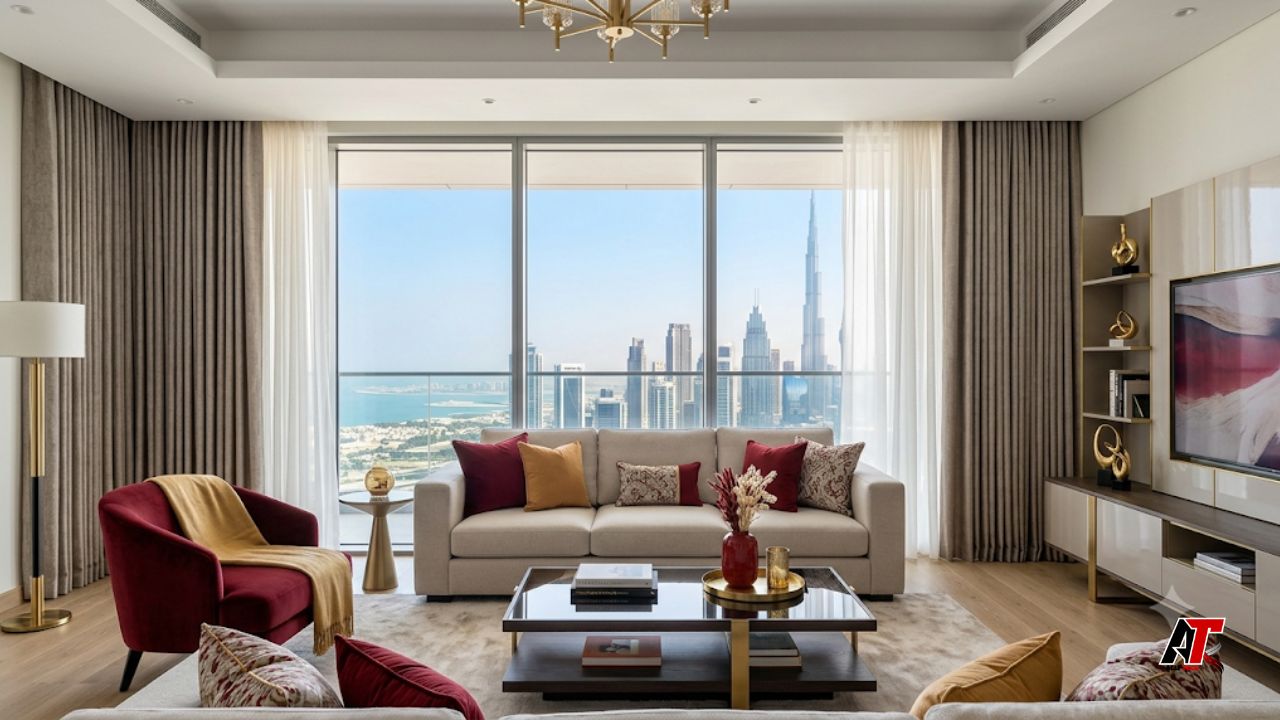
Dubai homes often feature large windows, open layouts, and strong natural light. These details look beautiful, but they can also create glare, reduce privacy, warm up rooms, and make bedrooms difficult to darken. Modern blackout curtains solve these problems while adding a clean, finished look to an interior.
Today’s blackout window treatments are available in soft neutrals, rich colors, textured fabrics, layered designs, custom sizes, and motorized systems. They can suit apartments, villas, hotels, nurseries, home offices, and cinemas. With the right fabric and installation, they help manage daylight, support better sleep, protect furnishings, and improve daily comfort.
This guide explains how modern blackout curtains in Dubai can transform a room, which fabrics and styles work best, how to measure correctly, and what to check before ordering.
Why Blackout Curtains Are Useful in Dubai
Dubai’s strong sunlight can make east-, west-, and south-facing rooms uncomfortable during bright hours. Light may reflect from screens, floors, mirrors, and glossy furniture, while uncovered glass can reduce privacy in apartments and closely spaced communities.
Blackout fabric uses a dense weave, coated backing, or several layers to reduce visible light. When the panels are wide enough and installed close to the wall, they create a darker, calmer environment. They also form an additional barrier between the window and the room, helping reduce direct radiant heat.
Their value is not limited to bedrooms. Living rooms, nurseries, home offices, media rooms, and guest rooms can all benefit from better control over light and privacy.
1. Build a Better Sleeping Environment
Streetlights, building lights, early sunrise, and passing traffic can disturb rest. Blackout curtains help create a darker bedroom for adults, children, shift workers, and anyone sleeping during daylight hours.
Fabric alone is not enough. Light can enter from the top, sides, and center gap when panels are too small. Ceiling-mounted tracks, full-width curtains, generous overlap, and floor-length panels produce stronger results.
Choose colors that support the bedroom design. Beige, greige, charcoal, muted blue, taupe, and soft green can feel modern and restful while providing effective light control.
2. Improve Comfort During Hot, Bright Hours
Blackout curtains add a layer between the window and the room. They can reduce the amount of direct sunlight reaching beds, sofas, desks, rugs, and floors, making the space feel less exposed during the brightest part of the day.
They do not replace efficient glazing, insulation, or air conditioning, but they can support these systems. Lined and multi-layer curtains usually provide better coverage than a thin single fabric. A lighter backing may also reflect more sunlight toward the window.
Close the curtains before intense sunlight reaches the room. Preventing heat and glare is more effective than trying to correct the room after it has already become uncomfortable.
3. Protect Furniture and Interior Finishes
Long-term sunlight exposure may fade upholstery, rugs, artwork, wooden floors, and decorative fabrics. The change happens slowly, so damage may become noticeable only after furniture is moved or one side appears lighter.
Blackout curtains provide a simple protective barrier. They are particularly useful where valuable furnishings sit close to large windows. During milder hours, the room can remain open; during peak sunlight, the panels can be closed.
A layered system gives greater flexibility. Sheers soften daytime light, while the blackout layer provides stronger protection and privacy when needed.
4. Gain Privacy Without a Heavy Look
Privacy matters in bedrooms, street-facing spaces, ground-floor homes, and apartments overlooking nearby buildings. Blackout curtains create a solid visual barrier at night, when indoor lighting can make rooms easy to see through thin sheers.
The result does not need to feel dark or old-fashioned. Curtains mounted near the ceiling make walls appear taller, while wide panels create a generous hotel-style finish. Pale neutrals keep the room visually light, and darker colors add drama.
Homeowners comparing curtains Dubai can review sheers, dim-out fabrics, decorative drapes, and true blackout options to match both privacy and design needs.
5. Know the Difference Between Blackout and Dim-Out
True blackout fabric is designed to block almost all visible light when the window is fully covered. Dim-out or room-darkening fabric reduces a large amount of light but leaves the room softly illuminated.
Full blackout is usually best for bedrooms, nurseries, cinemas, and daytime sleeping. Dim-out fabric may be suitable for living rooms, dining areas, and offices where glare reduction matters more than complete darkness.
Color does not prove performance. A pale curtain can offer strong blackout coverage when it has an effective backing, while an unlined dark fabric may still let light through. Always request a sample and test it against a bright window.
6. Choose a Modern Curtain Style
Wave curtains suit contemporary interiors because they form smooth, even folds and work well with concealed ceiling tracks. Pinch pleats create a tailored look, while eyelets feel more casual but may allow extra light around the top.
Neutral tones such as sand, stone, warm white, and gray work well in minimalist rooms. Burgundy, forest green, navy, or charcoal can frame a large window and create contrast. Linen-look textures add softness without looking traditional.
Hardware matters too. Concealed tracks give a clean architectural finish, decorative rods suit smaller rooms, and motorized tracks are useful for tall or wide openings.
7. Layer Sheers and Blackout Panels
A double-layer system combines a sheer curtain with a blackout panel. During the day, the sheer filters harsh light and provides some privacy. In the evening or during peak sun, the blackout layer can be closed.
This arrangement also adds depth and a hotel-inspired finish. A white sheer paired with beige, taupe, gray, or a deeper accent color works well in many Dubai interiors.
Use a double ceiling track so both layers move independently. Leave enough space between fabrics to prevent rubbing, and avoid excessive fullness in small rooms.
8. Measure for Better Coverage
Accurate measurement is essential. Measure the full area the curtains should cover, not only the glass. Extending the track beyond both sides of the window reduces light gaps and allows the curtains to stack away from the view when open.
For stronger darkness, install the track close to the ceiling and use floor-length panels. The fabric can just touch the floor or sit slightly above it for easier cleaning.
Adequate fullness is also important. Panels stretched flat look unfinished and may not cover the sides properly. Professional measurement is helpful for bay windows, curved walls, double-height spaces, and wide sliding doors.
9. Consider Custom-Made Curtains
Many Dubai properties have tall ceilings, wide glass doors, recessed tracks, or unusual window sizes. Custom curtains are made for the actual opening and usually offer better proportions, coverage, and light control than standard panels.
Custom service allows more choice in fabric, lining, pleat style, track, motorization, and installation. An installer can also check ceiling strength, air-conditioning vents, furniture placement, and access.
When ordering custom blackout curtains, request a written quotation covering fabric, lining, dimensions, track, installation, motor options, warranty, and completion time. View the sample inside the room because colors change under daylight and artificial lighting.
10. Explore Motorized Curtain Systems
Motorized blackout curtains are practical for villas, modern apartments, double-height windows, and home cinemas. They can operate by remote, wall switch, mobile app, or a compatible smart-home system. Timers may close the curtains before peak sunlight or open them gradually in the morning.
Motorization is useful for heavy panels and windows positioned behind furniture. It also reduces pulling on the fabric and keeps the folds even.
Confirm the power source, motor capacity, noise level, manual override, controls, and warranty. The track must be suitable for the curtain weight.
Choose the Right Fabric and Color
Match the curtain to the room’s walls, flooring, furniture, and lighting. Warm off-white and beige pair well with cream interiors and natural wood. Gray and charcoal feel contemporary, while deep colors create a stronger focal point.
Texture affects the mood. Smooth fabric creates a clean look, velvet adds richness, and linen-look material feels relaxed. The blackout performance comes from the lining or coated layer, not simply from the decorative texture.
Check cleaning instructions before buying. Some curtains are washable, while lined or delicate fabrics may require professional cleaning.
Installation Details That Matter
Mount the track close to the ceiling and extend it beyond the window. A center overlap and side returns can reduce light entering through gaps. Make sure the panels close without catching on furniture, handles, or air-conditioning vents.
Heavy curtains require secure fixings. For sliding doors, plan where the fabric will stack so the entrance remains easy to use.
After installation, close the curtains during daylight and inspect the room. Hooks, overlap, panel width, or track returns can often be adjusted if unwanted light remains.
Care and Common Buying Mistakes
Use a soft vacuum attachment to remove dust and follow the manufacturer’s cleaning instructions. Avoid ironing coated blackout surfaces directly, and clean spills according to the fabric type. Tracks should also be checked for dust, loose brackets, and uneven gliders.
Do not choose curtains by color alone. Confirm whether the fabric is blackout, dim-out, or simply lined. Avoid panels that are too narrow, too short, or insufficiently full.
Also compare the complete quotation rather than only the fabric price. Track quality, stitching, lining, installation, motorization, and after-sales service all affect long-term value.
Conclusion
Modern blackout curtains in Dubai can improve how a room looks and feels. They reduce unwanted light, strengthen privacy, support restful bedrooms, protect furnishings, and complete the design of large windows. Layered sheers, ceiling tracks, textured fabrics, and smart controls make it possible to combine performance with modern style.
Begin by deciding whether the room needs full darkness, glare reduction, privacy, or heat control. Test samples, measure beyond the window frame, choose reliable hardware, and confirm every detail in writing.
A well-planned curtain system should look attractive when open, work effectively when closed, and remain easy to use every day. Readers looking for more practical home and digital guidance can explore aelftech.com usa.
Leave a Reply