
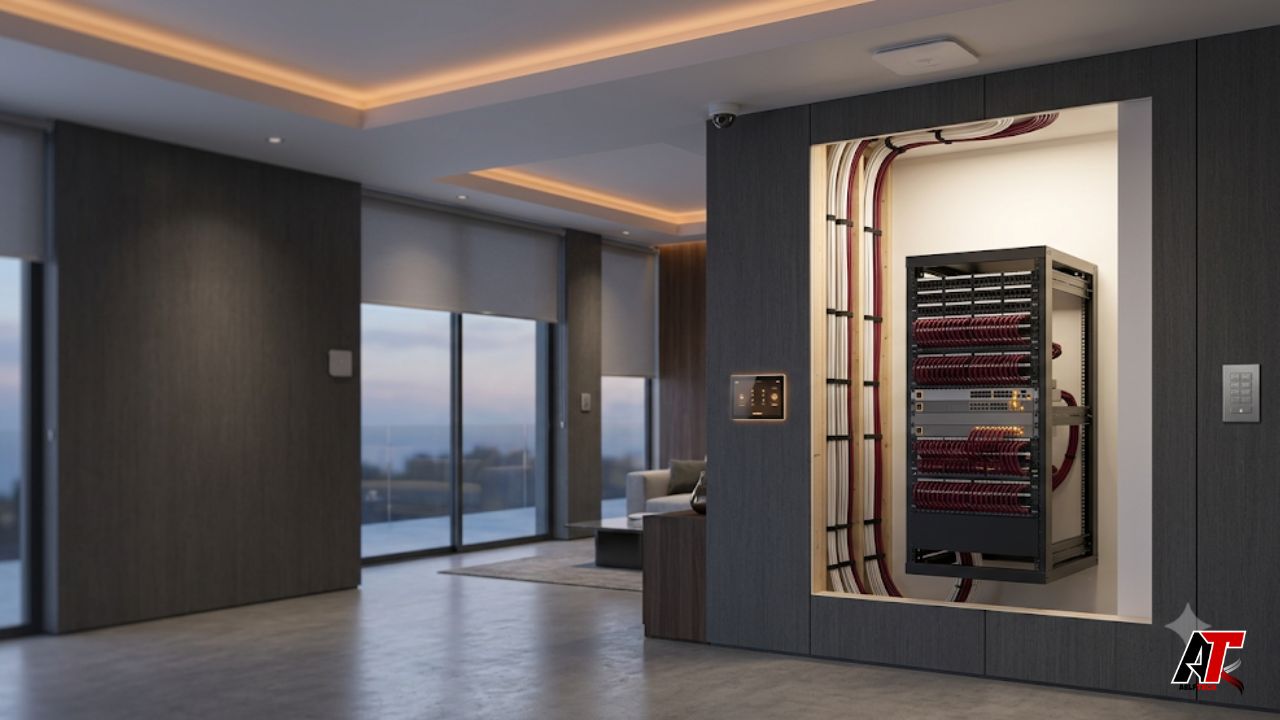
Luxury smart homes are often judged by what people can see. Elegant touch panels, motorized shades, immersive audio, intelligent lighting, discreet cameras, and responsive climate control all create a premium experience. However, these systems depend on something hidden behind walls and above ceilings: the cabling infrastructure.
Luxury smart home cabling carries data, power, audio, video, and control signals throughout the property. When the infrastructure is planned correctly, technology feels fast, stable, and effortless. When cabling becomes an afterthought, even expensive devices may feel slow, unreliable, and difficult to upgrade.
Better cabling does not simply mean installing more wire. It means creating an organized system for current needs while leaving room for future technology. Because luxury homes have more devices, larger spaces, and higher performance demands, the network should be treated as part of the architecture from the start.
Why Cabling Matters More in a Luxury Smart Home
Wireless technology is convenient, but it cannot replace a strong wired backbone. Wi-Fi performance changes with distance, interference, access-point placement, building materials, and the number of connected devices.
These challenges become more serious in large properties. Concrete, stone, metal, mirrors, multiple floors, outdoor areas, guest houses, cinemas, and mechanical rooms can weaken wireless signals. Premium Wi-Fi equipment still needs well-positioned access points, and those access points need dependable wired connections.
A structured cabling system also reduces wireless congestion. Fixed devices such as televisions, cameras, control processors, and audio equipment can use Ethernet. Wi-Fi can then focus on phones, tablets, laptops, and other mobile devices. The result is more consistent performance in every room.
Cabling also helps separate systems work together. Lighting, security, access control, audio, intercoms, sensors, and climate systems may come from different manufacturers. Organized wiring provides clear pathways for integration, testing, servicing, and future upgrades.
Structured Wiring: The Hidden Architecture
Structured wiring follows one coordinated plan. Instead of running a new cable whenever a device is added, installers route most data and control lines back to one or more central distribution points.
These locations may contain network switches, patch panels, routers, automation controllers, audio matrices, video equipment, surge protection, and backup power. The main rack should be accessible, secure, well ventilated, and large enough for expansion.
Good rack design also makes maintenance easier. Cables need clear labels, sensible management, and enough service loop for repairs. Power and low-voltage wiring should remain properly separated where required. In a large residence, smaller satellite racks may serve distant wings, extra floors, or separate buildings.
During planning, the design team should map every technology zone. This includes access points, cameras, televisions, ceiling speakers, touch panels, motorized shades, gates, thermostats, sensors, offices, gaming rooms, theaters, and outdoor spaces. A simple pathway is inexpensive during construction but costly after custom finishes are complete.
Ethernet as the Smart-Home Backbone
Ethernet is one of the most useful technologies in a modern home. It offers stable data connections and can also power compatible devices through the same cable. Whenever practical, fixed devices should use wired connections.
Common examples include wireless access points, smart televisions, media players, desktop computers, network audio devices, control processors, cameras, door stations, and automation gateways. Wiring these devices improves stability and reduces the load on Wi-Fi.
Cable selection should match the installation environment, performance target, run length, and local building rules. In areas with electrical interference, professionally installed shielded Ethernet cables may help protect signal quality. Shielding works best when the complete system is correctly designed, terminated, and grounded.
Conductor quality matters as well, especially on longer runs or when devices receive power over Ethernet. Installers may choose Cat6 plenum pure copper cable when the pathway requires the correct fire rating, dependable data performance, and reliable power delivery. The cable rating must always match the location and applicable code.
Power over Ethernet Simplifies Smart Technology
Power over Ethernet, usually called PoE, sends data and electrical power through one Ethernet cable. It can support cameras, access points, touchscreens, door stations, sensors, lighting interfaces, and many other low-voltage devices.
PoE simplifies installation because every device does not need a nearby electrical outlet. It also allows power to be managed from the equipment rack. When the PoE switch connects to an uninterruptible power supply, important network and security devices can stay active during a short outage.
Managed switches offer another benefit: technicians can restart a device remotely. This may solve minor problems without a service visit. Even so, PoE needs careful planning. The design must account for device wattage, switch capacity, cable length, heat, bundle size, and future growth.
Better Cabling for High-End Audio and Video
Luxury entertainment systems can place heavy demands on the network. A home may stream high-resolution video, lossless music, gaming traffic, and control data to many rooms at the same time. Home cinemas also need dedicated pathways for projectors, speakers, subwoofers, displays, and control equipment.
A television wall should usually receive more than one network connection. Designers may also include conduit, coordinated power, and extra routes for future video or control equipment. Conduit is especially valuable behind fireplaces, feature walls, custom cabinetry, and projection systems because connection standards change over time.
Speaker cable should match the distance, electrical load, placement, and environment. Outdoor speakers, pool areas, saunas, and marine settings may require cable designed for moisture, sunlight, heat, or corrosion. The technology should remain visually discreet but technically accessible.
Security, Access Control, and Privacy
Security systems must work continuously, so they should not rely entirely on consumer Wi-Fi. Wired cameras, alarm interfaces, gate controls, door stations, and access-control devices provide a more dependable foundation.
The cabling plan should consider camera position, mounting height, night lighting, bandwidth, power, weather exposure, and service access. Planning these details early prevents blind spots and avoids visible last-minute wiring.
Privacy also matters. A smart home may collect video, access records, occupancy data, voice commands, and information about household routines. A well-designed wired network supports segmentation, so security, automation, guest access, entertainment, and personal devices can operate on separate network zones.
Cabling does not create cybersecurity on its own. However, it gives network professionals a better foundation for firewalls, access controls, monitoring, and secure remote support. Life-safety systems must still follow all applicable rules and should be handled by qualified specialists.
Lighting, Shades, Climate, and Energy Management
The most impressive smart-home experiences usually come from coordinated systems. One scene may adjust the lights, shades, temperature, music, fireplace, and privacy settings. Reliable cabling helps every action happen quickly and in the correct order.
Motorized shades may need dedicated power and control wiring at each window. Lighting systems can use centralized panels, distributed keypads, network gateways, or a combination of these technologies. Climate control may involve thermostats, room sensors, controllers, and building-management interfaces.
Energy systems can add solar-production data, battery status, smart meters, and electric-vehicle charging information. Therefore, the technology plan should consider these systems together. Shared occupancy sensors, for example, can support lighting, climate, security, and energy-saving routines.
Future-Proofing Without Overbuilding
No property can remain permanently future-proof. Technology changes too quickly. However, a home can be designed so future upgrades are less disruptive and less expensive.
The most useful future-ready features are often simple. They include accessible conduit, spare cable runs, larger pathways, extra rack space, unused switch ports, documented routes, and pull strings in key locations.
Conduit deserves special attention where finished surfaces will be difficult to open later. Useful locations include theaters, television walls, gates, driveway entrances, rooftops, offices, outdoor entertainment zones, and links between buildings.
Future-proofing should still be disciplined. Large bundles of unidentified cable create confusion rather than value. Every run should have a purpose, a label, a destination, and a test record. When the future need is unclear, an empty conduit is often more flexible than a guessed cable type.
Installation Quality Determines Performance
Premium cable cannot overcome poor workmanship. Performance depends on correct bend radius, pulling tension, termination, grounding, pathway fill, moisture protection, and separation from interference sources.
Installers should never crush cables with staples, tighten cable ties excessively, leave runs against sharp edges, or bury connections behind inaccessible finishes. Small installation mistakes can cause intermittent faults that are difficult to diagnose later.
Testing is essential. Each data run should receive an identifier that matches the outlet, patch panel, floor plan, and project records. More demanding projects may require certification testing rather than a basic continuity check.
Photographs taken before walls and ceilings close can also become valuable service records. Clear labels and accurate documents reduce troubleshooting time and help future technicians understand the system without tracing every cable manually.
Retrofitting an Existing Luxury Property
Older luxury homes can still gain modern smart technology. However, the installation method must protect plaster, stone, millwork, historic features, and completed interiors.
Before making new openings, the team should survey attics, crawl spaces, closets, service shafts, mechanical routes, and existing conduits. A retrofit may combine new Ethernet, fiber between distant buildings, selective wireless links, and the reuse of suitable pathways.
The project should first wire the devices that gain the most from stability. These usually include access points, cameras, offices, entertainment centers, and core automation equipment. This focused approach can deliver a major improvement while limiting disruption.
A Practical Cabling Checklist
Before construction or renovation begins, the owner, architect, electrical contractor, interior designer, security specialist, and smart-home integrator should agree on one coordinated technology plan.
- Choose an accessible, ventilated, and secure equipment location.
- Map access points, cameras, televisions, speakers, controls, sensors, gates, and outdoor zones.
- Confirm cable types, pathway ratings, power needs, and local code requirements.
- Reserve conduit, rack space, switch ports, and cable capacity for expansion.
- Define who will provide each pathway, outlet, network port, and control connection.
The final handover should be equally organized. It should include cable schedules, rack layouts, outlet plans, network diagrams, test results, equipment lists, photographs, warranty details, secure account procedures, and support instructions.
Documentation is part of the installation, not an optional extra. Luxury projects often involve several contractors. A shared plan prevents gaps, reduces duplicated work, and helps all systems operate as one connected environment.
Conclusion
Luxury smart-home technology should feel calm, immediate, and almost invisible. That experience requires more than premium devices. It needs a cabling infrastructure that is organized, tested, documented, and designed around the way the property will be used.
A strong wired backbone improves Wi-Fi, supports high-quality audio and video, strengthens security, enables centralized power, and makes upgrades easier. The best time to plan it is before walls close and custom interiors are installed.
By treating structured wiring as part of the architecture, owners create a dependable platform for today’s lifestyle and tomorrow’s innovations. For more guidance on reliable digital environments, explore aelftech.
Leave a Reply