
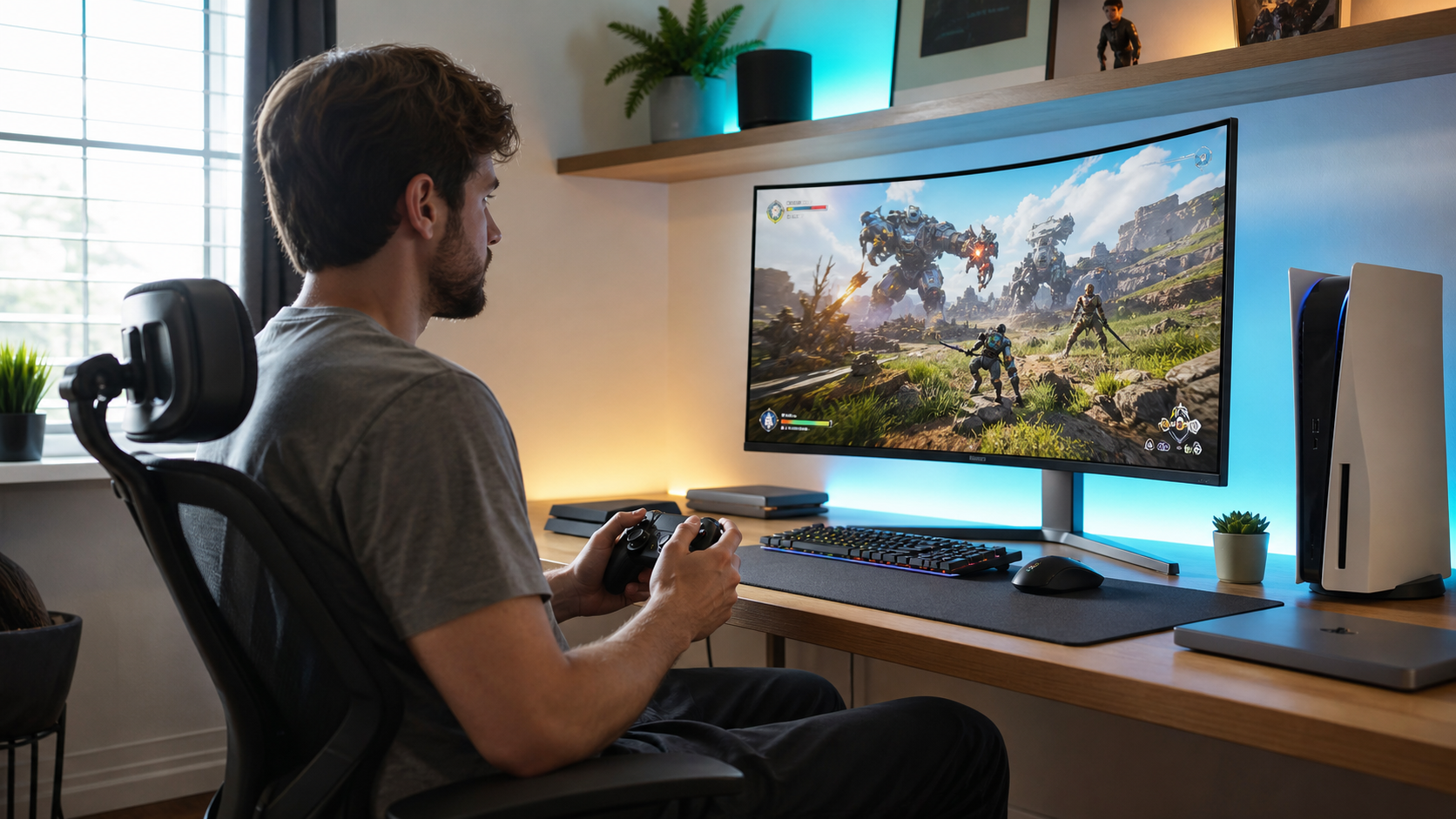
Want to become a better gamer but do not know where to start? Learning how to improve your gaming skills does not mean playing for ten hours every day. Small changes in the way you play can make a big difference.
Whether you enjoy PC games, action games, racing games, strategy games, or multiplayer titles, better gaming comes from practice, patience, and learning from mistakes.
You do not need expensive equipment or natural talent. You need a simple plan and regular practice.
Let’s look at some practical gaming tips that beginners and casual players can use to improve their skills.
Why Do Some Players Improve Faster?
Have you ever played the same game for months but felt that your skills were not improving?
This is common.
Simply playing more does not always make you better. The quality of your practice matters.
Good players usually do three things:
- They understand the game.
- They practice specific skills.
- They learn from their mistakes.
For example, if you keep losing because your aim is poor, playing random matches may not fix the problem. Practicing your aim for 10–15 minutes before playing can be much more useful.
The goal is not just to play more. The goal is to play with purpose.
Start With One Game
One common mistake beginners make is trying too many games at once.
You might play a shooter today, a racing game tomorrow, and a strategy game the next day. This can be fun, but it makes it harder to build strong skills in one game.
Choose one main game and spend some time learning it.
You can still play other games for fun, but keep one game as your main practice game.
This helps you learn:
- Controls
- Maps
- Weapons
- Characters
- Game mechanics
- Enemy patterns
- Strategies
Once you understand these things, your performance can improve naturally.
Learn the Basic Controls
Before worrying about advanced techniques, make sure you understand the basic controls.
For PC gaming, learn how to:
- Move comfortably
- Aim accurately
- Use abilities
- Change weapons
- Open the map
- Interact with objects
- Use shortcuts
- Adjust your camera
Spend some time in training or practice modes if the game provides them.
There is no shame in being slow at first.
Think about learning to ride a bicycle. You do not start by racing other people. First, you learn balance and control.
Gaming works in a similar way.
Practice One Skill at a Time
Trying to improve everything at once can become confusing.
Instead, choose one skill.
For example:
Week 1: Improve aiming
Week 2: Improve movement
Week 3: Learn maps
Week 4: Improve decision-making
This gives your practice a clear purpose.
If you play a racing game, you might focus on braking and cornering first. After that, you can work on racing lines and speed control.
Small improvements can add up over time.
Improve Your Aim
Aim is one of the most important skills in many PC games.
If you play shooting games, better aim can immediately improve your performance.
Start with simple exercises.
Practice:
- Tracking moving targets
- Flicking toward targets
- Keeping your crosshair at head level
- Controlling recoil
- Shooting while moving
- Switching between targets
Do not focus only on speed.
Accuracy comes first.
Once your movements become accurate, you can slowly increase your speed.
Find a Comfortable Mouse Sensitivity
Mouse sensitivity can have a big effect on aiming.
If your sensitivity is extremely high, small mouse movements can move your crosshair too far.
If it is extremely low, turning around may become difficult.
There is no single sensitivity that works for everyone.
Try different settings and find one that feels comfortable.
Once you find a setting that works, keep it for some time.
Changing your sensitivity every day makes it harder to build consistent muscle memory.
Keep Your Crosshair Ready
In shooting games, do not point your crosshair at the ground while moving around.
Keep it around the height where an enemy’s head or upper body could appear.
This reduces the amount of movement needed when an opponent appears.
It is a small habit, but it can save valuable time during a fight.
Ask yourself while moving:
“If an enemy appears now, where will my crosshair already be?”
That question can improve your awareness.
Learn the Maps
Knowing the map can be just as important as having good aim.
Learn:
- Common enemy locations
- Safe areas
- Important routes
- Shortcuts
- High-ground positions
- Objectives
- Popular hiding spots
You do not need to memorize everything on day one.
Learn one area at a time.
After playing the same map regularly, you will start remembering important locations without thinking about them.
This gives you more time to focus on the actual match.
Improve Your Game Sense
Game sense means understanding what is happening and making good decisions.
You may not have the fastest reactions, but strong decision-making can still help you win.
Game sense includes knowing:
- When to attack
- When to defend
- When to retreat
- Where enemies may be
- When to use abilities
- When to save resources
- When to help teammates
For example, imagine you have very little health and an enemy is nearby.
Running toward the enemy may not be the best choice.
Finding cover and healing first could give you a better chance.
Good players do not only react. They think ahead.
Watch Your Own Gameplay
Want a simple way to find your mistakes?
Record your gameplay.
You do not need expensive software. Many modern PCs and gaming platforms already offer basic recording features.
After a match, watch a few minutes of your gameplay.
Look for questions like:
- Why did I lose that fight?
- Was my aim bad?
- Did I move into a dangerous area?
- Did I ignore my teammates?
- Did I make a decision too quickly?
- Could I have escaped?
Do not watch your gameplay only to feel bad about mistakes.
Watch it to find patterns.
If you make the same mistake five times, you now know exactly what to practice.
Learn From Better Players
Watching skilled players can teach you techniques that may take a long time to discover yourself.
You can watch:
- Gameplay videos
- Tutorials
- Tournament matches
- Strategy guides
- Educational streams
But do not simply copy everything they do.
Ask why they made a certain decision.
For example:
Why did they move there?
Why did they wait instead of attacking?
Why did they choose that weapon?
Understanding the reason behind a decision is more useful than copying the action.
Do Not Copy Professional Settings Blindly
You may see a professional player using a particular mouse, sensitivity, resolution, or key setup.
That does not mean it will work for you.
Professional players often have years of experience with their settings.
Use their setup as a starting point, not a rule.
Your comfort matters.
A simple setup that feels natural can be more useful than an expensive setup that feels uncomfortable.
Use the Right Gaming Equipment
You do not need the most expensive gaming setup to improve.
However, your equipment should be comfortable and reliable.
For PC gaming, focus on:
- A responsive mouse
- A comfortable keyboard
- A suitable monitor
- Stable internet
- Good headphones
- A comfortable chair
If your mouse stops responding or your internet keeps disconnecting, your performance can suffer even when your skills are good.
Upgrade equipment when you actually need it.
Do not buy something simply because another gamer owns it.
Improve Your Reaction Time
Reaction speed can help in fast games.
You can improve it through regular gameplay and activities that require quick responses.
More importantly, learn to combine reaction speed with anticipation.
Imagine an opponent always appears from the same doorway.
You do not need super-fast reactions if you already expect them.
This is why game knowledge matters.
Good anticipation can reduce the amount of reaction needed.
Use Headphones and Listen Carefully
Sound can provide useful information in many games.
You may hear:
- Footsteps
- Reloading
- Vehicle sounds
- Enemy abilities
- Doors opening
- Shots
- Movement nearby
Good headphones can make these sounds easier to hear, but you also need to learn what the sounds mean.
Do not just listen.
Learn to identify the direction and type of sound.
Over time, audio awareness can become an important part of your gameplay.
Communicate With Your Team
If you play team-based games, communication is a major skill.
You do not need to talk constantly.
Keep your communication short and useful.
For example:
- “Enemy behind us.”
- “Two players on the left.”
- “I need help.”
- “Let’s wait.”
- “Objective is clear.”
Clear communication helps your teammates understand what is happening.
Avoid unnecessary arguments.
A calm team can make better decisions than a team that spends the match blaming each other.
Learn From Your Losses
Losing is part of gaming.
Even experienced players lose matches.
Instead of saying:
“The game is unfair.”
Ask:
“What could I have done differently?”
Maybe you:
- Took a bad fight
- Moved without checking
- Used an ability too early
- Ignored your health
- Forgot the objective
- Became too aggressive
Finding one mistake after each match gives you something specific to improve.
You do not need to fix everything immediately.
Stop Blaming Your Teammates
Bad teammates can happen.
But blaming them does not improve your own gameplay.
Focus on what you can control.
You control:
- Your movement
- Your decisions
- Your communication
- Your positioning
- Your attitude
- Your practice
This mindset helps you improve faster.
It also makes gaming more enjoyable.
Take Regular Breaks
Playing for many hours without a break can make you tired.
When you become tired, your:
- Attention can drop
- Reactions may become slower
- Decision-making can suffer
- Patience can decrease
A short break can help you return with a clearer mind.
Stand up, drink some water, stretch, and rest your eyes.
You do not need to treat every gaming session like a competition.
Gaming should be fun.
Get Enough Sleep
Sleep is important for learning and attention.
If you stay awake all night playing games, your performance may not improve simply because you played more hours.
A rested player can usually focus better than someone who is exhausted.
If you have school, work, or other responsibilities, keep gaming time balanced with sleep and daily activities.
Stay Calm During Difficult Matches
Have you ever lost a match and immediately started playing worse?
It happens.
Anger can affect your decisions.
You may start:
- Taking unnecessary fights
- Rushing
- Blaming teammates
- Ignoring objectives
- Making careless decisions
When you feel frustrated, take a short break.
Come back when you feel calmer.
A clear mind is a useful gaming skill.
Set Small Gaming Goals
Instead of saying:
“I want to become really good.”
Set a smaller goal.
For example:
- Improve accuracy
- Learn one new map
- Reduce unnecessary deaths
- Improve movement
- Learn three useful strategies
- Communicate more clearly
Small goals are easier to measure.
When you achieve one, choose another.
This makes improvement feel much more realistic.
Create a Simple Practice Routine
You do not need to practice for hours.
Try a simple routine:
10 Minutes: Warm-Up
Practice basic movement, aiming, or controls.
20–30 Minutes: Skill Practice
Focus on one specific weakness.
30–60 Minutes: Real Matches
Use the skill during normal gameplay.
5 Minutes: Review
Think about what went well and what needs work.
This routine can be adjusted depending on your available time.
Even 30 minutes of focused practice can be useful.
Avoid Changing Games Too Often
Playing many games can be fun, but constantly changing games means you have to relearn controls and mechanics.
If improving is your main goal, give one game enough time.
Learn its systems.
Understand its maps.
Practice its mechanics.
Then decide whether you actually enjoy it.
If you do, continue.
If not, try something else.
Play for Fun, Not Just for Winning
This is probably the most important tip.
Improvement takes time.
If every match becomes a test of your ability, gaming can become stressful.
Enjoy the process.
Celebrate small improvements.
Maybe you hit a difficult shot today.
Maybe you finally learned a difficult map.
Maybe you made a smart decision that you would have missed last week.
Those are real improvements.
Common Mistakes Beginners Should Avoid
Here are some mistakes that can slow down your progress.
Playing Without a Goal
Random practice can make improvement slower.
Know what skill you are working on.
Changing Settings Too Often
Constantly changing sensitivity or controls makes consistency harder.
Playing Only When Angry
Frustrated practice is rarely productive.
Take a break when needed.
Ignoring Game Knowledge
Good mechanics are useful, but understanding the game is also important.
Comparing Yourself With Experts
Experienced players may have thousands of hours of practice.
Compare your current skills with your own previous performance.
How Long Does It Take to Improve Gaming Skills?
There is no fixed timeline.
Some players notice changes after a few focused sessions. Others need weeks or months.
Your progress depends on:
- The game
- Your starting skill level
- Practice quality
- How often you play
- Your ability to learn from mistakes
- Your physical and mental energy
Do not expect to become an expert overnight.
Think about improvement as a long-term process.
One better decision today can lead to many better decisions later.
If you regularly search for gaming information, NEWGAMESZONE can also be part of your research routine when exploring game-related topics and guides.
A Simple 30-Day Gaming Improvement Plan
Want something practical?
Try this four-week plan.
Week 1: Learn the Basics
Focus on:
- Controls
- Movement
- Aim
- Game rules
- Maps
Do not worry about advanced techniques yet.
Week 2: Fix One Weakness
Choose your biggest problem.
Maybe your aim is poor.
Maybe you die because of bad positioning.
Work on that one area.
Week 3: Study Better Players
Watch experienced players.
Focus on their decisions.
Ask why they move, attack, defend, or retreat.
Then test those ideas in your own games.
Week 4: Review Your Progress
Compare your gameplay with your first week.
Look at what improved.
Then choose your next skill.
This creates a simple cycle:
Practice → Play → Review → Improve
Final Thoughts
Learning how to improve your gaming skills does not require expensive equipment or endless gaming sessions.
Start with the basics. Pick one game, learn its mechanics, practice one skill at a time, and review your mistakes.
Keep your gaming setup comfortable. Take breaks. Stay calm. Learn from experienced players and communicate well when playing with a team.
Most importantly, enjoy the process.
You will not improve every single day. Some matches will go badly. That is normal.
The important thing is to keep learning.
So, the next time you start a gaming session, do not just ask, “How many matches can I play?”
Ask yourself:
“What is one skill I can improve today?”
That simple question can turn normal gaming time into useful practice and help you become a more confident player.
Leave a Reply