
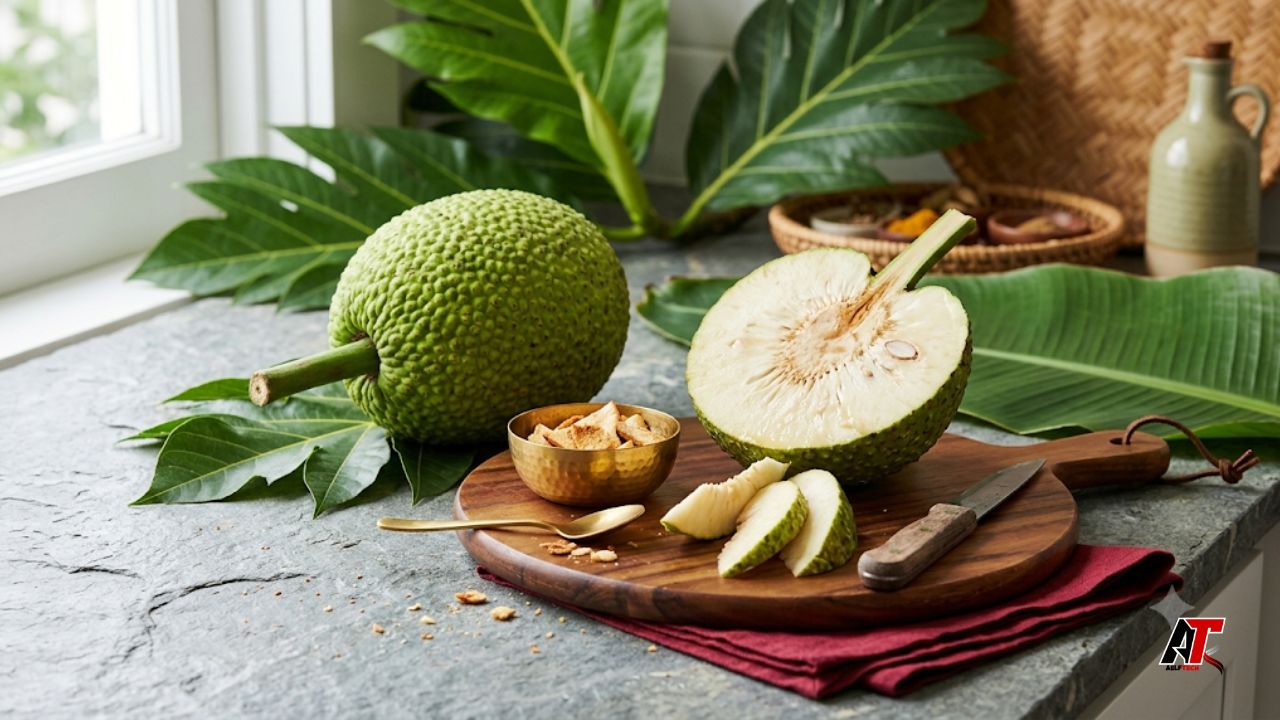
Breadfruit is moving from a familiar tropical staple to a food that attracts cooks, wellness-focused shoppers, restaurants, and specialty fruit buyers around the world. Its name may sound unusual to anyone seeing it for the first time, but the fruit is valued across the Pacific, Caribbean, Southeast Asia, and other warm regions.
Better shipping and online specialty markets have also made this fruit easier to find outside its growing regions. People can now explore fresh breadfruit without relying only on a nearby tropical grocery store. However, buying it successfully requires some basic knowledge about maturity, ripeness, storage, flavor, and cooking methods.
This guide explains what breadfruit is, how it tastes, what nutrients it provides, how it may support a balanced diet, and what to check before ordering it online. It also explains why breadfruit is increasingly described as a global superfood and a promising crop for future food systems.
What Is Breadfruit?
Breadfruit, or Artocarpus altilis, is a large tropical fruit related to jackfruit and mulberry. It grows on a long-living tree and usually has a round or oval shape with green, patterned skin. The pale interior is firm and starchy when the fruit is mature but not fully ripe. As it ripens, the flesh becomes softer, sweeter, and more aromatic.
Unlike a juicy dessert fruit, mature breadfruit is commonly prepared as a staple food. It can be boiled, roasted, baked, steamed, fried, mashed, or added to soups and curries. This gives it a role similar to potato, plantain, yam, or other starchy foods. Fully ripe breadfruit can also be used in sweet dishes because its texture and flavor change as natural sugars develop.
There are many cultivars, so size, skin texture, seed content, cooking quality, and flavor can vary. Some types are seedless, while others contain seeds that may also be cooked and eaten.
Why Breadfruit Is Gaining Global Attention
Breadfruit combines nutrition, culinary flexibility, cultural importance, and agricultural potential. One tree can produce a substantial amount of food over many years in a suitable tropical climate. Because the fruit can replace or complement common starches, it offers communities another way to diversify meals and reduce dependence on a limited number of staple crops.
Chefs are also using breadfruit in creative ways. It appears in fries, tacos, curries, stews, chips, baked dishes, plant-based meals, and gluten-free flour products. Its fairly neutral flavor allows it to carry spices and sauces, which makes it useful across many cuisines.
The word “superfood” is mainly a marketing term rather than a scientific category. Breadfruit still earns attention because it provides complex carbohydrates, fiber, vitamin C, potassium, and other nutrients while remaining naturally low in fat. Its broader value also comes from its productivity and role in food security, not from any single miracle nutrient.
What Does Breadfruit Taste Like?
The taste depends strongly on the stage of maturity. Mature green breadfruit has a mild, clean, starchy flavor. Many people compare its cooked texture to potato, freshly baked bread, or a firm root vegetable. It is not usually sweet at this stage, so it works well with salt, herbs, garlic, curry, chili, coconut milk, and savory sauces.
As the fruit ripens, the flesh softens and develops a sweeter flavor with gentle tropical notes. Very ripe breadfruit may have a creamy texture that works in desserts, pancakes, puddings, baked goods, or blended recipes. The aroma also becomes stronger.
First-time buyers should decide whether they want a savory cooking fruit or a sweeter ripe fruit. A mature, firm fruit is better for roasting, frying, boiling, and curries. A soft, ripe fruit is better for sweet preparations.
Breadfruit Nutrition at a Glance
Breadfruit is primarily a carbohydrate-rich food. According to USDA legacy data, 100 grams of raw breadfruit provides about 103 calories, 27.1 grams of carbohydrate, 4.9 grams of dietary fiber, 1.1 grams of protein, and only about 0.2 grams of fat. It also contains vitamin C, potassium, and smaller amounts of several other vitamins and minerals.
Nutrient values vary by cultivar, growing conditions, maturity, cooking method, and serving size. Frying adds oil and calories, while boiling or steaming may change some vitamin levels. Breadfruit should therefore be understood as one useful part of a varied diet rather than a complete source of every nutrient.
| Nutrient (per 100 g raw) | Approximate amount |
| Energy | 103 kcal |
| Carbohydrate | 27.1 g |
| Dietary fiber | 4.9 g |
| Protein | 1.1 g |
| Fat | 0.2 g |
Source: USDA FoodData Central legacy entry for raw breadfruit. Values vary by cultivar and preparation.
Potential Health Benefits of Breadfruit
Breadfruit can support a balanced eating pattern in several practical ways. These benefits come from its nutrient profile and food use, not from an ability to cure disease.
1. A Useful Source of Dietary Fiber
Fiber supports normal digestion and can help meals feel more satisfying. Raw breadfruit contains roughly 4.9 grams of fiber per 100 grams, although the final amount in a meal depends on preparation and portion size. Replacing a highly refined side dish with boiled, roasted, or steamed breadfruit may increase the fiber content of a meal.
A sudden increase in fiber can cause discomfort for some people, so new users may prefer a moderate portion and enough water. The whole diet matters more than one serving.
2. Provides Carbohydrates for Energy
Breadfruit is a substantial source of carbohydrate, which makes it useful as an energy-providing staple. It can be served with beans, fish, eggs, poultry, tofu, or other protein foods to create a more complete meal. Its starch content also makes it a practical choice for active people and families who want a filling base for savory dishes.
Preparation affects the overall nutritional quality. Baked, boiled, grilled, or steamed breadfruit generally requires less added fat than deep-fried versions.
3. Naturally Low in Fat
The fruit itself contains very little fat. This gives cooks control over how much oil, butter, coconut cream, cheese, or sauce is added. A simple roasted or boiled preparation can fit easily into many eating styles.
Low fat does not automatically mean a food is ideal in unlimited amounts. Portion size and the other ingredients in a recipe still influence calories and overall balance.
4. Contains Vitamin C and Potassium
Breadfruit contributes vitamin C, an essential nutrient involved in normal immune function and collagen formation. It also provides potassium, a mineral needed for normal muscle, nerve, and fluid functions. Eating a range of fruits and vegetables remains the best way to obtain these and other micronutrients.
People with kidney disease or anyone advised to limit potassium should speak with a qualified healthcare professional before making high-potassium foods a regular part of their diet.
5. A Naturally Gluten-Free Whole Food
Fresh breadfruit does not contain gluten. It can be cooked as an alternative to wheat-based sides, and dried breadfruit can be milled into flour for selected recipes. This has encouraged interest among people exploring gluten-free cooking.
Packaged breadfruit flour or processed products should still be checked for cross-contact, added ingredients, and certified gluten-free labeling when this is medically important.
How to Buy Breadfruit Online With Confidence
Ordering tropical fruit online is convenient, but it is different from choosing fruit in person. Start with a seller that clearly describes the product, quantity, origin, shipping area, handling process, and expected condition on arrival. Read the storage instructions and confirm whether the listing is for fresh whole fruit, frozen breadfruit, cooked products, flour, or another form.
Shoppers looking to buy breadfruit online should also review delivery timing, especially during very hot or cold weather. Fresh fruit can continue ripening in transit. A reputable seller should use protective packaging and provide a clear policy for damaged or spoiled deliveries.
Product photos are helpful, but natural fruits vary in size, shape, and skin appearance. Look for realistic descriptions instead of expecting every fruit to match one perfect image. Check the total shipped weight, not only the number of pieces, because breadfruit size can vary considerably.
How to Judge Quality When Breadfruit Arrives
Inspect the package soon after delivery. A mature green breadfruit should usually feel firm, with intact skin and no large wet, leaking, or deeply collapsed areas. Small marks, sap residue, surface patterns, and minor color variation may be normal for a tropical fruit.
A ripe fruit will feel softer and may have a stronger aroma. Softness is not always spoilage, but sour odor, extensive leaking, fuzzy mold, or severely fermented flesh are warning signs. Photograph any major shipping damage before cutting the fruit and contact the seller according to its policy.
Wash the exterior before cutting. Breadfruit can release sticky latex-like sap, so lightly oiling the knife and cutting board may make cleanup easier. Use a stable board because the fruit can be heavy and firm.
Storage and Ripening Tips
If a firm breadfruit needs more time to ripen, keep it at room temperature and check it daily. Once it reaches the desired stage, refrigeration can slow further ripening, although prolonged cold storage may affect texture. Follow the seller’s guidance because cultivar and shipping condition can change the best approach.
Cut breadfruit should be refrigerated in a sealed container and used promptly. Cooked portions can also be refrigerated or frozen. For longer storage, people often peel, core, cut, blanch, and freeze the fruit. Label the container with the date and planned use.
Do not cut the entire fruit until you are ready to prepare it. Once opened, the flesh is exposed to air and moisture loss, so quality declines more quickly.
Easy Ways to Cook Breadfruit
Breadfruit is popular because one fruit can support many meals. For a simple method, peel and core a mature fruit, cut it into even pieces, and boil or steam until tender. Serve it with herbs, a light sauce, or a protein-rich main dish.
For roasting, coat wedges lightly with oil and seasonings, then cook until the outside is browned and the inside is soft. Thin slices can become chips, while thicker strips can be prepared like fries. Cubes work well in curries, soups, and stews because they absorb flavor.
Mashed breadfruit can replace or blend with mashed potato. Cooked pieces can be added to salads or breakfast hashes. Ripe flesh can be used in baked desserts, pancakes, or puddings. Breadfruit flour may work in breads, pancakes, and snacks, but recipes often need adjustment because it behaves differently from wheat flour.
Why Breadfruit Matters for Sustainable Food Systems
Breadfruit trees are perennial, meaning they can produce over many seasons without being replanted every year. In suitable regions, this may reduce repeated soil disturbance and provide shade, biomass, and long-term food production. The tree’s value is especially important in tropical communities where imported staple foods can be expensive or vulnerable to supply disruptions.
No crop is automatically sustainable in every location. Water, soil, biodiversity, farming practices, transport distance, waste, and local ecology all matter. Even so, breadfruit offers an important example of how underused traditional crops can contribute to more diverse and resilient food systems.
Its global rise is therefore about more than a nutrition trend. It connects culinary heritage, local agriculture, new food products, and interest in crops that can support future food security.
Important Considerations Before Eating Breadfruit
Most people can enjoy breadfruit as a normal food, but individual needs differ. Anyone with kidney disease, a medically prescribed potassium restriction, diabetes management concerns, digestive sensitivity, or known allergies should obtain personalized guidance. People allergic to related plants or fruits should introduce it carefully.
Breadfruit is rich in carbohydrate, so portion size and meal composition may matter for blood glucose management. Pairing it with protein, vegetables, and healthy fats can create a more balanced plate. Preparation also matters; heavily fried breadfruit is nutritionally different from steamed or roasted breadfruit.
The information in this article is educational and is not a substitute for medical or dietary advice.
Conclusion
Breadfruit is a versatile tropical food with a mild savory taste when mature and a softer, sweeter character when ripe. It supplies complex carbohydrates, useful fiber, vitamin C, potassium, and very little natural fat. These qualities make it suitable for roasting, boiling, baking, curries, soups, snacks, desserts, and gluten-free food development.
Its growing reputation also reflects its wider role as a productive perennial crop and culturally important staple. Buyers can get better results by choosing a reliable seller, understanding the maturity stage, checking shipping details, and planning how the fruit will be stored and cooked.
Online access is helping more households discover breadfruit beyond its traditional regions. For more practical guides on digital shopping, technology, and online growth, readers can visit aelftech.com usa.
Leave a Reply