
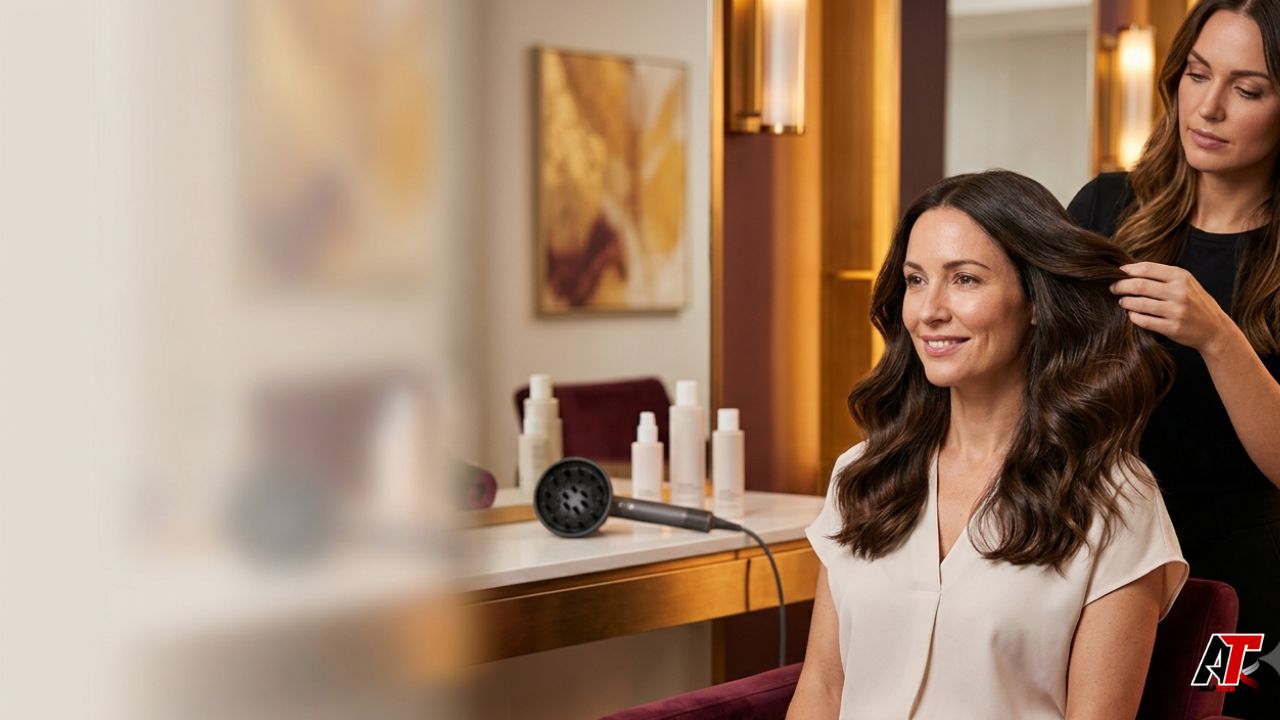
A digital perm can give straight or difficult-to-style hair soft movement, body, and polished waves that look especially defined when the hair is dry. However, the salon appointment is only the beginning. The way you wash, dry, style, sleep on, and protect your hair afterward has a major influence on how quickly the curl pattern relaxes and how healthy the hair feels over time.
You do not need a complicated shelf of products to make your digital perm last longer. You need a consistent routine built around gentle cleansing, reliable moisture, controlled heat, low-friction handling, and timely professional maintenance. These tips cover the first days after your appointment and the later stages, when the waves naturally become softer.
Why Digital Perm Aftercare Matters
A digital perm is sometimes called a hot perm because the process combines a chemical solution with temperature-controlled heated rods. The treatment temporarily rearranges bonds within the hair so it can hold a new shape after neutralising. Unlike many cold perms, a digital perm generally produces looser, natural-looking waves that become more visible as the hair dries. Professional salon guidance commonly places the average lifespan at roughly three to six months, although hair condition and home care affect the result.
Aftercare matters because permed hair has already undergone a chemical process. Rough shampooing, excessive heat, repeated straightening, and poor moisture balance may not instantly remove the perm, but they can create dryness, frizz, breakage, and uneven curl definition. Choosing an experienced stylist is equally important. A detailed consultation at a best hair salon singapore can help determine whether your hair is healthy enough for the service and which curl pattern will suit its length, density, and chemical history.
Protect the Curl Pattern During the First Few Days
The first stage of care should follow the instructions given by the stylist who performed your service. Different perm systems, neutralisers, and finishing products may come with different recommended waiting periods. Instead of relying on a single rule from social media, ask exactly when you may shampoo, tie, clip, or fully restyle the hair. Following that personalised window gives the newly formed pattern time to settle without unnecessary disturbance.
During this early period, avoid soaking the hair, steaming it for long periods, or repeatedly pulling it straight to check the result. Heavy ponytails, tight buns, firm headbands, and clips may press temporary bends into freshly treated hair. Sleep with the hair loose and arranged comfortably above or beside your head rather than trapped beneath your shoulders. When the hair needs tidying, use your fingers gently and avoid aggressive brushing.
Wash Less Aggressively, Not Necessarily as Little as Possible
A long-lasting digital perm depends on clean, comfortable hair and a healthy scalp, so avoiding shampoo for excessive periods is not the goal. Choose a wash schedule according to your scalp’s oil production, exercise routine, climate, and product use. Shampoo should be concentrated mainly on the scalp, while the foam running through the lengths is usually enough to remove light residue. This approach reduces unnecessary friction on the mid-lengths and ends.
Use lukewarm rather than very hot water. Hot water can leave already processed hair feeling rougher and may encourage dryness. Select a gentle, moisturising shampoo that does not make the hair feel squeaky or stripped. Sulphate-free formulas work well for some people, but the label alone is not a guarantee of suitability. The best choice is the product that cleans your scalp effectively while leaving the permed lengths flexible and manageable.
Condition Every Time You Shampoo
Conditioner is one of the simplest ways to support softness, reduce tangling, and improve the appearance of digital-permed waves. Apply it from the mid-lengths to the ends, where chemical and mechanical stress usually show first. Let the product sit for the recommended time, then rinse thoroughly. Leaving excess conditioner behind may weigh down fine hair and make the curl pattern look flat rather than bouncy.
Once or twice a week, replace your regular conditioner with a richer mask if your hair feels dry. Fine hair may need a lightweight hydrating formula, while coarse or porous hair may benefit from a more substantial mask. Protein-rich treatments can temporarily improve strength and feel, but using them too frequently may leave some hair types rigid. Alternate strengthening and moisture-focused care according to how the hair responds rather than following a rigid trend.
Dry Your Hair in a Way That Supports the Waves
Freshly washed hair is more vulnerable to stretching and breakage, so do not rub it vigorously with a traditional towel. Instead, gently squeeze out water and blot the hair with a soft microfibre towel or smooth cotton T-shirt. Detangle carefully with your fingers or a wide-tooth comb, beginning at the ends and moving upward. The American Academy of Dermatology also advises gentle handling and wide-tooth detangling to reduce damage when hair is wet.
Digital-permed waves often look best when dried with intention. Apply a lightweight leave-in conditioner or curl cream, distribute it evenly, and scrunch upward without crushing the hair. Air-drying works well when the weather and your schedule allow. For more definition, use a diffuser on low airflow and low-to-medium heat. Cup sections of hair in the diffuser rather than blasting them from above, which can separate the wave pattern and create frizz.
Use Heat Strategically Instead of Recreating the Curl Every Day
One advantage of a digital perm is that it can reduce the need for daily curling. Constantly using a curling iron at high temperature defeats that benefit and increases stress on chemically treated hair. When blow-drying, keep the dryer moving and avoid concentrating heat on one section for too long. A heat-protectant product adds a useful layer of protection, but it does not make extreme temperatures harmless.
If a few pieces need refreshing, start with water or a light curl-refreshing spray. Twist the strand around a finger, scrunch it, and allow it to dry before reaching for a hot tool. When heat is genuinely necessary, use the lowest effective setting and make sure the hair is fully dry before applying an iron. Flat-ironing the entire head repeatedly will make the waves appear weaker and may leave the ends dry long before the perm has naturally grown out.
Choose Styling Products That Define Without Building Up
Heavy waxes, thick oils, and large amounts of silicone-rich serum can make a soft digital perm look limp. Begin with a small amount of product and add more only where needed. Lightweight mousse can add lift, curl cream can improve shape and softness, and a flexible-hold gel may help in humid weather. The right product should support movement rather than leave a hard, sticky coating.
Product buildup can also reduce bounce. If the roots feel coated or the waves stop responding to water and styling cream, use a suitable clarifying shampoo occasionally, followed by a moisturising conditioner. Clarifying too often may make processed hair feel dry, so frequency should depend on your water quality, scalp oil, and use of styling products. Ask your stylist to recommend a schedule based on your specific hair rather than copying someone with a different texture.
Reduce Friction While You Sleep
Night-time friction quietly affects curl definition. Cotton pillowcases can absorb moisture and create drag as you move, especially when the hair is long. A satin or silk pillowcase provides a smoother surface and may help reduce tangling and morning frizz. Long hair can be gathered loosely at the top of the head with a soft scrunchie, provided the band does not pull the roots or leave a sharp indentation.
Never go to sleep with soaking-wet permed hair. The hair may dry in a compressed or irregular shape, and prolonged dampness against the scalp can feel uncomfortable. Dry the roots and most of the lengths first, then arrange the hair loosely. In the morning, refresh flattened sections with a fine mist of water, a tiny amount of leave-in product, and gentle scrunching instead of brushing the waves out.
Protect Your Perm From Humidity, Sun, Chlorine, and Salt
Humidity can expand the hair fibre and encourage frizz, while strong sun exposure may worsen dryness and make colour-treated hair appear faded. In tropical or sunny conditions, use lightweight anti-humidity styling products and cover the hair with a loose hat or scarf during prolonged outdoor exposure. Avoid tight hat bands that crush the curl pattern. A UV-protective hair product may also be helpful, particularly if the hair is coloured as well as permed.
Before swimming, wet your hair with clean water and apply a small amount of leave-in conditioner so it absorbs less pool or seawater. A swimming cap offers better protection when practical. Rinse immediately after swimming and follow with an appropriate cleanser and conditioner. The American Academy of Dermatology recommends prompt rinsing after exposure to pool chemicals because chlorine can be harsh on the hair.
Space Out Additional Chemical Services
Bleaching, permanent colouring, rebonding, relaxing, and repeated perming all place extra demands on the hair. Combining services too close together may cause porosity, snapping, and unpredictable results. Tell your stylist your complete chemical history, including home colour, previous lightening, keratin treatments, and any sections that have already been permed. Hair that looks smooth on the surface may still be fragile internally.
A strand test and professional assessment are especially important when you want colour after a perm. Services offered by Blonde and Pastel Hair Salon emphasise hair assessment and protective techniques before major transformations. Your own stylist may advise waiting, adjusting the colour goal, or treating only new growth. Preserving healthy length is usually more valuable than forcing several dramatic changes into one appointment.
Maintain the Shape With Trims and Professional Check-Ins
A digital perm does not disappear overnight. The waves gradually relax while straight new growth appears at the roots. Regular trims remove split or thin ends that can make the overall shape look untidy. They also keep long layers from becoming too heavy, which can stretch soft waves. A trim every six to twelve weeks may suit many people, but your ideal timing depends on length, haircut, and the condition of the ends.
Return to your stylist when the roots, fringe, or face-framing sections become difficult to manage. Do not assume that the entire head needs to be re-permed at the first sign of softer curls. A reshaping haircut, targeted treatment, or styling lesson may restore the look without another full chemical process. For more practical beauty, technology, and lifestyle guidance, explore aelftech.com.
Common Mistakes That Shorten the Life of a Digital Perm
The most common errors are simple: washing or restyling before the stylist’s recommended time, brushing dry curls until they separate, using very hot tools daily, skipping conditioner, and securing the hair too tightly. Another mistake is applying more product whenever the curls look weak. In many cases, buildup is the problem, so adding another layer makes the hair heavier.
Ignoring warning signs can also turn a styling concern into a damage problem. If the hair feels gummy when wet, breaks with gentle handling, develops severe tangling, or causes scalp burning and irritation, stop experimenting with home remedies and contact a qualified stylist or dermatologist. A digital perm should be enjoyable and manageable; persistent discomfort or unusual breakage needs professional attention.
Final Thoughts
The best way to make your digital perm last longer is to treat it as both a hairstyle and a chemical service. Protect the pattern in the first few days, keep cleansing gentle, condition consistently, dry with low heat, minimise friction, and space out other chemical treatments. These habits help the waves stay defined while also protecting shine, softness, and strength. Remember that no perm remains identical forever. A graceful, gradual loosening is normal, and good maintenance should help the style age attractively rather than forcing every curl to stay salon-perfect. Follow your stylist’s personalised instructions, observe how your hair responds, and adjust products thoughtfully. Consistency—not excessive styling—is what keeps a digital perm looking polished for the longest possible time.
Leave a Reply