
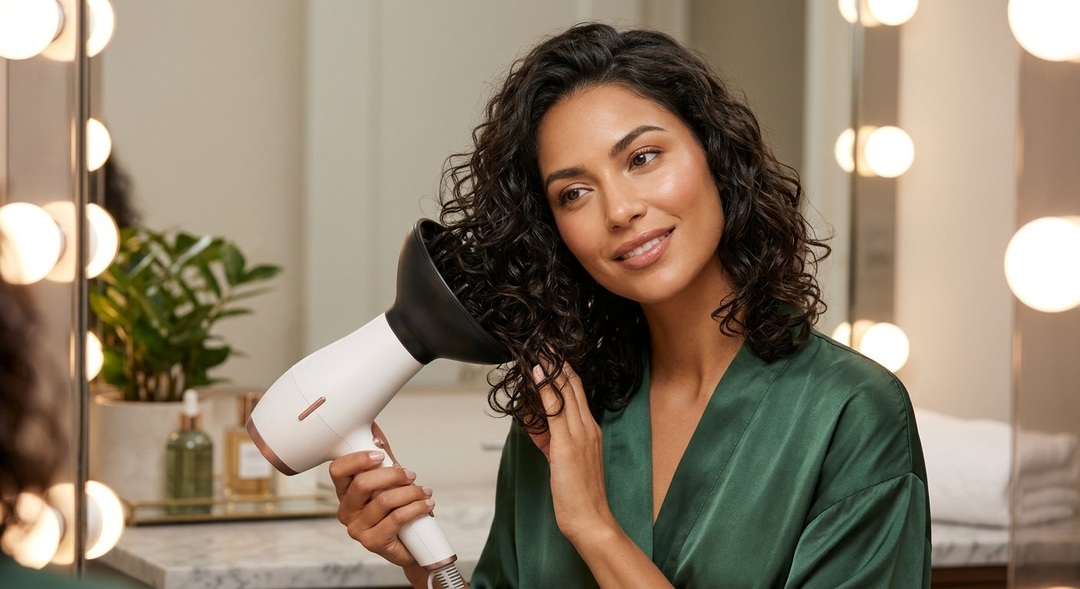
Achieving fuller, more voluminous hair without making it stiff or sticky can feel difficult, especially when styling products leave behind unwanted residue. Whether your hair is naturally fine, straight, wavy, or curly, the right product and application method can make a noticeable difference. Hair mousse is a lightweight styling foam designed to provide volume, shape, and flexible hold while helping hair maintain natural movement. When used correctly, it can create a polished hairstyle without the rigid texture associated with excessive styling products.
Modern hair mousse formulations offer different levels of hold, conditioning ingredients, and styling benefits. Some products focus on lifting fine hair at the roots, while others support curl definition or help control frizz. Understanding how to select and apply hair mousse is essential for achieving soft, touchable results. With a few practical techniques, this versatile styling product can become a useful part of an everyday hair care routine.
What Is Hair Mousse?
Hair mousse is a foam-based hairstyling product designed to provide structure, volume, and hold.
It typically contains styling polymers that form a lightweight film around hair strands as the product dries.
These polymers help support the hairstyle and maintain its shape.
Unlike heavier creams, waxes, or pomades, mousse is dispensed as an airy foam that can be distributed through damp hair.
However, product weight and texture vary between formulations.
Some mousses provide strong hold, while others focus on flexibility, conditioning, or curl definition.
How Does Hair Mousse Work?
Hair mousse works by depositing styling ingredients onto the hair.
As moisture evaporates during drying, film-forming ingredients help hold strands in the desired position.
This can create the appearance of additional volume or improve the definition of natural waves and curls.
However, mousse does not permanently increase hair thickness or change the structure of individual strands.
Its effects are temporary and generally disappear after washing or restyling.
Why Has Hair Mousse Become Popular Again?
Mousse has long been associated with voluminous hairstyles.
Earlier formulations sometimes produced stiff or crunchy results when applied heavily.
Contemporary products offer a wider range of textures and hold levels.
Many are designed to support flexible styling rather than creating rigid shapes.
This makes hair mousse relevant for people seeking volume, natural movement, and manageable hairstyles.
7 Amazing Benefits of Hair Mousse for Everyday Styling
The advantages of hair mousse depend on the formulation, application technique, and individual hair characteristics.
1. Creates Lightweight Volume
One of the primary reasons people use hair mousse is to create the appearance of fuller hair.
Fine or flat hair may benefit from lightweight styling support.
When applied near the roots and dried with appropriate techniques, mousse can help lift hair away from the scalp.
This creates visual volume without requiring permanent changes to the hair.
Why Root Lift Matters
Hair often appears flatter when strands lie close to the scalp.
Lifting the roots can create a fuller silhouette.
A lightweight volumizing mousse may help maintain this shape after blow-drying.
However, excessive product can weigh hair down or make it feel coated.
2. Provides Flexible Hold
Hair mousse can help maintain a hairstyle while allowing movement.
Flexible-hold products are particularly suitable for casual styles, soft waves, and natural-looking blowouts.
Strong-hold formulations may provide greater structure but can feel firmer.
Choosing the correct hold level is essential.
3. Helps Define Natural Curls
Curly and wavy hair can benefit from products that support natural curl patterns.
A curl-focused hair mousse may help strands group together into more defined waves or curls.
Application techniques such as scrunching can encourage this effect.
However, results vary according to curl pattern, porosity, moisture balance, and product formulation.
4. May Reduce the Appearance of Frizz
Frizz occurs when strands do not align smoothly with surrounding hair.
Humidity, damage, static, and natural hair texture can influence frizz.
Some mousse formulations contain conditioning or film-forming ingredients that help manage flyaways.
However, no styling product can permanently eliminate frizz.
5. Supports Heat Styling
Certain hair mousse products are designed for use before blow-drying.
They may help provide shape and support during styling.
However, mousse should not automatically be considered a heat protectant.
Only products specifically formulated and labeled for heat protection should be relied upon for that purpose.
6. Works With Different Hair Textures
Hair mousse is available in formulations suitable for straight, wavy, curly, and coily hair.
Fine hair may benefit from lightweight volumizing formulas.
Curly hair may require products emphasizing definition and moisture compatibility.
The best choice depends on individual needs rather than hair type alone.
7. Can Simplify Daily Styling
A suitable mousse may provide enough volume and hold without requiring several additional products.
This can make styling more convenient.
However, some hairstyles still benefit from combining mousse with leave-in conditioner, heat protection, or finishing products.
The goal should be effective styling without unnecessary product layering.
How to Use Hair Mousse Without Making Hair Crunchy
Crunchy hair is one of the most common concerns associated with mousse.
However, stiffness often results from product formulation, application quantity, or drying techniques.
Some curl styling methods intentionally create a temporary firm cast that can be softened afterward.
The key is understanding how to use the product correctly.
Step 1. Start With Clean, Damp Hair
Hair mousse is commonly applied to damp, towel-dried hair.
Damp hair can help distribute the foam more evenly.
However, hair should not be dripping wet unless the product instructions recommend that method.
Excess water may dilute the product and affect styling results.
Step 2. Shake the Container
Many aerosol mousse products require shaking before dispensing.
Follow the instructions on the packaging.
Proper dispensing helps produce the intended foam consistency.
Step 3. Use a Small Amount First
Begin with a modest quantity.
The appropriate amount depends on hair length, thickness, and the product’s concentration.
Short, fine hair generally requires less product than long, dense hair.
Adding more is easier than removing excess mousse.
Step 4. Distribute the Product Evenly
Place the foam into your palms and spread it lightly.
Apply according to the desired styling result.
For volume, focus on the roots.
For curl definition, distribute mousse through the lengths and ends.
Avoid repeatedly applying product to the same section.
Step 5. Choose the Right Drying Method
Air-drying can produce a relaxed finish.
Blow-drying may provide greater control over root lift and shape.
Diffusing can support defined curls and waves.
The best method depends on hair texture and styling goals.
Step 6. Avoid Excessive Handling During Drying
Repeatedly touching hair while it dries can disrupt curl formation or create frizz.
Allow the product to set before making final adjustments.
Step 7. Soften the Finished Style
If a curl mousse creates a firm cast, gently scrunch fully dry hair to soften it.
This technique is often called scrunching out the crunch.
Use clean, dry hands or follow a suitable finishing routine.
Do not assume that every mousse should create a cast.
Flexible-hold volumizing products may dry without noticeable stiffness.
Best Hair Mousse for Different Hair Types
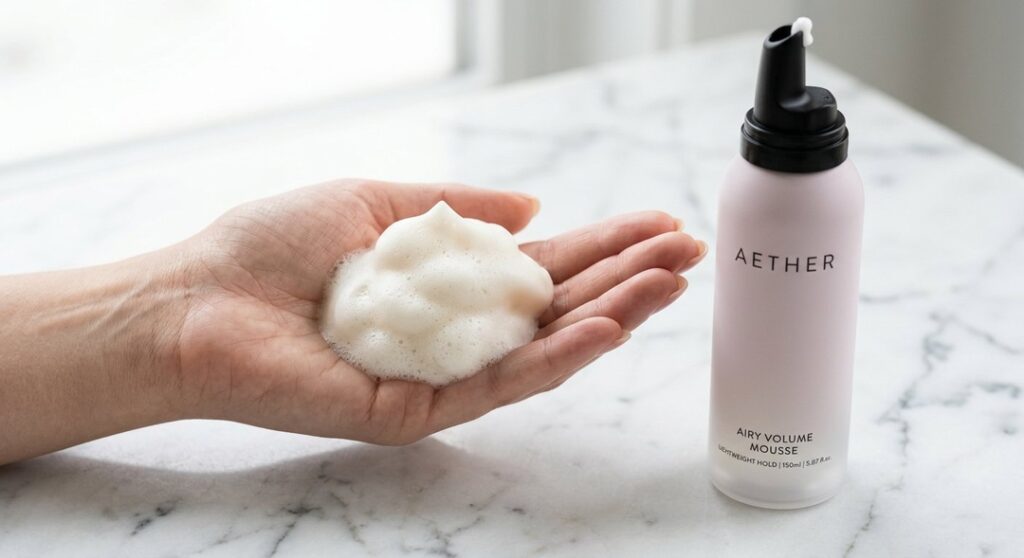
Choosing hair mousse based on hair texture can improve styling results.
However, individual preferences and product ingredients also matter.
Hair Mousse for Fine Hair
Fine hair has strands with relatively small diameters.
It can appear flat when heavy styling products accumulate.
A lightweight volumizing mousse may help create lift without adding excessive weight.
Look for products intended for fine or limp hair.
Avoid applying large amounts to the roots.
Hair Mousse for Thick Hair
Thick hair may require more product for even distribution.
However, density and strand thickness are different characteristics.
A person can have many fine strands or fewer coarse strands.
Thicker or denser hair may benefit from mousse designed for flexible control.
Hair Mousse for Curly Hair
Curly hair often benefits from styling products that support curl definition.
A curl-enhancing mousse may help maintain curl groupings.
Application to evenly damp hair can improve distribution.
Scrunching and diffusing are commonly used techniques.
Hair Mousse for Wavy Hair
Wavy hair may lose definition when heavy products are used.
A lightweight mousse can support waves without the weight of some creams.
Scrunch the product into damp hair and allow it to dry with minimal disturbance.
Hair Mousse for Straight Hair
Straight hair may benefit from root-focused application.
Blow-drying with a round brush or directing airflow to lift the roots can create temporary volume.
However, mousse alone may not maintain dramatic volume in every hair type.
Hair Mousse for Coily Hair
Coily hair may require particular attention to moisture and product compatibility.
Some mousse formulations can support definition during twist-outs, roller sets, or other styles.
However, products with high hold and limited conditioning ingredients may feel drying for some users.
Consider a suitable leave-in product where necessary.
Hair Mousse vs Hair Gel vs Hair Cream
Different styling products create different effects.
| Feature | Hair Mousse | Hair Gel | Styling Cream |
|---|---|---|---|
| Texture | Airy foam | Liquid or gel | Creamy |
| Main purpose | Volume and styling support | Definition and hold | Conditioning and control |
| Typical weight | Often lightweight | Varies | Often richer |
| Hold level | Flexible to strong | Light to strong | Usually light to moderate |
| Suitable for fine hair | Often useful | Depends on formula | May feel heavy |
| Curl definition | Common benefit | Common benefit | Common benefit |
| Potential stiffness | Possible with stronger formulas | Possible | Usually less pronounced |
| Best application | Often damp hair | Damp or dry depending on product | Usually damp hair |
No single product is best for everyone.
Hair mousse is particularly useful when volume and lightweight styling support are priorities.
How to Apply Hair Mousse for Maximum Root Volume
Root volume requires more than simply distributing mousse through the hair.
The application and drying method influence the final result.
Apply Product Near the Roots
Use a lightweight volumizing mousse on damp roots.
Avoid saturating the scalp.
The product should coat the hair rather than accumulate on the skin.
Lift Hair While Blow-Drying
Use a brush or your fingers to lift sections away from the scalp.
Direct airflow toward the roots while maintaining a safe distance.
Follow the hair dryer’s instructions and avoid excessive heat.
Use Appropriate Sectioning
Working in sections can improve control.
Large sections may be difficult to dry evenly.
However, overly complicated sectioning is unnecessary for everyday styling.
Allow Hair to Cool
Hair temporarily changes shape during heat styling.
Allowing styled sections to cool may help preserve the result.
Avoid immediately flattening freshly styled roots with tight accessories.
How to Use Hair Mousse for Curly Hair
Curly hair styling often focuses on definition, frizz management, and maintaining natural shape.
Apply to Evenly Damp Hair
Distribute moisture throughout the hair before applying mousse.
Uneven dampness may result in inconsistent product distribution.
Work in Sections
Sectioning can help ensure that the product reaches different areas.
This may be particularly useful for dense or long hair.
Scrunch Upward
Gently gather the ends toward the scalp.
This encourages natural curl formation.
Avoid aggressive rubbing.
Diffuse Carefully
A diffuser spreads airflow across a wider area.
Use an appropriate heat and speed setting.
Excessive heat can contribute to hair damage.
Let Hair Dry Fully
If the mousse forms a cast, wait until the hair is completely dry before softening it.
Scrunching damp curls repeatedly may increase frizz.
Why Hair Mousse Sometimes Makes Hair Crunchy
Stiffness can have several explanations.
Too Much Product
Excess mousse may create a thicker styling film.
This can make strands feel coated or rigid.
Start with less product and increase only when needed.
Strong-Hold Formulas
Some products are intentionally designed to create firm hold.
Choose flexible-hold mousse when softness is the priority.
Uneven Distribution
Concentrating mousse in one area may produce inconsistent texture.
Distribute the foam carefully.
Product Layering
Combining several strong-hold products can increase stiffness.
Consider whether every product is necessary.
Incomplete Drying
Certain formulas feel different before they are fully dry.
Allow hair to dry before evaluating the final finish.
Common Mistakes When Using Hair Mousse

Avoiding common application errors can improve results.
Applying Too Much Mousse
More product does not always create more volume.
Excessive mousse can weigh hair down.
Using the Wrong Formula
A strong curl mousse may not provide the same result as a lightweight root-lifting product.
Choose according to styling goals.
Applying Unevenly
Patchy application can produce inconsistent hold.
Spread the product before styling.
Ignoring Hair Condition
Damaged or highly porous hair may respond differently to styling products.
Consider conditioning needs.
Using Excessive Heat
High temperatures can damage hair regardless of styling product.
Use appropriate heat settings and suitable protection when needed.
Brushing Out Defined Curls
Brushing dry curls can disrupt definition.
Use styling methods appropriate for the desired finish.
Can Hair Mousse Damage Your Hair?
Hair mousse is not inherently damaging when used according to product instructions.
However, individual formulations and styling habits matter.
Some products contain alcohols, fragrances, preservatives, or other ingredients that may not suit every user.
Certain ingredients can cause irritation or dryness in susceptible individuals.
Alcohol in Hair Mousse
Not all alcohols function the same way.
Some are used as solvents, while fatty alcohols may have conditioning functions.
Ingredient performance depends on the complete formulation.
A product should not be judged solely by the presence of the word alcohol.
Product Buildup
Repeated styling without appropriate cleansing can contribute to residue.
This may affect hair feel and appearance.
Wash hair according to individual needs and product guidance.
Scalp Sensitivity
People with sensitive scalps may react to certain ingredients.
Stop using a product if significant irritation occurs.
Seek medical advice for persistent or severe symptoms.
How to Choose the Right Hair Mousse
Selecting the best mousse involves evaluating more than packaging claims.
Identify Your Main Styling Goal
Determine whether you want volume, curl definition, flexible hold, or frizz control.
Products are formulated for different outcomes.
Check Hold Strength
Light-hold mousse may suit natural styles.
Medium-hold products offer additional control.
Strong-hold mousse may be useful for structured hairstyles.
Consider Hair Density
Dense hair may require different application quantities from sparse hair.
However, product concentration also influences usage.
Review Ingredient Compatibility
If you have known sensitivities, check the ingredient list.
Avoid ingredients that have previously caused irritation.
Read Product Instructions
Application recommendations vary.
Some formulas are designed primarily for damp hair, while others may support additional uses.
Styling Hair Mousse Without Heat
Heat-free styling can be useful for people who prefer a simpler routine.
Air-Dried Waves
Apply mousse to damp hair.
Scrunch gently and allow it to dry.
Avoid repeatedly touching the hair.
Braided Waves
Apply a suitable amount of mousse before loosely braiding damp hair.
Allow it to dry completely before removing the braids.
Results depend on hair texture.
Twist-Out Styles
Some hair mousse products can support twist-out styling.
Apply evenly and allow the hair to dry before unraveling.
Roller Sets
Mousse may provide styling support during roller sets.
Use suitable rollers and follow safe application techniques.
Hair Mousse for Short, Medium, and Long Hair

Hair length influences application technique.
Short Hair
Short hair often requires only a small amount of mousse.
Apply according to the desired shape.
For root volume, focus on areas that need lift.
Medium-Length Hair
Medium-length hairstyles can benefit from mousse distributed through selected sections.
A round brush may help create a soft blowout.
Long Hair
Long hair may require more careful sectioning.
However, using excessive product can create heaviness.
Apply gradually and focus on the areas requiring support.
How Much Hair Mousse Should You Use?
There is no universal amount suitable for every product.
Foam density, hair length, texture, and concentration influence the correct quantity.
The following guidance is approximate.
| Hair Type or Length | Starting Approach |
|---|---|
| Short, fine hair | Small amount applied gradually |
| Medium-length hair | Moderate amount distributed evenly |
| Long hair | Apply in sections as needed |
| Thick or dense hair | Increase gradually for coverage |
| Curly hair | Use enough for even curl distribution |
| Root volume styling | Focus on roots rather than full lengths |
Always follow manufacturer instructions.
Can You Use Hair Mousse Every Day?
Many people can use suitable styling mousse regularly.
However, frequency should depend on scalp comfort, hair condition, cleansing habits, and product formulation.
Daily use is not automatically harmful.
Nevertheless, persistent buildup or irritation may indicate that the routine needs adjustment.
Daily Styling Considerations
Use only the amount necessary.
Avoid applying multiple layers of strong-hold products without cleansing.
Pay attention to changes in hair texture or scalp comfort.
When to Wash Your Hair
Washing frequency depends on oil production, hair texture, lifestyle, and product use.
There is no single schedule suitable for everyone.
Choose a routine that maintains scalp comfort and removes unwanted residue.
Hair Mousse and Humidity
Humidity can affect hairstyles because hair fibers absorb and release moisture from the environment.
This can influence shape, frizz, and volume.
Some mousse formulations contain ingredients intended to improve humidity resistance.
However, performance varies.
Styling in Humid Weather
Use products suitable for your hair type.
Avoid excessive handling after styling.
Consider whether a compatible finishing product is necessary.
Styling in Dry Weather
Dry conditions may contribute to static or flyaways.
Conditioning products may help manage these effects.
However, heavy products can reduce volume in fine hair.
Professional Tips for Long-Lasting Soft Volume
Long-lasting styling depends on preparation, product selection, and technique.
Begin With Appropriate Cleansing
Excessive residue can make hair feel heavy.
Use a shampoo suitable for your scalp and hair needs.
Avoid Heavy Conditioner at the Roots
For fine hair, applying rich conditioner directly to the roots may reduce volume.
Focus conditioning where it is needed.
Choose Flexible Hold
When softness matters, select mousse intended for natural movement.
Use Moderate Heat
Controlled blow-drying can create shape without relying on maximum temperature.
Finish Without Overloading
Additional hairspray or serum may be useful for some styles.
However, applying too many products can reduce touchability.
Is Hair Mousse Better Than Hairspray?
Hair mousse and hairspray serve different styling purposes.
Mousse is generally applied during the styling process.
Hairspray is commonly used to help maintain a finished hairstyle.
However, product instructions vary.
When Mousse Is Better
Mousse may be useful for building volume and definition during drying.
When Hairspray Is Better
Hairspray may be appropriate for setting a completed style.
Can You Use Both?
Yes, when compatible.
However, combining strong-hold formulas may create stiffness.
For soft volume, begin with minimal product.
The Future of Hair Mousse in Modern Haircare
Hair styling products continue to evolve as consumers seek combinations of performance, convenience, and manageable texture.
Manufacturers are developing formulations intended for different curl patterns, hair densities, and styling preferences.
Lightweight Styling Formulas
Products designed for flexible movement may appeal to people who dislike rigid hairstyles.
Multifunctional Styling
Some formulas combine hold with conditioning or humidity-management ingredients.
However, individual claims should be evaluated according to product evidence.
Texture-Specific Products
Haircare companies increasingly offer products marketed for particular textures.
Consumers should still evaluate actual performance rather than relying only on labels.
Greater Ingredient Transparency
Clear ingredient information can help people with sensitivities make informed choices.
However, ingredient lists alone do not fully predict product performance.
FAQ’s
1. How Do You Use Hair Mousse Without Crunchy Hair?
Apply a small amount of hair mousse evenly to damp hair, choose a flexible-hold formula, and avoid excessive layering. For curls, soften any cast after drying.
2. Is Hair Mousse Good for Fine Hair?
Yes, lightweight volumizing hair mousse can help fine hair appear fuller by supporting root lift and temporary styling structure.
3. Should Hair Mousse Be Applied to Wet or Dry Hair?
Most hair mousse products are designed for damp, towel-dried hair. Follow the instructions because some formulations support different application methods.
4. Can Hair Mousse Help Define Curls?
Yes, curl-focused hair mousse can support curl definition and reduce the appearance of frizz, depending on the formulation and application technique.
5. Does Hair Mousse Cause Hair Damage?
Hair mousse is not inherently damaging when used properly. However, unsuitable ingredients, excessive buildup, or irritating formulations may cause problems for some users.
6. Can I Use Hair Mousse Without a Hair Dryer?
Yes, hair mousse can be used for air-dried waves, curls, twist-outs, and other heat-free styles. Results depend on hair texture and product choice.
Conclusion
Hair mousse offers a versatile approach to creating volume, definition, and styling support without necessarily sacrificing softness or natural movement. The key is selecting a formulation that matches your hair type and desired result, applying an appropriate amount, and using techniques that encourage the intended shape. Lightweight products can help lift fine hair, while curl-focused formulas may support definition and reduce the appearance of frizz. Understanding the difference between flexible hold and firm styling casts also helps prevent unwanted stiffness.
With thoughtful application, hair mousse can become a useful part of a simple and effective styling routine. Start with clean, damp hair, distribute the product evenly, and choose a drying method suited to your texture. Avoid overloading strands, using excessive heat, or combining unnecessary styling products. Whether creating a soft blowout, defined curls, or effortless everyday waves, the right mousse and technique can help achieve fuller-looking hair that remains comfortable, manageable, and naturally touchable.
Leave a Reply