
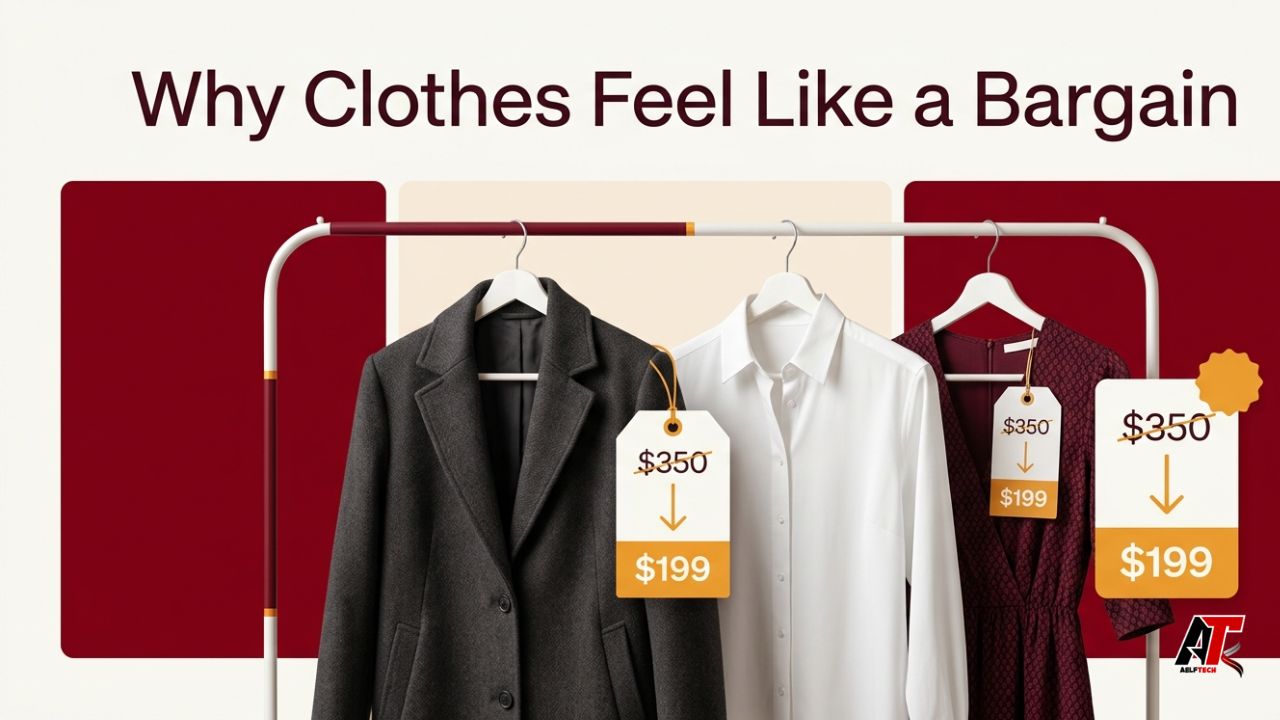
A shopper sees a wool coat marked “Was $320, now $179.” Within seconds, $179 can feel surprisingly reasonable. The coat has not changed, yet the comparison has changed the way its price is judged. This is the basic power behind clothing price anchoring: a brand presents an initial number, product, or value cue that becomes the reference point for everything that follows.
Anchoring is not limited to a crossed-out price. Fashion retailers use premium collections, bundles, “good-better-best” options, limited drops, free-shipping thresholds, and carefully ordered product pages to shape what customers consider expensive or affordable. The strategy works because people rarely evaluate a garment in complete isolation. We compare it with the first price we noticed, another item beside it, what we paid last time, or what we believe a similar piece should cost.
Used responsibly, anchoring helps shoppers understand a range and makes complicated choices easier. Used carelessly, it can make an ordinary discount look exceptional or create pressure around a deal that is not genuinely valuable. Understanding the method is useful for both marketers and customers.
What Is Price Anchoring in Fashion?
Price anchoring is the practice of establishing a reference point before a shopper evaluates the final offer. The anchor may be the original price, a premium item, a competitor comparison, or even a number connected to a bundle. Once that reference is visible, the next price is interpreted relative to it rather than judged on its own.
The psychological idea comes from research on judgment under uncertainty. Amos Tversky and Daniel Kahneman showed that people often begin with an initial value and make adjustments that are too small. In retail, that means a first-seen price can continue to influence later judgments, even when shoppers know they should compare more carefully.
Imagine two identical shirts. One is displayed at $60. The other is shown as “Regularly $100, now $60.” The amount paid is the same, but the second presentation gives the shopper a higher reference point. The Federal Reserve Bank of St. Louis uses a similar dress-shirt example when explaining how an initial price can shape the feeling of getting a bargain.
Why Clothes Are Especially Suited to Anchoring
Fashion is unusually open to relative pricing because quality is difficult to measure at a glance. Fabric weight, construction, finishing, fit, design originality, brand reputation, and durability all matter, but they are not expressed through one universal score. When objective comparison is hard, shoppers naturally look for signals.
A high original price may suggest premium quality. A more expensive jacket placed nearby may make a mid-priced jacket seem accessible. A “designer edit” can elevate the perceived status of the rest of a collection. Coverage of luxury British heritage brands also shows how history, craft, and identity can become part of the value story surrounding a garment, not just the material cost.
Clothing also involves emotion and self-image. Buyers are not merely purchasing cotton, wool, or stitching; they may be buying confidence, professional appearance, belonging, convenience, or a sense of personal style. These intangible benefits give brands more room to frame value through comparison.
The Most Common Anchoring Techniques Clothing Brands Use
1. The crossed-out original price
The classic example is a higher “was” price beside a lower sale price. The original figure becomes the anchor, while the current figure appears to represent savings. The bigger the visible gap, the stronger the bargain can feel. This approach is most credible when the original price was genuinely offered for a meaningful period and the sale is temporary rather than permanent.
2. Premium products that make the core range feel affordable
A brand may place a $600 leather jacket beside a $220 wool-blend jacket. Many shoppers will not buy the most expensive option, but its presence changes the frame. The $220 piece can begin to look like the sensible middle choice rather than a costly purchase. This is why flagship products can influence sales even when they account for a small share of units sold.
3. Good-better-best pricing
Retailers often organize clothing into three tiers. For example, a basic shirt might cost $39, a premium version $69, and a limited-edition version $119. The lowest tier establishes accessibility, the highest tier establishes aspiration, and the middle tier frequently feels balanced. Customers can justify the middle option because it appears to avoid both compromise and excess.
4. Bundle comparisons
Bundles use totals as anchors. Three T-shirts for $75 may feel attractive when a single shirt is shown at $32. The shopper mentally compares $75 with $96, not with the possibility of buying only one shirt. Multi-buy offers work best when the customer already needs the quantity; otherwise, the “saving” may increase total spending.
5. Free-shipping thresholds
A message such as “Free shipping over $100” creates a target. A shopper with an $82 cart may add socks or a belt because the threshold becomes a reference point. The extra item can feel nearly free when compared with paying for delivery, even though the final total is higher.
6. Percentage discounts and savings labels
“30% off” can be easier to process emotionally than calculating the final value of the garment. Large percentage badges create an immediate anchor around savings. Some stores strengthen the effect by showing both the cash saving and the final price: “Save $45 — now $105.” The shopper receives two comparison cues at once.
7. Product ordering and visual hierarchy
Online stores can create anchors through sequence. Showing premium pieces first makes later prices seem lower. Large typography for the original price, bold sale badges, and prominent savings messages direct attention toward the comparison the retailer wants the shopper to make. Fashion brands also use category pages and curated edits to place products within a deliberate value ladder.
8. Limited editions and collaboration pricing
A limited capsule collection may be priced above the normal range. Even shoppers who skip the collaboration can become more comfortable with the standard collection after seeing the elevated anchor. Scarcity adds another layer because the buyer may compare the current opportunity with the fear of missing it later.
9. “Cost per wear” framing
Instead of comparing a coat only with its purchase price, a brand may frame it as an investment worn for years. A $240 coat worn 120 times becomes “$2 per wear.” This shifts the anchor from the upfront amount to repeated use. The calculation can be meaningful when durability and actual usage support it, but it should not replace honest information about quality.
How Context Changes the Perceived Bargain
Anchors do not work alone. Their effect depends on the surrounding story. A $150 blazer may feel expensive on a page full of $60 items and reasonable on a page where most options cost $250. Photography, packaging, model styling, product descriptions, reviews, and material details all influence whether the price comparison feels believable.
Brand familiarity matters too. Shoppers with strong product knowledge may rely more on their own internal reference prices. Someone who regularly buys tailored trousers may know the normal range for wool content, alterations, and construction. A first-time buyer may depend more heavily on the numbers and cues shown by the retailer. Experimental research on consumer price judgment has found that external high and low anchors can influence estimates, while experience and context affect how people respond.
This is one reason Fashion brands invest heavily in presentation. The anchor is stronger when the visual environment, product information, and overall experience support the same message about value.
When Anchoring Becomes Misleading
Anchoring crosses an ethical line when the reference point is invented, unrealistic, or designed to prevent informed comparison. A garment that is permanently “70% off” may never have had a meaningful selling history at the displayed original price. Likewise, comparing a basic item with an unrelated luxury product can exaggerate value rather than clarify it.
Misleading anchors can produce short-term conversions but damage trust. Customers notice when every sale is described as the biggest sale, when countdown timers repeatedly reset, or when the same product returns at a different “original” price. Once shoppers suspect manipulation, even genuine promotions become less persuasive.
Responsible brands keep reference prices accurate, explain what makes premium tiers different, and avoid artificial urgency. They also make practical details easy to find: fabric composition, measurements, care instructions, returns, delivery costs, and warranty information. Clear information allows the anchor to support a decision instead of replacing one.
How Shoppers Can See Beyond the Anchor
The easiest way to weaken an anchor is to create a new reference point. Before buying, compare similar garments across several retailers and focus on the final amount rather than the advertised saving. Check fabric composition, construction, return terms, reviews, and likely usage. A discount is valuable only when the final product suits the buyer.
It also helps to ask a simple question: “Would this still feel worth the price if the crossed-out number disappeared?” That removes the retailer’s preferred comparison. For bundles, calculate the cost per item and consider whether every item will be used. For free shipping, compare the delivery fee with the cost of the extra product being added.
Waiting can also improve judgment. A short pause reduces the emotional effect of urgency and gives the shopper time to check alternatives. Saving a product, taking a screenshot, or returning the next day often makes the price easier to evaluate on its own.
How Brands Can Use Anchoring Without Losing Trust
For marketers, the strongest long-term anchor is credible value. Price ladders should reflect real differences in material, construction, design, service, or exclusivity. Sale prices should be tied to authentic previous prices. Bundle savings should be transparent, and shipping thresholds should not hide poor economics for the customer.
Product pages should explain why one option costs more. A premium shirt might use longer-staple cotton, reinforced seams, mother-of-pearl buttons, or specialist finishing. When those distinctions are visible, the higher anchor becomes informative rather than decorative. The team at aelftech can also use educational content, comparison pages, and clear visual hierarchy to help ecommerce audiences understand value without relying on exaggerated claims.
Testing still matters. Brands can compare different product orders, pricing tables, and message styles, but success should not be measured only by immediate conversion. Return rates, repeat purchases, customer complaints, and long-term retention reveal whether the framing attracted the right buyer.
Final Thoughts
Anchoring makes clothing feel like a bargain by changing the reference point against which the final price is judged. A crossed-out price, premium collection, bundle total, shipping threshold, or limited edition can all make another option appear more affordable. The technique is powerful because fashion purchases combine uncertain quality, emotional value, and frequent comparison.
Yet the best use of anchoring is not to disguise weak value. It is to organize choices and communicate genuine differences. Shoppers benefit when they pause, compare final prices, and evaluate the garment itself. Brands benefit when their anchors are honest enough to survive scrutiny. A bargain that feels good at checkout is useful; a purchase that still feels worthwhile months later is better.
Leave a Reply