
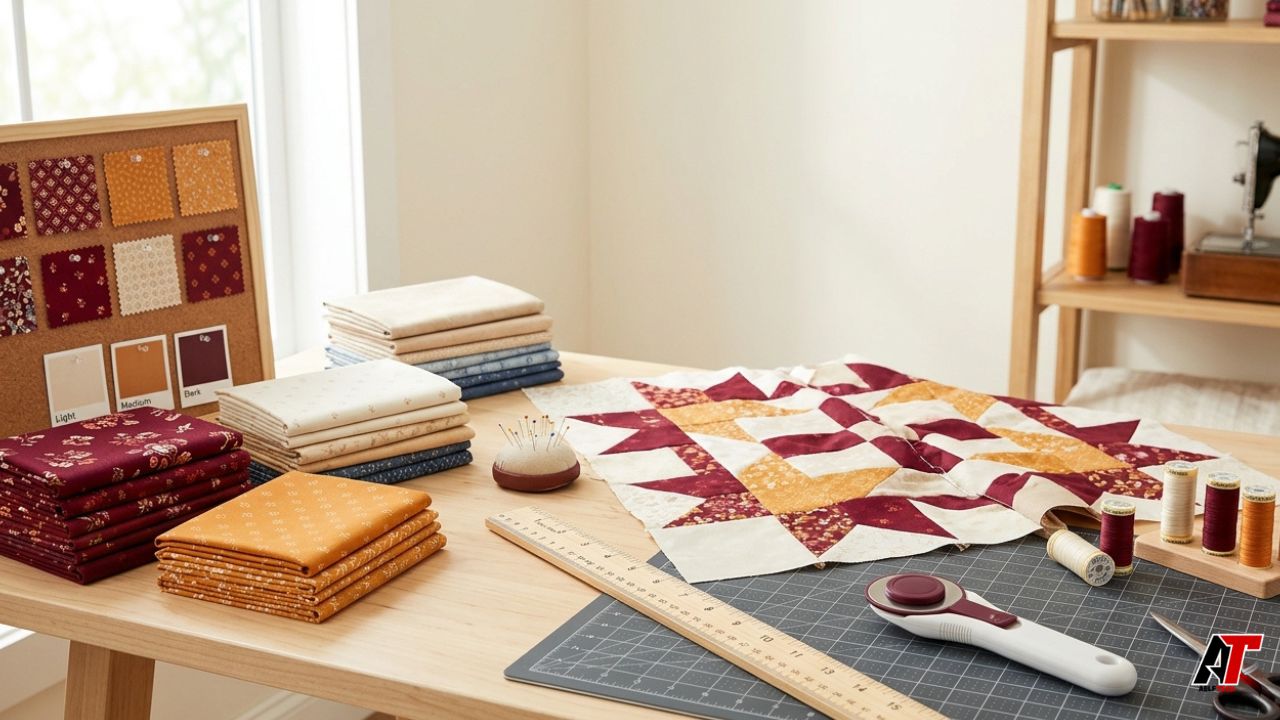
Choosing fabric is one of the most enjoyable parts of quilting, yet it is also where many projects quietly succeed or struggle. A beautiful print can catch your eye in seconds, but a dependable quilt needs more than attractive color. Fiber content, weave, weight, scale, contrast, shrinkage, intended use, and care requirements all influence how the finished piece will look and behave. When these factors work together, cutting becomes easier, seams lie flatter, blocks remain more accurate, and the quilt feels cohesive rather than accidental.
The good news is that fabric selection does not require an expert-level design background. You only need a repeatable process that starts with the purpose of the quilt and narrows your choices step by step. This guide explains how to choose fabrics for quilt projects with confidence, whether you are making a first baby quilt, a durable bed quilt, a modern wall hanging, or a detailed heirloom. Instead of relying on guesswork, you will learn how to balance practical performance with personal style.
Begin With the Quilt’s Purpose and Pattern
Every strong fabric plan begins with a simple question: how will the quilt be used? A decorative wall quilt can accommodate delicate fabrics, unusual textures, or high-contrast colors that might feel too dramatic on a bed. A child’s quilt needs washable, colorfast fabric that can tolerate frequent handling. A picnic or travel quilt benefits from sturdy materials and forgiving prints, while an heirloom piece may justify premium cotton, careful matching, and more conservative care. Purpose gives you a filter, so every fabric does not have to compete equally for your attention.
Next, study the pattern before buying yardage. Look at block size, seam density, directional pieces, curved units, appliqué areas, and negative space. Tiny prints can disappear in large blocks, while oversized motifs may be chopped into confusing fragments in small patchwork. Patterns with many half-square triangles need fabrics that maintain visible contrast after cutting. If the designer supplies a color key or fabric requirements chart, treat it as a starting framework rather than a rigid rule. You can change the mood while preserving the pattern’s visual logic.
Choose a Fiber and Weight That Sew Well Together
For most pieced quilts, medium-weight woven cotton remains the safest choice. It is stable under the rotary cutter, presses crisply, accepts precise seams, and is widely available in coordinated colors and prints. More important, similar fabrics tend to shrink and wear at comparable rates. Mixing dramatically different weights can create puckering, stretching, or uneven drape. Before combining materials, handle them side by side. They should feel reasonably compatible in thickness, flexibility, and surface texture.
This does not mean every quilt must use identical fabric. Mixed-textile quilts can be striking, but they require more planning. Linen may fray more than quilting cotton, flannel can stretch and shrink, and silky fabrics may shift during piecing. When you intentionally mix fibers, stabilize loose weaves, enlarge seam allowances when appropriate, and test a sample block before cutting the entire project. A small trial reveals whether the fabrics press well, feed evenly through the machine, and retain the shape the pattern requires.
Quilting Cotton
Quality quilting cotton has a firm, balanced weave and enough body to hold accurate shapes without feeling stiff. Hold it toward the light: an extremely open weave may distort or allow dark seam allowances to show through pale areas. Rub the surface lightly to check whether printed color transfers, and inspect the selvage for manufacturer information. Coordinated quilt fabric collections can simplify selection because the prints, solids, and blenders are designed to share a compatible palette and visual style.
Batik Fabric
Batik is tightly woven cotton with dye penetrating through much of the cloth, so both sides often appear richly colored. Its crisp hand makes it useful for sharp points, appliqué, and complex piecing. Because the weave may feel denser than standard quilting cotton, use a fresh, fine needle and press carefully. Batiks can work with regular cotton, but test the combination first, especially when the quilt includes many small seams or a soft, relaxed drape is important.
Flannel, Linen, and Specialty Fabrics
Flannel creates warm, cozy quilts but usually requires generous prewashing because it may shrink and produce lint. Linen offers texture and an elegant natural look, though its looser weave can fray and stretch. Minky is popular for backing, but its pile and elasticity make it less predictable than woven cotton. Denim, corduroy, silk, and recycled garments can also be used successfully when the design, needle, batting, seam allowance, and quilting method are chosen around their distinctive behavior.
Build a Color Palette Using Value, Not Color Alone
Color attracts attention, but value creates readable design. Value describes how light or dark a fabric appears. Two fabrics may be different colors yet share nearly the same value, causing pieced shapes to merge from a distance. Before purchasing, arrange swatches from lightest to darkest. Photograph them with your phone and switch the image to grayscale. If neighboring fabrics become indistinguishable, add a lighter or darker option to strengthen the separation.
A useful palette often includes a dominant color, one or two supporting colors, and a small accent that adds energy. Neutrals such as cream, charcoal, navy, or soft gray can provide breathing room. Warm shades tend to feel inviting and active, while cool shades often appear calm and spacious. You do not need equal amounts of every color. Uneven proportions usually feel more natural, with one family leading and the others reinforcing the focal areas of the quilt.
Balance Print Scale, Texture, and Visual Movement
A fabric pull becomes more interesting when it includes varied print scales. Large florals or geometric motifs can provide identity, medium prints connect the palette, and small prints or tone-on-tone fabrics rest the eye. If every fabric has a large, busy motif, individual blocks may compete and the piecing can disappear. If every selection is tiny and uniform, the quilt may lack depth. Aim for a deliberate rhythm rather than a collection of equally loud patterns.
Directional prints need extra attention. Stripes, words, animals, buildings, and one-way florals may require additional yardage because pieces must be cut in a consistent orientation. Consider whether the pattern rotates units or places triangles in multiple directions. Fussy cutting, where a motif is centered within a shape, can create memorable blocks but increases fabric use. Texture also matters: dots, crosshatches, woven-look prints, and subtle mottles behave like visual solids while adding more character than a perfectly flat color.
Check Fabric Quality Before You Commit
Price alone does not guarantee quality, so use your hands and eyes. A dependable fabric should feel even across the width, recover after gentle crumpling, and show a consistent weave without frequent slubs or thin spots unless those variations are intentional. Compare the printed side with the reverse. Strong saturation and clean edges often indicate better printing, while blurred outlines may become more obvious after cutting. Also check whether the fabric is off-grain, meaning the crosswise threads do not sit perpendicular to the selvage.
Whenever possible, buy a small test amount or request swatches before investing in backing yardage or a large coordinated pull. Wash the sample using the same method planned for the finished quilt, then measure shrinkage and inspect bleeding, distortion, and surface wear. This simple test is particularly useful for dark reds, deep blues, hand-dyed fabrics, flannels, and mixed fibers. It may feel like an extra step, but it protects many hours of cutting, piecing, and quilting.
Decide Whether to Prewash Your Quilt Fabrics
Prewashing is a design decision rather than a universal command. Washing removes manufacturing finishes, reveals shrinkage, and can identify unstable dyes before construction. It is especially helpful when combining fabrics from different sources, using flannel or garments, or making a quilt that will be washed frequently. After washing, press the fabric flat and square the cut edge before measuring. To reduce tangling and fraying, place smaller cuts in a mesh bag or secure raw edges with a zigzag stitch.
Skipping prewashing preserves the crisp finish that makes accurate cutting pleasant and can create the softly puckered texture many quilters enjoy after the completed quilt is washed. Precuts such as charm squares, jelly rolls, and layer cakes are usually not prewashed because they can distort or fray. Whichever approach you choose, stay consistent within the quilt whenever possible. Mixing prewashed and unwashed fabrics may lead to uneven shrinkage, particularly when the fiber content and weave are not closely matched.
Coordinate the Quilt Top, Backing, Binding, and Batting
The quilt top receives most of the creative attention, but backing and binding affect both appearance and durability. Backing should complement the front without requiring a perfect match. A medium-scale print can hide quilting irregularities and everyday marks better than a very pale solid. Check the usable width and calculate seams carefully; wide-back fabric can eliminate piecing on larger quilts. When using a directional backing, allow extra length so the print can be aligned without leaving the longarm quilter short of material.
Binding experiences frequent friction, so a tightly woven fabric is a practical choice. Stripes and small geometric prints create lively edges, while a darker value can frame the quilt and conceal wear. Batting also changes the fabric’s behavior: cotton batting produces a traditional drape, polyester offers loft and resilience, and blended batting balances warmth with ease of care. Test the entire “quilt sandwich” if the top includes unusual fibers or if you plan dense quilting that may stiffen the finished project.
Buy Enough Fabric Without Wasting Your Budget
Accurate yardage planning prevents mismatched dye lots and last-minute substitutions. Start with the pattern requirements, then add a sensible margin for squaring, shrinkage, cutting errors, directional prints, and fussy cutting. The extra amount depends on the design, but a modest buffer is usually cheaper than searching for discontinued fabric later. Keep the receipt and record the manufacturer, collection name, designer, and color number from the selvage so you can locate the same print if more is needed.
Budget strategically rather than choosing the least expensive option in every category. Spend more on the focal print, background, and binding because these fabrics strongly influence the finished result. Use economical blenders, scraps, or carefully selected solids for supporting roles. For more practical content-planning guidance and publishing resources, visit aelftech.com. The same principle applies to quilting and content alike: a clear plan helps you invest where quality has the greatest visible impact.
Use a Final Fabric Selection Checklist
Before cutting, lay every fabric together in natural light and view the group from several feet away. Confirm that the palette contains clear light, medium, and dark values; that print scales vary; and that one fabric does not unintentionally overpower the rest. Remove any option that looks attractive alone but weakens the group. Then label each fabric according to its role in the pattern, such as background, main color, secondary color, accent, border, or binding.
Finally, make one test block. It is the most reliable way to evaluate contrast, seam visibility, pressing behavior, and motif placement. Place the test block on a wall and look at it during different times of day. Small changes are easy before hundreds of pieces are cut. Once the sample feels balanced and the fabrics cooperate under the machine, you can continue with confidence instead of wondering whether the original fabric pull will translate into a successful quilt.
Conclusion
Learning how to choose fabrics for quilt projects is less about following strict rules and more about making connected decisions. Begin with the quilt’s purpose, use the pattern to guide scale and contrast, select compatible fibers, test quality, and build a palette with clear value differences. Then coordinate backing, binding, batting, care, and budget before cutting. Each step reduces uncertainty and gives your creativity a dependable structure. The best quilt fabric is not simply the prettiest bolt in the shop. It is the material that supports the design, feels appropriate for its future use, and remains enjoyable throughout cutting, piecing, quilting, and washing. With a thoughtful selection process and one test block, you can turn a shelf of possibilities into a cohesive quilt that looks intentional, performs well, and remains meaningful for years.
Leave a Reply