
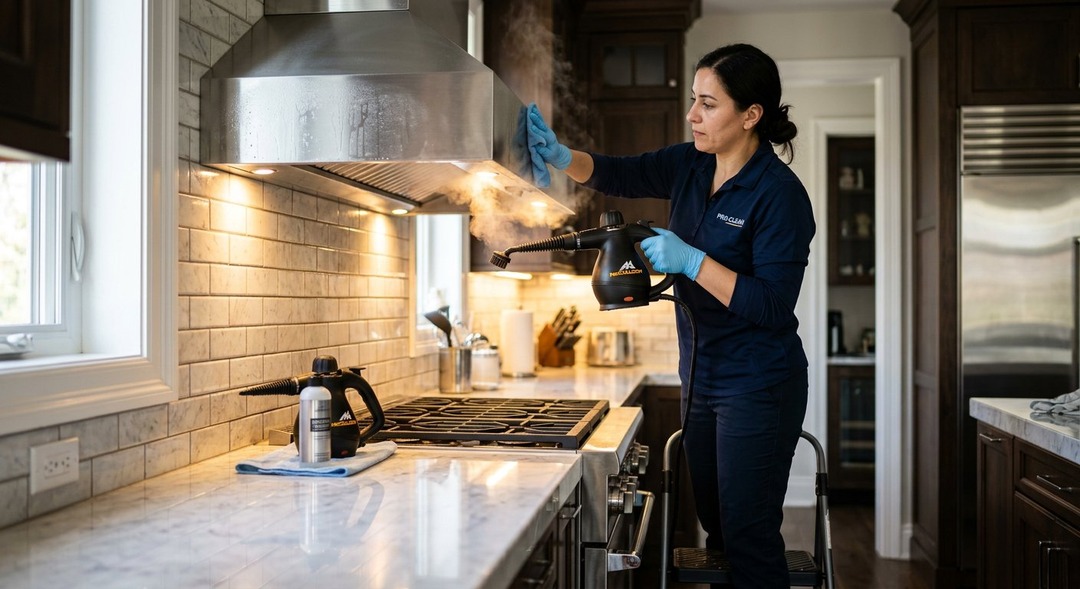
A home can look reasonably tidy while still containing layers of dust, grease, soap residue, and grime in areas that ordinary cleaning routines rarely address. Kitchen cabinets, bathroom grout, baseboards, ventilation covers, and spaces behind furniture can gradually accumulate dirt without attracting much attention. Deep cleaning focuses on these overlooked areas, offering a more detailed approach to household maintenance that goes beyond everyday sweeping, wiping, and vacuuming.
Although regular housekeeping helps maintain a presentable living environment, Deep cleaning can address accumulated residue and neglected surfaces that require additional attention. The benefits extend beyond appearance, potentially improving indoor comfort, reducing certain dust and allergen sources, and helping homeowners identify maintenance problems earlier. Understanding the difference between routine cleaning and a thorough home cleanout makes it easier to plan effective cleaning schedules, choose appropriate products, and maintain a comfortable living space.
What Is Deep Cleaning?
Deep cleaning is a comprehensive cleaning process that focuses on removing accumulated dirt, grease, dust, and residue from areas that may receive limited attention during routine housekeeping.
Unlike everyday cleaning, which concentrates on frequently used surfaces, this approach involves more detailed work around fixtures, furniture, appliances, and hard-to-reach spaces.
The exact tasks depend on the property’s condition, layout, and specific cleaning needs.
For example, a kitchen may require attention to cabinet exteriors, appliance surfaces, backsplash grout, and areas beneath movable equipment.
Meanwhile, bathrooms may need detailed cleaning around taps, shower doors, tile joints, and ventilation covers.
What Does Deep Cleaning Include?
A thorough service commonly includes:
- Detailed dusting of accessible surfaces.
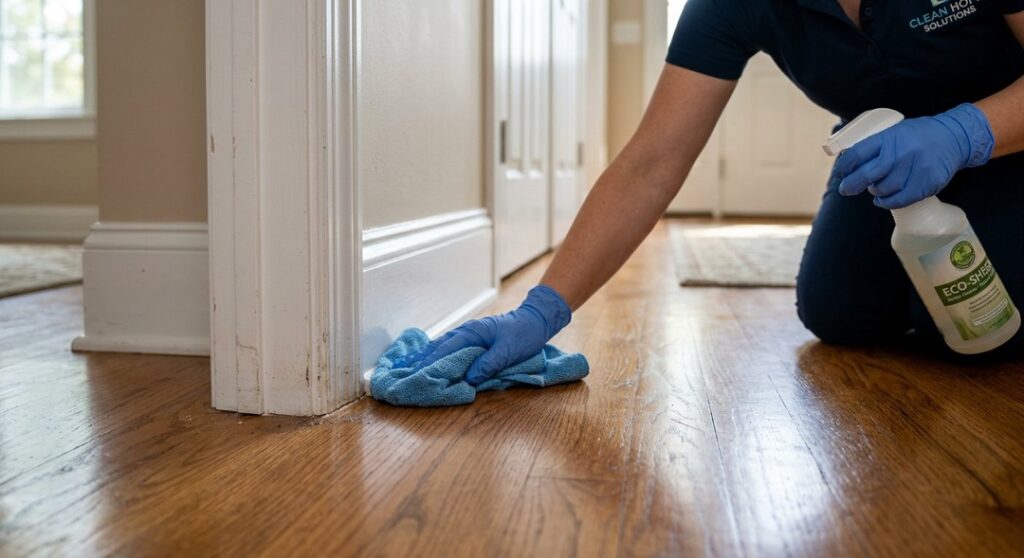
- Cleaning baseboards and door frames.
- Removing grease from suitable kitchen surfaces.
- Cleaning accessible areas behind movable furniture.
- Washing bathroom fixtures and tile surfaces.
- Removing soap residue and mineral deposits.
- Vacuuming upholstery and floor edges.
- Cleaning accessible ventilation covers.
- Wiping cabinet and cupboard exteriors.
- Addressing high-touch surfaces.
- Cleaning accessible appliance exteriors.
- Removing dirt from corners and crevices.
However, not every professional service includes the same tasks.
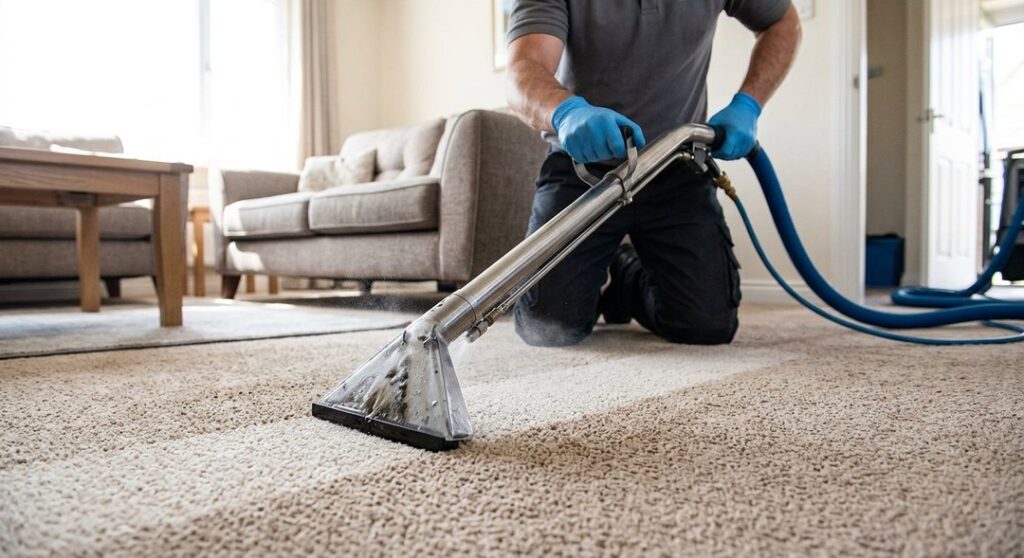
Specialist services such as carpet extraction, mold remediation, and exterior window cleaning may require separate arrangements.
Deep Cleaning vs Regular Cleaning
Understanding the distinction between routine housekeeping and Deep cleaning helps homeowners choose appropriate maintenance methods.
Regular cleaning generally focuses on visible dirt and frequently used surfaces.
By contrast, more detailed cleaning addresses accumulated residue and areas that require additional time or equipment.
| Cleaning Task | Regular Cleaning | Deep Cleaning |
|---|---|---|
| Vacuuming floors | Usually included | Includes detailed edges and accessible corners |
| Kitchen countertops | Routine wiping | Detailed residue removal |
| Bathroom sinks | Basic cleaning | Detailed cleaning around fixtures |
| Baseboards | Occasional attention | Thorough dusting and wiping |
| Appliance exteriors | Basic wiping | Detailed surface cleaning |
| Cabinet surfaces | Spot cleaning | More comprehensive cleaning |
| Tile grout | Limited attention | Targeted cleaning where appropriate |
| Furniture areas | Visible spaces | Accessible areas underneath and behind |
| Door frames | Occasional dusting | Detailed cleaning |
| Floor corners | General cleaning | Focused attention |
Neither approach replaces the other.
Routine housekeeping prevents excessive accumulation, while periodic detailed cleaning addresses areas that need additional care.
7 Powerful Benefits of Deep Cleaning Your Home
A thorough cleaning routine can support household maintenance in several ways.
However, results depend on the methods used, the condition of the property, and the specific sources of dirt or contamination.
1. Removes Accumulated Dirt and Grime
One of the main advantages of Deep cleaning is the removal of residue that develops gradually.
Everyday activities introduce dust, cooking oils, moisture, and other substances into the home.
Over time, these materials can accumulate on surfaces that are not cleaned frequently.
Why Hidden Dirt Matters
Dust may collect along baseboards, beneath furniture, and around ventilation openings.
Similarly, cooking grease can settle on kitchen cabinets and nearby surfaces.
Removing these deposits can improve the appearance and cleanliness of affected areas.
However, cleaning should be performed with suitable products to avoid damaging finishes.
2. Helps Reduce Certain Indoor Allergens
Household dust can contain particles such as pollen, pet dander, and dust mite material.
Cleaning may reduce some of these particles on accessible surfaces.
For example, vacuuming carpets and upholstery with suitable equipment can help remove accumulated debris.
Additionally, damp dusting may reduce the amount of dust redistributed into the air compared with aggressive dry dusting.
Nevertheless, Deep cleaning does not eliminate all allergens or guarantee relief from allergic conditions.
People with significant allergies should follow appropriate medical advice.
3. Improves Kitchen Cleanliness
Kitchens accumulate food residue, grease, and moisture through everyday use.
Routine wiping helps maintain countertops, but other areas may require more detailed attention.
Deep cleaning can address suitable appliance surfaces, cabinet exteriors, backsplash areas, and accessible floor edges.
Why Kitchen Grease Builds Up
Cooking releases airborne particles and grease.
These materials can settle on nearby surfaces.
Consequently, cabinet doors, extractor hood exteriors, and backsplash areas may develop sticky residue.
Using appropriate cleaning products can help remove these deposits.
However, strong degreasers should not be used indiscriminately.
Always check compatibility with the surface material.
4. Restores Bathroom Freshness
Bathrooms experience frequent moisture exposure.
Soap residue, mineral deposits, and accumulated dirt can affect fixtures and finishes.
Detailed cleaning helps address these areas.
Soap Scum and Mineral Deposits
Soap residue can combine with minerals in water, creating deposits on shower doors and tiles.
Hard water may also leave visible scale around taps.
Suitable cleaning products can remove some deposits.
However, acidic cleaners may damage natural stone and other sensitive materials.
Therefore, product compatibility is essential.
Moisture and Mold Concerns
Bathrooms may develop mold when moisture persists.
Cleaning small affected areas may be appropriate in some circumstances.
However, recurring or extensive mold requires identifying and correcting the moisture source.
Professional remediation may be necessary.
5. Makes Living Spaces More Comfortable
A clean environment can feel more pleasant and organized.
Removing dust, visible stains, and accumulated residue may improve the overall appearance of a room.
Additionally, detailed cleaning can reveal spaces that need decluttering or better storage arrangements.
However, psychological responses to cleanliness vary between individuals.
It would be inaccurate to claim that Deep cleaning automatically improves mental health or eliminates stress.
6. Helps Protect Household Surfaces
Dirt and residue can affect certain finishes when left untreated.
For example, abrasive particles may contribute to scratching when trapped under furniture or cleaning tools.
Meanwhile, accumulated moisture can affect vulnerable materials.
Appropriate cleaning may help maintain surfaces.
However, aggressive scrubbing and unsuitable chemicals can cause damage.
The objective is careful maintenance rather than maximum chemical strength.
7. Makes Routine Cleaning Easier
Once accumulated grime has been addressed, everyday housekeeping may become more manageable.
For example, a thoroughly cleaned kitchen backsplash may require less effort during subsequent routine wiping.
Similarly, removing dust from neglected areas can reduce the amount of visible buildup that needs attention later.
Nevertheless, Deep cleaning does not eliminate the need for regular maintenance.
A consistent routine remains important.
Which Areas of Your Home Need Deep Cleaning Most?
Different rooms develop different cleaning challenges.
Therefore, an effective plan should prioritize areas according to use, moisture exposure, and visible buildup.
Kitchen Deep Cleaning
The kitchen often requires detailed attention because of food preparation and cooking residue.
Common tasks include:
- Cleaning suitable cabinet surfaces.
- Removing grease from backsplash areas.
- Wiping appliance exteriors.
- Cleaning accessible spaces behind appliances.
- Washing sink fixtures.
- Cleaning floor edges.
- Inspecting refrigerator seals.
- Removing dirt around handles and switches.
However, moving heavy appliances can create safety risks.
Professional assistance may be appropriate.
Bathroom Deep Cleaning
Bathrooms require attention to soap residue, moisture, and frequently touched fixtures.
A practical checklist includes:
- Cleaning shower walls.
- Removing suitable mineral deposits.
- Washing sink surfaces.
- Cleaning around taps.
- Wiping cabinet exteriors.
- Cleaning toilet exterior surfaces.
- Washing accessible floor edges.
- Cleaning ventilation covers where safe.
Use separate cleaning tools for toilet areas and general bathroom surfaces to reduce cross-contamination.
Bedroom Deep Cleaning
Bedrooms can accumulate dust on furniture, textiles, and flooring.
Detailed cleaning may involve vacuuming accessible areas beneath beds, dusting baseboards, and cleaning suitable furniture surfaces.
Additionally, bedding should be washed according to manufacturer instructions.
Living Room Deep Cleaning
Living rooms often contain upholstered furniture, electronics, and decorative objects.
Focus on accessible dust accumulation and suitable surface care.
However, electronics require special cleaning precautions.
Never spray liquids directly onto electrical equipment unless manufacturer guidance specifically permits it.
Hallways and Entryways
Entryways collect outdoor dirt and debris.
Detailed cleaning may include floor edges, skirting boards, doors, and frequently touched surfaces.
How Often Should You Deep Clean Your Home?
There is no universal schedule suitable for every household.
The appropriate frequency depends on occupancy, pets, cooking habits, indoor air conditions, and regular cleaning practices.
Some households may benefit from a detailed clean every few months.
Others may need certain tasks more frequently.
Factors Affecting Cleaning Frequency
Important considerations include:
- Number of occupants.
- Presence of pets.
- Cooking frequency.
- Indoor dust levels.
- Seasonal pollen exposure.
- Household allergies.
- Ventilation conditions.
- Frequency of routine cleaning.
- Property size.
For example, a busy household with pets may experience faster accumulation of dust and debris.
Meanwhile, a lightly occupied home may require less frequent intensive cleaning.
Signs Your Home Needs Deep Cleaning
Common indicators include:
- Persistent grime around fixtures.
- Dust accumulation in neglected areas.
- Sticky kitchen surfaces.
- Visible soap residue.
- Dirt along baseboards.
- Stains requiring additional treatment.
- Unpleasant odors with identifiable cleaning-related causes.
- Difficulty maintaining surfaces through routine wiping.
However, persistent odors can sometimes indicate moisture, plumbing, or ventilation problems that cleaning alone will not resolve.
Deep Cleaning Checklist for the Entire House
A structured checklist helps organize tasks and reduce overlooked areas.
General Living Areas
- Dust accessible high and low surfaces.
- Clean door frames and baseboards.
- Vacuum floor edges.
- Wipe appropriate furniture surfaces.
- Clean accessible window sills.
- Remove cobwebs.
- Vacuum suitable upholstery.
- Clean frequently touched handles and switches.
Kitchen
- Clean cabinet exteriors.
- Wipe countertops.
- Remove suitable grease deposits.
- Clean sink fixtures.
- Wipe appliance exteriors.
- Address backsplash residue.
- Clean accessible floor corners.
- Inspect areas prone to moisture.
Bathrooms
- Clean sinks and taps.
- Remove soap residue.
- Clean shower surfaces.
- Wash toilet exterior areas.
- Wipe cabinets.
- Clean floor edges.
- Address suitable mineral deposits.
- Check ventilation openings.
Bedrooms
- Dust furniture.
- Vacuum accessible areas beneath beds.
- Clean baseboards.
- Wash bedding.
- Wipe suitable storage surfaces.
- Remove accumulated dust from accessible corners.
The checklist should be adjusted to the property’s materials and cleaning requirements.
How to Deep Clean Your Home Step by Step
A planned approach can make detailed cleaning more efficient.
Step 1. Declutter Before Cleaning
Remove unnecessary objects from the areas being cleaned.
This improves access to surfaces.
However, decluttering and cleaning are separate activities.
Avoid spending the entire cleaning period reorganizing unrelated belongings.
Step 2. Gather Suitable Equipment
Prepare microfiber cloths, appropriate cleaners, a vacuum, brushes, and protective equipment where needed.
Read product labels before use.
Step 3. Work From Higher Areas Downward
Dust from upper surfaces can settle below.
Therefore, cleaning higher accessible areas before floors may reduce repeated work.
Step 4. Focus on One Room at a Time
Completing one area before moving elsewhere helps maintain organization.
However, some products require dwell time.
Tasks can be coordinated accordingly.
Step 5. Clean Before Disinfecting
Visible dirt and organic material can interfere with some disinfectants.
Therefore, follow product instructions regarding pre-cleaning.
Not every household surface requires routine disinfection.
Step 6. Allow Surfaces to Dry
Moisture left on vulnerable materials may cause damage.
Ensure appropriate drying and ventilation.
Step 7. Review the Results
Inspect areas that were previously neglected.
Identify any maintenance problems that require separate attention.
Essential Products for Deep Cleaning
Effective cleaning requires suitable tools rather than the strongest available chemicals.
Microfiber Cloths
Microfiber cloths can capture dust and support surface cleaning.
Use different cloths for different areas when appropriate.
Vacuum Cleaner
A suitable vacuum helps remove debris from floors and upholstery.
Filtration performance depends on the model and maintenance.
General-Purpose Cleaner
A compatible cleaner can remove everyday soil from many surfaces.
However, universal compatibility should never be assumed.
Degreaser
Degreasers are useful for suitable kitchen applications.
Follow dilution and surface instructions.
Bathroom Cleaner
Bathroom products may target soap residue or mineral deposits.
Check whether they are suitable for the surface.
Soft Brushes
Brushes can help clean grout and textured areas.
Avoid abrasive tools on delicate finishes.
Protective Gloves
Gloves may be necessary for certain cleaning chemicals.
Choose materials appropriate to the product.
Safe Deep Cleaning Practices
Cleaning products can create hazards when used incorrectly.
Never Mix Cleaning Chemicals
Combining incompatible products can release harmful gases or cause dangerous reactions.
For example, chlorine bleach must not be mixed with ammonia or acidic cleaners.
Improve Ventilation
Follow product instructions concerning ventilation.
Open windows where appropriate and safe.
Read Safety Labels
Cleaning products have different hazards and usage requirements.
Never assume that a product is safe on every surface.
Protect Children and Pets
Store chemicals securely.
Keep children and animals away from active cleaning areas when necessary.
Avoid Excessive Scrubbing
Aggressive cleaning can damage paint, stone, wood, and other materials.
Test suitable products in an inconspicuous area when appropriate.
Professional Deep Cleaning vs DIY Cleaning
Homeowners can perform many detailed cleaning tasks themselves.
However, professional services may be useful for larger properties, demanding schedules, or difficult cleaning conditions.
| Factor | DIY Deep Cleaning | Professional Deep Cleaning |
|---|---|---|
| Labor | Performed by household members | Provided by cleaning staff |
| Scheduling | Flexible | Appointment-based |
| Equipment | Household tools | May include commercial equipment |
| Cost | Products and personal time | Service charges |
| Customization | Fully controlled by homeowner | Depends on service agreement |
| Physical effort | Can be demanding | Reduces homeowner labor |
| Specialist tasks | May require outside help | Some services offer specialist options |
Neither option guarantees superior results in every situation.
Quality depends on methods, equipment, experience, and the specific tasks involved.
How Much Does Professional Deep Cleaning Cost?
Professional Deep cleaning prices vary by location, property size, condition, and service scope.
Some companies charge hourly rates.
Others provide fixed quotations based on property characteristics.
Major Pricing Factors
Costs commonly depend on:
- Number of rooms.
- Property square footage.
- Level of accumulated dirt.
- Number of cleaners required.
- Accessibility.
- Special cleaning requests.
- Equipment requirements.
- Local labor rates.
- Service duration.
A property requiring extensive grease removal may cost more than a similar-sized home in relatively good condition.
Avoiding Unexpected Charges
Request a detailed service checklist.
Ask whether oven interiors, refrigerator interiors, windows, carpet treatment, or other specialist tasks are included.
Additionally, confirm whether cleaning products and equipment are provided.
Deep Cleaning Before Moving Into a Home

Moving into a new property can provide an opportunity for detailed cleaning before furniture arrives.
Empty rooms may be easier to access.
Kitchen Preparation
Clean suitable cabinet interiors and surfaces before storing food or dishes.
Bathroom Preparation
Inspect fixtures and clean appropriate surfaces.
Floors and Corners
Vacuum and clean accessible edges while rooms remain empty.
Ventilation Areas
Check accessible vents for dust.
However, internal duct cleaning may require a separate assessment.
Identify Maintenance Concerns
Cleaning may reveal leaks, damaged surfaces, or other issues.
These should be addressed separately.
Deep Cleaning Before Moving Out
Move-out cleaning requirements depend on the property and tenancy agreement.
Landlords and tenants should follow applicable local laws.
Review the Agreement
Check the required condition of the property.
However, contractual terms must comply with relevant legal requirements.
Prioritize High-Use Areas
Kitchens, bathrooms, and floors often require additional attention.
Document Property Condition
Photographs may help establish the condition at handover.
Consider Professional Assistance
Professional services may be useful when time is limited.
However, hiring a cleaner does not automatically guarantee compliance with every tenancy obligation.
Deep Cleaning and Indoor Air Quality
Indoor air quality depends on several factors, including ventilation, pollutant sources, filtration, and moisture.
Deep cleaning may reduce accumulated dust and certain surface contaminants.
However, it cannot resolve every air quality problem.
Dust Removal
Damp dusting and appropriate vacuuming may reduce settled particles.
Pet Dander
Cleaning textiles and surfaces may help manage accumulated pet-related particles.
However, allergens may remain in other areas.
Moisture Control
Persistent dampness should be investigated.
Cleaning visible residue does not correct leaks or ventilation problems.
Ventilation
Fresh-air ventilation may help manage certain indoor pollutants.
The appropriate strategy depends on the building.
Source Control
Reducing pollution at its source is often more effective than relying only on cleaning.
Examples include addressing water leaks and using suitable kitchen exhaust ventilation.
Does Deep Cleaning Eliminate Germs?
Cleaning can remove dirt and some microorganisms from surfaces.
However, cleaning and disinfection are not identical.
Disinfectants are designed to inactivate specified microorganisms when used according to label instructions.
When Disinfection May Be Appropriate
Certain situations may justify targeted disinfection.
Examples include surfaces contaminated with bodily fluids or specific infection-related circumstances.
However, routine use of strong disinfectants throughout every home is not always necessary.
Follow Contact Times
Disinfectants require specific application conditions.
Surfaces may need to remain visibly wet for the stated contact time.
Avoid Unsupported Health Claims
Deep cleaning does not guarantee prevention of illness.
Health outcomes depend on multiple factors.
Common Deep Cleaning Mistakes
Avoiding common errors can improve efficiency and safety.
Using Too Much Cleaning Product
Excess cleaner may leave residue.
Follow recommended quantities.
Mixing Different Products
Chemical combinations can be hazardous.
Never improvise mixtures.
Ignoring Surface Compatibility
Certain products can damage stone, wood, metal, or coatings.
Cleaning Without Decluttering
Clutter limits access and may slow the process.
Using Dirty Cleaning Tools
Contaminated cloths can redistribute dirt.
Clean or replace tools as needed.
Rushing Difficult Areas
Heavy buildup may require appropriate dwell time or repeated treatment.
Neglecting Maintenance Problems
Persistent moisture or odors may require repairs rather than additional cleaning.
How to Maintain Your Home After Deep Cleaning
Regular maintenance helps preserve the results.
Establish a Weekly Routine
Focus on high-use surfaces, floors, kitchens, and bathrooms.
Address Spills Promptly
Fresh spills may be easier to remove than dried residue.
However, follow surface-specific guidance.
Control Clutter
Organized storage improves access for cleaning.
Maintain Cleaning Tools
Wash suitable cloths and maintain vacuum filters.
Monitor Moisture
Repair leaks and manage ventilation problems.
Schedule Detailed Tasks
Create a rotating schedule for baseboards, cabinet surfaces, and other neglected areas.
Eco-Friendly Deep Cleaning Practices
Environmental considerations can influence household cleaning choices.
However, natural ingredients are not automatically safer.
Choose Suitable Products
Look for products with credible environmental information.
For example, EPA Safer Choice identifies qualifying products under established criteria.
Avoid Unnecessary Chemical Use
Use the amount needed for the task.
Select Reusable Tools
Washable cloths may reduce reliance on disposable materials.
However, laundering also uses water and energy.
Follow Disposal Instructions
Cleaning chemicals should be discarded according to local requirements.
Prioritize Prevention
Routine maintenance can reduce the need for intensive cleaning later.
When Should You Hire a Professional Deep Cleaning Service?
Professional assistance may be appropriate when the required work exceeds available time, equipment, or physical ability.
Large Properties
Bigger homes may require substantial labor.
Heavy Buildup
Persistent grease or extensive residue may require specialist techniques.
Moving Deadlines
Professional cleaning can help manage time-sensitive transitions.
Physical Limitations
Some homeowners may prefer to avoid demanding cleaning tasks.
Specialist Conditions
Mold contamination, biohazards, or other significant risks may require qualified specialists rather than ordinary domestic cleaners.
FAQ’s
1. What Is the Difference Between Deep Cleaning and Regular Cleaning?
Regular cleaning maintains frequently used surfaces, while Deep cleaning focuses on accumulated dirt, neglected areas, fixtures, and detailed household maintenance.
2. How Often Should You Deep Clean Your Home?
Frequency depends on occupancy, pets, household activities, and routine maintenance. Many homes benefit from periodic detailed cleaning throughout the year.
3. Is Professional Deep Cleaning Worth It?
Professional Deep cleaning may be worthwhile for large homes, demanding schedules, or difficult cleaning tasks. Value depends on service quality and individual needs.
4. Does Deep Cleaning Improve Indoor Air Quality?
Deep cleaning may reduce settled dust and certain allergens, but indoor air quality also depends on ventilation, filtration, and pollution sources.
5. How Long Does Deep Cleaning Take?
The time required depends on property size, condition, and service scope. A detailed clean generally takes longer than routine housekeeping.
6. What Areas Are Included in Deep Cleaning?
Common tasks include detailed bathroom and kitchen cleaning, baseboards, accessible corners, appliance exteriors, furniture areas, and accumulated surface residue.
Conclusion
Deep cleaning provides a more thorough approach to home maintenance by addressing dirt, grease, dust, and residue that routine housekeeping may overlook. From kitchens and bathrooms to bedrooms and living spaces, detailed cleaning can improve the appearance and comfort of a home while helping residents identify neglected maintenance needs. Additionally, appropriate dust removal and surface cleaning may reduce certain indoor contaminants. However, results depend on suitable products, safe techniques, and realistic expectations, as cleaning alone cannot resolve underlying ventilation, moisture, or structural problems.
The lasting value of Deep cleaning comes from combining periodic detailed work with consistent everyday maintenance. Homeowners should prioritize high-use areas, follow product safety instructions, protect delicate surfaces, and seek professional assistance when tasks involve significant physical demands or specialized hazards. Whether completing the work independently or hiring a qualified cleaning service, a thoughtful approach can make household upkeep more manageable. By maintaining practical cleaning habits and addressing problems early, families can enjoy a fresher, more organized, and comfortable living environment throughout the year.
Leave a Reply