
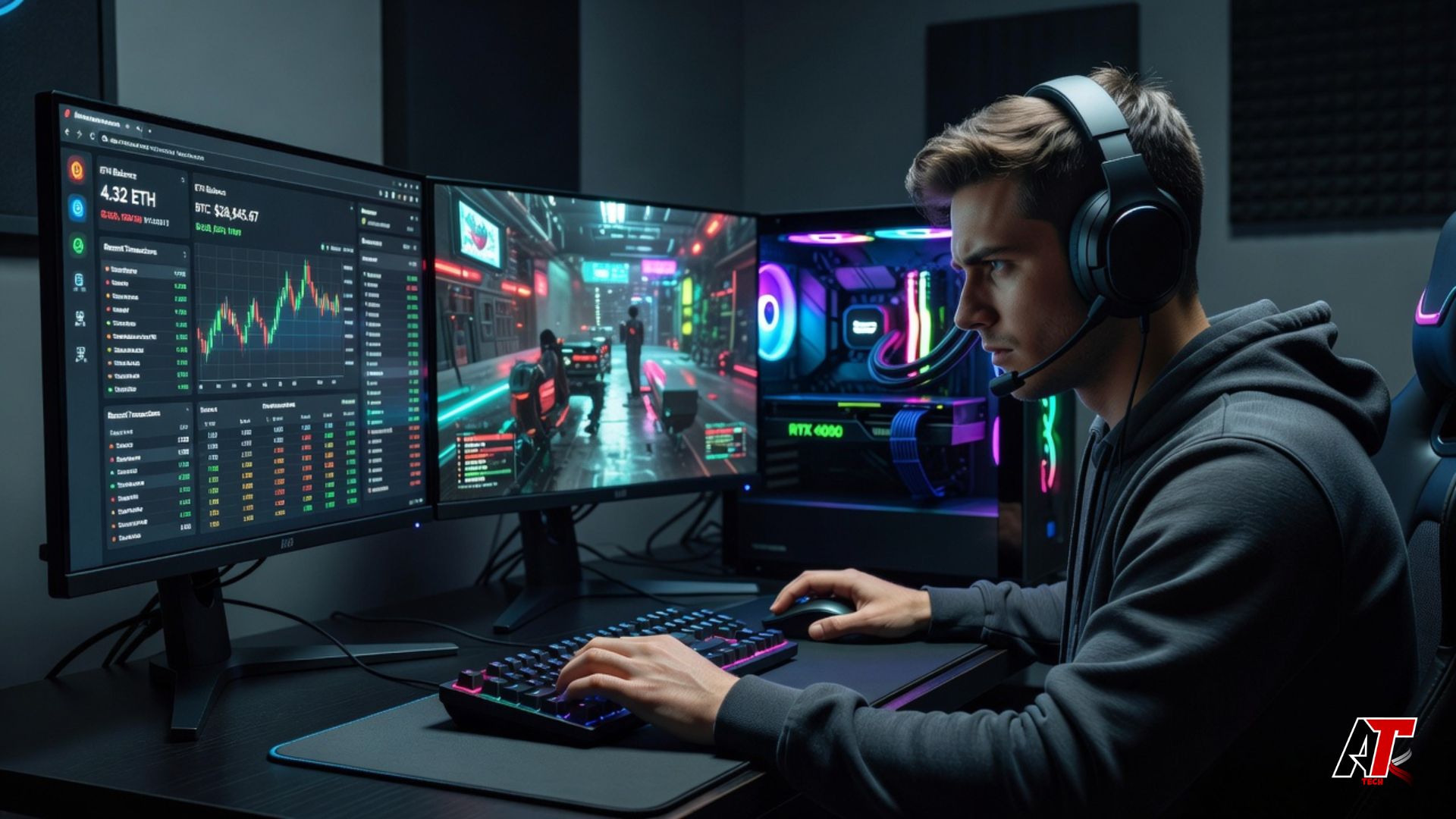
The gaming industry has undergone a paradigm shift with the introduction of blockchain technology. Consequently, developers and players alike are exploring new economic models within virtual worlds. Engaging with crypto games offers players true ownership of their in-game assets through decentralized ledgers. Furthermore, this ecosystem introduces financial mechanics into entertainment, creating what the industry terms GameFi. Therefore, understanding the architecture, benefits, and challenges of these platforms is essential for participants navigating the next generation of digital entertainment.
The Mechanics Behind crypto games and GameFi
Traditional video games operate on closed ecosystems where developers retain absolute control over in-game economies. If a server shuts down, players lose all progress and purchased items. Crypto games solve this by migrating data to public blockchains. Smart contracts govern the rules, ensuring transparency and immutability. Therefore, developers cannot arbitrarily alter the economy or seize player assets. Furthermore, GameFi integrates decentralized finance protocols into gameplay. Players stake tokens, provide liquidity, or earn yield through gameplay mechanics. Consequently, the gaming environment becomes an interactive financial ecosystem rather than a standalone entertainment product.
Smart Contracts and Decentralized Infrastructure in crypto games
The backbone of any blockchain game is its smart contract architecture. These self-executing codes automate matchmaking, reward distribution, and asset creation. By removing centralized servers, developers reduce infrastructure costs and single points of failure. However, smart contracts introduce unique vulnerabilities. A single bug in the code can lead to irreversible fund drainage. Therefore, developers must subject their contracts to rigorous third-party audits. Consequently, decentralized infrastructure offers resilience but demands strict technical oversight. Thus, security and transparency go hand-in-hand in blockchain development.
Play-to-Earn Models and Digital Asset Ownership
The most revolutionary aspect of crypto games is the play-to-earn model. In traditional gaming, spending hours grinding for in-game currency yields no real-world value. Play-to-earn models reward players with native cryptographic tokens for completing tasks, winning battles, or progressing through levels. These tokens hold real-world value and can be traded on decentralized exchanges. Therefore, players in developing countries often view these platforms as a source of primary income. Furthermore, digital asset ownership extends beyond currency to virtual land, avatars, and equipment.
NFTs as In-Game Assets in crypto games
Non-fungible tokens represent unique digital items within these ecosystems. Unlike traditional in-game items, NFTs exist independently of the game servers. If a developer abandons a project, the NFTs still exist in the player wallet and can be used in secondary markets or other compatible games. This interoperability is a cornerstone of the Web3 vision. Therefore, players invest heavily in upgrading their NFTs, knowing they hold tangible market value. Consequently, NFT integration transforms cosmetic microtransactions into legitimate digital investments. Thus, ownership economics fundamentally alter player engagement strategies.
Overcoming Challenges in crypto games Development
Despite the innovative potential, blockchain gaming faces significant technological hurdles. Public blockchains like Ethereum struggle with high transaction fees and slow processing times. A game requiring rapid microtransactions cannot function if each move costs high gas fees. Therefore, developers must seek alternative scaling solutions to make gameplay viable. Layer networks and specialized gaming blockchains have emerged to address these specific limitations. Consequently, the infrastructure supporting GameFi is rapidly evolving to meet consumer demands.
Scalability and User Onboarding in crypto games
To achieve mass adoption, crypto games must offer a user environment comparable to traditional Web2 titles. Setting up a digital wallet, managing seed phrases, and paying network fees create massive friction for non-crypto-native players. Developers are now utilizing account abstraction and invisible wallets. These protocols allow players to start playing with an email address, while the backend handles the cryptographic security. Furthermore, Layer scaling solutions like Immutable X and Polygon offer gas-free and instant transactions. Therefore, the technical barriers to entry are gradually disappearing. Consequently, smoother onboarding pipelines will attract traditional gamers into the Web3 space. Thus, user interface design dictates the pace of mainstream adoption.
The Shift Toward Play-and-Earn in Modern crypto games
Early play-to-earn models suffered from unsustainable economic designs. Games focused entirely on token generation led to hyperinflation. Once new player growth stagnated, the token value crashed, destroying the in-game economy. Therefore, modern crypto games are shifting toward a play-and-earn model. This approach prioritizes high-quality gameplay and engaging storylines over financial mechanics. Tokens and NFTs act as secondary rewards rather than the primary focus. Consequently, games retain players based on entertainment value, ensuring long-term economic stability. Thus, fun replaces yield farming as the core retention metric.
Enhancing Gameplay Over Financial Incentives
Developers are investing heavily in graphics, mechanics, and narrative depth. By utilizing advanced game engines and physics systems, blockchain games are shedding their amateur aesthetic. Titles now feature premium visuals and complex multiplayer modes. Furthermore, earning mechanics are deeply integrated into the core loop rather than feeling like a repetitive chore. Players earn assets through skill-based combat or strategic resource management. Therefore, the reward feels earned through merit rather than time spent clicking. Consequently, prioritizing gameplay creates a sustainable loop that attracts both gamers and investors. Thus, quality entertainment drives organic economic growth.
The Role of Metaverse and Virtual Real Estate
Virtual worlds constitute a major segment of the blockchain gaming industry. These metaverse platforms allow players to purchase land, build structures, and host social events. Virtual real estate operates on a speculative market, with prime locations near central hubs commanding high premiums. While the initial land grab hype has subsided, the underlying utility of virtual spaces continues to develop. Brands use these spaces for virtual product launches and digital advertising. Therefore, the metaverse functions as a social and commercial extension of crypto games. Consequently, virtual land ownership offers utility beyond simple gameplay mechanics.
Interoperability Across crypto games Ecosystems
The ultimate goal of Web3 gaming is interoperability. A sword earned in one game should theoretically be usable as a weapon in another. While technical limitations make full interoperability difficult, developers are establishing shared asset standards. By using the same blockchain networks and NFT metadata schemas, developers allow cross-game utility. For example, an avatar NFT might serve as a playable character in a racing game and a profile picture on a social platform. Therefore, shared ecosystems amplify the value of digital assets. Consequently, collaborative development strengthens the entire blockchain gaming landscape. Thus, interconnected virtual worlds represent the future of digital interaction.
Security and Wallet Integration in crypto games
Handling digital assets introduces severe security considerations. Players are prime targets for hackers and scammers. Malicious actors often create fake game websites or phishing links to steal wallet seed phrases. Once a wallet is compromised, the assets are drained instantly and irreversibly. Therefore, educating players on operational security is a critical responsibility for developers. Furthermore, games must integrate secure wallet connection protocols that do not expose private keys during transactions. Consequently, robust security measures protect the community and preserve the platform reputation. Thus, cybersecurity remains a foundational pillar of GameFi development.
Managing Private Keys and Phishing Risks
Hardware wallets offer the highest level of security for high-value assets, but they are cumbersome for active gameplay. Therefore, developers are implementing hot wallet solutions with strict spending limits specifically for gaming. Players fund their gaming wallets with only the tokens needed for immediate play, keeping their main vault offline. Furthermore, transaction signing processes are being streamlined to prevent blind signing, where users approve malicious smart contracts without reading the code. Consequently, balancing security with gameplay fluidity remains an ongoing engineering challenge. Thus, intuitive security protocols will ultimately determine player trust.
FAQs
1. What are crypto games?
They are video games built on blockchain networks that allow players to own, trade, and sell in-game assets as NFTs or cryptocurrencies.
2. How does play-to-earn work in blockchain gaming?
Players earn native cryptocurrency tokens by completing in-game tasks, winning battles, or progressing, which can be traded on external exchanges.
3. Do I need a crypto wallet to play Web3 games?
Yes, a non-custodial crypto wallet is required to store your digital assets, interact with smart contracts, and receive token rewards.
4. What is the difference between play-to-earn and play-and-earn?
Play-and-earn focuses primarily on fun gameplay with crypto rewards as a bonus, whereas early play-to-earn models prioritized financial gain over game quality.
5. Are blockchain games free to play?
Many modern Web3 games offer free-to-play models, though purchasing specific NFT assets often provides advantages or unlocks premium earning features.
6. Can in-game NFTs be used in other games?
True interoperability allows NFTs to be used across compatible games, though technical limitations currently restrict this to specific blockchain ecosystems.
Conclusion
The integration of blockchain technology into the gaming sector represents a fundamental shift in how digital value is created and owned. Crypto games empower players with true asset ownership, transforming time spent in virtual worlds into tangible economic activity. While the industry initially struggled with scalability and unsustainable economic models, the shift toward engaging gameplay and robust Layer solutions signals a maturing market. Furthermore, as user onboarding becomes frictionless and security protocols advance, mass adoption becomes increasingly viable. Ultimately, crypto games are evolving beyond speculative financial tools into sustainable, player-driven ecosystems that redefine the relationship between developers and their communities.
Leave a Reply