
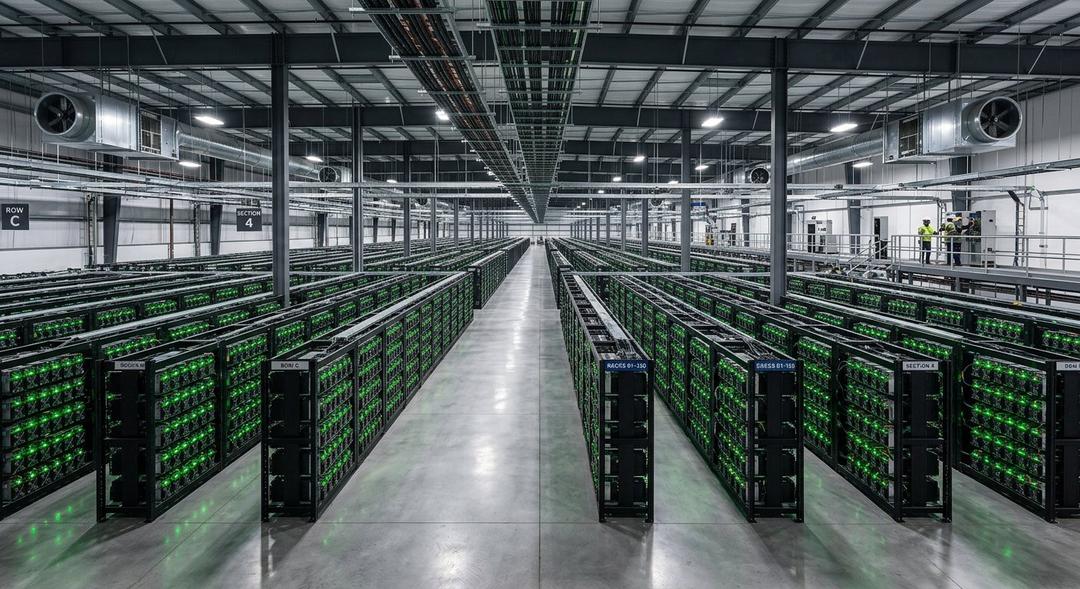
Choosing reliable Bitcoin hosting solutions is an important consideration for anyone planning to mine Bitcoin in 2026. Modern Bitcoin mining relies on specialized computing equipment, substantial electricity consumption, reliable cooling, and access to suitable infrastructure. As mining competition changes and operating expenses fluctuate, profitability depends on more than purchasing a powerful mining machine.
For individuals and businesses without suitable facilities, professional hosting can provide access to dedicated electrical infrastructure, equipment installation, monitoring, and environmental controls. However, hosting does not guarantee profitable mining or eliminate financial risk. Understanding current mining methods, ASIC hardware requirements, network difficulty, electricity pricing, and service agreements can help miners evaluate whether a hosted operation makes economic sense.
Understanding Bitcoin Mining in 2026
Bitcoin mining is the process through which specialized computers perform proof-of-work calculations to compete for the right to add new blocks to the Bitcoin blockchain. Miners calculate hashes while searching for a block header that satisfies the network’s current difficulty target.
Successful miners receive the applicable block subsidy and transaction fees associated with the block. However, mining revenue is uncertain and depends on network conditions, equipment performance, and the method used to participate.
Bitcoin hosting solutions support the physical operation of mining hardware rather than changing how Bitcoin’s consensus mechanism works. Hosting providers typically supply infrastructure needed to operate customer-owned or otherwise contracted ASIC machines.
How Proof-of-Work Mining Functions
Bitcoin uses the SHA-256 hashing algorithm within its proof-of-work system. Mining equipment performs large numbers of hashing operations in an attempt to find a valid block.
The network adjusts mining difficulty approximately every 2,016 blocks to maintain an average block interval of roughly ten minutes. Actual block discovery times vary because mining is probabilistic.
Bitcoin Mining Rewards in 2026
Following the April 2024 halving, Bitcoin’s block subsidy is 3.125 BTC per block until the next scheduled halving. Miners may also receive transaction fees included in successfully mined blocks.
The Bitcoin network’s total block reward therefore varies with transaction fees. Individual mining revenue depends on the miner’s share of effective network hash rate and the mining arrangement.
Why Bitcoin Hosting Solutions Matter for Modern Mining
Running ASIC miners requires more than connecting equipment to an ordinary electrical outlet. High-performance mining machines may consume several kilowatts continuously and produce significant heat and noise.
Bitcoin hosting solutions provide access to facilities designed around these requirements. They can be useful when residential electrical systems, cooling capacity, or noise restrictions make home mining impractical.
Industrial Electrical Infrastructure
Mining facilities require electrical distribution systems sized for continuous equipment loads. Appropriate protection, wiring, and maintenance procedures are essential.
Professional Bitcoin hosting solutions should use infrastructure designed and maintained by qualified personnel. Miners should not assume that every hosting facility provides identical electrical reliability.
Cooling and Ventilation
ASIC miners convert much of their electrical input into heat. Inadequate cooling can cause thermal throttling, instability, or equipment failure.
Bitcoin hosting solutions may use industrial airflow systems, evaporative cooling, liquid cooling, or immersion systems depending on machine compatibility and facility design.
Remote Monitoring
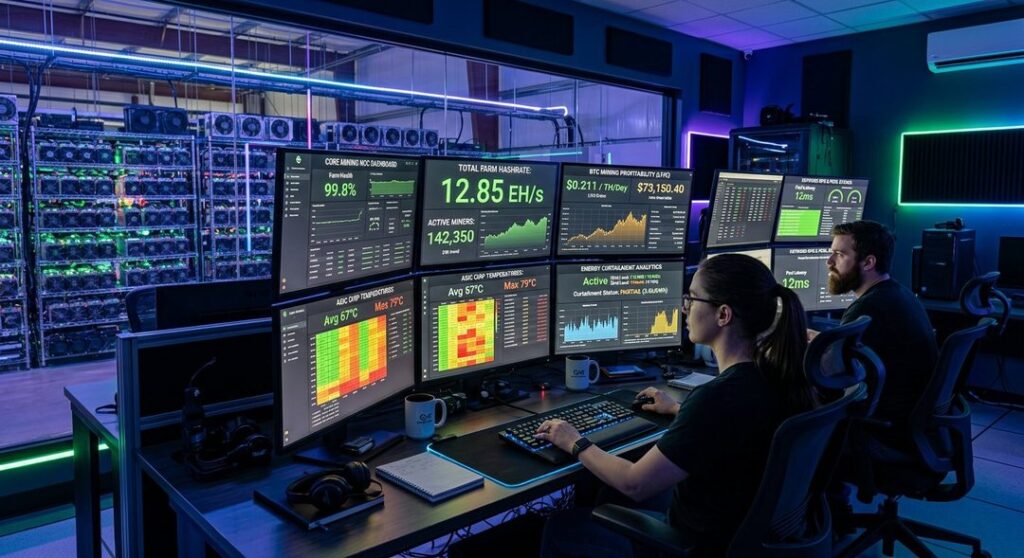
Hosting customers may need visibility into hash rate, operating status, temperatures, and downtime. Providers can offer dashboards or reports according to their service model.
Bitcoin hosting solutions should explain what monitoring information customers receive and how operational problems are handled.
Main Bitcoin Mining Methods Available in 2026
Bitcoin mining can be approached through several operational models. These differ in infrastructure responsibility, capital requirements, and financial risk.
Selecting the right method requires understanding both technical and contractual obligations.
Home Bitcoin Mining
Home mining involves installing and operating mining equipment at a residential property. The owner manages electricity, ventilation, internet access, equipment maintenance, and noise.
This approach may be impractical where electricity is expensive or household infrastructure cannot safely support continuous loads. Local regulations and property restrictions also matter.
Hosted ASIC Mining
Hosted mining involves placing mining equipment in a facility operated by a third-party provider. The customer may own the hardware and pay for electricity and hosting services.
Bitcoin hosting solutions can reduce the need to build a dedicated facility. However, profitability still depends on fees, machine efficiency, uptime, and Bitcoin network conditions.
Industrial Self-Hosted Mining
Larger operators may develop their own mining facilities. This requires capital for electrical infrastructure, buildings, cooling, security, and ongoing operations.
Industrial mining offers direct control but also creates substantial operational responsibilities. It is generally more complex than renting hosted capacity.
Cloud Mining Contracts
Cloud mining usually involves purchasing a contract linked to mining capacity rather than directly operating specific hardware. Terms and transparency vary considerably.
These arrangements deserve particular caution because misleading profitability claims and fraudulent offerings have existed in the market. Cloud mining should not be confused automatically with customer-owned ASIC hosting.
Bitcoin Hosting Solutions Versus Home Mining
Home mining and professional hosting involve different cost structures. Home miners may avoid certain hosting fees but remain responsible for electrical upgrades, cooling, repairs, and ongoing maintenance.
Bitcoin hosting solutions shift some infrastructure responsibilities to the provider. This can simplify operations but introduces counterparty and contractual risks.
Benefits of Home Mining
Home mining provides direct physical control over hardware. Owners can inspect equipment and change settings without relying on a third party.
However, noise, heat, electricity consumption, and building limitations may create significant challenges. Safety requirements should be evaluated before installation.
Benefits of Hosted Mining
A dedicated facility may provide suitable power distribution, cooling, monitoring, and maintenance services. These features can reduce the operational burden for customers.
Bitcoin hosting solutions may also offer electricity pricing structures different from residential tariffs. Actual rates and additional charges must be verified in writing.
Limitations of Hosted Mining
Hosting customers depend on a third party for physical access, equipment care, and operational availability. Contract disputes or provider financial problems can affect hardware access.
Before selecting Bitcoin hosting solutions, review ownership rights, termination procedures, insurance, and equipment retrieval terms.
Choosing the Right ASIC Mining Hardware
Bitcoin mining in 2026 is dominated by specialized application-specific integrated circuit machines, commonly called ASIC miners. These devices are designed to perform SHA-256 hashing far more efficiently than general-purpose computers.
Bitcoin hosting solutions should be selected alongside hardware because facilities may support different power capacities, cooling systems, and machine types.
Hash Rate
Hash rate measures the number of hashing attempts performed per second. Bitcoin ASIC performance is commonly expressed in terahashes per second or petahashes per second.
Higher hash rate can increase expected mining output when other conditions remain equal. However, electricity consumption and equipment cost also affect profitability.
Energy Efficiency
Mining efficiency is commonly expressed in joules per terahash. Lower values generally indicate that a machine uses less energy to perform the same amount of hashing work.
Bitcoin hosting solutions should evaluate both machine efficiency and facility operating conditions. A high-performing miner can still become uneconomic under expensive electricity rates.
Hardware Reliability
ASIC machines operate continuously under demanding conditions. Fans, power supplies, control boards, and other components may require maintenance or replacement.
Choose hardware based on verified specifications, manufacturer support, repair availability, and total cost. Promotional hash-rate claims should not replace technical documentation.
ASIC Hardware Options for 2026
The Bitcoin ASIC market includes several established manufacturers and changing product generations. Available models, efficiency ratings, and prices can change quickly.
Rather than assuming one machine is always best, miners should compare current specifications and realistic acquisition costs.
Bitmain Antminer Systems
Bitmain manufactures Antminer ASIC products used by mining operators. Model specifications vary by generation and cooling configuration.
Some systems use conventional air cooling, while others require specialized liquid-cooling infrastructure. Bitcoin hosting solutions must be compatible with the exact machine being deployed.
MicroBT WhatsMiner Systems
MicroBT produces WhatsMiner ASIC equipment for Bitcoin mining. Different models offer different power, performance, and cooling characteristics.
Miners should verify current manufacturer documentation before purchasing. Hosting compatibility depends on electrical and environmental requirements.
Canaan AvalonMiner Systems
Canaan develops AvalonMiner ASIC equipment. Available models differ in hash rate, efficiency, and operating characteristics.
Equipment selection should consider acquisition cost, service support, and expected operating economics. No manufacturer can guarantee profitability.
Understanding ASIC Power Requirements
ASIC power consumption is one of the largest recurring mining expenses. Many modern industrial miners require several kilowatts of continuous electrical power.
Bitcoin hosting solutions typically calculate electricity costs according to energy consumption or an agreed pricing structure.
Calculating Daily Energy Consumption
Electrical energy use depends on power draw and operating time. A machine drawing 3.5 kilowatts continuously consumes approximately 84 kilowatt-hours during a 24-hour period.
At an illustrative electricity price of $0.08 per kilowatt-hour, that equals $6.72 in daily electricity expense before additional charges. This example does not represent a guaranteed hosting tariff.
Understand Continuous Load
Mining equipment may operate around the clock. Electrical systems must therefore be designed for sustained loads rather than occasional use.
Bitcoin hosting solutions should use appropriate infrastructure and protection devices. Qualified electrical professionals should assess installation requirements.
Electricity Costs and Bitcoin Mining Profitability
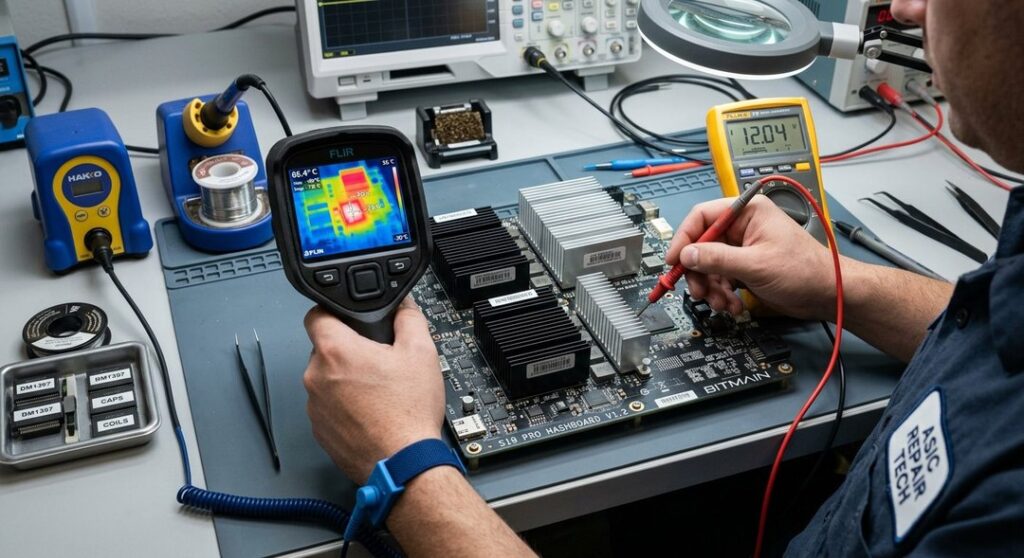
Electricity pricing strongly influences mining economics because ASIC machines consume power continuously. Even small differences in energy rates can become significant over extended periods.
Bitcoin hosting solutions should provide clear information about the electricity rate and how usage is measured.
Compare Effective Electricity Rates
A quoted energy rate may exclude hosting, infrastructure, administration, or other charges. Businesses should calculate the effective cost per kilowatt-hour after relevant fees.
Bitcoin hosting solutions that advertise low rates may not always provide the lowest total operating cost.
Consider Electricity Price Changes
Some contracts use fixed rates, while others permit adjustments linked to utility pricing or other conditions. These differences can affect future profitability.
Review contract terms before committing capital. Mining projections should consider unfavorable pricing scenarios.
How Bitcoin Network Difficulty Affects Earnings
Bitcoin mining difficulty changes in response to network hash-rate conditions. When more effective computing power competes for blocks, the expected output of an unchanged miner can decline.
Bitcoin hosting solutions do not protect customers from difficulty increases. Hosting affects operational infrastructure, not the competitive nature of proof-of-work mining.
Mining Revenue Is Not Fixed
A machine’s hash rate may remain stable while its expected Bitcoin output changes. Network difficulty, transaction fees, and uptime influence results.
Profitability estimates should therefore be updated regularly. Old mining calculator screenshots can become misleading.
Account for Competition
Industrial mining operators continuously evaluate hardware upgrades and energy costs. New equipment can increase competition when deployed at scale.
Bitcoin hosting solutions should be assessed against realistic network conditions rather than assumptions that mining rewards remain constant.
Understanding Mining Pools
Mining pools combine hash-rate contributions from multiple miners. When the pool successfully mines a block, rewards are distributed according to its payout method and rules.
Many hosted miners connect their equipment to a selected mining pool. Bitcoin hosting solutions should explain whether customers can choose their own pool.
Why Pools Are Common
Individual miners may wait an unpredictable and potentially very long time to discover a block independently. Pool participation can provide more frequent, smaller payouts.
However, expected returns remain subject to network conditions and pool fees.
Pool Fees and Payout Methods
Pools use different payout structures, minimum thresholds, and fee arrangements. These details affect the amount and timing of payments.
Bitcoin hosting solutions should allow customers to understand how pool participation interacts with hosting charges.
Calculating Bitcoin Mining Profitability in 2026
Mining profitability depends on expected Bitcoin production, market price, electricity expense, hosting fees, equipment cost, and maintenance.
Bitcoin hosting solutions should be evaluated using realistic assumptions rather than guaranteed return claims.
Estimate Gross Mining Revenue
Gross revenue can be estimated from effective hash rate, network difficulty, block rewards, transaction fees, and pool payout arrangements.
Mining calculators can assist with these estimates, but results change as network conditions evolve.
Subtract Operating Costs
Relevant operating expenses may include:
- Electricity
- Hosting fees
- Mining pool charges
- Equipment maintenance
- Repairs
- Network connectivity
- Insurance
- Administrative costs
- Applicable taxes
Bitcoin hosting solutions should disclose the charges customers are expected to pay. Missing expenses can make profitability projections appear more attractive than reality.
Account for Hardware Purchase Cost
An ASIC miner represents an upfront capital expense. Profitability should consider whether mining revenue can recover that investment over the equipment’s useful economic life.
Hardware resale value may also change. A profitable operating month does not automatically mean the overall investment is profitable.
Understanding Hashprice
Hashprice is a commonly used mining-industry metric expressing expected mining revenue per unit of hash rate over a period.
It helps operators compare revenue opportunities against operating costs.
Bitcoin hosting solutions can be evaluated using hashprice alongside machine efficiency and electricity pricing. However, hashprice changes with network and market conditions.
Hashprice Is Not Guaranteed Income
Hashprice estimates depend on assumptions about current mining economics. Future values can differ substantially.
Miners should stress-test projections rather than using one favorable number to justify equipment purchases.
Cooling Systems in Bitcoin Hosting Facilities
Cooling is essential because ASIC machines produce substantial heat during operation. Poor thermal management can reduce performance or contribute to equipment damage.
Bitcoin hosting solutions may use several cooling methods depending on climate, hardware, and facility design.
Air Cooling
Air-cooled facilities use fans and ventilation systems to move heat away from mining equipment. Their performance depends on airflow, ambient temperature, and equipment arrangement.
Air cooling can be practical for suitable hardware, but noise and dust management require attention.
Hydro Cooling
Hydro-cooled ASIC systems use liquid-based thermal management designed for compatible equipment. These installations require appropriate plumbing, heat exchangers, and monitoring.
Bitcoin hosting solutions offering hydro cooling should explain compatibility and maintenance arrangements.
Immersion Cooling
Immersion systems place compatible equipment in engineered dielectric fluids to remove heat. This requires specialized infrastructure and operating procedures.
Not every ASIC can be used in an immersion system without modification. Warranty and service implications should be checked.
Uptime and Hosting Reliability
Mining revenue depends partly on whether equipment is operating effectively. Downtime reduces the number of hashing attempts performed.
Bitcoin hosting solutions should explain how uptime is measured and what service commitments apply.
Understand Uptime Guarantees
Some providers advertise uptime targets or service-level agreements. These may contain exclusions for utility outages, maintenance, curtailment, or other events.
Customers should read the actual contract rather than relying on headline percentages.
Maintenance Procedures
Fans, power supplies, and network components may require attention. Providers should have clear maintenance and incident-response procedures.
Bitcoin hosting solutions should explain how customers are notified about equipment problems and who authorizes repairs.
Mining Curtailment and Power Management
Some mining facilities participate in arrangements that reduce electricity consumption during selected periods. These may involve grid conditions, energy pricing, or contractual obligations.
Bitcoin hosting solutions should disclose whether customer equipment may be curtailed and how this affects billing.
Curtailment Can Affect Revenue
When a miner is powered down, it does not contribute hash rate during that period. Expected Bitcoin production therefore falls.
However, curtailment may also reduce electricity expenses or involve other contractual arrangements. The financial impact depends on the specific agreement.
Understand Provider Control
Some hosting contracts permit the operator to control machine availability under defined conditions. Customers should understand these rights before signing.
Bitcoin hosting solutions should provide transparent reporting when significant curtailment occurs.
Physical Security at Hosting Facilities
ASIC equipment can represent substantial capital value. Facilities should therefore consider appropriate physical security measures.
Bitcoin hosting solutions may use controlled access, surveillance, equipment inventories, and other safeguards.
Equipment Identification
Customers should receive clear documentation identifying their hardware where ownership arrangements require it. Serial numbers and inventory records can support accountability.
This becomes particularly important when several customers use identical machine models.
Access and Retrieval Rights
Customers should understand whether they can inspect or retrieve equipment and under what conditions.
Bitcoin hosting solutions should specify access procedures, notice periods, and applicable charges.
Cybersecurity and Mining Operations
Mining systems rely on network connections, management interfaces, and pool configurations. Poor security can expose equipment to unauthorized access or configuration changes.
Bitcoin hosting solutions should implement appropriate network security and access controls.
Secure Management Interfaces
Default credentials and unnecessary internet exposure can create risks. Administrative access should use suitable authentication and restricted permissions.
Customers should ask how configuration changes are authorized and recorded.
Protect Payout Information
Mining pool accounts and payout addresses are financially sensitive. Unauthorized changes can redirect rewards.
Bitcoin hosting solutions should clarify who controls payout configuration and how changes are verified.
Ownership Models in Bitcoin Hosting Solutions
Not every hosting arrangement uses the same ownership structure. Some customers purchase and own specific ASIC machines, while others enter managed agreements with different rights.
Bitcoin hosting solutions should clearly identify who owns the equipment and what happens when the contract ends.
Customer-Owned Hardware
Under a customer-owned model, the miner purchases hardware and pays the provider to operate it. The contract should explain storage, maintenance, and retrieval procedures.
Proof of ownership and equipment identification can be important if disputes arise.
Provider-Supplied Hardware
Some providers sell hardware together with hosting services. Customers should verify the sales agreement and hosting agreement separately.
Bitcoin hosting solutions should not obscure hardware pricing through bundled offers.
Managed Mining Agreements
Managed services may include additional configuration, monitoring, or operational administration. Their scope varies between providers.
Customers should understand which decisions remain under their control.
How to Evaluate Bitcoin Hosting Providers
Selecting a hosting provider requires technical, financial, and contractual due diligence. Attractive electricity pricing alone does not establish reliability.
Bitcoin hosting solutions should be compared using transparent information and verifiable operating arrangements.
Verify the Facility
Ask where equipment will be hosted and whether the provider operates the facility directly. Request appropriate evidence of operations where practical.
Be cautious when a company cannot explain its infrastructure or equipment arrangements.
Review the Contract
Important terms include electricity pricing, hosting fees, maintenance charges, uptime provisions, termination, equipment ownership, and retrieval.
Bitcoin hosting solutions should provide these details in writing before payment.
Assess Financial Stability
Provider financial problems can disrupt mining operations or complicate access to hardware. Public information and appropriate professional due diligence may help evaluate risk.
No review process can eliminate every counterparty risk.
Common Bitcoin Hosting Fees
Hosting contracts may include several categories of charges. Their structure varies by provider and service model.
Bitcoin hosting solutions should provide enough information for customers to calculate effective operating costs.
Electricity Charges
These may be based on measured energy use, machine power ratings, or another agreed formula. The billing method should be clear.
Infrastructure Fees
Some providers charge separately for rack space, electrical infrastructure, or facility services. Others bundle these costs into the energy rate.
Maintenance Fees
Repairs and replacement parts may create additional charges. Customers should understand approval procedures before work begins.
Setup and Removal Fees
Installation, configuration, and equipment retrieval may involve one-time costs. These should be included in investment calculations.
Contract Risks in Bitcoin Hosting
Hosting contracts can contain provisions that materially affect the customer’s financial position.
Before selecting Bitcoin hosting solutions, review the conditions governing equipment ownership, payments, outages, termination, and disputes.
Minimum Contract Terms
Some agreements require a minimum commitment period. Early termination may trigger charges.
A long commitment can become unfavorable if mining economics deteriorate.
Price Adjustment Clauses
Providers may reserve rights to increase energy or service rates. The permitted circumstances should be defined.
Customers should evaluate how changes could affect profitability.
Equipment Retrieval
Contracts should explain how customers recover hardware after termination. Delays or excessive fees can create additional financial exposure.
Bitcoin hosting solutions should establish clear procedures before equipment is delivered.
Bitcoin Hosting Scams and Warning Signs
Cryptocurrency-related markets have experienced fraudulent investment and service schemes. Mining hosting is not immune to these risks.
Bitcoin hosting solutions should be assessed carefully, particularly when providers request substantial upfront payments.
Guaranteed Profit Claims
No legitimate provider can guarantee future Bitcoin mining profits. Market prices, difficulty, fees, and equipment performance can change.
Claims of fixed daily returns deserve strong skepticism.
Unclear Equipment Ownership
A customer should understand whether they own specific machines or merely hold contractual rights. Ambiguous ownership can create serious disputes.
Pressure to Invest Immediately
Limited-time offers may discourage proper research. High-value mining decisions require careful evaluation.
Avoid transferring funds before reviewing contracts and verifying the provider.
Environmental Considerations in Bitcoin Mining
Bitcoin mining consumes electricity, and its environmental impact depends on factors including energy sources, grid conditions, equipment efficiency, and facility operations.
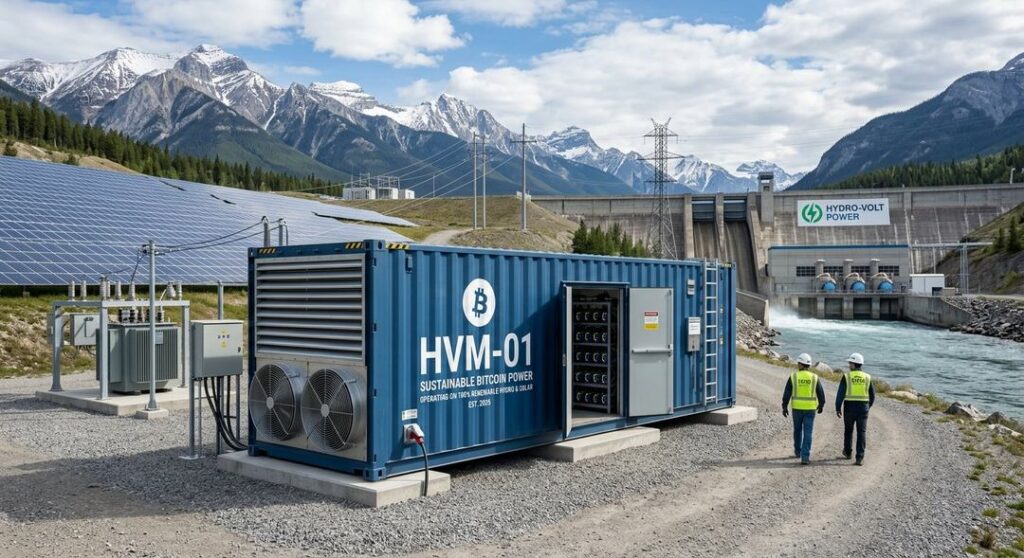
Bitcoin hosting solutions may advertise renewable energy or waste-heat utilization, but these claims should be supported by credible evidence.
Energy Source Transparency
A facility’s electricity mix can influence its environmental footprint. However, renewable-energy claims can be complex when power is purchased through grids or contractual instruments.
Customers should ask for clear information rather than relying on vague sustainability language.
Heat Reuse
Some operators explore recovering mining heat for useful applications. Technical and economic feasibility depends on facility design and nearby demand.
Bitcoin hosting solutions offering heat reuse should explain the actual system rather than imply that all generated heat is automatically beneficial.
Tax and Regulatory Considerations
Bitcoin mining can create tax, accounting, and regulatory obligations. Requirements depend on jurisdiction, business structure, and activities performed.
Bitcoin hosting solutions do not remove the customer’s responsibility to understand applicable laws.
Mining Income and Accounting
The tax treatment of mining rewards and later asset disposals can vary. Businesses may also need to consider equipment depreciation and operating expenses.
Consult a qualified tax professional familiar with the relevant jurisdiction.
Energy and Facility Regulations
Industrial mining facilities may be subject to electrical, zoning, environmental, and other requirements. The exact obligations depend on location.
Customers should evaluate whether the provider operates under appropriate legal arrangements.
Scaling a Hosted Bitcoin Mining Operation
Some miners begin with a small number of machines and expand when operating results justify additional investment.
Bitcoin hosting solutions can support expansion when sufficient infrastructure and capacity are available.
Start With Realistic Financial Assumptions
Initial performance data can help identify actual electricity use, downtime, and maintenance costs.
However, short-term profitability should not be assumed to continue indefinitely.
Evaluate Additional Hardware Carefully
Adding machines increases hash rate but also raises capital and operating expenses. Network difficulty may change during expansion.
Bitcoin hosting solutions should be assessed based on updated economics before additional commitments.
Monitoring Hosted Mining Performance
Regular monitoring helps customers understand whether equipment operates as expected.
Bitcoin hosting solutions may provide dashboards displaying hash rate, temperatures, energy consumption, and operating status.
Compare Expected and Actual Hash Rate
Small variations can occur during normal operation. Sustained underperformance may require investigation.
Customers should understand whether reported figures are measured at the machine, pool, or another monitoring layer.
Track Effective Uptime
Operational reports should distinguish scheduled maintenance, curtailment, network interruptions, and equipment faults where possible.
This information helps explain differences between expected and actual mining revenue.
Review Financial Performance
Mining income should be compared with electricity, hosting, pool fees, and other costs.
Bitcoin hosting solutions should make it possible to obtain the information needed for accurate financial review.
Common Mistakes New Bitcoin Miners Make
New miners may focus heavily on potential revenue while overlooking operating costs and technical requirements.
Bitcoin hosting solutions can simplify infrastructure management but cannot correct unrealistic financial assumptions.
Ignoring Network Difficulty
Mining output can decline as competition increases. Profitability projections should include unfavorable scenarios.
Buying Inefficient Hardware
Older ASIC machines may have lower purchase prices but higher energy consumption per unit of hash rate.
A cheaper machine is not automatically more profitable.
Overlooking Hosting Contract Terms
Unexpected fees, retrieval restrictions, or price changes can affect investment outcomes.
Always review written agreements.
Trusting Guaranteed Returns
Bitcoin mining revenue is variable. Claims of risk-free profit should be treated as warning signs.
How to Start Bitcoin Mining in 2026
A structured approach helps miners evaluate whether the activity is suitable for their circumstances.
Begin by understanding proof-of-work mining, hardware economics, and operational requirements.
Choose a Mining Model
Decide whether home mining, self-hosting, or professional hosting fits the available budget and infrastructure.
Bitcoin hosting solutions may be appropriate when operating ASIC machines independently is impractical.
Compare ASIC Hardware
Review hash rate, energy efficiency, purchase price, warranty, and service support.
Use current manufacturer specifications rather than outdated promotional claims.
Estimate Operating Costs
Calculate electricity, hosting charges, pool fees, repairs, and other expenses.
Compare expected mining revenue against several network and Bitcoin price scenarios.
Review Hosting Contracts
Confirm ownership, pricing, uptime terms, maintenance, insurance, and retrieval procedures.
Bitcoin hosting solutions should provide transparent documentation before equipment is deployed.
Monitor and Reassess
After deployment, track actual operating performance and costs.
Mining economics can change quickly, making periodic reassessment essential.
The Future of Bitcoin Hosting Solutions
Bitcoin mining will continue to evolve through hardware improvements, network competition, electricity market conditions, and changes in facility operations.
Bitcoin hosting solutions may increasingly emphasize energy efficiency, operational transparency, sophisticated cooling, and flexible power arrangements.
However, technological improvements do not guarantee higher profits. More efficient hardware can also increase competition as it becomes widely deployed.
The strongest hosting arrangements will be those that provide clear contracts, dependable infrastructure, and accurate operational reporting.
FAQ’s
What are Bitcoin hosting solutions?
Bitcoin hosting solutions provide facilities and operational services for ASIC mining equipment, commonly including electricity, cooling, physical space, monitoring, and maintenance arrangements.
Is Bitcoin mining profitable in 2026?
Profitability depends on Bitcoin price, network difficulty, transaction fees, hardware efficiency, electricity costs, and hosting charges. No mining setup guarantees positive returns.
How much electricity does a Bitcoin ASIC miner use?
Consumption varies by model. A miner drawing 3.5 kilowatts continuously uses approximately 84 kilowatt-hours per day before accounting for facility overhead.
Are Bitcoin hosting solutions better than home mining?
Hosting can provide suitable infrastructure and reduce operational responsibilities, but it adds fees and counterparty risk. The better option depends on total costs and individual circumstances.
What should I check before choosing Bitcoin hosting solutions?
Verify facility operations, electricity rates, additional fees, equipment ownership, uptime provisions, security, maintenance responsibilities, and hardware retrieval terms.
Can Bitcoin hosting providers guarantee mining profits?
No. Mining revenue changes with network conditions and Bitcoin prices, while operating costs and equipment performance can also vary.
Conclusion
Bitcoin hosting solutions can make industrial-style Bitcoin mining more accessible to individuals and businesses that do not have suitable electrical, cooling, or operational infrastructure. Hosted facilities may provide equipment installation, power distribution, ventilation, monitoring, and maintenance support, allowing customers to focus more closely on hardware selection and mining economics. However, hosting introduces fees, contractual obligations, and dependence on third-party operators.
Successful Bitcoin mining in 2026 requires realistic calculations and careful risk management. Miners should evaluate ASIC efficiency, network difficulty, electricity pricing, transaction fees, hardware costs, and provider reliability before committing capital. By comparing transparent Bitcoin hosting solutions and reviewing actual performance regularly, operators can make more informed decisions without relying on unrealistic promises of guaranteed mining profitability.
Leave a Reply