
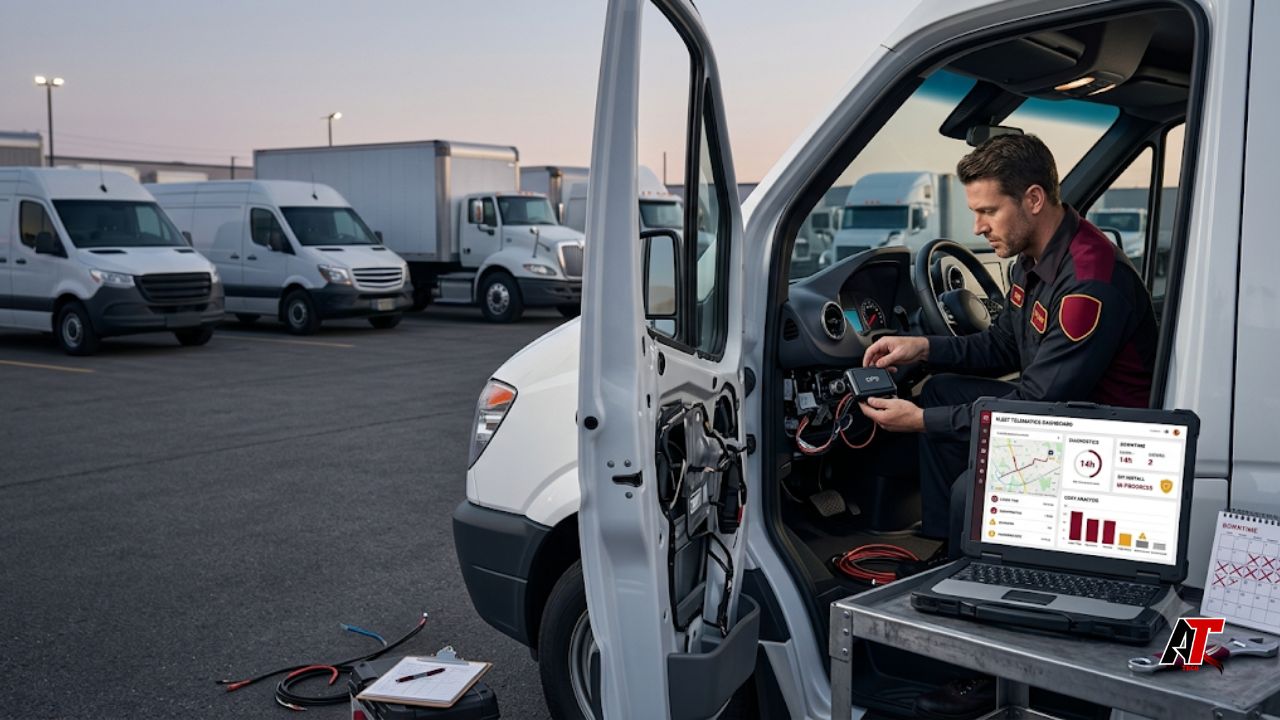
Telematics helps a fleet understand where vehicles are, how they are being driven, when maintenance is due, and where fuel or time is being wasted. Because many devices now look simple to install, fleet managers may assume a do-it-yourself setup is the cheapest route. The hardware may arrive with a plug, an app, and a short guide, making the project seem like adding an ordinary vehicle accessory.
The real cost is rarely limited to the device price. DIY telematics costs include staff time, vehicle downtime, installation mistakes, troubleshooting, data gaps, training, security work, and future maintenance. A fleet may save on the first installation invoice but spend more over the following months correcting avoidable problems. Managers therefore need to compare total ownership cost, not only the purchase price.
Why DIY Telematics Looks Affordable at First
A DIY approach appears to provide more control. The business can buy devices directly, schedule installations internally, and avoid professional installation charges. For a very small fleet with identical vehicles and basic plug-in trackers, this may work. Problems become more likely when the fleet has different vehicle makes, limited workshop time, hardwired equipment, cameras, sensors, ELDs, or several software integrations.
The market is also growing quickly. IoT Business News reported that active fleet management systems in North America reached about 19.2 million units in late 2024 and may grow to 33.2 million by 2029. Greater adoption gives fleets more choices, but it also creates more combinations of hardware, software, wiring, and support. Selecting equipment is only one part of the job. Every device must also work reliably in daily operations.
1. Hardware Costs Go Beyond the Device
The first visible expense is the telematics unit, but a complete installation may need wiring harnesses, adapters, mounting brackets, fuses, antennas, camera cables, tamper-resistant covers, and replacement clips. Vehicles with unusual dashboards or electrical layouts may require model-specific accessories.
Ordering the wrong part can delay the rollout and force vehicles to be rescheduled. Low-cost hardware may also become expensive if it has weak warranties, poor documentation, limited network support, or a short working life. Before buying, the fleet should confirm vehicle compatibility, connectivity, power requirements, warranty terms, and software support. The cheapest device is not economical when it fails early or produces unreliable data.
2. Internal Labor Is Not Free
DIY installation still uses paid working hours. A technician may need to inspect the vehicle, find the correct connection point, remove trim, mount equipment, route wires, activate the unit, test communication, document the work, and return the vehicle to service.
The calculation should include everyone involved. Fleet managers coordinate schedules, IT staff configure accounts, drivers wait for vehicles, and supervisors check whether units are reporting. Employees who are learning during the project will take longer. Costs rise further when skilled staff are pulled away from maintenance, dispatch, customer service, or other work that supports revenue.
3. Vehicle Downtime Can Be the Largest Cost
A parked vehicle may cost more than the labor used to install the device. A service van that misses an appointment, a truck that loses a delivery window, or a construction vehicle that cannot reach a jobsite can affect both revenue and customer trust. This loss does not appear on the device invoice, so it is often overlooked.
Installation should be measured in total out-of-service time, not only hands-on minutes. Waiting for parts, solving login issues, finding a wiring diagram, or repeating a failed test all extend downtime. Fleets should estimate how many vehicles can be completed daily, whether work can happen outside operating hours, and what happens when a vehicle cannot be finished on schedule.
4. Installation Errors Lead to Rework
A device may power on and still be installed incorrectly. Loose connections can cause intermittent data. Poor wire routing can create rattles or wear. An unsuitable power source may drain the battery or turn the unit off when information is still needed. A camera mounted at the wrong angle may fail to capture important events.
Rework creates another round of labor and downtime. It can also cause damaged trim, broken clips, blown fuses, or electrical faults. Professional providers such as safetynetinstalls.com specialize in installation, configuration, and testing across fleet technologies. This highlights why deployment quality is a technical part of the telematics project, not a minor final task.
5. Poor Data Creates Poor Decisions
The main value of telematics is the information it provides. If location, mileage, ignition, diagnostic, or driver-event data is incomplete, managers may act on a false picture. They could miss maintenance intervals, calculate utilization incorrectly, question drivers unfairly, or fail to identify fuel waste.
Data issues are not always obvious. A unit may report only sometimes, a sensor may be assigned to the wrong vehicle, or odometer values may be configured incorrectly. The business then pays employees to investigate reports that should have been accurate from the start. A proper test should confirm power, connectivity, GPS location, vehicle assignment, sensor readings, and platform visibility.
6. Troubleshooting Becomes a Permanent Responsibility
DIY telematics creates an ongoing support duty. Devices can lose connection, software can update, vehicles can be replaced, batteries can be disconnected, and drivers can report camera or app problems. Someone inside the business must own these issues.
Without a clear support process, small faults stay unresolved and coverage slowly declines. The fleet should decide who monitors device health, contacts the vendor, keeps spare parts, and schedules repairs. It should also record serial numbers, SIM details, installation dates, vehicle assignments, and warranty status. This administrative work is a real part of DIY telematics costs.
7. Training and Adoption Require Time
Telematics affects drivers, managers, and administrators. Drivers may use mobile apps, respond to in-cab alerts, or learn how camera events are reviewed. Managers need to understand dashboards, reports, maintenance features, and coaching tools. Administrators must control permissions and settings.
Poor training reduces the return on the system. Drivers may resist it when the purpose is unclear, while managers may ignore reports because the platform feels complicated. Alerts may also be set too aggressively and create unnecessary noise. A successful rollout needs clear policies, role-based training, driver communication, and a process for questions.
8. Cybersecurity and Privacy Add Hidden Work
Telematics systems collect sensitive information, including vehicle locations, routes, customer visits, driving patterns, and sometimes video or audio. A DIY rollout does not remove the fleet’s responsibility to protect that data. The business must control administrator access, use strong authentication, remove old accounts, review vendor security, and limit data downloads.
Cameras and driver monitoring can also raise privacy concerns. Policies should explain what is collected, why it is collected, how long it is stored, and who can access it. Employment rules, customer contracts, insurance conditions, and local laws may affect the setup. Security and compliance reviews cost money, but ignoring them can create much larger financial and reputational risks.
9. Scaling Multiplies Small Problems
A process that works for five vehicles may fail at fifty or five hundred. Larger fleets have more vehicle types, locations, drivers, replacement cycles, and scheduling conflicts. They also need consistent installation standards. When employees use different methods, future troubleshooting becomes slower.
Scaling requires inventory control and deployment reporting. The fleet needs to know which vehicles are complete, which devices are activated, which units need parts, and which installations failed testing. Multi-location rollouts may also involve travel, shipping, local supervision, and coordination with branch managers. A professional rollout may cost more initially, but predictable scheduling and consistent documentation can lower the cost per working vehicle.
10. Configuration and Integration Need a Budget
Telematics creates more value when its data connects with maintenance, dispatch, payroll, fuel, safety, or business systems. These connections may require data mapping, permissions, testing, and record cleanup. Even built-in integrations need correct vehicle and driver information.
The DIY budget should include software configuration. Duplicate vehicle names, incorrect driver records, or inconsistent asset numbers can make reports difficult to use. Alerts must also match the fleet’s goals. Idling limits, speeding rules, maintenance reminders, and geofences should be tested before full rollout. Otherwise, the system may create too many alerts or miss the events that matter.
How to Calculate the Total DIY Telematics Cost
A fleet can create a more realistic estimate with this formula:
Total DIY cost = hardware and accessories + internal labor + vehicle downtime + training + rework + support + configuration + security and compliance + replacement and maintenance.
Consider a hypothetical fleet of 50 vehicles. If each installation needs two technician hours, half an hour of management coordination, and one hour of vehicle downtime, the project includes 175 combined labor and downtime hours before training, troubleshooting, or rework. If only 10 percent of units need a second visit, five vehicles create further disruption. The exact dollar amount will vary, but the example shows why a device-only budget is incomplete.
Managers should calculate best-case, expected, and worst-case scenarios. The expected case should include a reasonable allowance for rework, delayed vehicles, missing accessories, training, and support during the first three months. This produces a fairer comparison with a professional deployment quote.
DIY Versus Professional Installation
DIY can offer flexibility, direct control, and lower upfront spending. Professional installation can provide faster rollout, consistent workmanship, documentation, testing, and a clearer point of responsibility. The best choice depends on fleet size, hardware complexity, internal skills, operating schedules, and risk tolerance.
A small fleet may reasonably install simple plug-in units when vehicles are compatible and an employee understands the platform. Hardwired trackers, multi-camera systems, sensors, ELDs, and mixed fleets need more planning. The comparison should focus on the cost per completed, working vehicle rather than the hourly installation rate.
When DIY Telematics Makes Sense
DIY may be suitable when the fleet is small, vehicles are similar, devices are genuinely plug-and-play, operations can tolerate short downtime, and staff already have the required technical experience. Strong vendor documentation, responsive support, clear test procedures, and easy replacement processes also reduce risk.
A pilot is the safest starting point. Install the system on a small but representative group of vehicles and measure actual labor, downtime, data quality, driver feedback, and support requests. Use those results to update the budget before expanding.
Questions to Ask Before Choosing DIY
Fleet leaders should ask whether their team can verify compatibility, install every device consistently, test all data points, protect privacy, train users, document assets, and provide ongoing support. They should also estimate the cost of a failed installation and the operational effect of delayed vehicles.
The digital strategy team at aelftech.com recommends evaluating technology projects through total cost, adoption, risk, and long-term support rather than purchase price alone. This is especially important for fleet systems because the technology affects vehicles, employees, customers, and everyday operations at the same time.
Final Thoughts
The true price of DIY telematics is the cost of creating a reliable, secure, fully adopted system, not simply buying and plugging in devices. Hardware is the easiest number to see, but labor, downtime, rework, troubleshooting, training, data quality, and future maintenance often decide whether the project actually saves money.
Fleet managers should compare complete ownership costs, run a representative pilot, and assign value to internal time and operational disruption. DIY can be practical in the right environment, but it should be chosen because the fleet has the skills and capacity to manage it well, not because installation appears free.
Leave a Reply