
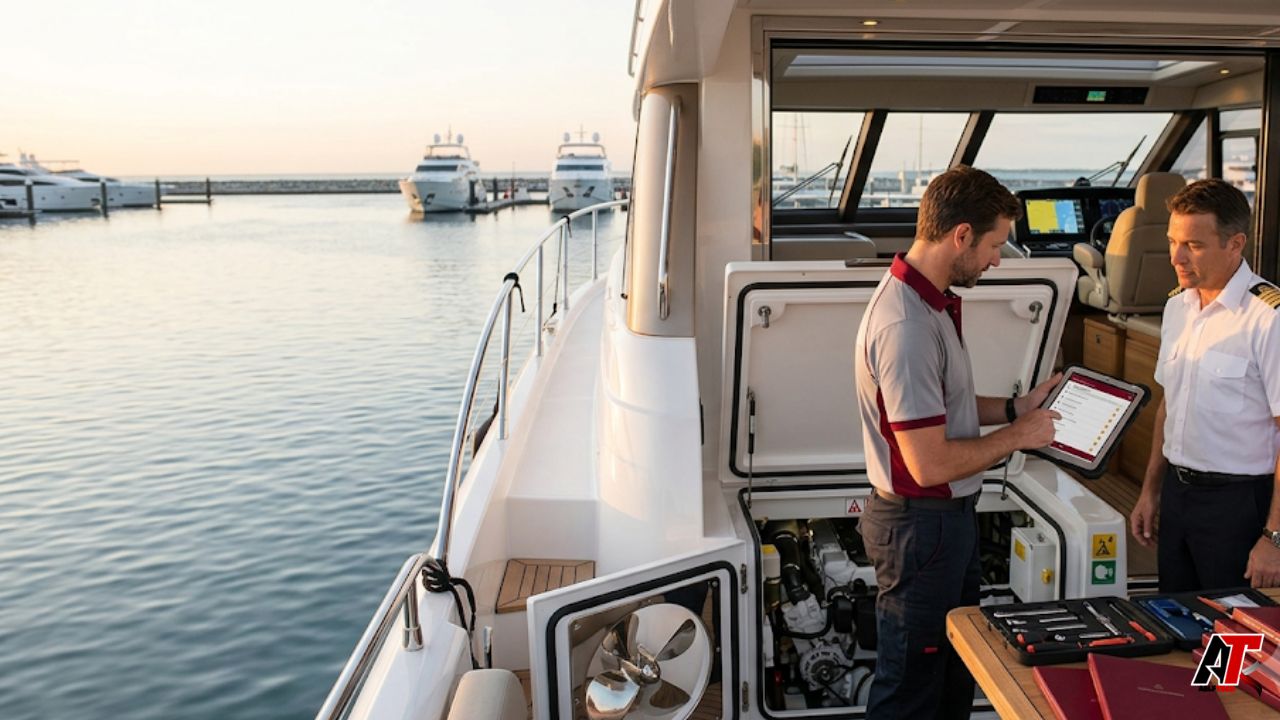
Taking delivery of a yacht should feel like the start of an exceptional ownership experience, not the beginning of an expensive troubleshooting exercise. The difference often comes down to planning. A yacht can appear beautifully presented at handover while still carrying overdue services, incomplete records, aging components, or small defects that become disruptive once cruising begins.
Effective yacht maintenance planning starts before operational control changes hands. It turns survey findings and service histories into a program with clear priorities, realistic costs, assigned responsibility, and confirmed technical support. This preparation protects the vessel and helps the owner and crew begin operating with confidence.
Buyers comparing current listings can use these maintenance tips for yachts for sale alongside vessel specifications, refit histories, survey results, and broker documentation. The goal is not simply to identify a desirable yacht. It is to understand what the yacht will require from the first day of ownership.
Why Maintenance Planning Must Begin Before Handover
Maintenance decisions made after delivery are often reactive. The owner discovers that a generator service is due, a life-saving appliance needs certification, a battery bank is approaching replacement, or a navigation component is no longer supported. Each problem may be manageable on its own, but several arriving together can delay cruising and increase costs.
Pre-delivery planning creates a baseline for major systems, deadlines, priorities, and responsibilities. It also gives buyers time to address repairs, completion conditions, credits, or retained funds before closing, subject to the purchase agreement and professional advice.
1. Turn the Survey Into a Working Maintenance Plan
A pre-purchase condition survey is a starting point, not a finished maintenance program. It usually covers accessible structure, machinery, electrical systems, safety equipment, and installed items. A haul-out, trial run, and specialist inspections may reveal issues involving engines, rigging, paint, electronics, or stabilization systems.
Once the reports are available, convert every finding into an action register. Avoid leaving recommendations buried in a long PDF. Each item should show its priority, responsible party, estimated cost, required parts, preferred service provider, target completion date, and proof of completion.
- Critical before delivery: defects affecting safe operation, insurance acceptance, seaworthiness, or legal compliance.
- Complete before first voyage: items that could cause breakdowns, water ingress, loss of essential services, or avoidable damage.
- Schedule within 30 to 90 days: overdue servicing, weak components, calibration, software updates, and preventive replacements.
- Monitor or improve later: cosmetic work, nonessential upgrades, and items with acceptable remaining life.
Ask the surveyor and technical specialists to clarify ambiguous recommendations. Phrases such as “service as required” or “monitor condition” are difficult to manage unless they are translated into specific inspections, measurements, or deadlines.
2. Establish the Yacht’s True Maintenance Baseline
Before handover, collect invoices, engine-hour records, oil-analysis results, warranties, applicable class or flag records, manuals, software versions, spare inventories, and refit details. Compare engine and generator hours with invoices and electronic displays so the maintenance history can be trusted.
Create an equipment register listing manufacturer, model, serial number, warranty status, service interval, last service, next due date, and approved contact. Include pumps, chargers, fire systems, watermakers, sewage treatment, air conditioning, stabilizers, thrusters, cranes, passerelles, and tender machinery.
Owners who want a more structured digital workflow can connect maintenance records, reminders, vendor information, and document control through a system designed with support from aelftech.com. Whatever platform is used, the record should be accessible, backed up, and simple enough for the crew to maintain consistently.
3. Verify Engines, Generators, and Propulsion Systems
Main engines and generators usually represent some of the most expensive and operationally important machinery on board. Confirm service requirements against the exact manufacturer manuals rather than relying on a generic schedule. Intervals may be based on operating hours, elapsed time, operating conditions, or whichever limit comes first.
Review oils, coolants, filters, belts, hoses, impellers, exhaust components, fuel and seawater systems, gearboxes, shaft seals, pods, propellers, and controls. When appropriate, take baseline fluid samples and have a competent technician review alarm histories and diagnostics.
Low engine hours do not automatically mean low maintenance. Rubber components, seals, coolant, fuel, batteries, and corrosion protection can deteriorate with time. Build the first service plan around both the documented history and the yacht’s present condition.
4. Inspect the Hull, Deck, and Underwater Gear
The underwater portion of the yacht directly affects reliability, efficiency, and cruising comfort. Review the condition of antifouling, anodes, through-hulls, sea valves, strainers, shafts, bearings, rudders, stabilizer fins, propellers, pods, transducers, and grounding or bonding arrangements. Confirm when the yacht was last hauled and what work was completed.
Above the waterline, inspect paint or gelcoat, sealants, windows, hatches, deck hardware, teak, drains, guardrails, anchors, windlasses, cranes, and tender equipment. Small leaks can damage interiors and concealed structure, so cleaning, corrosion control, teak care, and sealant inspection should begin immediately.
5. Test Electrical, Navigation, and Digital Systems
Modern yachts rely on interconnected electrical and digital equipment. A weak battery, outdated software package, failing network component, or undocumented configuration change can affect multiple systems. Test shore power, generators, inverters, chargers, battery banks, emergency supplies, isolation equipment, alarms, lighting, and monitoring systems under realistic loads.
Record software and chart versions for navigation, communications, engine displays, security, entertainment, and vessel monitoring. Confirm that credentials, licenses, subscriptions, backups, configuration files, and administrator access will transfer. Complete updates carefully and according to manufacturer instructions.
6. Confirm Safety, Insurance, and Regulatory Readiness
Safety equipment should be checked for presence, condition, correct location, service date, and suitability for the yacht’s intended operation. Review fire extinguishers and fixed suppression, alarms, lifejackets, life rafts, flares, emergency communications, first-aid supplies, bilge alarms, pumps, navigation lights, carbon-monoxide detection, emergency steering, man-overboard equipment, and abandon-ship arrangements.
Requirements vary by vessel size, flag, operating area, private or commercial use, and local law. Larger or commercially operated yachts may face formal safety-management, class, flag, or charter obligations. Confirm the applicable position with qualified advisers instead of copying another vessel’s checklist.
Send requested surveys, valuations, crew information, navigation limits, and repair confirmations to the insurer early. A policy may include survey recommendations, warranties, geographic restrictions, named-operator conditions, or deadlines for corrective work. These should be placed directly into the maintenance and compliance calendar.
7. Build the Crew and Vendor Network Before Delivery
A maintenance plan is only useful when qualified people are available to execute it. Identify the captain or responsible operator, engineer, yacht manager, shipyard, divers, detailers, electricians, electronics specialists, refrigeration technicians, engine dealers, safety-equipment providers, and emergency contacts before handover.
Check for authorized support near the yacht’s home port and cruising grounds, including lead times, travel charges, seasonal capacity, and parts availability. If the yacht will relocate, finish essential work before departure and arrange destination contacts, especially for proprietary systems.
8. Create a Critical Spares and Consumables List
Do not assume that the spare-parts lockers are complete simply because they look full. Inventory every item, confirm part numbers, inspect packaging and shelf condition, and remove obsolete or unidentified stock. Match spares to the installed equipment register.
Priorities often include fuel and oil filters, belts, impellers, lamps, fuses, relays, pump repair kits, hose clamps, approved fluids, sacrificial anodes, seals, navigation-light components, water filters, cleaning supplies, and manufacturer-specific emergency parts. The correct inventory depends on the yacht, trip length, cruising region, and availability of support. Store parts securely and record where each item is located.
9. Set a Realistic First-Year Maintenance Budget
The first-year plan should separate predictable maintenance from deferred repairs and optional improvements. Include machinery service, haul-out, antifouling, anodes, safety inspections, cleaning, paint and teak care, subscriptions, software, charts, spares, labor, travel charges, and contingency.
Do not base the budget solely on the previous owner’s spending. A yacht that was used differently, maintained by in-house crew, or kept in another climate may have a cost profile that does not match the new program. Use survey findings, manufacturer schedules, written vendor estimates, and the planned cruising calendar to create a more reliable forecast.
10. Prepare a Delivery-Day Technical Checklist
Delivery day should include more than signatures and a ceremonial handover. Conduct a documented inventory and operational review with the seller’s captain, engineer, broker, or representative. Photograph hour meters, tank levels, equipment condition, spare-parts lockers, keys, remotes, and any open defects.
- Receive original certificates, manuals, drawings, passwords, licenses, warranties, invoices, and service histories.
- Confirm that agreed repairs are complete and supported by invoices, reports, photographs, or retesting.
- Record fuel, lubricants, water, tender, toys, safety equipment, tools, spares, linens, and loose inventory.
- Test essential machinery and alarms, and confirm that the yacht can safely remain at its berth after the seller’s team leaves.
- Transfer marina arrangements, utility accounts, monitoring access, satellite services, emergency contacts, and security credentials.
- Document unresolved items in a signed handover record and manage them according to the purchase agreement.
The First 90 Days After Delivery
Treat the first three months as a validation period. Run equipment through normal cycles, review alarms and defects weekly, and compare performance with the survey baseline. Log irregularities such as slow pumps, unusual odors, temperature changes, vibration, leaks, or abnormal power use.
Complete overdue services early, but avoid multiple uncoordinated upgrades. Stabilize the yacht, verify records and recurring tasks, stock parts, and brief trusted vendors. After several trips, refine the calendar using actual hours, operating patterns, climate, and cruising plans.
Common Mistakes to Avoid
- Treating the survey report as a maintenance schedule without assigning dates, costs, and responsibility.
- Accepting missing service records because the yacht appears clean or has low operating hours.
- Planning only for engines while overlooking generators, batteries, pumps, safety equipment, software, and hotel systems.
- Buying upgrades before correcting reliability, compliance, and documentation gaps.
- Waiting until the first voyage to identify technicians, spares, insurance conditions, or marina support.
- Using generic service intervals instead of the manuals for the exact installed models.
Final Thoughts
The best delivery is not the one with the fewest survey comments. It is the one in which every important comment has been understood, prioritized, funded, assigned, and tracked. Strong yacht maintenance planning turns an unfamiliar vessel into a managed asset with a clear operational baseline.
By organizing surveys, records, machinery service, safety requirements, digital systems, vendors, spares, and budgets before handover, owners reduce avoidable surprises and protect valuable cruising time. The result is a safer, more predictable start to ownership and a maintenance culture that supports the yacht for years to come.
Frequently Asked Questions
When should yacht maintenance planning begin?
Begin during the purchase and survey process. This allows time for specialist inspections, cost estimates, clear responsibilities, technician bookings, and urgent work before the first voyage.
Is a pre-purchase survey enough for maintenance planning?
No. A survey gives a condition snapshot, but the owner still needs an equipment register, service calendar, budget, vendor plan, spares inventory, and completion evidence.
Which yacht systems should receive priority?
Prioritize systems linked to safety, seaworthiness, insurance, propulsion, power generation, water ingress prevention, fire protection, navigation, and essential onboard services. Cosmetic improvements should normally follow reliability and compliance work.
How much should be reserved for first-year maintenance?
There is no universal percentage that suits every yacht. Build the budget from survey findings, vessel size and age, machinery schedules, planned usage, location, crew model, written estimates, and a contingency for concealed or emerging defects.
Should maintenance records be kept digitally?
Yes, when they are backed up, consistently updated, and accessible to authorized crew. Store invoices, photographs, reports, serial numbers, manuals, due dates, and defect histories while retaining required originals.
Leave a Reply