
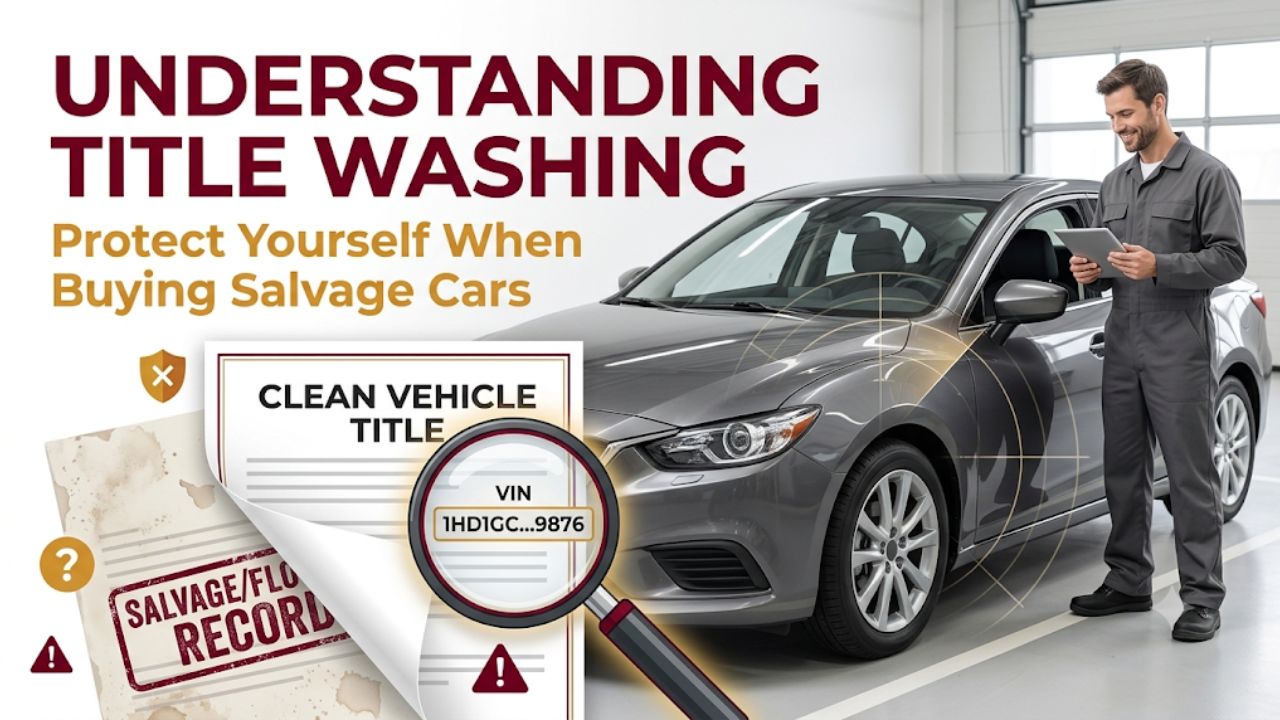
Buying a salvage car can save you money. However, it can also expose you to title washing. This fraud hides a vehicle’s true history and makes a risky car look safer than it is. As a result, buyers may overpay, face large repair bills, or struggle with insurance and registration.
The good news is that you can lower the risk. You need to check the VIN, review the title, inspect the car, and verify the seller’s claims. This guide explains each step in simple terms. It also shows you when to walk away from a deal.
What Is Title Washing?
Title washing is the act of hiding or removing a negative title brand. State agencies use title brands to record major events in a vehicle’s life. Common brands include salvage, rebuilt, flood, junk, fire damage, and not actual mileage.
A dishonest seller may move the car to another state. That state may use different wording or different title rules. Then, the new title may show a weaker warning or no clear warning at all.
Still, a clean-looking title does not prove a clean history. It only shows what appears on the current document. Therefore, buyers should compare the paper title with databases, auction records, service history, and the car itself.
Why Salvage Cars Face More Risk
Salvage cars often pass through many hands. For example, a vehicle may move from an insurer to an auction, rebuilder, dealer, and private buyer. Each transfer creates new records. It also creates more chances for missing or confusing paperwork.
In addition, states do not always use the same terms. One state may use “salvage,” while another uses “reconstructed” or “prior damage.” These differences can confuse honest buyers. Unfortunately, they can also help dishonest sellers hide the original loss.
A total-loss decision does not always mean the car is beyond repair. Sometimes, repair costs simply exceed the insurer’s limit. Even so, flood, fire, frame, and airbag damage can create long-term safety problems. That is why the repair quality matters as much as the title.
How Title Washing Happens
Interstate retitling is one common method. First, someone moves a branded vehicle to a state with different rules. Next, that person applies for a new title. Later, the vehicle may return to another state with a less obvious history.
Paperwork fraud is another method. A seller may use an old title, hide a reassignment, alter a document, or claim the original title was lost. The seller may also give false repair details or leave out the cause of the damage.
Reporting delays can create problems too. A major loss may not appear in every database at once. Therefore, a seller may try to complete the sale before new records arrive.
VIN cloning is more serious. In this scheme, criminals copy the VIN from a legal vehicle and place it on another car. The second car may be stolen, badly damaged, or both. Any mismatch between VIN locations should end the deal immediately.
Red Flags in the Paperwork
Start with the current title. Check the issue date, state, owner name, VIN, mileage, and brand section. A very recent out-of-state title deserves extra attention. Several title changes in a short period also require a clear explanation.
Next, look for erasures, different fonts, damaged paper, missing signatures, or empty reassignment spaces. Also, confirm that the seller’s legal name matches the title. A seller who is not the listed owner may be skipping taxes, hiding a dealer role, or using false documents.
Finally, review the mileage history. Sudden drops, large gaps, or a “not actual mileage” note can reduce the car’s value. They may also point to odometer fraud.
Red Flags on the Vehicle
Check every visible VIN location. Compare the dashboard plate, door label, frame stamp, title, bill of sale, and inspection papers. The characters must match exactly. Loose rivets, scratched plates, or uneven labels are serious warning signs.
Then, inspect the body and cabin. Look for uneven panel gaps, fresh paint, overspray, wrinkled metal, or mismatched lights. Inside, watch for new carpet in an older car, a musty smell, water lines, silt, or corrosion.
Also, test every electronic feature. Flood damage can cause problems months after the sale. Warning lights, dead sensors, random faults, or nonworking safety systems need a professional diagnosis.
Seller Behavior That Should Concern You
A trustworthy seller should allow reasonable checks. Be careful when someone demands quick payment or refuses an independent inspection. Cash-only demands, missing receipts, and vague repair stories also increase the risk.
Likewise, avoid sellers who will not share the VIN before a meeting. You need the VIN to research the car. If the seller hides it, the deal is not worth your time.
Pressure is another warning sign. A seller may claim that several buyers are waiting. Do not let that claim replace due diligence. A safe purchase can survive a short verification process.
How to Protect Yourself Before You Buy
Begin with a vehicle history check. Use the VIN with a trusted provider, and compare more than one source when possible. Look for title brands, total-loss reports, auction entries, ownership changes, mileage issues, and moves between states.
However, never treat one report as final proof. Databases can contain delays or missing records. Instead, use the report as one part of a larger review.
Next, ask for a clear photo of the current title. Confirm the seller’s name and check for liens. Also, contact the issuing motor vehicle agency when the wording seems unclear.
Then, search for the original auction listing. Photos from the first sale may show the real damage before repairs. When comparing damaged vehicles, match the VIN, sale date, damage type, and images with the seller’s story.
After that, hire an independent mechanic or body repair expert. The inspector should not work for the seller. For a rebuilt car, request checks for frame damage, welds, alignment, airbags, seat-belt systems, warning lights, and water exposure.
Finally, speak with your insurer and lender before paying. Some companies limit coverage or financing for branded vehicles. Registration rules may also require extra inspections and documents.
Documents You Should Request
Good records make a salvage purchase easier to judge. Ask for the original auction photos, repair invoices, parts receipts, inspection certificates, alignment reports, and airbag records. Also, request the seller’s identification and proof of ownership.
The bill of sale should include the VIN, price, mileage, title status, and known damage. It should also list any repair promises. In addition, the document should state whether the car comes with a warranty or sells as-is.
Save copies of the listing, messages, reports, and payment records. These files can help if a dispute starts later.
Questions to Ask the Seller
Ask direct questions and compare every answer with the evidence. Start with the cause of the total loss. Was it a collision, flood, fire, theft, hail, or another event?
Next, ask who completed the repairs and which parts were replaced. Find out whether the frame was measured and whether the airbags were replaced. Also, ask whether the seller has titled the vehicle in another state.
Most importantly, ask whether you can choose the inspection shop. An honest seller should welcome a fair review. A refusal gives you a simple answer: walk away.
Clean, Salvage, and Rebuilt Titles
A clean title means the current title does not show a major brand. It does not prove that the vehicle has never crashed or needed repairs. Unreported damage may still exist.
A salvage title usually means the vehicle met a state’s total-loss or salvage rules. In many states, you cannot drive it on public roads until you repair and inspect it.
A rebuilt title usually means a former salvage vehicle completed a state process. However, that process may focus on ownership and stolen parts. It may not confirm perfect structural or mechanical quality.
Because state rules differ, always confirm the exact meaning with the relevant agency.
Can a Salvage or Rebuilt Car Be a Good Buy?
Yes, it can. A good deal needs a clear history, proper repairs, a strong inspection, and a fair price. For example, a theft recovery with minor missing parts may carry less risk than a flooded vehicle.
Still, calculate the full ownership cost. Include repairs, tires, calibration, transport, taxes, registration, insurance, financing, and lower resale value. Also, keep money aside for hidden faults.
For practical automotive guidance, aelftech.com recommends treating records as part of the vehicle. Missing proof should lower the price or stop the purchase.
What to Do If You Suspect Fraud
Stop the sale if you have not paid. Save the listing, screenshots, messages, VIN report, and seller details. Do not confront a suspicious seller in a way that puts you at risk.
If you already bought the car, act quickly. Contact your state motor vehicle agency, insurer, lender, and local law enforcement. You may also need legal advice or help from a consumer protection office.
In the United States, you can report suspected fraud to the Federal Trade Commission, your state attorney general, and the National Insurance Crime Bureau. Keep every document because the available remedy depends on the evidence and local law.
Final Buyer Checklist
Before you pay, confirm every VIN location. Review the current title and check national and state records. Compare auction photos with the finished car. Verify the mileage and arrange an independent inspection.
Also, confirm insurance, financing, and registration requirements. Get repair records and all promises in writing. If one major detail does not match, pause the deal.
Above all, do not rush. Title washing works when a buyer trusts one paper or one story. Your best protection is a set of records that all support the same history.
Conclusion
Title washing can make a dangerous vehicle look ordinary. Fortunately, careful buyers can spot many warning signs. Check the VIN, study the title history, review the original damage, and hire an independent inspector.
A salvage or rebuilt car may still offer good value. However, the history must make sense, and the price must reflect the risk. When the seller cannot prove the story, the safest choice is to walk away.
Frequently Asked Questions
Can title washing make a salvage car look clean?
Yes. The current paper title may show no clear warning, even when an older record contains a serious brand. Therefore, always check more than one source.
Will a vehicle history report catch every washed title?
No. A report is useful, but it may contain delays or gaps. Combine it with state records, auction photos, seller documents, and an inspection.
Is a rebuilt title the same as a clean title?
No. A rebuilt title normally shows that the vehicle had salvage status before repairs. The exact rules depend on the state.
What is the biggest mistake buyers make?
Many buyers trust one clean-looking document. Instead, they should require several independent checks that tell the same story.
Leave a Reply