

TL;DR:
Your email domain heavily influences how potential customers judge your brand before they even read your message. Setting up a branded inbox builds instant credibility, improves deliverability, and forms a strong foundation for long-term customer relationships. It is an easy, powerful step toward looking as professional as the work you actually do.
Imagine a potential client receives two emails offering the exact same service. One arrives from a generic @gmail.com account, while the other comes from a custom @yourcompany.com domain. The outcome is almost always the same. People instinctively lean toward the branded option. A custom inbox is far from a minor detail. It acts as a powerful credibility signal that shapes how customers perceive a brand before reading a single word of the message. Taking this step is incredibly easy, and Wix provides a professional business email address that builds immediate trust and reinforces brand identity from the very first contact. Making this switch shifts the entire tone of your communications, showing potential clients that you mean business.
The Invisible Handshake — Why Your Email Domain Speaks Before You Do
Cognitive shortcuts play a massive role in consumer decision-making. People assess professionalism, legitimacy, and intent within seconds of seeing an email address in their inbox. We all rely on these quick mental checks to navigate busy days. Drawing on the concept of social proof and brand consistency, a custom domain signals that a company has invested real time and energy into its identity. This investment subconsciously reads as stability and accountability. Customers feel reassured knowing they are dealing with an established entity.
Contrast this with the implicit “hobbyist” reading of free providers. Generic domains often suggest a temporary setup or a side project rather than a fully realized business. Upgrading your domain resolves this doubt instantly.
The Trust Gap Between a Free Email Address and a Branded One
Generic email addresses create a concrete trust deficit that can hurt your bottom line. Data shows clear patterns: higher delete rates, lower open rates, and an increased likelihood of being flagged as spam. When customers are asked to take a meaningful action—like booking a consultation, purchasing a product, or signing a contract—they want to feel completely secure. A generic domain introduces unnecessary hesitation right at the point of conversion.
Service businesses, freelancers, and startups see this play out in the real world constantly. Many entrepreneurs who switched from free accounts to branded domains experienced measurable changes in response rates and client retention almost overnight. When you email a client from a customized domain, you remove friction. People open the message with confidence, read the proposal, and take action because the sender looks legitimate. Establishing this baseline of trust clears the path for smoother transactions and better client relationships.
A Consistent Brand Presence Starts at the Inbox — and Extends to Your Website
Email credibility does not exist in isolation. It functions as one node in a wider network of trust signals that includes a polished website, clear contact information, and a cohesive visual identity. Customers who receive a branded message will instinctively look up the sender’s website to learn more. If they click through and find a site that feels credible and well-designed, trust compounds rapidly. The inbox introduces the brand, and the website seals the deal.
For many creators and founders, building this initial credibility starts with great design tools. Businesses establishing their first professional web presence often use a portfolio template to establish visual credibility alongside their email identity. Creating a beautiful website gives your branded inbox a solid home base. When a client matches your custom domain to an impressive, responsive website, they feel confident choosing your services over a competitor.
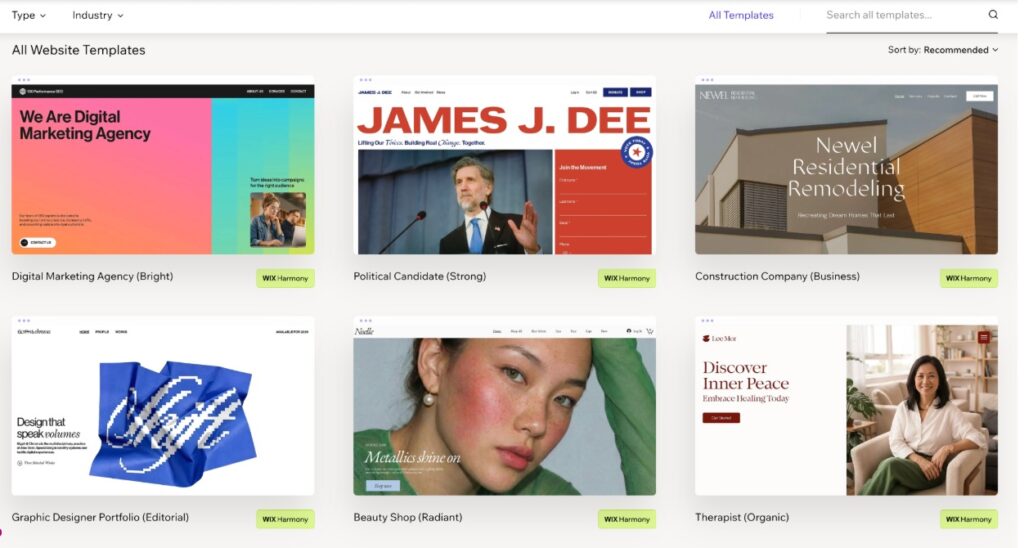
Image Source: Wix’s Portfolio Templates
The Spam Filters, Phishing Fears and Security Signals Customers Read Without Realising
Email security perceptions heavily shape consumer behavior. Many customers have been trained to distrust unfamiliar or free-provider addresses because phishing attacks frequently use them to trick unsuspecting users. People naturally throw up their guards when they see a generic address asking for sensitive information or payment details. A branded domain, especially one properly authenticated with SPF, DKIM, and DMARC records, easily passes both technical spam filters and the informal “gut check” cautious recipients apply before clicking any links.
This layer of trust is entirely invisible when everything goes right. Customers simply open the email, read the contents, and reply. However, it becomes immediately damaging when it is absent. If your message lands in the junk folder or triggers a suspicious sender warning, winning back that client’s confidence is an uphill battle. Investing in a proper domain ensures your messages bypass these fears and reach the primary inbox securely.
What Behavioural Research Tells Us About How Customers Evaluate Digital Credibility
Purchasing decisions are rarely purely rational. Customers use a variety of environmental cues to build a composite picture of whether a business is “real” and worth engaging with. They look at email format, domain authority, response speed, and design quality. All these small details add up to a major impression. Understanding why users care about these psychographic signals helps you craft a digital presence that speaks directly to their motivations and concerns.
When you align your brand with these behavioral expectations, you make it incredibly easy for customers to say yes. They want to work with professionals who respect their time and security. A branded inbox shows that you understand these unspoken rules of commerce. It tells the client that you value your own brand enough to present it properly, which implies you will value their business just as much.
How Email Authority Connects to Your Broader Digital Visibility
A professional inbox is part of a much larger ecosystem. Domain credibility, consistent NAP (name, address, phone) data, and inbound signals from owned content all reinforce each other. Businesses that take their communications seriously tend to also invest in content and SEO infrastructure. The correlation between branded communication and organic traffic growth is not coincidental. Everything connects back to a single, authoritative domain.
Search engines and customers alike reward consistency. Tying the credibility of the sender identity to the credibility Google assigns to the domain as a whole creates a powerful compounding effect. Every time you send an email, share a link, or publish a post under your custom domain, you build equity in that name. Over time, this consistent visibility establishes your brand as an industry authority.
Every Inbox Is a First Impression — Make Yours Count
Reframing a professional email address not as a technical setup task but as an ongoing brand asset changes how you approach your growth. The trust chain is simple but undeniable: a branded email leads to a credible website, which establishes a consistent identity, which ultimately builds customer confidence.
Getting a custom inbox is one of the simplest moves a new or growing business can make. It is also one of the highest-leverage actions for long-term trust. You have incredible skills, fantastic products, and a great vision. Make sure your email address reflects all that hard work, and watch how much easier it becomes to connect with your ideal customers.
Frequently Asked Questions
How much does a business email address typically cost?
A custom inbox is highly affordable for businesses of any size. Most providers charge a small monthly or annual fee, typically ranging from a few dollars to around ten dollars per user. This small investment pays for itself quickly through better response rates and increased brand trust.
Can I use a professional email address even if I don’t have a website yet?
Yes, you can absolutely purchase a domain and set up a custom inbox before you build a full website. This allows you to communicate professionally with vendors and early clients right from day one. You can always connect the domain to a website later when you are ready to launch.
Does a branded email address actually affect open rates and deliverability?
It absolutely does. Email clients like Gmail and Outlook use strict filtering algorithms that heavily scrutinize free accounts for spam-like behavior. A properly authenticated custom domain tells these filters that you are a legitimate sender, which dramatically improves your chances of landing directly in the primary inbox.
What is the difference between a business email address and a regular Gmail or Outlook account?
A regular account uses the provider’s domain (like @gmail.com) and gives the provider control over the data and branding. A business account uses your own purchased domain (like @yourcompany.com). This gives you total ownership, better security controls, admin rights over employee accounts, and a much more professional appearance.
How many email addresses does a small business typically need?
Most small businesses start with just one or two addresses, such as a founder’s name and a general “hello@” or “support@” address. As your team grows, you can easily add specific accounts for new employees or distinct departments like billing and sales. Starting small and scaling up as needed is a highly efficient approach.
Leave a Reply