
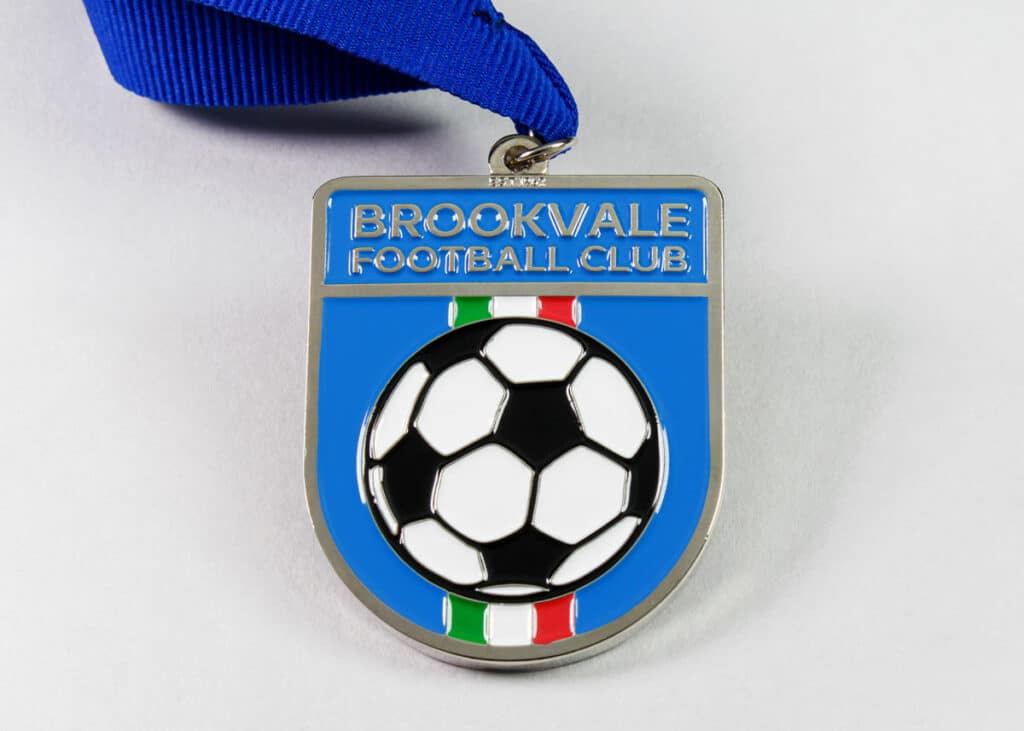
When you hold a medal engraved with perfect detail — smooth edges, mirror finish, and lettering so crisp it catches the light — you’re not just seeing artistry. You’re seeing engineering mastery. Behind every piece of metal lies a process defined by mathematics, laser precision, and a deep understanding of materials. That’s the real story of how custom medals are born — a blend of creativity and technology that transforms design into legacy.
The Journey from Concept to Metal
Every custom medal begins as an idea sketched on paper or screen — a logo, an emblem, or a symbol of achievement. Designers translate this vision into vector artwork using advanced design tools such as Illustrator or CAD programs. Every curve, bevel, and contour is plotted with mathematical precision, ensuring that when it’s time to engrave, the design remains sharp even at microscopic levels.
Once finalised, the file is converted into a digital path readable by engraving machines. This conversion stage is critical; the slightest error in calibration could distort the alignment of text or misjudge the engraving depth.
Understanding the Materials
Material selection plays a decisive role in the outcome of custom medals. Metals such as brass, zinc alloy, stainless steel, and aluminium each have unique reactions to heat, pressure, and cutting torque.
- Brass offers a rich golden hue and responds beautifully to deep mechanical engraving.
- Stainless steel is prized for durability but requires higher laser power and slower feed rates.
- Aluminium is lightweight and ideal for anodised finishes, yet demands low-intensity engraving to prevent surface melting.
Choosing the right material determines how light interacts with the finished product — the contrast between polished and matte zones, the tactile feel, and the durability of the engraved marks.
Laser Engraving: The Precision of Light
Modern custom medals rely heavily on laser technology. A finely tuned CO₂ or fibre-optic laser vaporises micro-layers of material to create crisp, permanent markings.
The process revolves around three main variables: power, speed, and frequency.
- Higher power increases depth but can cause thermal deformation.
- Slower speeds enhance clarity by allowing each pulse to etch deeper.
- Pulse frequency controls smoothness; a higher setting yields a polished, glass-like edge.
For curved or textured surfaces, automatic focusing systems adjust beam distance in real time, maintaining consistent engraving depth across the entire medal. This level of precision allows logos, names, and intricate linework to remain perfectly balanced.
Rotary Engraving: The Mechanical Touch
While lasers dominate modern production, mechanical or rotary engraving remains essential for certain custom medals. This traditional method uses a diamond-tipped or carbide cutter to physically carve designs into the metal surface.
Unlike lasers that burn, rotary tools cut — producing grooves you can feel. The tactile depth adds weight and authenticity, especially for high-end medals or commemorative awards. Engineers calibrate spindle speed, feed rate, and tool pressure to achieve uniform depth and texture. Even the smallest deviation in rotation speed can alter the reflection of light on the finished surface.
Multi-Stage Finishing: The Unsung Hero of Quality
After engraving, the raw medals undergoes several treatments that elevate its look and longevity. Electroplating applies a protective layer of gold, silver, or nickel through a controlled electric current. The plating thickness, measured in microns, determines corrosion resistance and shine.
Next comes colour filling, where enamel or epoxy is applied into the recessed areas of the engraving. This adds contrast and vibrancy, sealing the detail within the metal. The curing process at high temperature locks pigment molecules into place, ensuring the colours never fade.
Finally, mechanical buffing and hand-polishing remove microscopic imperfections. The end result is a smooth, reflective surface that enhances every engraved detail.
Balancing Depth and Durability
The depth of an engraving affects both aesthetics and structural integrity. Too shallow, and the text may fade after polishing; too deep, and the medal risks stress fractures. Engineers use digital micrometers and profilometers to measure depth with sub-millimetre accuracy.
Advanced machines store engraving profiles for each metal type. When producing multiple batches of custom medals, this ensures every piece maintains uniform engraving depth, regardless of quantity.
The Role of Software and Automation
Computer-aided manufacturing (CAM) software has revolutionised medals production. It manages engraving sequences, optimises tool paths, and simulates laser travel to reduce wasted motion. Real-time sensors adjust for vibration, temperature, and beam distortion, ensuring continuous precision.
Automation also allows variable data engraving — perfect for medals that require unique names, numbers, or event details. Instead of resetting each file manually, the system imports data from spreadsheets and updates each engraving automatically. This not only increases efficiency but eliminates the risk of human error.
Integrating Colour and Texture
Modern engraving doesn’t stop at metal etching. Texture variation — matte backgrounds, gloss highlights, or sandblasted finishes — creates visual depth without adding layers. Some custom medals feature dual-tone surfaces achieved by alternating laser intensity, giving the illusion of multi-material construction.
UV printing adds another layer of creativity. It allows full-colour logos or gradients to overlay engraved text, merging digital printing with traditional craftsmanship. When properly sealed, these hybrid finishes resist fading even under direct sunlight or heavy handling.
Safety and Environmental Responsibility
Working with engraving lasers, chemicals, and polishing compounds demands strict safety controls. Professional workshops use sealed laser chambers, fume extractors, and anti-static workstations to protect technicians and maintain air quality.
Equally important is environmental stewardship. Many producers now use recycled metal alloys and water-based paints, reducing waste and emissions. The precision of digital engraving minimises material loss, ensuring sustainability without sacrificing quality.
Quality Control: Where Technology Meets the Human Eye
Even with automation, human oversight remains irreplaceable. Each batch of custom medals undergoes visual inspection under magnification to ensure perfect alignment and legibility. Any minute defect — a burr, a mis-etched character, or uneven plating — is corrected before final assembly.
Durability testing follows: medals are rubbed, dropped, and exposed to humidity simulations to confirm that engravings remain sharp and untarnished. Only after passing these checks do the medals move to the packaging and presentation stages.
The Final Stage: Assembly and Presentation
A medal’s story doesn’t end with engraving. Ribbon attachment and clasp installation require their own precision. Holes are drilled to exact tolerances so that ribbons hang symmetrically during ceremonies. Weight distribution is tested to ensure the medal lies flat when worn. These finishing touches transform engraved metal into a symbol of pride and accomplishment.
The Intersection of Art and Engineering
Creating custom medals is where artistry meets physics — where heat, motion, and light collaborate to immortalise achievement. Each medal represents countless variables controlled with scientific precision, yet guided by an artist’s intuition.
Medals Engraving Sydney may look simple on the surface, but every letter and contour is calculated, measured, and executed with purpose. From the quiet hum of CNC machinery to the final hand polish that catches the light, it’s a process that celebrates not only the recipient’s success but also the mastery of those who craft it.
Custom medals are more than awards. They are engineered expressions of excellence — proof that true recognition lies not only in what is achieved but in how it is honoured.
Leave a Reply