
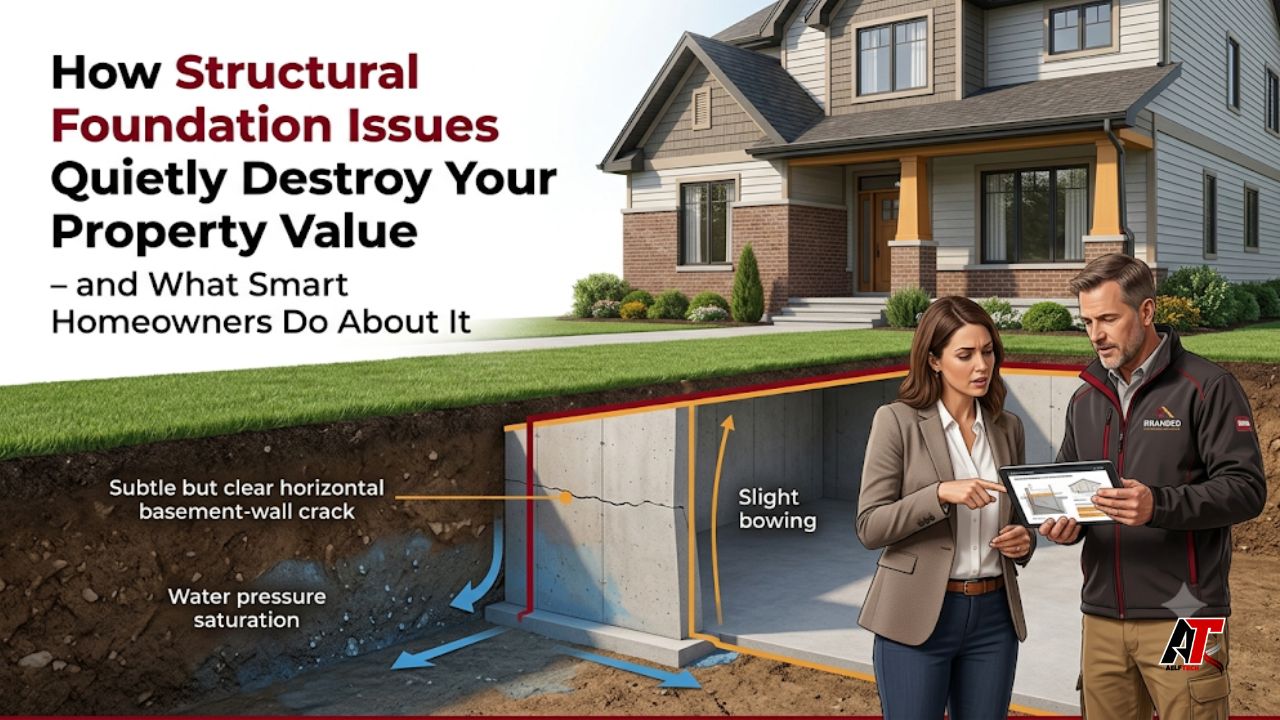
A foundation problem rarely begins with a dramatic collapse. It usually starts quietly: a thin crack, a door that suddenly sticks, a basement wall that appears slightly curved, or a damp smell after heavy rain. Because these signs can look cosmetic, many homeowners postpone an inspection. That delay is how structural foundation issues can gradually weaken property value.
A home is valuable because buyers believe it is safe, stable, dry, and financeable. When the foundation creates doubt, the concern spreads beyond the concrete below ground. Buyers may expect expensive repairs, appraisers may flag defects affecting soundness, lenders may request professional reports, and negotiations may shift toward major discounts. Movement and moisture can also damage walls, floors, finishes, plumbing, and usable basement space.
Foundation concerns do not automatically make a property unsellable. Smart homeowners act early, identify the cause, choose a suitable repair, and retain complete records. This guide explains the warning signs, the effect on market value, and the practical steps that protect both the building and the homeowner’s investment.
Why Foundation Problems Quietly Reduce Property Value
Property value depends on appearance, but also on safety, condition, durability, and future expense. Structural foundation issues influence all of these factors at once. That is why one visible crack can create a financial reaction much larger than the damaged area.
The first problem is uncertainty. A buyer who sees a horizontal basement crack or a sloping floor may not know whether the solution will be simple or extensive. To protect themselves, buyers often assume a worst-case cost and add a risk allowance. Even when the actual repair is manageable, fear can weaken an offer.
Financeability may also become more complicated. Appraisal and lending standards can require defects affecting safety, soundness, or structural integrity to be repaired or reviewed by a qualified professional. This may delay closing or reduce the number of eligible buyers.
Foundation movement can also produce secondary damage, including cracked drywall, separated trim, uneven floors, jammed windows, moisture, and damaged finishes. Each symptom makes the home appear less dependable. The result can be lower offers, longer market time, repeated negotiations, or a sale that fails after inspection.
What Counts as a Structural Foundation Issue?
Not every crack signals serious failure. Concrete can develop small shrinkage cracks as it cures, and some cosmetic cracks remain stable for years. The important questions are whether movement is active, whether the pattern suggests pressure or settlement, and whether the foundation is still supporting the building correctly.
Structural concerns may include abnormal or differential settlement, bowing walls, horizontal cracking, stair-step cracks in masonry, wall shear, or loss of support beneath part of the house. They can result from changing soil conditions, water pressure, weak fill, poor construction, frost, erosion, or alterations around the property.
Crack direction and related symptoms matter. A narrow vertical crack may be less concerning than a widening horizontal crack, visible wall displacement, or stair-step cracking through mortar joints. Doors that become misaligned, gaps between walls and ceilings, and floors that develop a noticeable slope can indicate that movement is affecting the structure above.
Homeowners should avoid diagnosing structural foundation issues from photographs alone. A qualified inspector, structural engineer, or experienced foundation professional can measure movement, assess drainage and soil conditions, and determine whether monitoring or repair is appropriate.
Warning Signs Homeowners Should Never Ignore
The key is to recognize patterns instead of dismissing each symptom separately. One sticking door may be seasonal. A sticking door combined with new cracks and a sloping floor deserves professional attention.
Important warning signs include horizontal cracks in basement walls, stair-step cracks in brick or block, cracks that continue widening, and walls that bow, tip, or move inward. Outside, look for separation between a chimney and the house, gaps around frames, cracked masonry, or a foundation line that no longer appears straight.
Inside, watch for doors and windows that suddenly stop closing, floors that feel uneven, cabinets pulling away from walls, and cracks extending from the corners of openings. Repeated patching is another clue. When a repaired crack returns in the same place, the surface treatment may be hiding ongoing movement.
Moisture signs matter too. Water stains, white mineral deposits, peeling paint, musty odors, damp insulation, or mold may point to drainage and waterproofing failures. Persistent water can increase soil pressure and damage materials. If a wall is visibly moving or several symptoms are changing quickly, arrange a prompt assessment rather than continuing to watch the problem.
Why Foundation Problems Develop
Water and soil behavior cause many foundation problems. Soil expands, contracts, freezes, softens, or erodes depending on its type and moisture level. When those changes are uneven around the house, one section of the foundation may move differently from another.
Poor drainage is a common contributor. Clogged gutters, short downspouts, negative grading, leaking pipes, and hard surfaces that direct runoff toward the building can saturate soil beside foundation walls. Wet soil may create strong lateral pressure, while dry periods can cause certain soils to shrink and reduce support.
Trees and landscaping can change soil moisture, frost can move soil in cold climates, and poorly compacted fill may settle after construction. Excavation, plumbing leaks below grade, or renovations that add load can also contribute.
The visible crack is often a symptom rather than the complete problem. Sealing it without addressing drainage, pressure, or settlement may provide only temporary relief. A durable solution identifies and corrects the mechanism that produced the damage.
What Smart Homeowners Do About Foundation Concerns
Smart homeowners do not panic, but they do not ignore evidence. First, document the condition. Take clear dated photographs, note where water enters, measure visible crack width when practical, and record changes in doors, windows, and floors. A timeline helps professionals distinguish stable conditions from active movement.
Next, reduce obvious water pressure. Clean gutters, reconnect downspouts, direct discharge away from the house, repair leaking plumbing, and correct areas where the ground slopes toward the foundation. These steps do not replace structural work, but they can prevent added moisture while the condition is evaluated.
For bowing, shearing, settlement, repeated leakage, or significant cracking, consult qualified professionals. Homeowners can speak with experienced structural foundation repair specialists to discuss assessment, stabilization, and waterproofing options. An independent structural engineer may be especially useful when the cause is uncertain, the proposed work is extensive, or the home is being prepared for sale.
Ask for a written scope that separates diagnosis, structural stabilization, water management, cosmetic restoration, and optional work. Compare the proposed solutions rather than choosing only by price. Confirm warranties, permits where required, insurance, product details, monitoring needs, and responsibility for engineering. Keep reports, photographs, invoices, and completion records together because documentation can rebuild buyer confidence later.
Common Foundation Repair Solutions
The right repair depends on the structure and the cause. No single method solves every foundation problem, and recommendations made without a proper inspection should be treated cautiously.
Crack injection or sealing may be suitable for certain stable cracks and water-entry points. Epoxy may restore continuity in some concrete cracks, while flexible materials may help control leakage. These methods do not stabilize an actively moving wall.
Bowing basement walls may require engineered carbon-fiber reinforcement, steel beams, wall anchors, or another bracing system. Settlement may be addressed with underpinning, helical piles, push piers, or systems that transfer loads to more reliable soil or bearing material.
Water-management work can include exterior membranes, drainage tile, interior drainage channels, sump equipment, grading changes, and downspout improvements. These solutions control moisture but do not automatically correct a displaced structure.
A responsible contractor should explain what the system is designed to accomplish, what it will not correct, and how performance will be checked. The strongest plan addresses the cause, stabilizes the structure, manages water, and leaves clear documentation for future owners.
Why Early Action Usually Protects More Value
Waiting can turn a focused repair into a larger restoration project. Continued movement may damage framing, drywall, floors, tile, plumbing, windows, doors, and exterior finishes. Persistent moisture can ruin stored items, deteriorate interior materials, and encourage mold growth.
Early evaluation also gives homeowners control. They can seek more than one opinion, plan the budget, schedule work appropriately, and finish repairs before a sale or refinancing deadline. A major concern discovered during a buyer’s inspection leaves less time and less negotiating power.
Not every hairline crack requires structural work. Monitoring may be reasonable when a qualified professional determines that the condition is minor and stable. The goal is to make that decision using evidence, not hope. A timely inspection or drainage correction is often far less costly than an unresolved structural question during a property transaction.
Selling a Home After Foundation Repair
A repaired foundation can still support a successful sale. Buyers mainly want to understand what happened, who evaluated it, what was completed, and whether the solution has been monitored.
Prepare a file containing professional reports, the contractor’s scope, permits where applicable, before-and-after photographs, paid invoices, warranties, maintenance instructions, and follow-up inspections. Include drainage, sump, grading, or waterproofing details when they formed part of the solution.
Do not simply cover warning signs with fresh paint before listing. Cosmetic concealment can create more suspicion if an inspector identifies the pattern. A clear repair history is more persuasive than an unexplained defect.
Disclosure requirements vary, so sellers should consult local real-estate and legal professionals. The marketing goal is not to pretend the issue never existed. It is to show that the problem was professionally diagnosed, properly addressed, and supported by records.
Frequently Asked Questions
Can foundation problems really lower a home’s value?
Yes. Unresolved structural foundation issues can reduce buyer confidence, increase expected repair costs, complicate appraisal or financing, and make the property harder to market. The effect depends on severity, demand, and the quality of the repair documentation.
Are all foundation cracks structural?
No. Some small cracks result from concrete shrinkage or minor stable movement. Direction, width, displacement, moisture, and changes over time help determine significance. Horizontal, stair-step, widening, or displaced cracks deserve professional review.
Should I repair the foundation before selling?
Often, completing and documenting a significant repair gives the seller more control and reduces uncertainty. The right decision depends on cost, timing, and market conditions. Obtain a diagnosis and written estimates before choosing a strategy.
Does waterproofing fix structural movement?
Not by itself. Waterproofing and drainage can reduce water and soil pressure, but a bowed, sheared, or settled foundation may require engineered stabilization. The plan should clearly separate moisture control from structural correction.
Who should inspect a suspected foundation problem?
A home inspector may identify warning signs, while a structural engineer or experienced foundation professional can investigate the cause and recommend action. Written professional findings are especially valuable for significant movement or a planned sale.
Final Thoughts
Structural foundation issues damage property value most when they remain unexplained. Smart homeowners replace uncertainty with evidence: they manage water, obtain a qualified assessment, choose a cause-based repair, and preserve every document.
A crack does not automatically mean disaster, and a repaired foundation does not automatically ruin a sale. The real risk is ignoring changing symptoms until the building, budget, and transaction are under pressure. For more practical homeowner and property-maintenance resources, visit aelftech.com.
Leave a Reply