
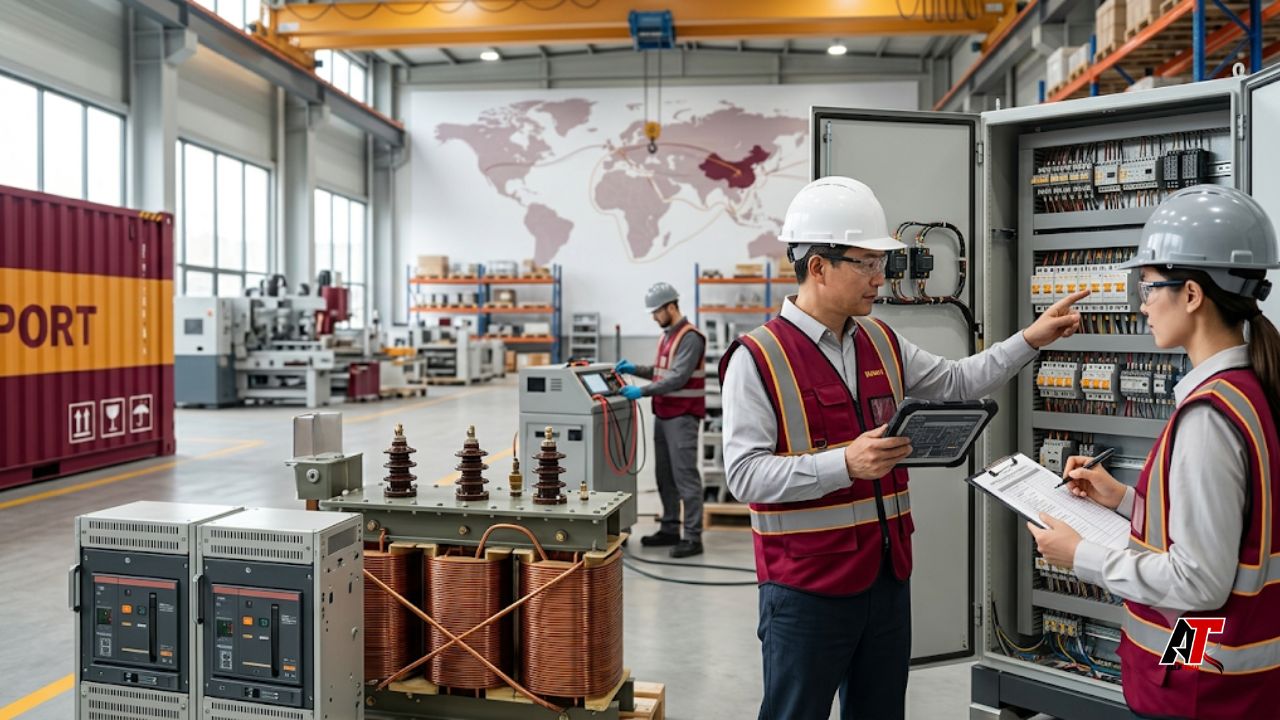
China is a major manufacturing base for transformers, switchgear, circuit breakers, cables, control panels, motors, power supplies, relays, and automation components. Buyers can access competitive prices, large production capacity, and extensive customization. However, electrical products carry technical, safety, and compliance risks that do not exist with simple consumer goods. A small mistake in voltage, insulation, protection level, component quality, or certification can cause installation delays, equipment failure, rejected shipments, or expensive warranty claims.
Successful sourcing begins before a purchase order is issued. You need a clear specification, a reliable supplier-verification process, realistic cost calculations, and quality checks from sampling through shipment. This guide explains what to know before sourcing electrical equipment from China so you can compare suppliers fairly, protect your budget, and receive products suited to their intended market and operating environment.
1. Prepare a Detailed Technical Specification
A vague inquiry such as “send your best price” usually produces quotations that cannot be compared accurately. Suppliers may assume different materials, accessories, standards, or test procedures. Prepare a request for quotation that lists the product type, rated voltage, frequency, phase, current or capacity, efficiency, insulation level, temperature rise, enclosure material, ingress protection rating, cooling method, dimensions, mounting arrangement, terminal configuration, and packaging needs.
Also describe the operating environment, including temperature, humidity, altitude, dust, salt exposure, and indoor or outdoor use. State the required drawings, manuals, labels, spare parts, and test reports. Most importantly, identify the standards required in the destination country. Depending on the product and market, these may include IEC, UL, ANSI, IEEE, EN, EMC, RoHS, energy-efficiency, or local utility requirements. Confirm regulatory obligations with a qualified local specialist rather than asking the factory to decide them for you.
2. Choose the Right Type of Supplier
A direct manufacturer may offer stronger technical control, clearer production information, and better customization. This is useful for engineered equipment, repeat orders, and products that require approved components or factory testing. A trading company may offer lower minimum order quantities, easier communication, a broader catalog, and consolidation of goods from several factories.
Neither option is automatically better. Ask who actually manufactures the product, which processes are completed in-house, and which are subcontracted. Confirm whether the supplier owns the factory and whether an audit is allowed. When researching a specialized category, reviewing an established transformer manufacturer in China can help you understand the technical information, product scope, and manufacturing details a serious supplier should be able to provide.
3. Verify the Company and Factory Capability
A polished website is not proof of manufacturing ability. Request the Chinese business license, registered legal name, factory address, quality-management certificates, product certificates, and export experience. Check that the company name on the quotation, contract, bank account, license, and certificates is consistent. Any difference should be explained and verified before payment.
Arrange a live video tour or independent on-site audit. Review the production lines, testing equipment, calibration records, incoming-material inspection, warehouse controls, and procedures for handling defective products. Ask how long the factory has made the exact product you need, not only how long the business has existed. A reliable supplier should answer technical questions clearly, provide sample reports and drawings, and accept reasonable inspection requirements.
4. Confirm Certifications for the Exact Model
Do not accept a certificate simply because it displays a familiar logo. A valid certificate may cover a different model, voltage range, factory, or standard edition. Request the full certificate and test report, then check the certificate number with the issuing organization where possible.
Confirm that the model number, rating, manufacturer name, factory address, and standard match the product being ordered. Determine whether certification applies to the finished product or only to a component. A certified relay, cable, or power supply does not automatically make an assembled control panel compliant. Requirements also vary by destination, so verify the latest rules for the exact product and market before production and shipment.
5. Approve Samples, Drawings, and Components
Order a pre-production sample or prototype before mass production. For large or customized equipment, this stage may involve engineering drawing approval, a component list, a factory acceptance test plan, or a pilot unit. Check dimensions, workmanship, materials, functions, labeling, and packaging.
Testing should reflect real operating conditions. Relevant checks may include dielectric strength, insulation resistance, grounding continuity, temperature rise, efficiency, leakage current, protection functions, noise, vibration, ingress protection, and communication performance. Use an accredited laboratory when independent evidence is required.
Keep an approved “golden sample” or a signed record containing photographs, drawings, serial details, and the bill of materials. Specify approved component brands, models, ratings, and acceptable alternatives. Require written approval before substitution because hidden changes to copper, insulation, breakers, contactors, capacitors, bearings, or semiconductors can affect safety, efficiency, lifespan, and certification.
6. Build Quality Control Into Production
Final inspection alone may not reveal hidden defects. A practical quality plan includes incoming-material checks, first-article inspection, in-process inspection, routine electrical testing, and pre-shipment inspection. List the inspection points, acceptance limits, testing instruments, and documents in the purchase order or quality agreement.
A pre-shipment inspection can verify quantity, dimensions, appearance, labels, accessories, packaging, and basic function using an agreed sampling method. For safety-critical or engineered equipment, consider witnessing a factory acceptance test. Provide your specifications directly to the inspection company so it does not rely only on the supplier’s description. Third-party inspection is normally far less expensive than replacing a defective shipment.
7. Calculate the Full Landed Cost
The lowest factory price may not be the lowest final cost. Add tooling, samples, laboratory testing, certification, inspection, inland transport, freight, insurance, duties, taxes, port charges, customs-broker fees, local delivery, installation, spare parts, and possible rework. Also consider the financial effect of delays or product failure.
Clarify the Incoterm in every quotation. EXW, FOB, CIF, and DDP divide responsibilities and risks differently. Confirm the named port or place and the applicable Incoterms version. Ask for the proposed HS code, but verify it with your customs broker because classification affects duties, restrictions, and documentation. Check whether wooden packaging, batteries, magnets, oversized cargo, or heavy equipment create special shipping and handling requirements.
8. Protect Payment, Contracts, and Delivery
Avoid paying personal accounts or unrelated companies. Common arrangements include a deposit with the balance after inspection, platform-based trade protection, or a letter of credit for larger transactions. Payment terms should reflect order value, customization, supplier history, and your negotiating position.
Use a detailed purchase agreement covering specifications, approved drawings, bill of materials, quantity, price, currency, Incoterm, schedule, inspections, test requirements, packaging, documentation, warranty, spare parts, intellectual property, remedies, and dispute resolution. State that unapproved design or component changes are not allowed. For major transactions, obtain advice from professionals familiar with cross-border contracts and Chinese commercial practice.
Define export packaging and shipping documents before production ends. Heavy or moisture-sensitive equipment may need reinforced crates, moisture barriers, desiccants, lifting markings, and shock indicators. Confirm commissioning support, remote troubleshooting, replacement parts, manuals, and warranty response times. Clear after-sales terms are essential when equipment will be installed far from the factory.
Common Warning Signs
Be cautious when a supplier offers an unusually low price without explaining material differences, refuses an audit or inspection, cannot answer technical questions, provides certificates with mismatched names or models, frequently changes bank details, promises unrealistic production times, or avoids written commitments. Other warning signs include incomplete test reports, demands for full payment before inspection, and quotations that do not state exclusions. Several warning signs together are a strong reason to pause and evaluate another supplier.
Pre-Order Checklist
Before paying a deposit, confirm that specifications and drawings are approved; the legal company and factory are verified; certificates match the exact model; sample testing is complete; components are controlled; inspection criteria are written; payment terms are secure; landed costs and Incoterms are understood; and packaging, documentation, warranty, spare parts, and technical support are included. Buyers who need additional business and technology resources can explore aelftech.com.
Final Thoughts
Sourcing electrical equipment from China can create strong value when price, performance, compliance, and supplier capability are evaluated together. Treat the purchase as an engineering and risk-management project, not a simple price comparison. Precise specifications, verified certificates, controlled components, independent testing, written contracts, and inspection before final payment greatly improve the chance of receiving safe and reliable equipment.
Frequently Asked Questions
Is it safe to buy electrical equipment from China?
Yes, provided the supplier is verified and the product is tested against your specifications and destination-market requirements. Risk rises when buyers choose only by price or skip inspections.
How can I verify a Chinese electrical equipment supplier?
Check its business license, legal name, factory address, certificates, production equipment, testing capability, and quality procedures. Add a factory audit, sample testing, and pre-shipment inspection for stronger verification.
What certifications are needed?
Requirements depend on the product, voltage, end use, and destination. They may involve IEC-based testing, CE-related rules, recognized safety certifications, EMC, RoHS, energy-efficiency rules, or utility approvals. Confirm the exact requirements before ordering.
Should I use FOB or CIF?
FOB generally gives the buyer more control over freight, while CIF includes freight and insurance to the named port but can leave significant destination charges. Compare total landed costs and responsibilities.
When is third-party inspection recommended?
Use it for new suppliers, high-value orders, customized products, safety-critical equipment, or shipments where failure would cause serious financial or operational damage.
Leave a Reply