
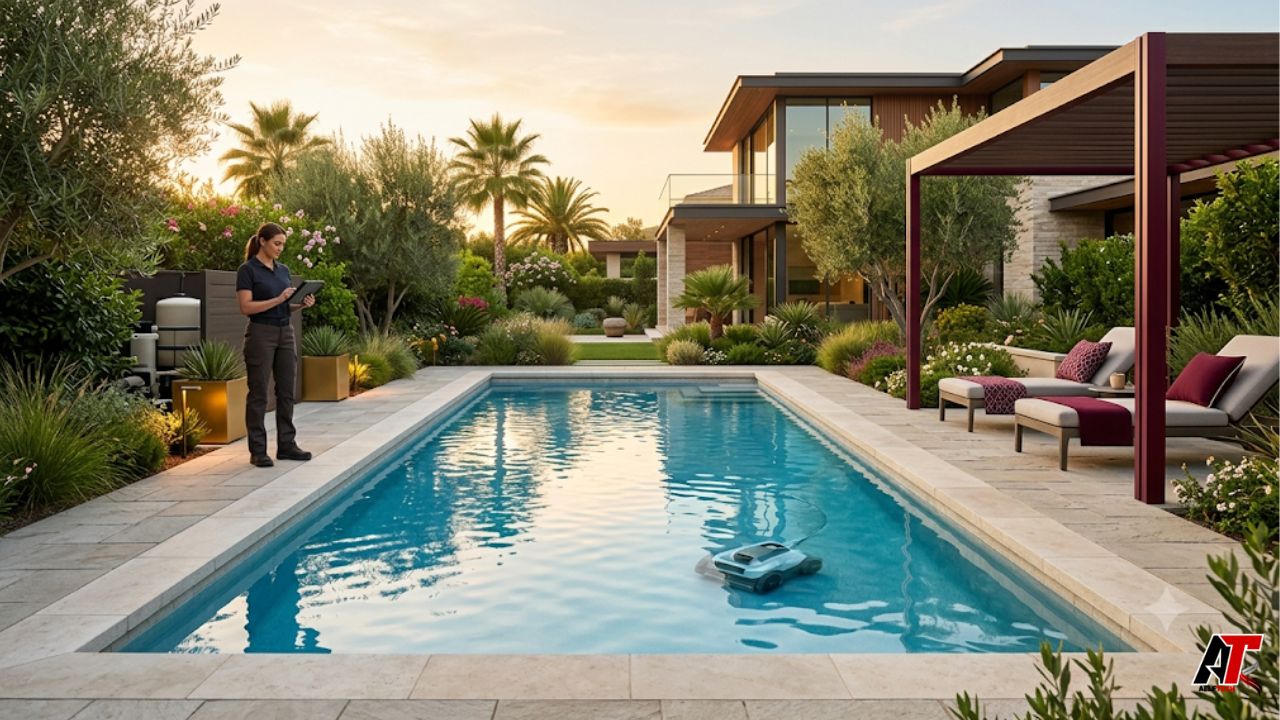
However, automation cannot identify every problem. A robot may collect debris but will not repair a cracked pipe, correct poor drainage, or explain why water chemistry changes unusually fast. Sensors also need calibration, filters need cleaning, and settings require occasional review.
The best approach combines automated labour with human observation. Let equipment handle routine cleaning and circulation while a homeowner or technician checks water condition, structural changes, unusual noise, error messages, and performance.
Find Water Loss Before It Damages the Space
Some water loss is expected through evaporation and splash-out, especially during hot, dry, or windy weather. Repeatedly adding more water than usual is different. Wet soil, soggy grass, air in return lines, cracks, falling water levels, or unusually high chemical use may point to a leak.
A bucket test can be a useful first check, but it does not locate the problem. Homeowners should avoid delaying professional help when water loss continues. Early detection can protect the pool shell, deck, landscaping, underground lines, and surrounding soil.
Professional pool leak detection can separate normal evaporation from structural or plumbing loss. WaterTex Pools explains that leaks may waste water, disturb nearby soil, stress equipment, and make chemistry harder to maintain. Its service information describes tools such as visual inspection, pressure testing, dye testing, and electronic listening, depending on the suspected source.
Protect Tile, Coping, Decking, and Planting
A pool can be chemically healthy and still look unfinished if surrounding materials are stained or damaged. Waterline tile should be cleaned with products suitable for its finish. Coping joints, sealants, deck drains, and expansion gaps should be checked for movement or deterioration.
Drainage is especially important. Water that repeatedly sits beside the pool may stain paving, encourage biological growth, damage furniture, or move soil. Keep drains open and direct irrigation away from coping, equipment, and chemical-storage areas.
Plant selection also influences maintenance. Trees that drop leaves, berries, pollen, or sticky sap directly over the water create extra work. Thoughtful pruning and planting distances preserve shade and beauty without turning the pool into a collection basin.
Use a Pool Cover With a Clear Purpose
A cover can reduce debris, evaporation, and heat loss, but different covers solve different problems. A safety cover is not the same as a thin solar cover, and neither should be used outside its intended design.
The US Department of Energy describes covering a pool as one of the most effective ways to reduce pool heating costs. Reduced evaporation may also lower water and chemical demand. The cover itself must remain clean, correctly fitted, and safely handled.
Consider how often the pool is used, whether children or pets have access, the local climate, and available storage. Safety decisions should follow local regulations and manufacturer instructions.
Create a Weekly Maintenance Rhythm
A practical routine should be easy enough to continue. Begin with quick visual checks instead of waiting for a major cleaning day. Look at water clarity, surface debris, water level, equipment sounds, and deck condition each time the area is used.
A typical week may include testing water, emptying baskets, brushing priority zones, running or cleaning the vacuum, checking filter pressure, and wiping the waterline. Heavy rain, storms, parties, high temperatures, and intense swimming may require extra attention.
Monthly or seasonal checks can include reviewing pump schedules, inspecting fittings, checking lights, examining sealants, cleaning equipment areas, and comparing water or energy use with earlier periods. A simple digital or paper record makes changes easier to spot.
Know When Professional Help Is Worth It
Routine ownership tasks are manageable, but some work requires specialist tools or licensed expertise. Call a qualified professional for persistent water loss, electrical faults, underground plumbing concerns, structural cracks, recurring algae, heater problems, or equipment that repeatedly loses prime.
Professional support is also useful when a pool has been neglected, a home has just been purchased, or the system includes unfamiliar automation. A thorough inspection can establish a safe baseline and prevent guesswork.
Before hiring, ask for a clear scope, written pricing, insurance information, relevant licensing where required, and an explanation of the diagnosis. Good providers explain what they found instead of recommending expensive work without evidence.
Smarter Care Can Lower Long-Term Costs
Preventive maintenance costs time and money, but neglect is usually more expensive. A small leak can increase water and chemical use. A blocked basket can strain the pump. Poor water balance can affect surfaces and metal components. Delayed cleaning can allow stains or algae to become harder to remove.
Efficiency improvements can also reduce operating costs. Correct pump sizing, clean hydraulic paths, appropriate schedules, efficient heating, covers, and task-specific automation all contribute. The best savings come from matching equipment to the pool rather than buying the most powerful option.
A homeowner does not need every smart device. Begin with the problems that consume the most time, water, chemicals, or electricity, then measure the result before adding another tool.
Build the Pool Into the Wider Home-Care Plan
Outdoor spaces stay attractive when pool care is coordinated with landscaping, lighting, drainage, furniture, and seasonal cleaning. Pruning before a storm, clearing deck drains, and scheduling robotic cleaning can prevent debris from spreading through the entire area.
When the pool is treated as part of the whole property, decisions become more practical. Equipment remains accessible, chemical storage stays secure, landscaping is chosen with debris in mind, and repairs are planned before visible damage spreads.
Home-maintenance resources from aelftech.com can support a more organised approach by connecting pool upkeep with broader property-care routines. Every system should have a simple schedule, a record of service, and a clear point at which professional help is requested.
Final Thoughts
A beautiful outdoor space depends on more than attractive finishes. It depends on clear water, quiet and efficient equipment, stable surfaces, clean edges, healthy landscaping, and the confidence that small problems are being noticed early.
Smarter pool maintenance makes that possible through regular testing, complete cleaning, efficient circulation, early leak investigation, careful automation, and realistic professional support. It reduces last-minute emergencies and helps every design choice around the pool remain enjoyable for longer.
The smartest plan is not the most complicated one. It is the routine that fits the pool, climate, and household, then gets followed consistently. With that foundation, the pool becomes a calm, attractive centrepiece for outdoor living.
Leave a Reply