
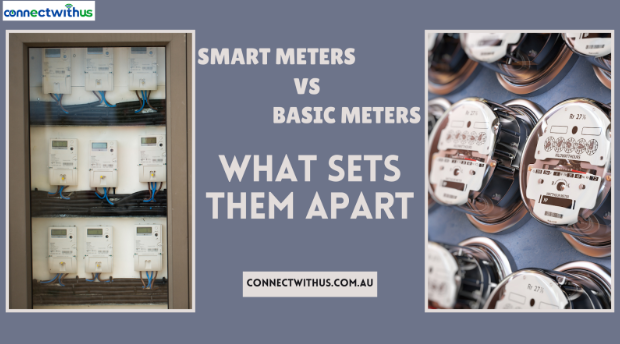
Understanding your electricity meter is an important step when managing household or business energy. Many people focus on the plan itself, but the meter plays a major role in how energy is measured, billed, and accessed. If you are reviewing Energy Australia Plans or setting up electricity at a new property, knowing the difference between smart meters and basic meters can prevent delays and billing issues later.
Meter type affects how data is collected, how accurate your bills are, and what kind of energy plans you can choose. It also impacts how quickly your electricity can be connected or changed.
What is a Basic Electricity Meter?
A basic electricity meter is a traditional device that records total electricity usage over time. It does not send data automatically. Instead, readings are collected manually by a technician who visits the property every few months.
Because readings are infrequent, billing is often based on estimates. When an actual reading is finally taken, the account is adjusted. This can result in unexpected bills that do not reflect recent usage patterns.
Basic meters also provide no visibility for customers. There is no way to see:
- Daily usage
- Hourly patterns
- Sudden spikes
- Appliance-level consumption
All usage is grouped into one total number, which limits how energy can be managed or analysed.
What is a Smart Meter?
A smart meter is a digital meter that records electricity usage in short intervals, usually every thirty minutes. This data is sent automatically to the energy retailer through a secure network.
Smart meters remove the need for manual readings. Bills are generated from real usage data, not estimates. Many retailers also provide access to this information through apps or online portals.
With a smart meter, customers can:
- View energy use by time of day
- Track patterns across weeks or months
- Receive usage alerts
- Identify high-consumption periods
Smart meters also support remote services, which allow customers to Connect Electricity Today without waiting for a technician in many cases.
How Smart Meters Affect Energy Plans
Smart meters allow energy retailers to offer plans based on actual usage behaviour. These include:
- Time-of-use plans
- Demand-based pricing
- Solar feed-in tracking
- Battery integration
These plan structures depend on interval data. Without it, the retailer cannot apply time-based pricing accurately.
Plans such as OVO energy plans are designed around smart meter data. They rely on digital readings to provide usage insights, renewable energy tracking, and flexible billing cycles.
Smart meters also make it easier to change plans, move properties, or update account details. Retailers can activate services remotely, which removes many of the delays seen with manual systems.
How Basic Meters Affect Energy Plans
Basic meters limit what retailers can offer. Because there is no time-based data, only flat-rate pricing structures are usually available.
This means:
- No time-of-use pricing
- No demand-based plans
- Limited access to flexible tariffs
- Slower switching processes
Some energy Australia plans require smart meters for eligibility. Customers with basic meters may need to upgrade before accessing certain offers.
Basic meters can also delay connections. If there is no recent reading on file, the retailer may need to arrange a site visit before activating the account. This becomes an issue when moving into a new property or reopening a closed account.
Why the Meter Type Impacts Your Energy Strategy
Meter type affects how energy is managed on a daily basis. Smart meters provide data that supports decision-making. Basic meters provide no operational insight.
With smart meter data, households and businesses can:
- Adjust usage based on peak periods
- Track the impact of new appliances
- Monitor seasonal trends
- Set internal energy targets
This makes energy planning practical instead of reactive.
Basic meters do not support these functions. Energy use remains invisible until the bill arrives.
Making the Right Meter Choice for Your Property
You can identify your meter type in several ways:
- Check your electricity bill
- Look at the meter display (digital screens usually indicate smart meters)
- Ask your energy retailer
If you are moving into a new property and want quick access to electricity, smart meters allow services such as an AGL Same-Day Connection to be processed remotely in many areas.
Retailers may recommend upgrading to a smart meter during plan sign-up. Some upgrades are provided at no cost, while others depend on network rules and property location.
Energy Plans Depend on Accurate Metering
Energy plans rely on the quality of the data being recorded. Without accurate and frequent readings, retailers cannot apply structured pricing or provide usage insights.
Some Energy Australia plans use smart meter data to:
- Apply time-based billing
- Support solar export tracking
- Provide usage dashboards
Without a smart meter, these features cannot function.
Meter type also affects billing stability. Smart meters reduce the risk of estimated bills and billing corrections.
Switching Plans or Retailers? Check the Meter First
Before changing energy plans, confirm:
- Your meter type
- Whether your chosen plan requires a smart meter
- If your property supports remote activation
If you need to connect electricity today, smart meters allow faster processing. Basic meters often involve scheduling delays.
Retailers offering services like the AGL same-day connection depend on smart meter infrastructure to complete the setup without physical site visits.
In Summary
Smart meters and basic meters perform the same core function of measuring electricity usage, but the way they operate shapes the entire energy experience. Smart meters provide real-time data, remote services, and access to flexible energy plans. Basic meters rely on manual processes and limit visibility.
If you are reviewing Energy Australia plans, planning a move, or setting up a new account, your meter type should be checked first. Households using plans such as OVO energy plans already depend on smart meter data for accurate tracking and billing.
Understanding your meter allows you to avoid delays, access suitable plans, and manage energy with clarity. It is one of the most overlooked parts of the energy system, yet it influences every part of your electricity account – from billing to connection timing and long-term planning.
Leave a Reply