
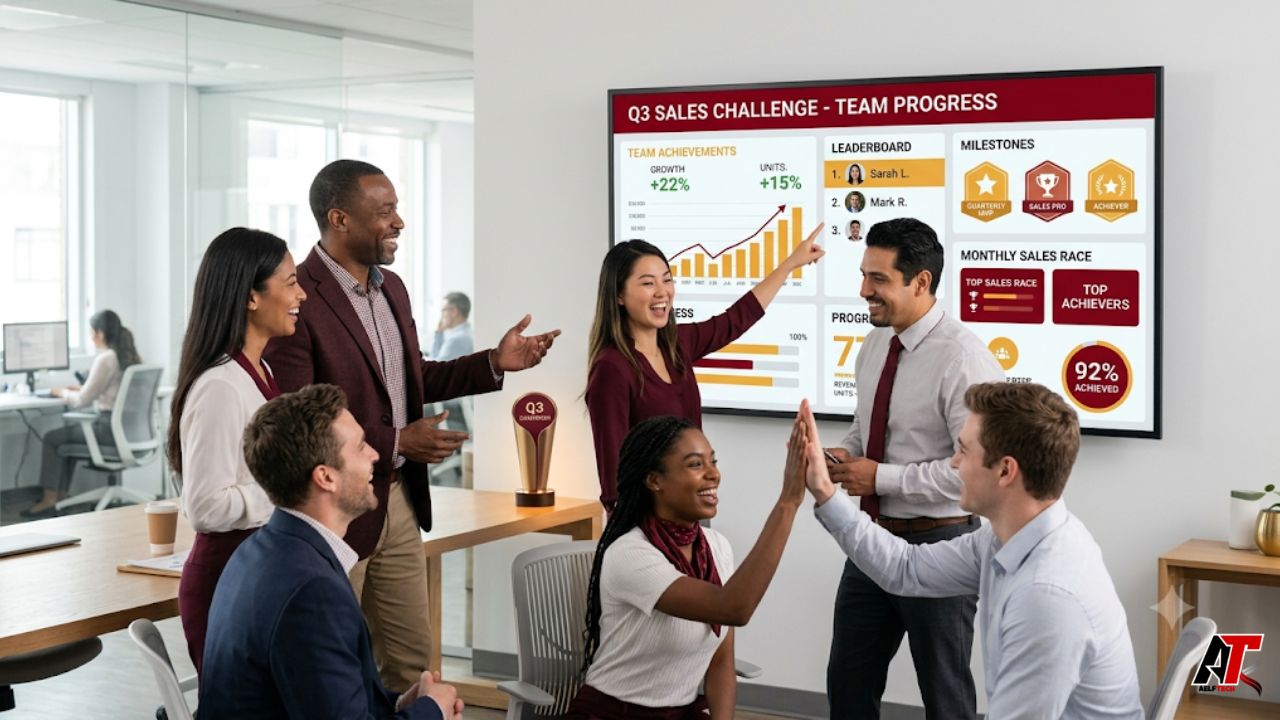
Salespeople are used to targets. They track calls, meetings, pipeline value, conversion rates, and closed revenue. Yet a target on a dashboard does not always create energy. A well-designed sales contest can turn an ordinary goal into a focused team challenge.
The best contests do more than reward the person who already leads the board. They make progress visible, create timely recognition, and give different performers a realistic reason to stretch. They can also connect daily sales activity with a wider business priority.
However, competition must be designed carefully. A contest that feels unfair can lower morale. A narrow revenue-only target can encourage discounting, poor-fit deals, or unhealthy rivalry. This guide explains how sales contests motivate high-performing sales teams and how leaders can build them without damaging trust.
Why Sales Contests Create Extra Motivation
A standard compensation plan rewards long-term performance. A contest adds urgency around a shorter goal. It creates a clear beginning, a visible finish line, and a reason to pay closer attention now.
Specific goals help people focus their effort. Progress tracking adds another layer. Research summarized by the American Psychological Association found that frequent progress monitoring improves the likelihood of reaching goals. A sales contest combines both ideas when the rules and scorecard are easy to understand.
Competition also creates a shared story. Team members discuss the challenge, compare approaches, and celebrate movement. The contest becomes a temporary campaign rather than another number in a monthly report.
1. Contests Turn Broad Priorities Into Clear Actions
Sales strategies often contain broad instructions such as grow new accounts, improve retention, or promote a new product. Those priorities can feel distant from a representative’s daily schedule. A contest translates them into observable actions and results.
For example, a company launching a new service could reward qualified demonstrations, trial activations, and retained customers. This is stronger than rewarding raw revenue alone. It shows the team which behaviors matter at each stage.
The contest metric should match the business problem. If the team needs more pipeline, reward qualified opportunities. If renewals are weak, focus on retention or expansion. If data quality is poor, include accurate CRM completion as a condition for eligibility.
2. Visible Progress Builds Momentum
People work differently when they can see movement. A progress bar, team dashboard, or weekly update makes effort feel real. It also helps managers spot where coaching is needed.
A leaderboard can create excitement, but it should not be the only feedback tool. Research discussed by Wharton found that rankings can sometimes reduce performance, especially when people feel permanently stuck near the bottom. That is why good contests show progress toward personal or tiered goals, not only distance from first place.
- Show each person’s progress against an achievable target.
- Update results at a predictable time.
- Explain how scores are calculated.
- Correct data errors quickly.
- Recognize improvement, not only total volume.
Frequent updates work best when they are useful rather than embarrassing. The purpose is to guide effort and build momentum, not to shame weaker performers.
3. Recognition Meets a Need That Money Alone Cannot
Sales professionals often value financial rewards, but recognition has a different effect. It shows that effort and skill were noticed. Public praise can strengthen confidence and professional identity.
Recognition may include a leadership message, a team meeting spotlight, a certificate, a development opportunity, or the chance to share a winning approach. These options are especially useful when the contest has several achievement categories.
High performers may already earn strong commissions. A contest still appeals to them when it offers status, variety, mastery, or access. Meanwhile, emerging performers may respond to milestones that prove they are improving.
4. The Right Incentives Encourage Focused Effort
Choosing meaningful sales contest incentives requires more thought than selecting the most expensive prize. The reward should fit the audience, effort level, contest length, and company culture.
Useful options include cash, merchandise, travel, extra time off, experiences, learning budgets, premium leads, or charitable donations selected by the winner. Choice can increase relevance because not every salesperson values the same reward.
The prize must feel valuable enough to justify extra effort, but it should not overpower normal judgment. When the reward is too large, people may focus on winning at any cost. Balanced incentives keep the contest exciting without making it reckless.
5. Multiple Ways to Win Keep More People Engaged
A winner-takes-all structure usually favors the same top performers. Once other representatives believe they cannot catch up, effort falls. The contest then motivates a small group and sidelines everyone else.
Tiered goals create broader participation. One reward may recognize the highest revenue. Others can recognize the largest percentage improvement, best conversion rate, strongest customer retention, or most qualified new opportunities.
Harvard Business Review has noted that varied prizes and tiered targets can motivate different types of salespeople. This matters because stars, core performers, and developing representatives do not respond to the same challenge in the same way.
- Top result: rewards exceptional total performance.
- Most improved: gives developing sellers a realistic path.
- Quality award: protects customer fit and margin.
- Team award: encourages collaboration and knowledge sharing.
- Milestone draw: keeps more people active throughout the contest.
6. Team-Based Contests Strengthen Collaboration
Individual competition can produce energy, but sales work is rarely completely individual. Representatives depend on marketing, sales development, solutions teams, operations, and customer success. A team component reflects that reality.
Small teams can compete on a balanced score. Members may share scripts, account knowledge, objection handling, and follow-up methods. This turns the contest into a learning system instead of a private race.
Team design needs care. Do not place one high performer with several inexperienced representatives and expect the result to feel fair. Build balanced groups or measure improvement against a team baseline.
7. Short Timeframes Create Urgency Without Fatigue
A contest should last long enough for effort to affect the result. It should also be short enough to hold attention. Many activity-based contests work well over one to four weeks. Longer sales cycles may require a longer window or leading indicators.
Very long contests can fade into the background. Very short contests may reward luck or existing pipeline. The right duration depends on the sales cycle, the behavior being measured, and the time needed to verify results.
Leaders can use several short campaigns during the year rather than one endless competition. Each campaign can support a different priority and include a recovery period before the next one.
How to Design a Fair and Effective Sales Contest
Choose One Main Business Outcome
Start with the reason for the contest. Avoid combining too many unrelated goals. A simple objective makes the rules easier to understand and reduces arguments about scoring.
Select Controllable Metrics
Representatives should have meaningful influence over the result. Territory size, account maturity, product availability, and lead quality can make raw revenue comparisons unfair. Use normalized targets, percentage improvement, or role-specific measures when needed.
Write the Rules Before Launch
Define eligibility, dates, data sources, tie breakers, cancellations, returns, discounts, and payout timing. Explain what happens when someone changes territory or goes on leave. Clear rules protect trust.
Set Ethical and Quality Guardrails
A contest should never reward behavior that harms customers or the company. Require suitable deals, approved pricing, accurate records, and completed handoffs. Exclude sales that are quickly canceled, fraudulent, or outside policy.
Recent HBR discussion on incentive design warns that salespeople may game systems when rules reward the wrong shortcut. Leaders should review likely loopholes before launch and monitor unusual patterns during the contest.
Test the Contest With Different Rep Profiles
Before launch, ask how a top performer, average performer, new hire, small-territory rep, and long-cycle seller could succeed. This simple test exposes hidden advantages.
Common Sales Contest Mistakes
- Rewarding only the highest revenue without considering territory differences.
- Running the contest for so long that attention disappears.
- Changing the rules after the team has started.
- Using delayed or inaccurate data.
- Offering a prize that the team does not value.
- Publishing rankings in a way that humiliates people.
- Ignoring margin, retention, compliance, or customer fit.
- Creating so many categories that nobody understands the goal.
The most damaging mistake is treating a contest as a replacement for leadership. A struggling team still needs coaching, a workable sales process, strong positioning, reliable tools, and fair compensation.
How Managers Can Support the Contest
Managers should use contest data to coach rather than simply announce scores. If activity is high but conversions are low, the issue may be qualification or messaging. If one person improves quickly, the manager can identify the technique and share it.
Weekly check-ins can focus on lessons, blockers, and next actions. This keeps the contest connected to skill development. It also prevents the challenge from becoming a separate game with no lasting value.
For more practical business, technology, and workplace guidance, visit aelftech.com usa. Clear systems and useful feedback help teams turn short-term energy into repeatable performance.
Measure More Than the Final Sales Number
A contest is successful when it improves useful performance without creating costly side effects. Compare results with the period before the contest and with a reasonable baseline.
- Revenue, margin, units, or qualified pipeline created.
- Conversion rate and average deal quality.
- Retention, cancellation, and return rates.
- Participation across the team.
- CRM accuracy and process compliance.
- Customer complaints or discount levels.
- Performance after the contest ends.
Post-contest performance matters. A short spike followed by a deep fall may mean the contest pulled deals forward rather than creating new demand. Review the full pattern before repeating the format.
A Practical Sales Contest Launch Checklist
- Define the business outcome and the behavior that supports it.
- Choose a fair metric that participants can influence.
- Set a clear start date, finish date, and verification period.
- Create several realistic paths to recognition where appropriate.
- Choose rewards that match the team and effort required.
- Publish complete rules, examples, and tie breakers.
- Build customer, margin, compliance, and data-quality guardrails.
- Update progress consistently and correct errors quickly.
- Coach from the data during the contest.
- Review both results and unintended effects after it ends.
Conclusion
Sales contests motivate high-performing sales teams when they make priorities clear, progress visible, and achievement meaningful. They create urgency and recognition that normal compensation may not provide.
The strongest contests are fair and focused. They offer more than one credible path to success, protect customer quality, and connect rewards with the right behaviors. They also give managers useful information for coaching.
A contest should be a short, well-designed performance campaign. When leaders combine healthy competition with clear rules, useful feedback, and ethical safeguards, the energy can continue long after the prizes are awarded.
Leave a Reply