
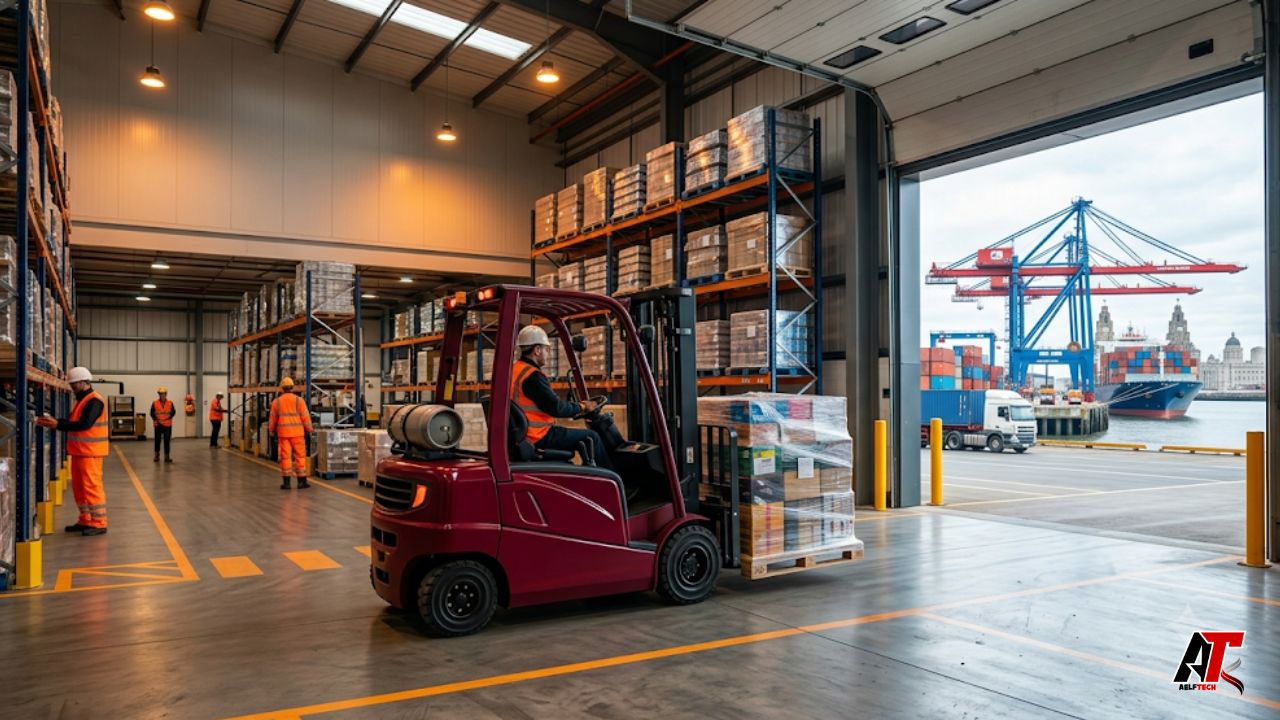
Liverpool has always been a city built around movement. Goods arrive through the River Mersey, pass through port terminals and distribution centres, move into factories, and leave warehouses for customers across the North West and the rest of the UK. Behind much of that activity is a practical machine that rarely receives attention until it stops working: the forklift truck.
Reliable forklift hire gives Liverpool businesses access to the right lifting equipment without carrying the full cost and responsibility of ownership. It helps warehouses respond to order peaks, manufacturers maintain production, port-related businesses manage changing cargo volumes, and construction teams handle materials safely. More importantly, dependable hire protects operations from one of industry’s most expensive problems: unplanned downtime.
Liverpool’s Economy Depends on Efficient Material Handling
Liverpool’s industrial economy extends far beyond its waterfront. The wider city region includes warehousing, maritime, logistics, advanced manufacturing, food and drink, retail distribution, engineering, recycling, construction, and e-commerce. The Liverpool City Region Combined Authority identifies maritime and logistics and advanced manufacturing among the sectors supporting regional growth.
The Port of Liverpool connects sea services with road, rail, warehousing, and onward distribution. Containers, pallets, components, drums, crates, and bundles must be received, checked, stored, picked, moved, and dispatched. Forklifts are therefore links in a chain connecting ships, lorries, storage facilities, production lines, and customers.
When a truck is unavailable, disruption spreads quickly. Loading bays become congested, trailers wait, labour is underused, production inputs arrive late, and customer orders miss dispatch windows. Reliable hire capacity allows a company to add or replace equipment before a local fault becomes a supply-chain delay.
What Makes Forklift Hire Reliable?
Reliable hire is not defined only by whether a truck arrives on time. A dependable service provides equipment that is suitable for the application, inspected, maintained, documented, and supported throughout the rental period.
The correct machine must match the load weight, load centre, lift height, aisle width, floor conditions, operating environment, attachments, and daily hours. A compact electric truck may be ideal for indoor pallet movement but unsuitable for rough external ground. A diesel counterbalance forklift may handle demanding yard work but be inappropriate in an enclosed food facility. Reliability begins with correct specification.
It also includes responsive technical support. Even a maintained truck can develop a fault or suffer accidental damage. A provider with local engineers, accessible parts, and replacement equipment can reduce the time between a fault being reported and normal work resuming.
Businesses comparing forklift hire services in Liverpool for warehouses should therefore consider suitability, service response, maintenance support, delivery, and documentation—not simply the daily or weekly price.
Supporting Warehouses and Distribution Centres
Warehouses depend on connected workflows. Goods-in teams unload vehicles, operators put stock into racking, pickers prepare orders, and dispatch teams stage pallets for collection. A delay at one point affects every stage after it.
Forklift hire gives managers flexibility during seasonal peaks, promotions, inventory counts, building moves, racking projects, or unexpected demand. Instead of purchasing a permanent truck for a temporary workload, a business can hire additional capacity only when needed.
Short-term hire is also valuable while an owned truck is being repaired, serviced, or examined. A replacement keeps shifts running and protects narrow loading windows, retailer deadlines, and high-volume e-commerce orders.
Good planning starts with real work patterns: pallet movements per shift, maximum loads, lift heights, aisle dimensions, charging opportunities, and operator availability. This prevents under-specification, which harms safety and productivity, and over-specification, which raises cost without adding value.
Keeping Port, Freight, and Maritime Operations Moving
Liverpool’s port and freight network handles varied cargo, while material-handling demand changes with vessel schedules, customs clearance, weather, trailer availability, and collection times.
Hire fleets provide extra capacity when cargo volumes rise or when a specialist truck is needed for a short contract. An operation may require a higher-capacity counterbalance forklift, longer forks, a container-compatible machine, or an attachment for unusual loads. Hiring lets the equipment fit the job rather than forcing the job to fit an unsuitable owned truck.
Dependability matters because port-related operations involve several organisations working to the same timetable. A forklift failure can affect hauliers, warehouse teams, customers, and terminal schedules. Fast support and realistic replacement arrangements protect those connections.
Helping Manufacturers Protect Production
In manufacturing, forklifts supply raw materials, move work in progress, feed assembly areas, remove finished goods, and manage packaging or waste. Production can slow or stop when components do not reach the correct workstation on time.
Reliable hire supports equipment replacement, factory expansion, product launches, shutdowns, and changing production volumes. It also lets companies test another truck type before making a long-term investment. A business considering electric equipment can evaluate battery runtime, charging routines, operator acceptance, and performance in real conditions.
New racking, heavier products, tighter aisles, different trailers, or revised shifts may make an existing fleet less suitable. Flexible hire can bridge the gap while the company reviews its permanent fleet.
Reducing the True Cost of Downtime
The visible cost of downtime is the repair bill, but larger costs appear elsewhere. Employees wait, overtime is needed to recover work, hauliers charge for delays, production falls, and urgent deliveries become necessary.
Reliable forklift hire reduces this risk because replacement equipment can cover repairs and servicing, extra trucks can remove peak-period bottlenecks, maintained machines can reduce avoidable failures, and predictable rental charges can improve budgeting.
For smaller companies, hire also avoids tying capital up in equipment used irregularly. Ownership may suit stable, intensive use, but it brings depreciation, maintenance planning, storage, insurance, compliance, and disposal. Hire converts many of these responsibilities into a clearer operating cost.
The cheapest quote is not always the lowest-cost solution. A poorly matched or unsupported truck may cost far more through lost productivity than the rental saving.
Choosing the Right Forklift for the Job
Before requesting a quotation, prepare an accurate application profile.
Maximum Load and Dimensions
Give the genuine maximum load, not the average. Load centre, dimensions, stability, and shape affect capacity, while unusual items may require specialist forks or attachments.
Lift Height
Include the highest storage position and the clearance needed to place loads safely. Residual capacity can reduce at height, so nominal capacity alone is not enough.
Operating Environment
Indoor sites often favour electric trucks because of quieter operation and no exhaust at the point of use. Outdoor yards may require diesel or LPG equipment, suitable tyres, greater ground clearance, weather protection, and lighting.
Aisles and Access
Measure the narrowest aisle, doorway, ramp, and turning area. Overall dimensions, turning radius, mast height, and lowered height must suit the site.
Working Hours and Energy
Shift length, intensity, battery capacity, charging time, and fuel access influence the best power option. Multi-shift work may require battery changing, opportunity charging, or another truck type.
Attachments
Sideshifters, fork positioners, clamps, rotators, or extended forks can improve handling but may affect capacity and operator training. Confirm the complete configuration before delivery.
Safety, Training, and Legal Responsibilities
Hiring a forklift does not transfer all safety responsibility to the rental company. The employer or site operator remains responsible for safe work planning, competent operators, supervision, traffic management, and suitable workplace conditions.
The UK Health and Safety Executive states that lift-truck operator training should include basic training, specific job training, and familiarisation training. Operators trained on one truck or attachment may need conversion training for significantly different equipment. Site rules should separate pedestrians and vehicles where reasonably practicable, control speed, manage blind corners, and provide safe loading areas.
Lift trucks also require maintenance, inspections, and thorough examination. HSE guidance distinguishes routine servicing from a legally required thorough examination under LOLER and PUWER. The hire agreement should state who arranges examinations, planned maintenance, fault reporting, and repair authorisation. Operators should complete appropriate pre-use checks and report defects rather than use unsafe equipment.
Relevant documents may include the hire agreement, inspection information, examination records, operating instructions, service contacts, and damage-reporting procedures.
How to Evaluate a Liverpool Forklift Hire Provider
A strong supplier acts as an operational partner, not simply a machine delivery service. Check:
- local availability and realistic delivery times;
- range of electric, diesel, LPG, reach, pallet, and specialist trucks;
- inspection, maintenance, and examination arrangements;
- engineer coverage and fault-response procedures;
- replacement policy after a serious fault;
- transparent transport, fuel, damage, and overtime charges;
- clear off-hire and extension processes;
- support with specification and attachments; and
- condition reporting at delivery and collection.
Ask what happens outside normal office hours if the operation runs nights or weekends. Confirm that replacement equipment would match the required capacity and site limitations.
Inspect the truck at handover. Record existing damage, test safety features, check forks and tyres, confirm the rated-capacity plate, and ensure operators understand the controls. A documented handover protects both parties.
Building a Hire Contingency Plan
Companies that depend heavily on forklifts should not wait for a breakdown before deciding what to do. A simple plan should identify critical trucks, approved suppliers, emergency contacts, required specifications, site access, delivery restrictions, and authorised decision-makers.
Keep essential data available: truck type, capacity, lift height, mast requirement, attachments, tyre type, power source, and environment. This allows a replacement to be sourced faster and more accurately.
Sites with no spare capacity may benefit from a pre-agreed backup arrangement or planned hire during high-risk periods. Prevention is often cheaper than emergency recovery, especially where one truck serves a busy loading bay or production line.
Flexible Hire Supports Liverpool’s Industrial Future
Liverpool’s logistics and industrial landscape continues to evolve through port investment, Freeport activity, advanced manufacturing, digital supply chains, and pressure to reduce emissions. Material-handling fleets must adapt with it.
Hire lets businesses respond without committing too early to one technology or fleet size. Companies can introduce electric forklifts where charging and duty cycles make sense, add higher-capacity equipment for a project, or scale the fleet as contracts change.
Reliable forklift hire may seem like a narrow operational service, but its impact is wider. It protects loading schedules, labour productivity, production flow, transport connections, and customer service. Across Liverpool’s warehouses, port-related businesses, factories, and construction sites, dependable equipment prevents small interruptions from becoming expensive delays.
Businesses should choose hire on total operational value: the correct truck, safe and compliant equipment, dependable maintenance, responsive local support, and clear commercial terms. For more practical guidance on technology, operations, and business performance, readers can explore aelftech.com.
Leave a Reply