
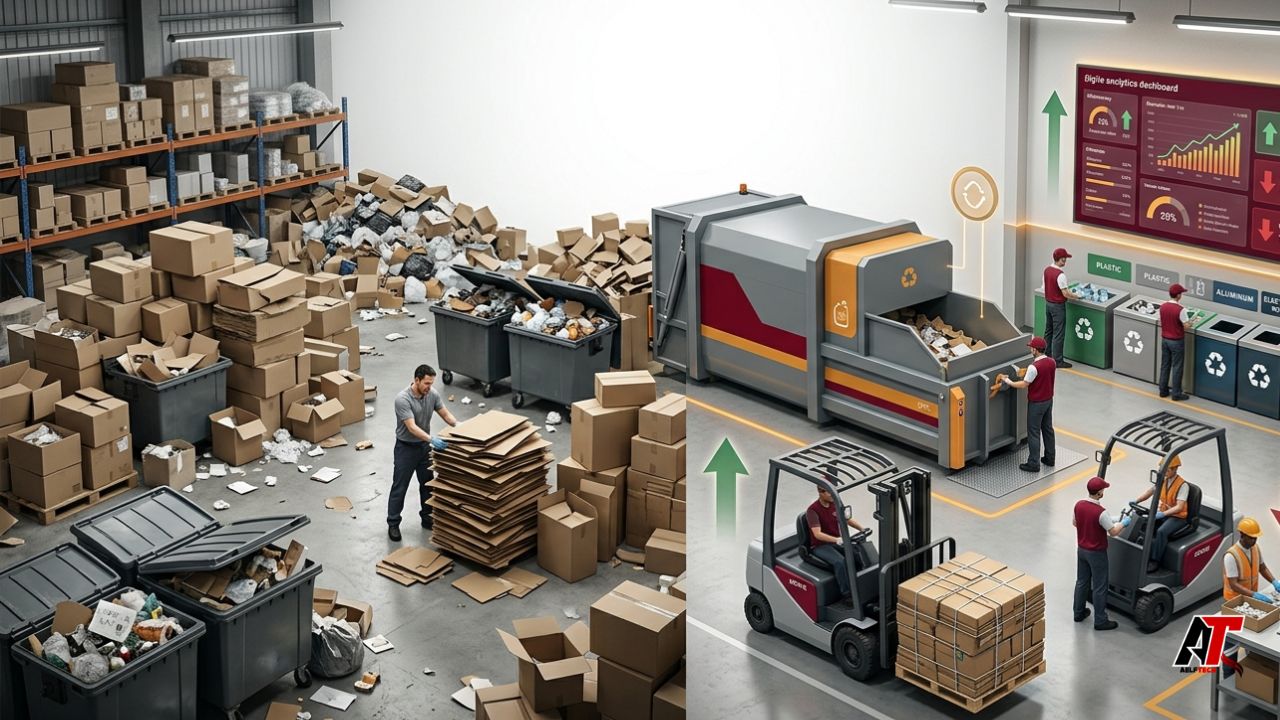
Waste is no longer a minor housekeeping expense. In 2026, businesses are treating it as a controllable operating cost linked to purchasing, labor, storage, hauling, compliance, and customer experience. A full dumpster is only the visible result; the larger loss often begins when a company overbuys, accepts unnecessary packaging, or pays for service that does not match actual volume.
The strongest waste-reduction programs therefore start before disposal. Companies are measuring what they discard, preventing avoidable material from entering the waste stream, separating valuable recyclables, and using equipment and contracts that fit their real operating patterns. This broader approach can lower direct fees while also improving space, safety, cleanliness, and workflow.
Why Waste Costs More Than the Hauling Invoice
A monthly waste bill shows container rental, pickups, disposal fees, and surcharges, but it misses hidden costs. Employees spend paid time moving cardboard, cleaning overflow, and correcting contaminated recycling. Bulky waste occupies floor space, while damaged inventory, expired ingredients, obsolete electronics, and disposable supplies represent money spent without producing value.
That is why businesses seeking meaningful savings look at the entire material flow. They ask what is purchased, why it becomes waste, where it is generated, how it is stored, who handles it, and what happens after collection. The U.S. Environmental Protection Agency’s Sustainable Materials Management guidance emphasizes measurement because businesses cannot improve a waste stream they do not understand.
1. Waste Audits Are Becoming a Financial Tool
The first practical change in 2026 is the move from rough estimates to evidence. A waste audit records the types, quantities, sources, and timing of discarded materials. It may be as simple as inspecting containers for one representative week or as detailed as weighing separate streams by department, shift, or product line.
The goal is to reveal expensive patterns, not create a complicated report. A retailer may find that cardboard occupies most dumpster space, while a restaurant may trace waste to a few ingredients. A warehouse may identify damaged pallets or excessive wrap. Once patterns are visible, management can price the problem and choose a targeted solution.
2. Source Reduction Is Replacing ‘Recycle Everything’
Recycling remains important, but businesses increasingly recognize that the cheapest waste is the waste never created. Source reduction means changing purchasing, product design, packaging, preparation, or operating procedures before material becomes trash. The EPA ranks reduction and reuse above disposal because they avoid the cost and resource use associated with creating and handling material in the first place.
Source-reduction steps include realistic ordering, consolidated deliveries, concentrated products, fewer disposable items, returnable packaging, and standardized supplies. Manufacturers can adjust production to reduce scrap; offices can limit printing and duplicate purchases; hospitality businesses can review portions and amenity packaging. Many of these changes require little capital and can improve margins quickly.
3. Compactors and Balers Are Cutting Collection Frequency
Bulky materials cause businesses to pay for air. Loose cardboard, packaging, and general refuse fill containers quickly even when their actual weight is modest. Compaction and baling equipment reduces volume, creates a cleaner collection area, and can decrease the number of pickups needed. The right equipment depends on the material, available space, volume, loading method, safety requirements, and local recycling market.
Organizations evaluating equipment to reduce waste costs for businesses should compare the total cost of ownership with current hauling, labor, space, and contamination expenses. Action Compaction notes that compactors can reduce disposal frequency, while balers can consolidate cardboard and plastics into materials that may have resale value instead of being paid for as trash.
A compactor is not right for every site. Small generators may not recover the investment, and recyclables should not be mixed into garbage simply to save space. Equipment should follow an audit and include maintenance, training, electrical needs, and safe loading procedures.
4. Hauling Contracts Are Being Matched to Real Usage
Many companies inherit a waste contract and renew it without checking whether the service still fits. In 2026, cost-conscious managers are reviewing container sizes, pickup schedules, fuel or environmental fees, contamination charges, overage rules, lock fees, and annual price adjustments. They are also comparing scheduled service with on-demand or sensor-informed collection where available.
The simplest savings may come from right-sizing. Half-empty collections waste money, while undersized containers create overages and extra calls. Seasonal businesses can negotiate flexible schedules instead of paying for peak capacity all year. Multi-location companies can compare cost per pickup, cost per ton, and diversion performance across sites.
5. Clean Material Separation Is Creating Value
Recyclables lose value when they are mixed with food, liquids, or nonaccepted materials. Businesses are responding by simplifying collection stations, using consistent labels, placing bins where waste is actually generated, and training teams on the few materials that matter most. High-volume streams such as cardboard, metals, pallets, film plastic, and certain production scraps may justify dedicated storage or baling.
Clean separation can avoid disposal charges and may generate rebates, depending on quality and local markets. Since commodity prices fluctuate, the program should still make sense when values are low. Managers should confirm accepted materials locally and keep environmental claims specific and evidence-based, consistent with Federal Trade Commission guidance.
6. Food Businesses Are Preventing Waste Before Composting
Restaurants, grocers, hotels, schools, and food manufacturers face a particularly expensive form of waste because discarded food includes the purchase price, refrigeration, preparation labor, water, energy, and disposal. EPA guidance places prevention at the top of its Wasted Food Scale and recommends audits that identify what is wasted and why.
Businesses are using tighter inventory rotation, forecasting, smaller batches, flexible portions, improved storage, and daily tracking. Safe surplus food may be donated or repurposed where appropriate. Composting and anaerobic digestion can manage unavoidable organics, but prevention usually saves more than processing food after it is wasted.
7. Repair, Reuse, and Refurbishment Are Extending Asset Life
Another 2026 cost strategy is to keep products and equipment in use longer. Furniture, pallets, shipping containers, tools, uniforms, computers, and appliances may be repaired, redeployed, sold, donated, or refurbished rather than replaced. This approach delays purchasing and disposal at the same time.
For electronics, businesses should protect data and use responsible downstream providers. EPA recommends certified electronics recyclers that follow recognized standards such as R2 or e-Stewards. Companies can also improve procurement by choosing products that are durable, repairable, upgradeable, minimally packaged, or supported by take-back programs. Waste prevention becomes easier when purchasing teams consider end-of-life costs before approving an item.
8. Digital Tracking Is Turning Waste Into Operational Data
Spreadsheets, smart scales, inventory platforms, equipment monitors, and waste dashboards are giving managers a clearer view of material loss. The technology does not need to be advanced to be useful. Even a weekly record of container fullness, pickup frequency, cardboard bales, damaged stock, and food waste can show whether a change is working.
Useful systems connect waste information with purchasing and production. A rise in packaging waste may point to a supplier change, while damaged goods may reveal a handling problem. EPA’s WARM compares management pathways, and ENERGY STAR Portfolio Manager tracks waste with energy and water. The priority is a small set of indicators managers will review.
9. Employees Are Being Given Clear Ownership
Waste programs often fail because responsibility is vague. A row of new bins does not change behavior by itself. Successful businesses assign an owner, explain why the change matters, show employees exactly what goes where, and provide feedback. Instructions should be visual, multilingual when needed, and specific to the materials found at that location.
Frontline employees often see waste before managers. They know which packaging is difficult, which ingredients expire, and where collection points create extra work. Short meetings and simple reporting channels can turn these observations into savings, while recognition and department targets help sustain participation.
How to Calculate the Return on a Waste-Reduction Project
A credible business case should compare the current annual cost with the expected cost after the change. Include hauling and disposal, equipment purchase or lease, maintenance, utilities, labor, training, storage space, rebates, and avoided purchases. Avoid counting uncertain recycling revenue as guaranteed income.
A simple calculation
- Annual savings = avoided pickups + lower disposal fees + avoided material purchases + labor savings + recycling revenue.
- Annual net benefit = annual savings – annual operating and maintenance costs.
- Simple payback period = initial project cost divided by annual net benefit.
Businesses should also record nonfinancial benefits such as cleaner loading areas, fewer pest or odor issues, reduced injury risk, improved compliance, and more usable space. These benefits may be difficult to price precisely, but they can influence whether a project is operationally worthwhile.
A Practical 90-Day Plan for 2026
Days 1-30: Measure
Collect invoices and contracts, inspect the waste stream, record container fullness, and identify the top three materials by volume or cost. Speak with employees who handle purchasing, inventory, production, cleaning, and waste. Establish a baseline using a few measures such as monthly waste cost, pickups, contamination fees, and material purchased but discarded.
Days 31-60: Test
Select one or two changes with clear financial logic. Examples include reducing a pickup, separating cardboard, changing an ordering rule, improving food rotation, repairing reusable assets, or trialing a compactor or baler analysis. Train the affected team and measure the same indicators used in the baseline.
Days 61-90: Standardize
Compare results, correct problems, and document the new procedure. Update contracts or purchasing rules only after the test demonstrates value. Then expand the approach to another department or location. Teams looking for broader operational and technology guidance can explore aelftech.com usa for additional business-focused insights.
Common Mistakes That Increase Waste Costs
The most common mistake is choosing a fashionable solution before measuring the problem. Other errors include oversized equipment, contaminated recycling, weak training, ignored maintenance, unclear vendor fees, and diversion claims that overlook contamination. Businesses should not assume every recyclable has a profitable local market.
A second mistake is treating waste as the responsibility of the cleaning team alone. Purchasing, operations, finance, facilities, and management all influence what enters the building and how it is handled. Waste costs fall faster when these functions share data and decisions.
Frequently Asked Questions
What is the fastest way for a small business to reduce waste costs?
Start by reviewing three months of invoices and conducting a basic waste audit. Look for half-empty pickups, unnecessary packaging, reusable items being discarded, and one high-volume material that can be reduced or separated. These actions usually require less investment than a full equipment upgrade.
Do compactors always save money?
No. Savings depend on waste volume, material type, pickup frequency, disposal rates, site layout, equipment cost, and maintenance. A compactor is most useful when bulky waste causes frequent collections or occupies valuable space. A site-specific cost comparison should come before purchase or lease.
Is recycling enough to control waste expenses?
Recycling can reduce disposal and recover material value, but prevention and reuse often deliver greater savings. A business should first avoid unnecessary purchases and waste, then reuse, repair, donate, recycle, compost, or recover material according to local options.
Which waste metrics should businesses track?
Useful starting metrics include total monthly cost, cost per pickup, number of pickups, container fullness, weight or volume by major material, contamination fees, recycling rebates, and avoided purchases. Choose measures that connect directly to decisions and can be collected consistently.
Conclusion
Businesses are reducing waste costs in 2026 by treating waste as a process problem rather than an unavoidable bill. They are measuring material flows, preventing unnecessary purchases, right-sizing hauling, improving separation, extending product life, using compactors or balers where justified, and giving employees clear ownership. The result is not merely less trash. It is a leaner operation with lower handling costs, better use of space, cleaner facilities, and stronger purchasing discipline. The best starting point is modest: establish a baseline, identify the most expensive waste stream, test one practical change, and verify the savings. Once waste data becomes part of routine management, reduction stops being a one-time sustainability campaign and becomes a repeatable financial strategy.
Leave a Reply