
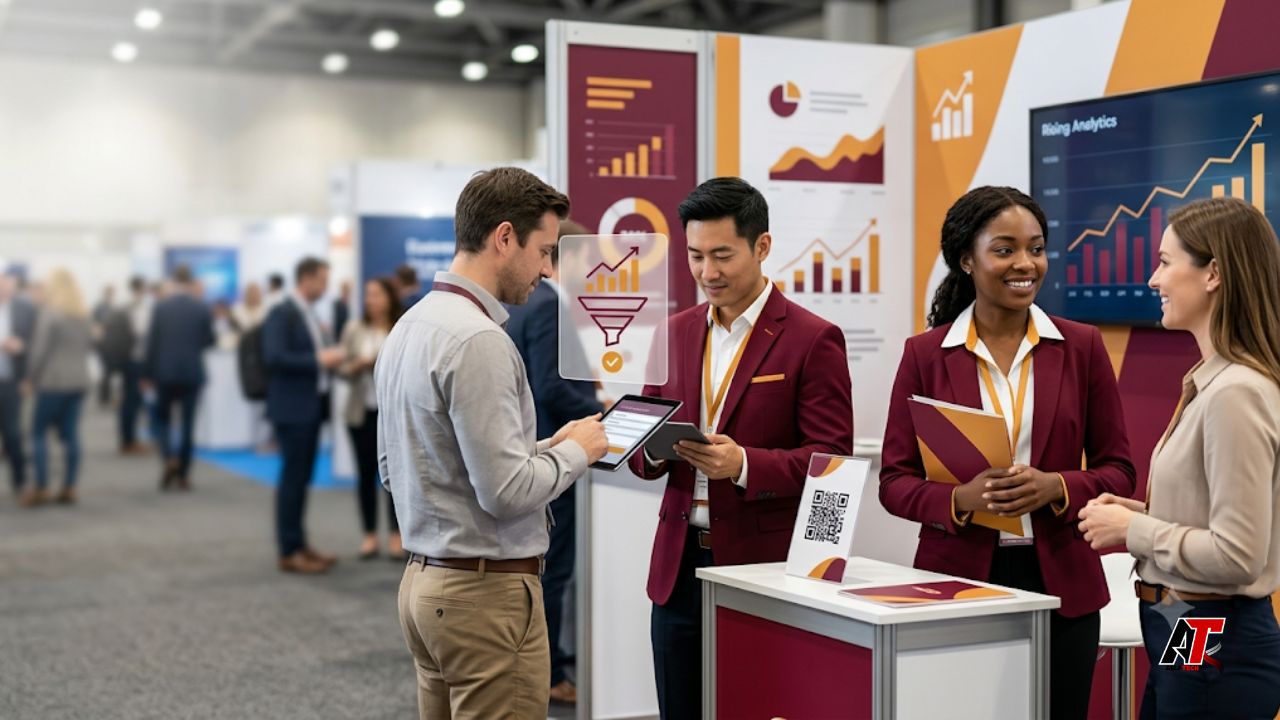
Busy events can create the appearance of success. A booth may be surrounded by visitors, samples may disappear quickly, and hundreds of people may walk past a branded display. Yet high foot traffic does not automatically produce useful business results. A company can finish an event with plenty of photos and conversations but very little reliable information about who showed interest, what they needed, or whether the sales team should contact them. This is where promotional models can make a major difference.
Professional promotional models do more than stand near a product or attract attention. When they are properly selected, trained, and supported, they act as the first stage of a lead-generation system. They welcome visitors, start relevant conversations, identify interest, explain a simple value proposition, collect permission-based contact details, and guide qualified prospects toward the next action. Their work turns an unstructured crowd into trackable opportunities. This article explains how promotional models for lead generation help businesses move from general event activity to measurable leads and stronger campaign results.
Why Foot Traffic Alone Is Not a Useful Result
Foot traffic is only an opportunity. It tells you how many people were present or passed through an area, but it does not show how many people understood the offer, matched the target audience, requested more information, or became sales opportunities. A booth with 1,000 visitors may produce fewer useful leads than a smaller activation with 200 carefully engaged attendees. A clear attract, engage, qualify, capture, and handoff process is what turns visitor numbers into useful business data.
1. They Attract the Right Kind of Attention
At trade shows, shopping centres, product launches, festivals, and street promotions, brands compete for a limited amount of attention. A well-presented promotional team can help a display feel active, approachable, and easy to understand. The purpose is not simply to gather the largest possible crowd. The goal is to attract people who are likely to care about the product, service, or message.
Effective teams use clear visual cues, brief opening lines, signs, demonstrations, or samples that match the campaign objective. For example, a fitness brand may invite attendees to try a quick challenge, while a software company may offer a one-minute workflow demonstration. The activity filters the audience naturally because interested people are more likely to stop. Businesses looking for experienced Promotional models can use this type of event staffing to support launches, exhibitions, demonstrations, and other face-to-face campaigns.
2. They Start Conversations Without Creating Pressure
Many visitors hesitate to approach a booth because they expect a hard sales pitch. Promotional models reduce that barrier by opening conversations in a friendly, low-pressure way. A simple question such as, “What brought you to the event today?” or “Are you currently using a solution for this problem?” can reveal useful context without making the visitor feel trapped.
This first conversation matters because it changes the interaction from passive exposure to active interest. The model can quickly learn whether the person is browsing, researching, buying for a company, or ready to speak with a specialist. A short and natural opening also makes the brand feel more human. People are more likely to share information when they feel that someone is listening rather than reading from a script.
3. They Qualify Visitors Before the Sales Handoff
Not every visitor should be treated as an immediate sales lead. Some people may only want a free sample, while others may be students, competitors, existing customers, or future buyers who are not ready yet. Promotional models can use a small number of approved questions to sort visitors into useful categories.
Qualification questions should be simple and relevant. They may cover role, company size, location, current provider, buying timeline, budget range, or the specific problem the visitor wants to solve. The team should never turn the conversation into an interrogation. Two or three questions are usually enough to decide whether the person needs a brochure, a demonstration, a sales conversation, or a future follow-up. This protects the sales team’s time and improves the quality of the leads recorded during the event.
4. They Exchange Real Value for Contact Information
People are becoming more careful about sharing their personal details. Asking for an email address without offering a clear benefit often produces low-quality data, false information, or refusal. Promotional models improve lead capture by explaining what the visitor receives in return.
The value exchange could be a useful guide, a product trial, a competition entry, a personalised recommendation, an event-only offer, a consultation, or access to a detailed demonstration. The model should clearly explain how the information will be used and request consent where required. When the value is relevant and the process is transparent, visitors are more willing to provide accurate details. This leads to a database that is smaller but far more useful than a long list of unqualified names.
5. They Deliver Consistent Brand and Product Messaging
Events are fast-moving environments, and inconsistent explanations can easily confuse visitors. One team member may focus on price, another may discuss technical features, and another may make claims that the company cannot support. Properly trained promotional models follow a clear messaging framework, so every visitor hears the same core value proposition.
A good briefing explains the target audience, main customer problem, key benefits, approved claims, common questions, prohibited statements, and next step. Models do not need to know every technical detail. They need enough knowledge to communicate confidently, recognise when a question requires an expert, and transfer the visitor smoothly. Consistency strengthens trust and makes campaign data easier to compare because the same message is tested across many interactions.
6. They Use Technology to Capture Clean, Trackable Data
Paper forms and stacks of business cards make follow-up slow and unreliable. Digital lead-capture tools allow promotional teams to record information immediately through tablets, mobile forms, QR codes, badge scanners, or campaign landing pages. Required fields can reduce missing information, while dropdown options keep answers consistent.
Technology also makes attribution possible. Each event, location, team member, offer, or QR code can have a unique campaign source. The business can then see where a lead came from, which message attracted the person, and what action should happen next. Data should be collected securely, and only information needed for the stated purpose should be requested. A fast form is usually better than a long one because it protects the flow of the conversation and reduces abandonment.
7. They Create a Smooth Handoff to Sales or Follow-Up Teams
Lead generation loses value when captured information sits unused for several days. Promotional models can improve the handoff by tagging each contact according to interest and urgency. A hot prospect may be introduced to a salesperson at the booth, while a warm lead may receive a follow-up message after the event. General interest contacts may enter a longer educational campaign.
The handoff notes should include enough context to help the next team continue the conversation. Useful details may include the prospect’s main challenge, preferred product, buying timeframe, questions asked, and promised next step. This prevents the follow-up from feeling generic. A message that refers to the real event conversation is more likely to earn a response than an automated email that simply says, “Thank you for visiting our booth.”
What Makes a Lead Truly Measurable?
A measurable lead is not just a name and phone number. It is a contact connected to a defined campaign, an engagement action, qualification information, and a next step. The business should decide what counts as a lead before the activation begins. For one campaign, a lead may be anyone who requests a product trial. For another, it may be a decision-maker planning to purchase within six months.
Clear definitions prevent teams from celebrating vanity numbers. If every sample recipient is recorded as a lead, the final total may look impressive but produce very few sales. A better system separates interactions into categories such as engaged visitor, marketing-qualified lead, sales-qualified lead, demonstration booked, appointment booked, and sale completed. These categories show how people move through the funnel and where improvement is needed.
Key Metrics to Track After the Event
The strongest campaigns measure both activity and quality. Activity metrics explain what happened at the activation, while quality metrics show whether the event created business value. Reviewing both types provides a more accurate picture than counting visitors alone.
| Metric | What It Shows |
| Total meaningful interactions | Shows how many visitors had a real conversation rather than simply walking past. |
| Qualified lead rate | Qualified leads divided by meaningful interactions; indicates audience and script quality. |
| Contact capture rate | Completed contact records divided by engaged visitors; measures the strength of the offer and form. |
| Cost per qualified lead | Total campaign cost divided by the number of leads that meet the agreed criteria. |
| Appointments or demos booked | Shows how many leads took a clear next step during or immediately after the activation. |
| Follow-up response rate | Measures whether the captured data and conversation notes supported relevant outreach. |
| Lead-to-customer conversion | Shows the percentage of event leads that eventually became paying customers. |
| Attributed revenue or pipeline | Connects the activation to closed sales or active opportunities in the CRM. |
Common Mistakes That Reduce Lead Quality
One common mistake is hiring based only on appearance. Presentation matters, but communication skill, reliability, confidence, brand fit, and the ability to follow a process matter far more. Brands also lose results when the lead definition is unclear, forms are too long, devices are not ready, consent language is missing, or sales staff are unavailable for handoffs. Pushing the team to collect maximum contacts without checking relevance creates a large but low-quality list that wastes follow-up time.
How to Calculate Campaign Value
The value of promotional models should be judged across the full lead journey. Start with the campaign cost, including staffing, training, travel, technology, samples, booth space, and creative materials. Then track the number of qualified leads, appointments, proposals, and sales connected to the event.
Cost per qualified lead is calculated by dividing the campaign cost by the number of qualified leads. Cost per appointment and customer acquisition cost can be calculated in the same way. Revenue and pipeline value should also be reviewed, but the measurement window must match the normal sales cycle. A business-to-business lead may take months to close, while a consumer product may generate sales on the same day. Tracking campaign source inside the CRM helps the company measure results over time instead of ending the analysis when the event closes.
Building a Repeatable Lead-Generation System
The best event campaigns are designed as repeatable systems. After each activation, the company should compare locations, team scripts, offers, engagement activities, and audience segments. If one opening question produces more qualified conversations, it can be used again. If one giveaway attracts people who have no interest in the product, it should be changed.
Results should be shared with the promotional team as well as marketing and sales staff. This creates a feedback loop in which everyone understands what worked. Resources from aelftech.com can also help teams think more clearly about digital strategy, content, and campaign performance. The aim is continuous improvement: better conversations, cleaner data, faster handoffs, and stronger return from every event.
Final Thoughts
Promotional models turn foot traffic into measurable leads by giving each interaction a clear purpose. They attract attention, open conversations, qualify visitors, communicate the offer, capture permission-based data, and direct each person toward the right next step. Their value is not based on how crowded a booth looks. It is based on the quality, accuracy, and progress of the opportunities they help create.
For the best results, brands should combine skilled people with clear goals, useful offers, simple technology, fast follow-up, and consistent measurement. When these parts work together, an event becomes more than a temporary display. It becomes a structured lead-generation channel that can be tested, improved, and connected to real revenue.
Leave a Reply