
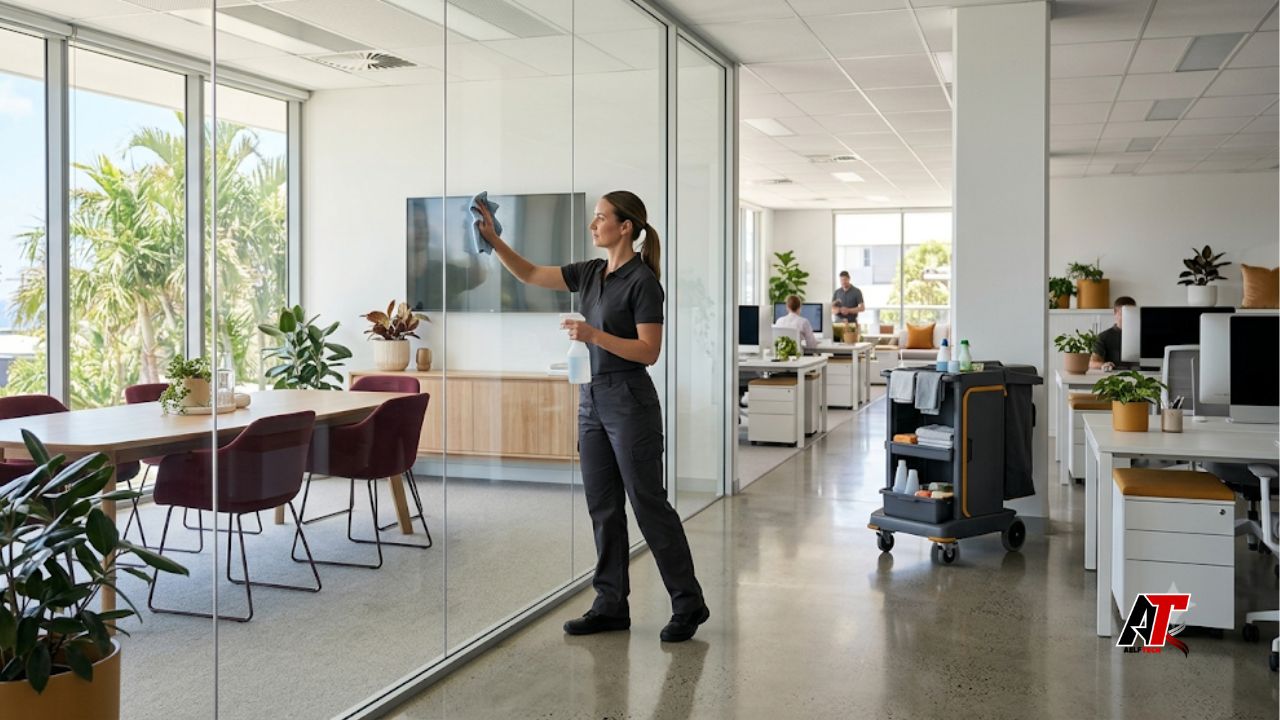
A modern office is more than a collection of desks, meeting rooms and computers. It is a shared environment where employees collaborate, clients form opinions and business operations happen every day. When that environment is dusty, cluttered or poorly sanitised, the effects can reach far beyond appearance. Cleanliness influences comfort, health, safety, productivity and the way people feel about the organisation.
For businesses on the Sunshine Coast, professional cleaning is especially important. Coastal air, humidity, sand, seasonal pollen and regular foot traffic can quickly affect floors, windows, ventilation grilles, kitchens and shared surfaces. A reliable cleaning plan helps workplaces stay presentable and functional while allowing employees to focus on their actual roles.
This guide explains why office cleaning should be treated as an essential part of workplace management, what areas require the most attention and how to choose a service that fits the needs of a modern business.
Office Cleanliness Is Business Infrastructure, Not a Cosmetic Extra
Cleaning is often treated as a cosmetic expense, but it supports the basic systems that keep an office usable. Clear walkways reduce hazards, maintained washrooms support hygiene, and clean kitchens make shared facilities more pleasant. A preventive schedule controls daily build-up before overflowing bins, odours, stains or complaints appear.
Businesses seeking a structured approach can review professional office cleaning in Sunshine Coast services to understand how routine and specialised tasks can be combined around the needs of a commercial site.
1. A Cleaner Office Supports Employee Health and Hygiene
Offices contain many high-touch points. Door handles, lift buttons, shared keyboards, phones, meeting-room controls, fridge doors, taps and coffee machines may be handled by dozens of people in a single day. Without consistent cleaning, dirt and microorganisms can accumulate on these surfaces and move between shared spaces.
Routine cleaning does not guarantee that nobody will become unwell, but it is an important layer in a broader workplace hygiene strategy. Safe Work Australia advises regular and thorough workplace cleaning as one way to manage biological hazards. A professional service can follow a defined process for cleaning first, then applying appropriate disinfecting products where risk levels or site requirements make that necessary.
Employee habits such as handwashing, responsible food storage and staying home when unwell also matter. However, staff should not replace a commercial cleaning program. Professional cleaners provide the equipment, training and accountability needed for whole-site maintenance.
2. Clean Workspaces Can Help Protect Productivity
A messy office creates small interruptions throughout the day. Employees may waste time clearing meeting rooms, dealing with unpleasant kitchens or working around poorly maintained common areas. Across a team and a full year, these delays can become a meaningful operational cost.
Illness and injury also create costs through absenteeism, reduced capacity, replacement staffing and disrupted workflows. Research and business reporting regularly show that Australia loses billions of dollars through workplace injury and illness. Cleaning alone cannot prevent every absence, but maintaining hygienic, dry and uncluttered spaces can support a broader strategy for reducing avoidable workplace risks.
There is also a psychological benefit. Organised surroundings can make it easier to settle into focused work, while a consistently clean office signals that management values the workplace and its people. This matters in hybrid offices, where employees expect on-site days to feel comfortable and professional.
3. First Impressions Influence Trust
Clients, job candidates, suppliers and business partners often form an opinion within moments of entering an office. Fingerprints on glass, stained carpets, dusty reception furniture or unpleasant washrooms can create doubts about attention to detail. Even when the service delivered by the business is excellent, the physical environment may tell a different story.
A clean reception area communicates readiness. Tidy meeting rooms make conversations feel more professional. Fresh washrooms and kitchens show respect for visitors as well as staff. This matters for professional services, medical administration, property businesses, education providers, technology companies and any organisation that welcomes people on site.
Consistent office cleaning in Sunshine Coast workplaces is valuable for businesses serving local clients and outside visitors. The office becomes a visible extension of the brand, reinforcing reliability, care and professionalism.
4. Regular Cleaning Helps Protect Office Assets
Office furniture, flooring, fixtures and equipment represent a significant investment. Dust, grit, food residue and moisture can shorten the useful life of these assets when they are left unmanaged. Sand and fine debris may scratch hard floors. Dirt can become embedded in carpet fibres. Dust can collect around vents, electronics and workstation equipment. Spills can turn into permanent stains when they are not treated promptly.
A planned schedule protects materials through suitable methods and products. Professional cleaners can adjust their approach for carpet, tile, vinyl, timber, glass, metal and upholstery. Product selection matters because the wrong chemical or technique may damage a surface.
Maintenance cleaning can also delay the need for disruptive deep restoration. Periodic carpet extraction, machine scrubbing, high-level dusting and detailed window cleaning are easier to manage when routine care is already in place.
5. Good Housekeeping Supports Workplace Safety
Cleanliness and safety are closely connected. Wet floors, loose waste, blocked walkways, overflowing bins and poorly stored supplies can all create hazards. WorkSafe Queensland advises businesses to review whether their cleaning systems leave surfaces clean and dry and whether the chosen process is suitable for the area.
A professional provider should use warning signs, follow safe chemical-handling procedures and schedule disruptive tasks carefully. Cleaners should also report concerns such as leaks, damaged flooring, loose fixtures or persistent mould-like growth because they inspect the same areas regularly.
Businesses still retain responsibility for workplace health and safety, but an organised cleaning contractor can become a useful part of the site’s hazard-management process.
6. Modern and Hybrid Offices Need Flexible Cleaning Plans
Workplaces have changed. Some offices are busy five days a week, while others experience peaks on selected collaboration days. Hot-desking means more people may use the same workstation. Shared meeting technology, lockers, breakout zones and wellness rooms create additional touchpoints that may not exist in a traditional office layout.
A fixed checklist can miss these patterns. A hybrid office may need more intensive cleaning after high-occupancy days and lighter service when fewer employees are present. The plan should also change as headcount, floor area or visitor numbers increase.
Professional office cleaning in Sunshine Coast locations should therefore begin with a site assessment. The provider should identify traffic levels, sensitive areas, access requirements, preferred service times and any industry-specific needs before recommending a schedule.
7. Sunshine Coast Conditions Create Local Cleaning Challenges
The Sunshine Coast lifestyle is one of the region’s strengths, but the local environment can create practical cleaning demands. Sand and outdoor debris are easily tracked into reception areas and corridors. Coastal moisture and humidity can make some spaces feel stale when ventilation and surface maintenance are neglected. Salt residue may build up on exterior-facing glass and metal. Seasonal pollen and landscaping debris can increase dust around entrances and windows.
These conditions make entry management important. Quality mats, frequent vacuuming and targeted floor cleaning can stop grit spreading through the building. Window schedules should reflect exposure, while kitchens, bathrooms and enclosed rooms may need closer attention during humid or busy periods.
A local provider offering office cleaning in Sunshine Coast businesses is more likely to understand these recurring conditions and build them into the service plan rather than treating every site the same way.
What Should a Professional Office Cleaning Service Include?
The exact scope should match the office, but a comprehensive plan commonly covers the following tasks:
- Reception areas, counters, furniture, glass and entry points.
- Carpet vacuuming and hard-floor mopping, including high-traffic edges.
- Bin emptying, liner replacement and agreed recycling procedures.
- Washroom cleaning, touchpoint sanitising and consumable restocking.
- Kitchen benches, sinks, tables, appliance exteriors and shared handles.
- Dusting desks, ledges, skirting boards, vents and accessible high surfaces.
- Meeting rooms, shared phones, controls and presentation equipment.
- Scheduled deep cleaning for carpets, floors, upholstery and windows.
How Often Should an Office Be Cleaned?
There is no single schedule for every workplace. Frequency depends on headcount, visitors, office size, operating hours, weather exposure and shared facilities. A small appointment-only office may need service several times a week, while a busy customer-facing site may require daily cleaning.
The table below provides a practical starting point, but the final schedule should be based on a site assessment.
| Area | Suggested Frequency | Main Reason |
| Reception and entry | Daily or each service visit | High visibility and frequent foot traffic |
| Washrooms | Daily; more often for busy sites | Hygiene, odour control and consumable restocking |
| Kitchen and break areas | Daily | Food residue and shared touchpoints |
| Desks and workstations | Several times weekly or by policy | Usage level and privacy requirements |
| Carpets and hard floors | Daily to weekly | Surface type, sand, traffic and weather |
| Internal glass | Weekly or as needed | Fingerprints and presentation standards |
| Deep cleaning | Monthly, quarterly or annually | Asset condition and manufacturer guidance |
How to Choose the Right Cleaning Provider
Price matters, but it should not be the only factor. An unrealistically low quote may be based on insufficient labour time, unclear inclusions or inconsistent staffing. A dependable provider should be willing to explain exactly what will be cleaned, how often it will be done and how service quality will be checked.
- Relevant commercial office experience and an understanding of local conditions.
- Trained, vetted and appropriately insured cleaning staff.
- A written scope of work with task frequencies and clearly defined exclusions.
- Safe product use, chemical labelling and access to safety information.
- Quality-control checks, issue reporting and a clear communication contact.
- Flexible scheduling that reduces disruption to employees and visitors.
- The ability to add periodic services without replacing the entire contract.
- Responsible waste practices and suitable low-odour or lower-impact products where requested.
Common Office Cleaning Mistakes to Avoid
Common mistakes include cleaning only visible areas, ignoring touchpoints and vents, using the same cloth across different zones, and failing to define responsibilities between employees, cleaners and building management.
Do not set frequency by floor area alone: two offices of the same size may have very different traffic. Regular check-ins and inspections help correct small issues before complaints build.
Conclusion
Modern workspaces need to be healthy, safe, flexible and welcoming. A structured cleaning program supports these goals by controlling daily dirt, maintaining shared facilities, reducing avoidable hazards and protecting office presentation. Sunshine Coast conditions such as sand, humidity and coastal residue make consistency even more important.
The best results come from a plan built around the actual site. Assess traffic, high-touch areas, schedules, surfaces and visitor expectations, then choose a provider that can deliver measurable consistency. For wider digital and business growth guidance, resources from aelftech.com can support the next stage.
Frequently Asked Questions
Why is professional office cleaning important?
Professional cleaning supports hygiene, safety, presentation and asset care. It also creates a consistent system for shared spaces instead of relying on employees for specialist tasks.
How frequently should an office be professionally cleaned?
Busy offices often need daily cleaning, while smaller sites may need service several times a week. Washrooms, kitchens, entrances and touchpoints usually need the most attention.
What are the most important areas to clean in an office?
Priority areas include washrooms, kitchens, reception spaces, floors, bins, handles, meeting rooms and shared equipment. Priorities should reflect usage and risk.
Can office cleaning be scheduled outside business hours?
Yes. Many providers offer morning, evening or weekend services. Access, security and noise-sensitive tasks should be agreed in advance.
What should be included in an office cleaning quote?
A useful quote should list areas, tasks, frequency, consumables, periodic services, exclusions, service times and the process for handling quality concerns.
Leave a Reply